



Choosing a PCB drilling and routing machine supplier: why the comparison matters
When buyers search for a PCB drilling and routing machine supplier, they are rarely comparing brochures for fun. They are trying to answer a more practical question: which supplier can keep hole quality, routing consistency, and production flow under control without creating more maintenance headaches than the machine solves. For engineering teams and sourcing managers, that decision affects throughput, scrap, operator workload, and how easily a line can absorb new board designs or higher volumes.
The phrase itself can cover more than one buying scenario. Some operations need a dedicated PCB drilling machine supplier because hole-making is the bottleneck. Others want a PCB routing machine supplier because edge profiling, contour cutting, and separation are the more difficult steps to stabilize. In practice, many buyers need both capabilities in some form, or at least a machine strategy that keeps drilling and routing aligned with the same production standard.
Drilling and routing are not the same job
That sounds obvious, but it is often where purchasing decisions go sideways. Drilling is about repeatable hole formation. Routing is about controlled material removal along a path, usually where edge finish and dimensional consistency matter. A machine can be excellent at one and merely adequate at the other.
For PCB and panel production, that distinction is not academic. Hole placement affects fit, assembly, and downstream soldering or fastening. Routing affects edge quality, panel depanelization, and how much post-processing an operator has to clean up. If a supplier oversells a machine’s versatility, the buyer may end up compensating with slower cycle times or extra inspection steps.
What the supplied machine description suggests
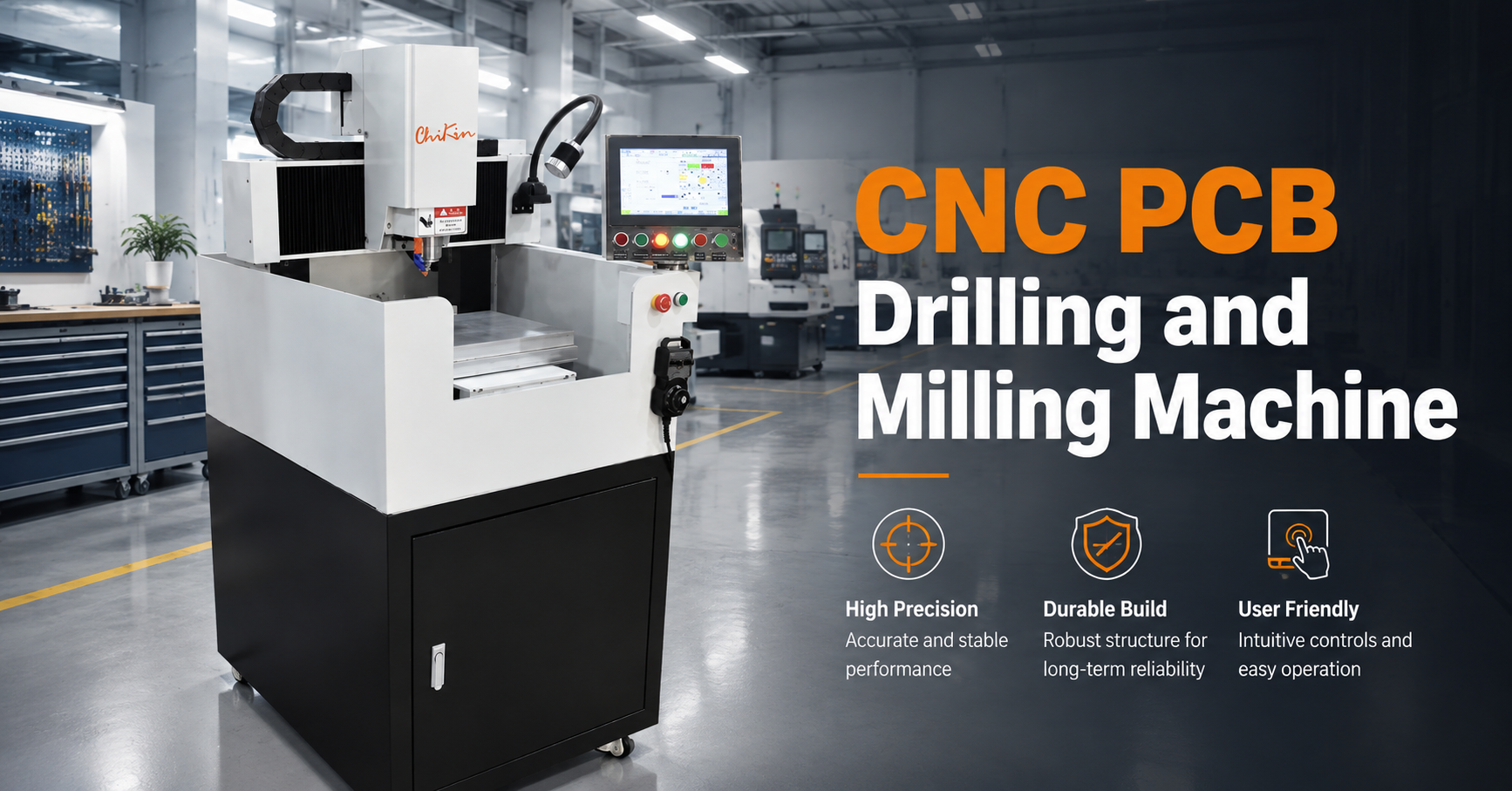
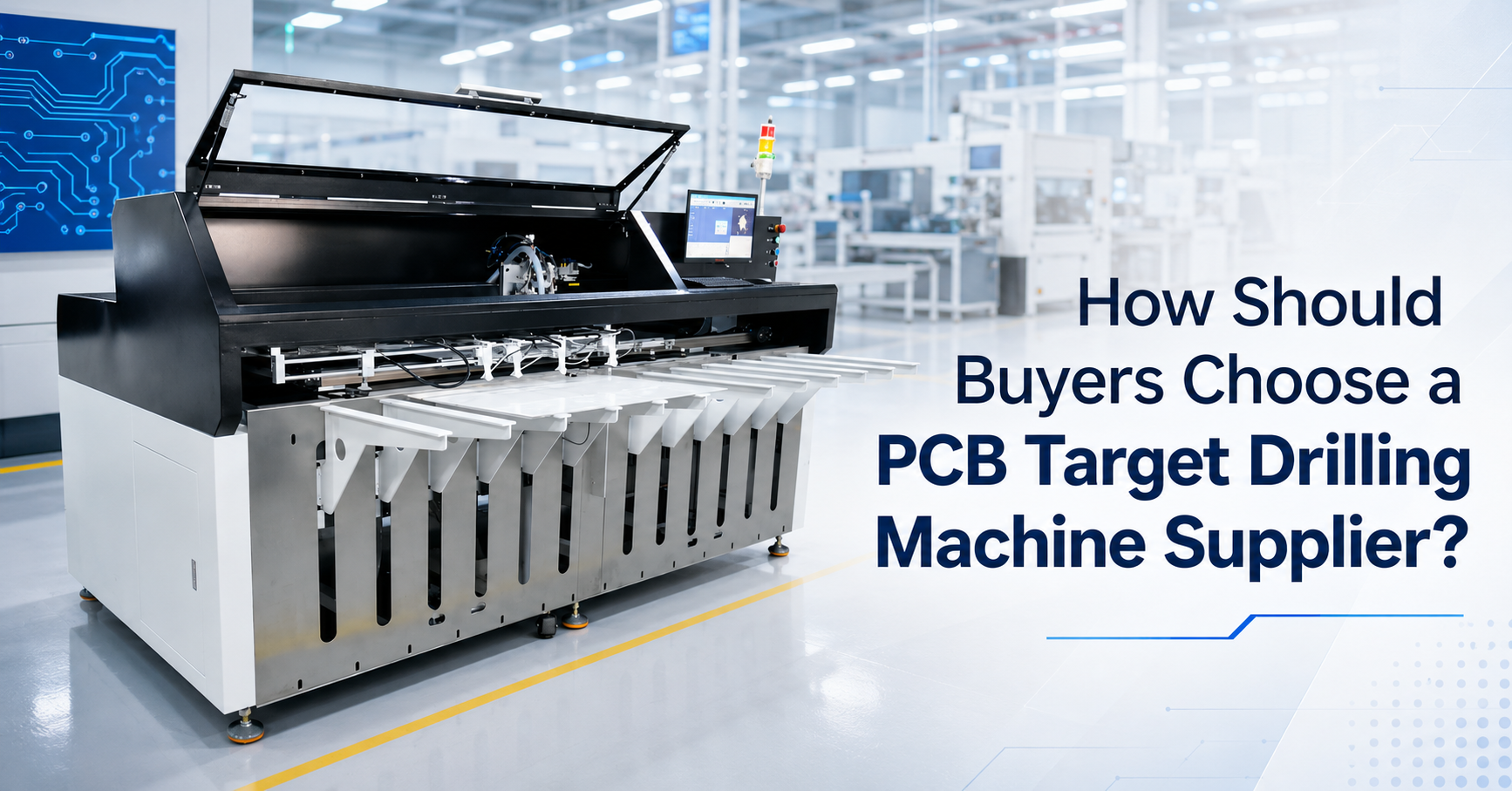
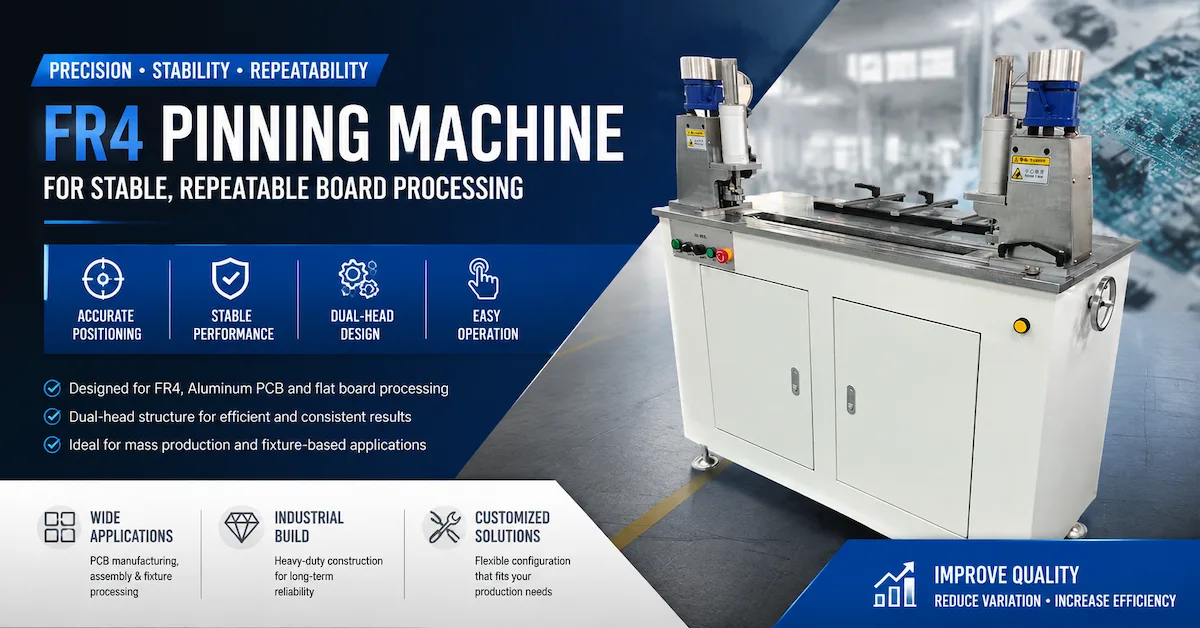
Based on the supplied product information, the machine appears to be an industrial CNC drilling unit with an enclosed structure, two vertical spindle heads, and a right-side operator console. The note also mentions a linear motor, although that should be treated as provided information rather than independently verified specification.
From a buyer’s point of view, the useful part is not the label; it is the setup. A dual-spindle arrangement can improve throughput on repetitive hole patterns, while the enclosed cabinet supports safer floor operation and better containment of chips or debris. The CNC interface matters too, because the real value in this class of equipment usually comes from repeatability and reduced operator variation, not from raw hardware alone.
PCB drilling machine supplier vs. PCB routing machine supplier
A quick comparison helps when evaluating vendors:
PCB drilling machine supplier
This type of supplier is usually better when the work is dominated by hole patterns, registration, and repetition. The main questions are spindle stability, positioning system quality, and how the machine handles high-volume cycle work. Buyers should also ask how easy it is to change programs and verify alignment between jobs.
PCB routing machine supplier
A routing-focused supplier is more important when edge finish, contour accuracy, and panel separation are the pain points. Here, the concerns shift toward cutting path control, vibration, dust or chip management, and how well the machine protects edges from tear-out or thermal damage. A routing machine that looks robust on paper can still be a poor choice if the motion system is not smooth enough for fine edge work.
Selection criteria that matter on the shop floor
The best supplier is not simply the one with the broadest catalog. Buyers should weigh a few practical points.
First, look at machine structure. An enclosed industrial frame, like the one described here, usually signals a focus on stability and safety rather than a lightweight bench-top approach. That matters if the machine will run for long shifts or be integrated into a larger production cell.
Second, examine motion architecture. Linear-motion systems and dual-spindle layouts can be useful for repetitive production, but only if they are matched to the real workload. A more complex machine is not automatically a better machine.
Third, ask how the control system supports daily use. Operators need clear job setup, straightforward maintenance access, and controls that do not force them into workaround habits. A machine can be mechanically strong and still be annoying to run if the interface is clumsy.
Fourth, think about the application boundary. The supplied information suggests use in metal, composite, plastic, or panel materials, but exact material compatibility should always be confirmed by the supplier. That is especially important for PCB-related work, where laminates and stack-ups can behave differently from generic industrial panels.
Common mistakes buyers make
One frequent mistake is buying to the headline feature instead of the process need. Dual spindles sound attractive, but if changeover time is long or the program setup is awkward, the time savings can disappear.
Another mistake is treating drilling and routing as interchangeable simply because both involve CNC motion. They do not stress the machine in the same way. A vendor that understands one process well may still need to prove capability on the other.
A third issue is underestimating support. For production equipment, supplier responsiveness often matters almost as much as the machine itself. If tooling advice, control support, or mechanical troubleshooting is slow, the line feels that delay immediately.
What a practical buyer should ask before ordering
Ask for the machine’s confirmed process scope: drilling only, routing only, or both.
Ask how the supplier handles program setup, operator training, and routine maintenance.
Ask what materials and panel thickness ranges are actually supported, rather than assuming broad compatibility.
Ask for examples of how the machine is positioned in production: standalone station, upstream hole-making cell, or part of a larger automated line.
Those questions sound simple, but they separate a real equipment partner from a catalog reseller.
Final buying perspective
If your operation needs a PCB drilling and routing machine supplier, the best comparison is not between two glossy machine pages. It is between two production outcomes: one where the machine matches the part flow, and one where the shop keeps paying for workarounds.
The supplied machine description points to a serious industrial CNC platform with dual spindle heads, enclosed guarding, and operator control built for repetitive work. That is the kind of setup buyers should study carefully when they need repeatability and throughput. But the final decision should still come down to whether the supplier can prove fit for your exact drilling or routing job, not just show a machine that looks capable.
If you are shortlisting vendors, start with process fit, then check support, then compare the machine architecture against your actual volume and part mix. That sequence usually saves more trouble than chasing the lowest quote.