



How Should Buyers Choose a PCB Chamfering Machine Supplier for FR-4 Board Edge Finishing?
For PCB factories, choosing a PCB chamfering machine supplier is not just a purchasing task. It is a process decision. The machine will affect board edge quality, operator workflow, dust control, fixture loading, maintenance work, and downstream handling. A supplier who only sends a price list may not understand the real edge-finishing problem. A better supplier should ask about board material, panel thickness, edge target, production volume, dust extraction, and how the machine will fit into the factory line.
Chikin CNC’s product page explains that a PCB chamfering machine is used to smooth or bevel board edges so panels feed better, fit more cleanly into downstream assemblies, and reduce edge-related damage during handling. It also notes that the common buyer problem is inconsistent edge quality: rough corners can interfere with fixtures, create burrs, or slow manual assembly.
For buyers searching for a PCB edge finishing machine supplier, FR-4 board corner grinder supplier, PCB board edge grinding machine supplier, or PCB finishing equipment manufacturer, the right supplier should provide more than equipment. It should help the buyer build a repeatable edge-finishing process.
What Should Buyers Understand Before Contacting Suppliers?
Before contacting any PCB chamfering machine manufacturer, buyers should define the application. A PCB edge finishing machine may be used before assembly, after routing, before inspection, before packaging, or inside a board preparation cell. The edge requirements may vary depending on whether the factory handles FR-4 boards, LED PCBs, panelized boards, or mixed electronics substrates.
Chikin’s product page says this type of equipment is designed to process board edges in a controlled, repeatable way. It is related to circuit board chamfering equipment, FR-4 board corner grinder, and PCB edge finishing machine configurations used in electronics production. The goal is to create a uniform edge profile that works better with conveyors, pallets, positioning tools, and operators’ hands.
That means the buyer should prepare clear information before requesting a quote:
What material will be processed?
Is the main material FR-4?
What is the board size range?
What is the panel thickness range?
What edge profile is required?
Is the issue burrs, sharp corners, fiber breakout, or fixture interference?
How many boards or panels are processed per shift?
Will operators load manually?
Is dust extraction already available?
Does the machine need to fit into an existing line?
What maintenance capability does the factory have?
Without this information, the supplier can only provide a generic quotation.
Which Product Selling Points Should the Supplier Explain?
A good supplier should explain how the machine supports repeatable edge finishing. Chikin’s page states that most PCB chamfering systems are built to handle panel edges with controlled feed and guided tooling. The system may use a cutter, grinding wheel, or combined finishing mechanism depending on the design. Common production features include a rigid frame, work support, dust collection interface, guarding around moving parts, and process controls for start/stop operation.
These are the selling points that matter in B2B purchasing:
Stable board support for consistent edge treatment.
Controlled feed or guided tooling for repeatable results.
Dust collection interface for FR-4 debris control.
Guarding around moving parts for safer operation.
Simple controls for easier operator training.
Serviceable structure for maintenance and cleaning.
Adjustable guides or fixtures for different board sizes.
Tooling or grinding components matched to edge requirements.
A supplier who cannot explain these points may not be ready to support real factory production.
Supplier Selection Checklist
| Supplier Evaluation Area | What Buyers Should Ask | Why It Matters |
|---|---|---|
| Application review | Can the supplier review board material, size, thickness, and edge target? | Prevents poor machine matching |
| FR-4 experience | Does the supplier understand fiber breakout, resin dust, and abrasive behavior? | FR-4 edge finishing needs controlled processing |
| Tooling method | Is the process cutter-based, grinding-wheel-based, or combined? | Determines edge profile, maintenance, and dust behavior |
| Board support | How are panels aligned and held during chamfering? | Stable support affects edge uniformity |
| Dust extraction | Does the machine include or support dust collection? | Important for cleanliness and equipment life |
| Adjustment | Are guides, stops, or tooling quick to adjust for different boards? | Helps high-mix factories reduce setup time |
| Safety design | What guarding and operator protection are included? | Supports safer daily operation |
| Maintenance access | Are access doors, control panels, and wear parts easy to service? | Reduces downtime |
| Customization | Can the machine be configured for board size range and workflow? | Improves factory fit |
| After-sales support | Are manuals, spare parts, training, and remote support available? | Protects long-term use |
How Does This Product Differ from Ordinary Chamfering or Grinding Options?
Ordinary market tools may be cheaper, but they may not be designed around PCB edge consistency. A general grinder can remove material, but it may not provide stable board support, dust control, guarded operation, or repeatable edge profile. A simple manual process may work for occasional jobs, but it is harder to standardize across shifts.
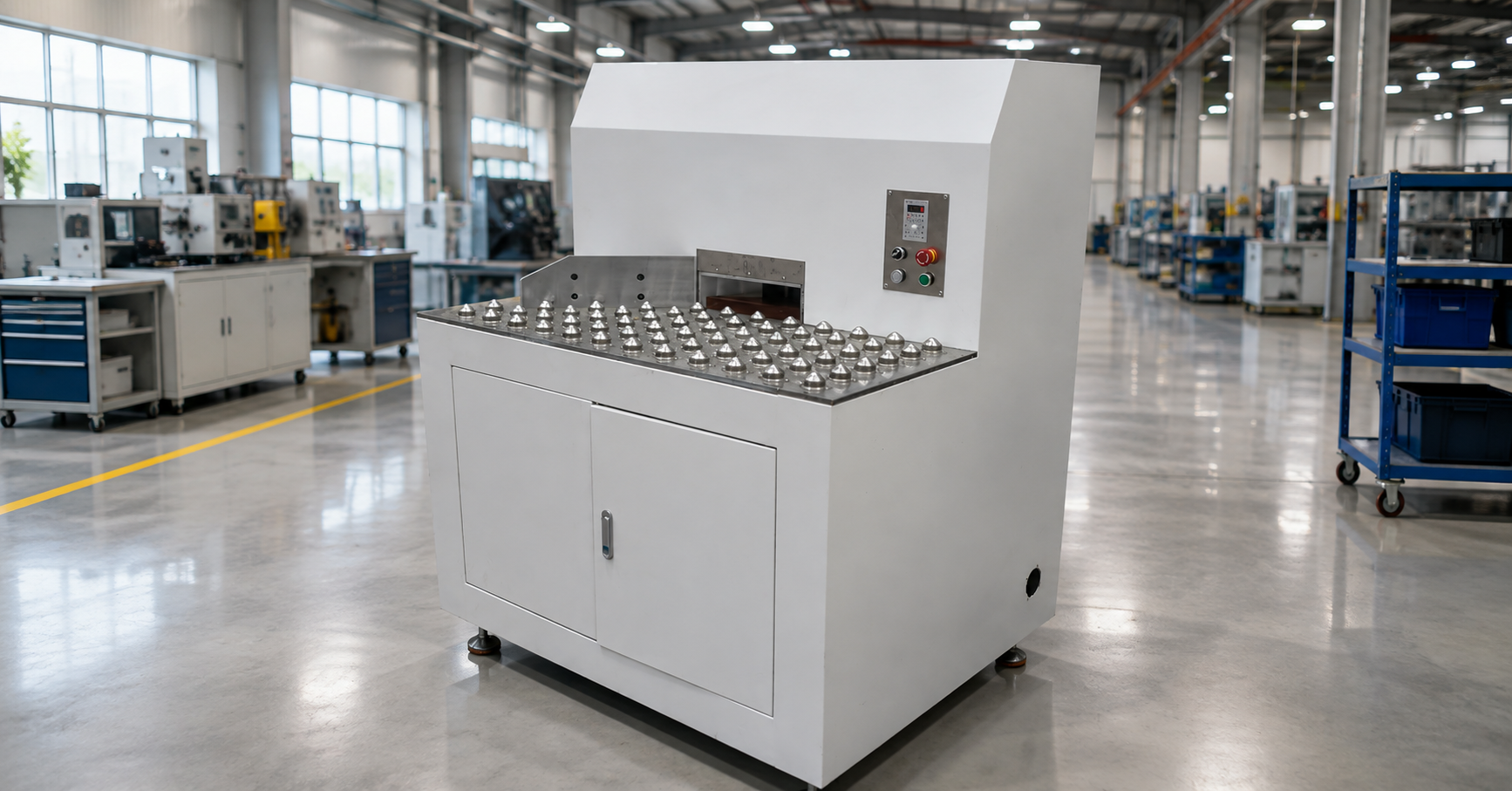
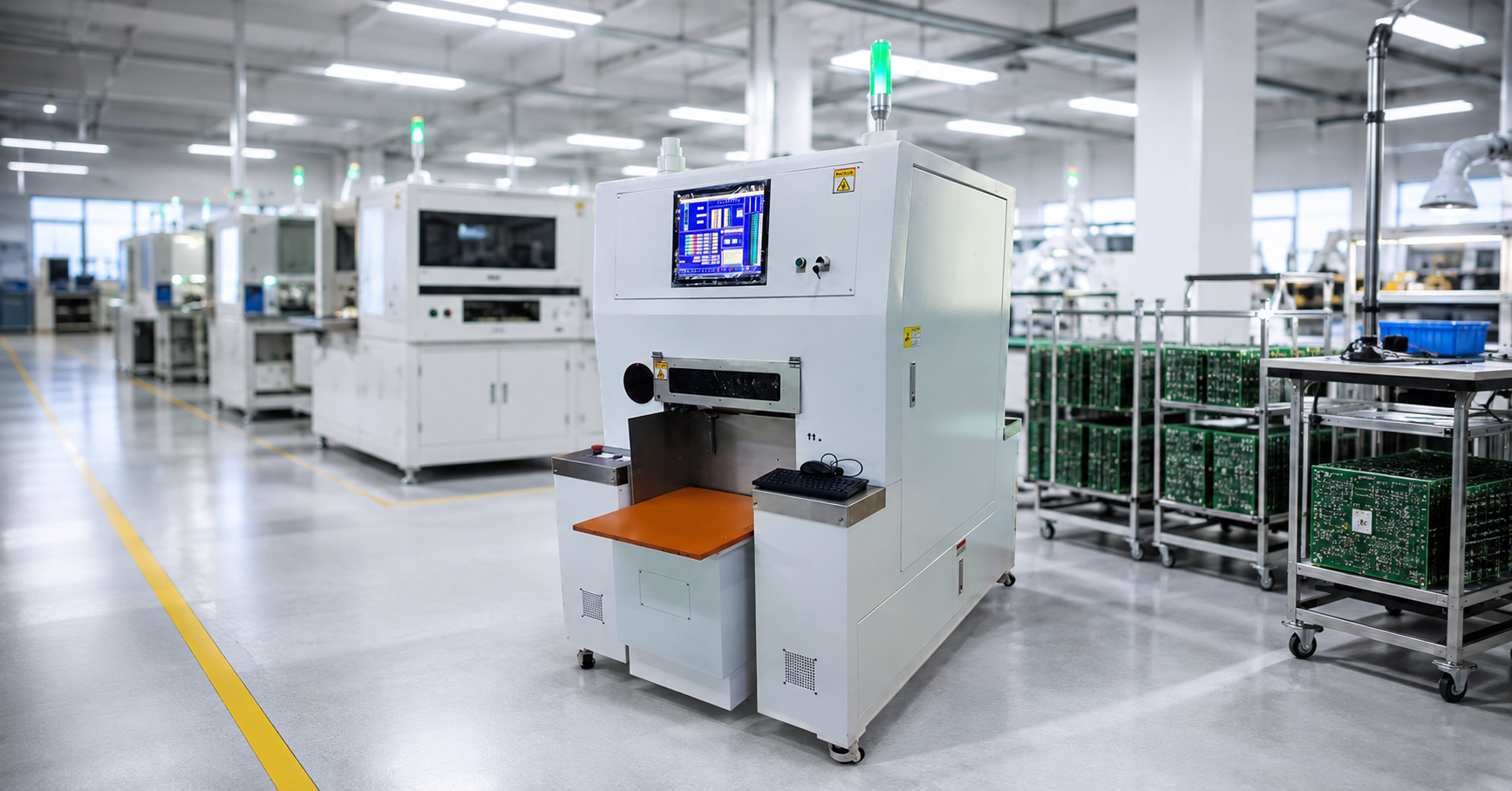
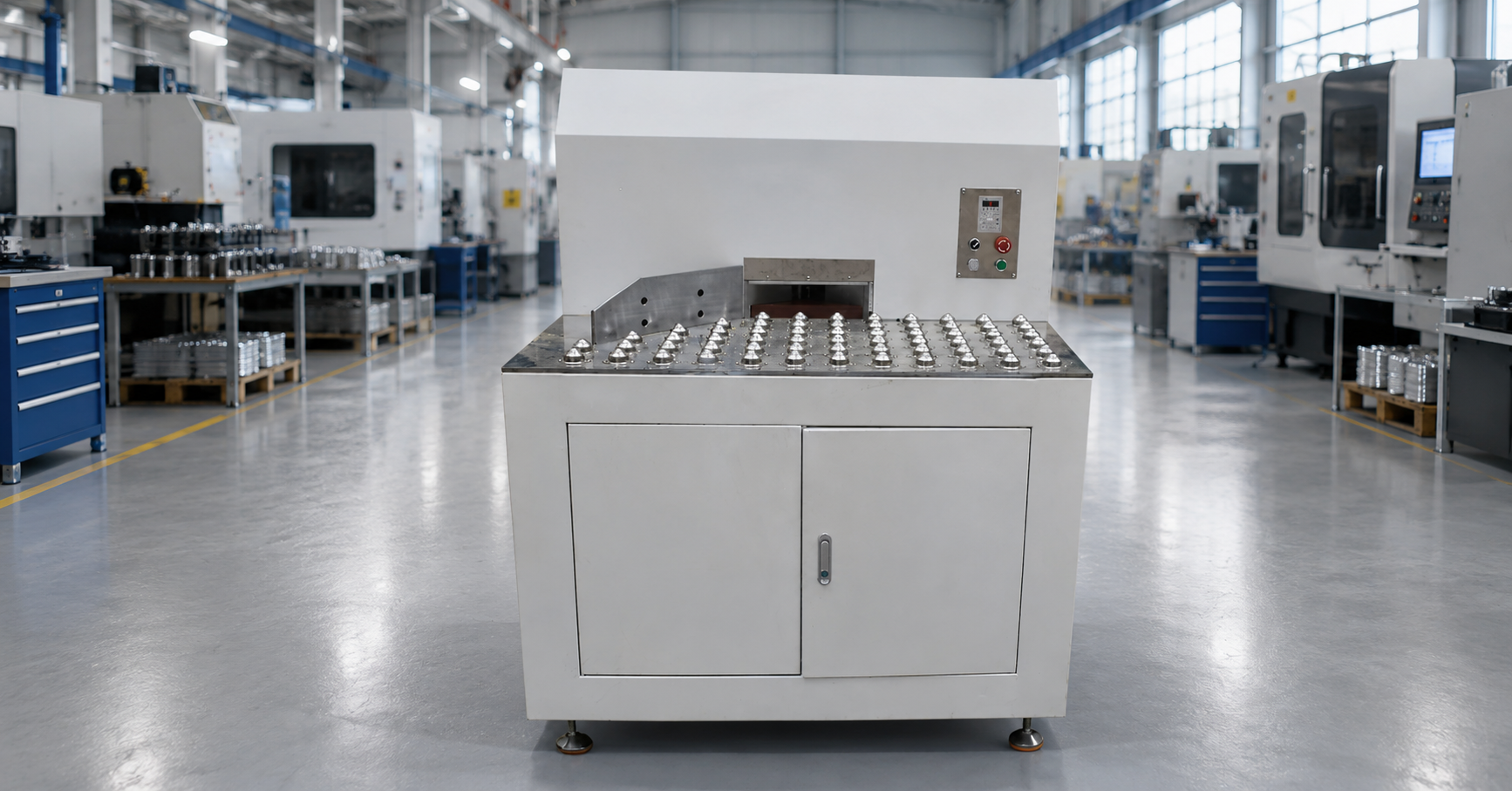
Chikin’s product page describes visible construction traits from the supplied reference image: a floor-standing industrial cabinet with an enclosed body, stainless-steel work surface, dual front access doors, adjustable leveling feet, and a right-side control panel with digital display and push buttons. It notes that these visible traits suggest a heavy-duty, serviceable industrial machine, while also advising that the exact internal process must be confirmed from the supplier.
This is the difference buyers should focus on. A production-oriented PCB corner grinding machine supplier should provide equipment that is not only capable of grinding but also easier to operate, clean, adjust, and maintain.
Ordinary equipment may answer one question: “Can it grind the corner?”
A professional PCB chamfering solution answers a larger question: “Can it create repeatable edge quality in a factory environment?”
Why Should Buyers Ask About Dust and Debris Control?
FR-4 board corner grinding produces dust and edge debris. Chikin’s page specifically states that dust extraction and edge debris control are important in FR-4 applications because fiberglass and resin dust can affect cleanliness and equipment life.
This should be one of the first supplier questions. A machine without suitable dust control may appear acceptable during short tests but become inconvenient during daily production. Dust can build up around guides, tools, motors, work surfaces, and nearby equipment. It can also increase cleaning time.
Buyers should ask:
What dust collection interface is provided?
Is extraction built in or external?
What airflow or extraction setup is recommended?
How is dust removed from the machine?
Can the dust path be accessed for cleaning?
How often should operators clean the work area?
What consumables are required?
Can the supplier help match extraction to the factory layout?
A strong PCB edge processing machine supplier should treat dust control as part of the machine configuration, not as an afterthought.
How Should Factories Evaluate Edge Quality?
Edge quality should be defined before machine selection. Without a clear quality target, it is hard to judge whether the machine is suitable.
Chikin’s page says quality control for PCB chamfering usually focuses on edge uniformity, dimensional repeatability, and surface damage prevention. Inspectors may check whether the bevel is even, whether corner breakout is acceptable, and whether the process affects nearby copper or laminate layers. Good control depends on stable fixtures, proper tooling condition, and clear operating settings.
Factories should decide:
What bevel shape is acceptable?
How much edge material can be removed?
What corner breakout is acceptable?
Can copper or laminate layers near the edge be affected?
How should operators inspect the finished edge?
Is visual inspection enough, or is magnification needed?
How often should edge quality be checked?
What should trigger tool replacement?
A supplier should be willing to discuss these points. If the supplier only says “the edge will be smooth” without defining how to verify it, the buyer should ask for more detail.
What Role Does Maintenance Play in Supplier Selection?
Maintenance directly affects edge quality. Chikin’s page notes that tool wear, alignment drift, and debris accumulation can all change the finished edge, so buyers should ask how the machine supports inspection, cleaning, and replacement of wear parts.
This is important for factory managers. A new machine may produce acceptable edges during the first trial. After weeks of use, the result may change if tools wear, debris accumulates, or guides shift. A production machine must be easy to inspect and service.
Before ordering, ask the supplier:
Which parts wear fastest?
How often should they be inspected?
How are tools or grinding parts replaced?
Are wear parts stocked by the supplier?
How is alignment checked?
How is the work surface cleaned?
Can operators perform basic maintenance?
Is there a maintenance checklist?
Are spare parts and manuals included?
A good supplier should help the factory maintain edge consistency over time, not only during the first installation.
How Should Buyers Compare Suppliers?
| Supplier Type | Possible Advantage | Possible Risk | Best-Fit Buyer |
|---|---|---|---|
| Direct PCB chamfering machine manufacturer | Better technical communication, configuration matching, and spare parts support | Buyer should still verify production experience | Factories needing long-term edge finishing stability |
| General equipment trader | May quote quickly and source multiple machines | May lack PCB-specific process knowledge | Buyers with simple, low-risk requirements |
| Local distributor | Easier communication and nearby support | Configuration options may be limited | Buyers who prioritize local service |
| Low-cost unknown supplier | Lower initial price | Higher risk in dust control, tooling quality, and maintenance support | Non-critical, occasional use only |
| PCB-focused equipment supplier | Better understanding of FR-4, panel handling, edge quality, and factory workflow | Requires buyer to provide board details | PCB manufacturers and EMS factories |
For most production buyers, the safest choice is a supplier that understands PCB materials and edge finishing requirements. The machine price matters, but long-term edge consistency, dust control, spare parts, and support may matter more.
What Should Buyers Send Before Requesting a Quote?
Chikin’s product page recommends sharing PCB dimensions, material type, edge finish target, and workflow requirements to evaluate the best machine configuration for the production line.
A strong inquiry should include:
Board material
Board size range
Panel thickness range
Edge profile target
Current edge problem
Production volume
Dust extraction requirement
Manual or semi-automatic workflow preference
Factory space
Need for adjustable guides
Maintenance expectations
Sample photos or drawings
Downstream process affected by edge quality
This allows the supplier to recommend a more precise solution.
What Mistakes Should Buyers Avoid?
The first mistake is choosing only by price. A low-cost grinder may create more long-term cost if edge quality is unstable or dust control is weak.
The second mistake is not defining the edge target. Without a clear target, there is no reliable way to judge performance.
The third mistake is ignoring FR-4 dust. Fiberglass and resin dust must be managed carefully in a PCB workshop.
The fourth mistake is not asking about maintenance. Tool wear and debris accumulation change edge results over time.
The fifth mistake is buying from a supplier that does not ask about board size, thickness, or production volume. That usually means the recommendation is not application-specific.
The sixth mistake is comparing only machine appearance. A stainless work surface, cabinet body, or control panel is useful, but buyers must still confirm the actual internal processing method and supported board range.
FAQ
What should buyers check when choosing a PCB chamfering machine supplier?
Buyers should check application review ability, FR-4 processing experience, tooling method, board support, dust extraction, adjustment flexibility, safety design, maintenance access, customization options, and after-sales service.
Why is FR-4 dust control important?
FR-4 grinding can produce fiberglass and resin dust. The product page notes that dust extraction and edge debris control are important because dust can affect cleanliness and equipment life.
How can buyers judge edge quality?
Buyers should inspect edge uniformity, dimensional repeatability, surface damage prevention, bevel evenness, corner breakout, and any effect on nearby copper or laminate layers.
What information should buyers send for configuration selection?
Buyers should share PCB dimensions, material type, edge finish target, and workflow requirements to evaluate the best machine configuration.
Is this machine only for cosmetic edge improvement?
No. The product page states that the goal is not cosmetic improvement alone. It is to produce a uniform edge profile that works better with conveyors, pallets, positioning tools, and operators’ hands.
Conclusion
Choosing a PCB chamfering machine supplier should be treated as a technical purchasing decision. The buyer must confirm board material, edge quality target, FR-4 processing behavior, dust control, fixture support, maintenance access, and supplier service before placing an order.
Chikin CNC’s PCB chamfering product page emphasizes clean, repeatable board edge finishing, stable board support, controlled feed and guided tooling, dust collection interface, guarding, process controls, service access, and configuration selection based on board size, edge profile, thickness range, and production volume.
For factories comparing PCB edge finishing machine suppliers, FR-4 board corner grinder suppliers, or circuit board chamfering equipment manufacturers, the best supplier is not simply the one with the lowest quote. It is the one that can help match machine design to the factory’s real edge-finishing problem and keep that process stable after installation.