



How Should Buyers Compare a PCB Target Drilling Machine Supplier Before Choosing Equipment?

When a team starts searching for a PCB target drilling machine supplier, the real question is usually not “who can sell a drilling machine?” It is whether the supplier can support a drilling process that remains accurate when board stacks, fiducial positions, hole patterns, and production requirements keep changing.
In PCB manufacturing, target drilling is not a casual operation. A small drilling offset can affect layer registration, downstream drilling, X-ray inspection reference points, fixture alignment, and final production confidence. This is why buyers often compare different types of suppliers: some focus specifically on PCB target drilling and registration-hole drilling, while others offer broader CNC machining platforms. Both may have value, but they do not solve the same problem in exactly the same way.
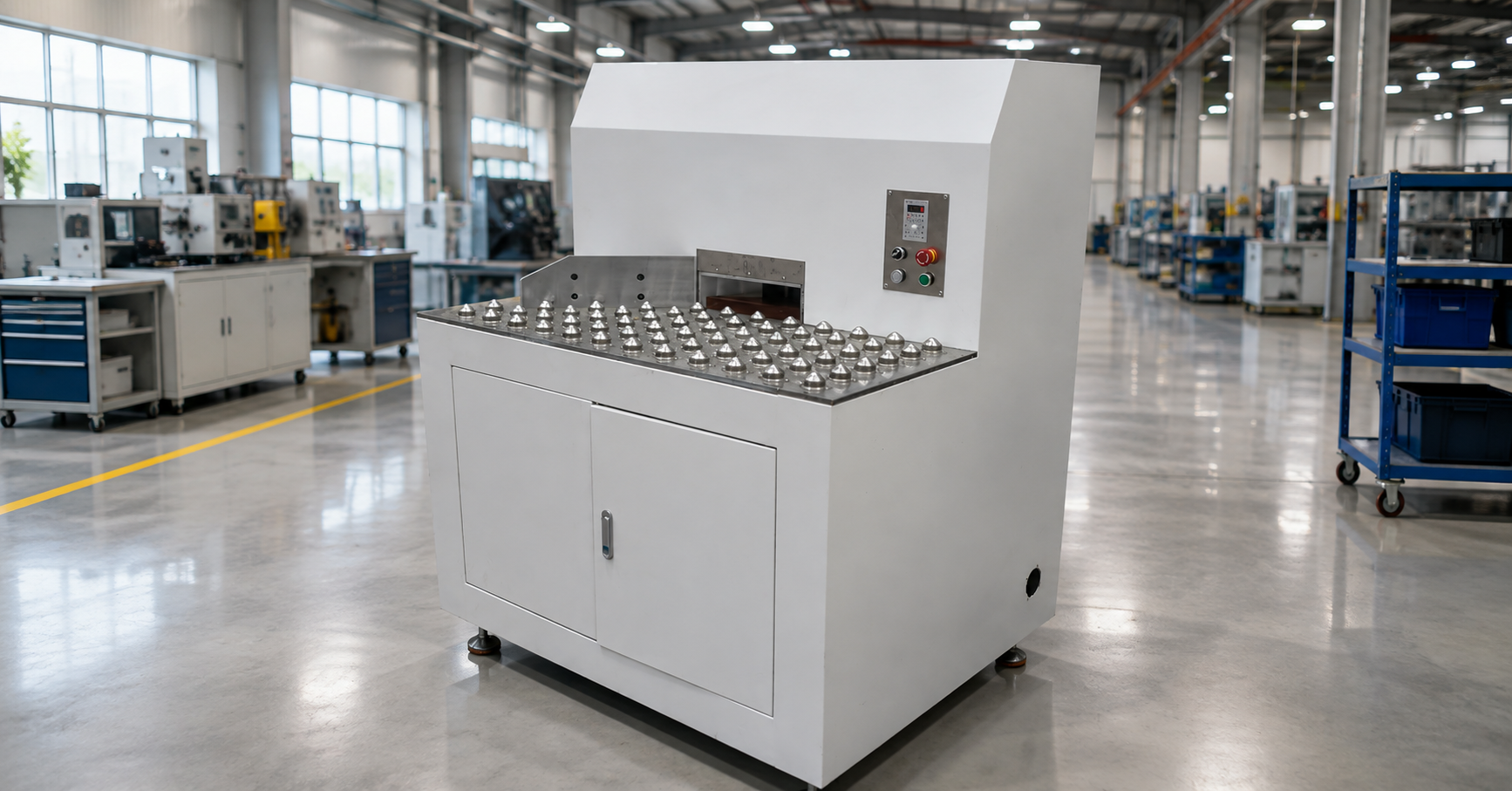
Chikin CNC’s PCB Target Drilling Machine is positioned as a high-precision CCD-guided drilling solution for target holes, fiducials, and registration marks, especially for multilayer PCB layer-to-layer alignment and later processes such as X-ray inspection or drilling optimization. The product page states that the machine uses advanced CCD vision to automatically locate and drill targets, helping reduce manual errors and improve consistency.
That product positioning changes the buyer conversation. Instead of asking only about spindle speed or price, engineering and sourcing teams should ask: can this supplier support accurate CCD alignment, repeatable target-hole drilling, stable fixture-based processing, tool protection, and reliable after-sales service?
What Does “Target Drilling” Mean in a PCB Factory?
The phrase target drilling can mean slightly different things depending on the factory. In some production lines, it refers to drilling reference holes for panel alignment. In others, it means drilling targets, fiducials, or registration marks used to support multilayer alignment and downstream inspection. Some buyers may use the phrase when they are trying to improve registration before lamination, X-ray processes, or later CNC drilling steps.
This definition matters because the correct machine depends on the process. A general drilling system may be able to make holes, but a PCB target drilling machine must do more than that. It must locate the correct target area, align the board accurately, control movement precisely, and drill repeatably without depending too much on manual judgment.
Chikin’s product page clearly places its machine in this category. It describes the equipment as specialized for precision drilling of target holes, fiducials, and registration marks. It also connects the machine to multilayer PCB alignment and high-reliability production, including automotive, medical, and telecom PCB applications.
For buyers, this means the supplier discussion should begin with the actual target definition. Are you drilling reference holes for alignment? Are you creating fiducial-based positioning points? Are you preparing panels for X-ray inspection? Are you trying to reduce layer offset defects? These questions should come before price comparison.
Why Dedicated PCB Target Drilling Is Different from General CNC Drilling
A general CNC drilling platform may offer flexibility, especially for rigid mechanical parts, tooling plates, fixtures, prototypes, or non-PCB components. But a PCB-focused target drilling machine is designed around a different production problem: precise board registration.
Chikin’s machine uses a high-resolution CCD vision system for automatic fiducial or target recognition and alignment. This is a critical difference from a machine that depends mainly on manual positioning or basic coordinate input. In target drilling, the machine needs to find the board’s actual reference points, not simply move according to an assumed position.
That distinction matters in multilayer PCB production. Panels may have small variations. Fiducial positions may need to be recognized visually. Operators may need to process different board lots without long manual setup. If the system cannot align accurately, the drilling result may look acceptable on one panel but drift on another.
A dedicated CCD target drilling machine is therefore not only a drilling device. It is a vision-guided positioning and registration system. Buyers should evaluate it as part of the PCB process flow, not as an ordinary machine tool.
What Product Features Should Buyers Notice in Chikin’s PCB Target Drilling Machine?
Chikin’s product page highlights several technical features that are directly relevant to B2B buyers. These include CCD vision alignment, granite machine base, high-accuracy linear guide and ballscrew components, automatic tool change, tool detection, broken tool detection, pressure foot switch, small-diameter drilling capability, control system options, and integration with other Chikin PCB process equipment.
| Product Feature | Product Page Information | Why It Matters for PCB Factories |
|---|---|---|
| CCD vision alignment | High-resolution CCD vision system for automatic fiducial or target recognition | Reduces manual alignment error and supports repeatable target drilling |
| Target-hole application | Used for target holes, fiducials, and registration marks | Supports multilayer PCB alignment and downstream process control |
| Granite base | Built on a high-density granite base | Helps vibration damping and thermal stability during precision drilling |
| Linear rails and ballscrews | Equipped with German Rexroth or Japanese linear rails and ballscrews | Supports smooth motion and high-accuracy positioning |
| Accuracy claim | Product page lists tight ±0.005 mm repeatability / positioning accuracy | Important for fiducial placement and registration-hole consistency |
| Tool management | Automatic tool changer, tool length detection, tool diameter detection, broken tool detection, pressure foot switch | Reduces downtime, protects micro-tools, and supports reliable operation |
| Small-hole capability | High-speed spindles optimized for small-diameter target holes, with 0.15–3.175 mm listed as typical | Suitable for precision target and registration-hole requirements |
| Control system | CHIKIN CNC or SIEB & MEYER control, English/Chinese interface | Helps match operator language and production workflow |
| Table size | 560×680 mm table size listed, with custom option | Buyers can confirm whether the work area fits their panel format |
| Optional linear scale | Optional linear scale for ±0.001 mm resolution | Useful for buyers with stricter positioning-control needs |
| Power options | 220V/380V 3PH listed | Buyers should confirm factory electrical compatibility |
| Process integration | Can integrate with Chikin drilling/routing, laser, AOI, and X-ray systems | Useful for buyers building a more complete PCB process flow |
These features are not just catalog points. Each one connects to a real production concern: alignment, stability, tool protection, operator workflow, maintenance, and long-term repeatability.
Why CCD Vision Should Be a Main Selection Point
For target drilling, CCD vision is one of the most important selection factors. A machine that only follows programmed coordinates may not compensate well for actual panel position variation. In contrast, a CCD-guided system can locate fiducials or target marks and adjust the drilling process accordingly.
Chikin’s machine uses CCD vision to automatically locate and drill targets. The product page also states that CCD vision auto-aligns fiducials for ±0.005 mm repeatability, supporting layer registration, X-ray targets, and precise alignment in HDI, rigid-flex, and high-reliability PCB production.
For buyers, this raises several practical questions:
Does the CCD system recognize the target type used in our process?
Can the system handle our panel surface condition and fiducial contrast?
How does the machine correct panel position before drilling?
Can operators verify alignment visually before the cycle starts?
How are failed recognition cases handled?
Can the supplier test our actual panels before purchase?
A good PCB target drilling machine supplier should be able to answer these questions clearly. CCD vision should not be treated as a simple accessory. It is one of the core reasons to choose a target drilling machine rather than a general drilling platform.
Why Machine Structure Matters for Target Accuracy
Target drilling requires a stable mechanical platform. If the structure vibrates, shifts with temperature, or lacks motion stability, the CCD system alone cannot guarantee long-term accuracy.
Chikin’s product page highlights a high-density granite base for vibration damping and thermal stability. It also lists premium German Rexroth or Japanese linear rails and ballscrews for smooth, backlash-free motion.
For PCB factories, this structure is important because target holes are often small and accuracy-sensitive. The machine must hold position across repeated panels, not only during a short demonstration. Granite construction, stable motion components, and proper drive systems help create a more reliable foundation for high-precision target drilling.
Buyers should ask suppliers:
What base material is used?
How is vibration controlled?
How is thermal stability managed?
Which linear guides and ballscrews are installed?
How is positioning accuracy tested before shipment?
Can the supplier provide sample drilling or accuracy evidence?
A strong supplier should be willing to discuss structure, not only vision and software.
Tool Management Is Not a Small Detail
Target drilling may involve small-diameter tools. Tool breakage, tool length error, or wrong tool diameter can create quality issues quickly. This is why tool management should be part of the buying decision.
Chikin’s machine includes automatic tool change, tool length detection, tool diameter detection, broken tool detection, and a pressure foot switch. The product page states that these functions help reduce downtime, protect micro-tools, and support reliable unattended operation for high-throughput target drilling.
For production teams, this can reduce several common problems:
Operator stops caused by manual tool change.
Wrong tool use during mixed production.
Undetected broken tools.
Inconsistent drilling depth caused by tool length variation.
Lost time during repeated setup.
Higher scrap risk when tool condition is not checked.
Buyers should not compare suppliers only by the number of spindles or maximum speed. For target drilling, intelligent tool protection may be just as important as drilling speed.
How Should Buyers Compare a Dedicated PCB Supplier with a Broader Machine Builder?
Some buyers compare a dedicated PCB target drilling machine supplier with a broader machine builder. This is reasonable, especially if the factory also processes tooling plates, fixtures, prototypes, or mechanical components. But the comparison must be fair.
A broader CNC platform may be useful for mixed mechanical work. It may offer flexibility in rigid materials, part geometry, or general machining. But it may not have CCD target recognition, PCB-specific fiducial alignment, automatic target drilling logic, or integration with PCB inspection systems.
A dedicated PCB target drilling machine, like the Chikin model, is built around PCB registration, target holes, fiducials, and alignment-related workflow. It is especially relevant for multilayer, HDI, rigid-flex, automotive, medical, and telecom PCB production where alignment and repeatability matter.
The practical takeaway is simple: if the main need is PCB target drilling, choose based on PCB process fit. If the factory also needs general mechanical machining, that may require a separate equipment decision. Do not force one machine to solve every workload unless the supplier can clearly prove process compatibility.
What Should Buyers Ask Before Comparing Price?
Price matters, but it should not be the first technical filter. Before comparing quotations, buyers should ask the supplier to explain how the machine handles alignment, motion accuracy, tool condition, panel size, control interface, and service support.
A practical inquiry should include:
What target or fiducial type must be recognized?
What board materials and stack structures are used?
What is the panel size?
What hole diameter range is required?
What alignment accuracy is needed?
Will the process support X-ray target drilling?
How many panels are processed per shift?
What data format or workflow does the machine support?
Is English interface required?
Does the factory use other drilling, routing, laser, AOI, or X-ray equipment?
Is sample drilling required before purchase?
Chikin’s product page lists a 560×680 mm table size with customization option, power options of 220V/380V 3PH, and integration with Chikin drilling/routing, laser, AOI, and X-ray systems. These points make it especially important for buyers to share panel size, factory power conditions, and current process flow during supplier communication.
Supplier Evaluation Checklist
| Evaluation Point | What Buyers Should Ask | Why It Matters |
| PCB process experience | Does the supplier understand target holes, fiducials, registration marks, and multilayer alignment? | Prevents buying a general drilling machine that does not fit PCB target drilling |
| CCD alignment | Can the CCD system locate our actual target marks? | Determines whether automatic alignment works in real production |
| Accuracy evidence | How is ±0.005 mm repeatability or positioning accuracy verified? | Helps buyers confirm performance objectively |
| Machine base | Is the machine built on a stable base such as granite? | Affects vibration damping and thermal stability |
| Motion components | What linear rails, ballscrews, and drives are used? | Impacts smooth motion and repeatability |
| Tool management | Are ATC, tool length detection, tool diameter detection, and broken tool detection included? | Reduces downtime and protects micro-tools |
| Panel compatibility | Does the table size or custom option fit our panels? | Prevents mismatch with production boards |
| Control system | Is the interface suitable for operators? | Reduces training pressure and setup errors |
| Integration | Can the machine connect with drilling/routing, laser, AOI, or X-ray workflows? | Supports a more complete PCB process |
| Support and warranty | What warranty, sample drilling, demo, training, and global support are available? | Protects long-term machine value |
What Are the Advantages of Chikin’s PCB Target Drilling Machine?
Chikin’s machine has several advantages that buyers should review objectively.
The first advantage is CCD-based automatic target recognition. This helps reduce manual alignment errors and supports repeatable target drilling.
The second advantage is precision-oriented construction. The granite base, high-accuracy rails, and ballscrews are intended to improve stability, vibration damping, and motion accuracy.
The third advantage is tool protection and automation. Automatic tool change, tool length detection, tool diameter detection, broken tool detection, and pressure foot switch help reduce downtime and protect small tools.
The fourth advantage is PCB-specific application fit. The machine is designed for target holes, fiducials, registration marks, multilayer PCB alignment, X-ray targets, HDI, rigid-flex, and high-reliability PCB production.
The fifth advantage is configuration flexibility. The table size is listed as 560×680 mm or custom, and optional linear scale is listed for ±0.001 mm resolution. Power options are listed as 220V/380V 3PH.
The sixth advantage is process integration. The product page mentions integration with Chikin drilling/routing, laser, AOI, and X-ray systems, which can be useful for buyers building a more connected PCB manufacturing workflow.
The seventh advantage is support positioning. Chikin states that the machine is backed by a 3-year precision warranty and 24-hour global support. Buyers should still confirm the exact service terms during quotation, but this is an important supplier-support point to discuss.
Common Buyer Mistakes
The first mistake is treating every drilling machine as the same. A PCB target drilling machine is different from a general-purpose CNC drill because CCD alignment, fiducial recognition, and registration accuracy matter.
The second mistake is focusing only on price. A cheaper machine may cost more later if it creates registration errors, tool breakage, or frequent manual adjustment.
The third mistake is ignoring tool detection. For small-diameter target holes, broken tool detection and tool dimension checking can prevent hidden process failures.
The fourth mistake is not confirming target definition. The supplier must know whether the application involves fiducials, registration marks, guide holes, X-ray targets, or another target-hole workflow.
The fifth mistake is overlooking integration. If the factory already uses drilling, routing, laser, AOI, or X-ray systems, target drilling should fit the broader process flow.
The sixth mistake is skipping sample drilling. Real panels can reveal whether CCD recognition, drilling accuracy, and operator workflow match production expectations.
How Can Engineering and Sourcing Teams Narrow the Field?
Start by separating PCB target drilling from general mechanical drilling. If the core need is fiducial-based target-hole drilling for multilayer PCB registration, the supplier should prove PCB-specific capability. If the factory also needs fixture machining or general rigid-part machining, evaluate that separately.
Then ask for a process review. Send sample panels, target drawings, hole diameter requirements, panel size, and expected production volume. Ask the supplier to explain how the CCD system recognizes targets, how the machine verifies tool condition, how accuracy is measured, and how the machine fits the factory’s downstream process.
A good supplier should be able to explain where a dedicated PCB target drilling machine is necessary and where another platform may be more suitable. That conversation is often more valuable than a small discount.
FAQ
What is a PCB target drilling machine used for?
A PCB target drilling machine is used for precision drilling of target holes, fiducials, and registration marks. Chikin’s product page connects this application with multilayer PCB layer-to-layer alignment and later processes such as X-ray inspection or drilling optimization.
Why is CCD vision important?
CCD vision helps automatically locate fiducials or target marks before drilling. This reduces manual alignment error and supports repeatable target-hole placement. Chikin’s machine uses a high-resolution CCD vision system for automatic fiducial or target recognition and alignment.
What accuracy does Chikin list for this machine?
The product page states tight ±0.005 mm repeatability / positioning accuracy, and it also lists an optional linear scale for ±0.001 mm resolution. Buyers should confirm testing conditions and configuration details with the supplier.
What table size is listed?
The product page lists a 560×680 mm table size, with custom options available. Buyers should confirm whether this fits their panel format before ordering.
What should buyers check before choosing a supplier?
Buyers should check CCD alignment capability, target recognition, panel compatibility, drilling diameter range, granite base stability, motion components, tool detection systems, control interface, sample drilling support, warranty, and integration with downstream PCB equipment.
Is this machine only for multilayer PCB production?
The machine is especially relevant for multilayer, HDI, rigid-flex, and high-reliability PCB production where registration accuracy matters. The product page also mentions automotive, medical, and telecom PCB applications.
Conclusion
Choosing a PCB target drilling machine supplier should be treated as a process decision, not just an equipment purchase. A suitable machine must support accurate fiducial recognition, repeatable target-hole drilling, stable mechanical movement, intelligent tool protection, and reliable factory workflow.
Chikin CNC’s PCB Target Drilling Machine is positioned for precision drilling of target holes, fiducials, and registration marks. Its key advantages include CCD vision automatic alignment, granite construction, high-accuracy linear guides and ballscrews, automatic tool change, tool length detection, tool diameter detection, broken tool detection, small-diameter drilling capability, control system options, custom table possibilities, and integration with PCB drilling/routing, laser, AOI, and X-ray systems.
For engineering and sourcing teams, the practical buying path is clear: define the target drilling purpose, send real board data, request sample drilling, confirm accuracy evidence, review tool protection, and evaluate supplier support before comparing price. A machine that matches the real PCB process will usually create more value than one that only looks competitive in a quotation.