



Why Precision Parts Manufacturers Should Look Beyond Ordinary CNC Milling
For many factories, CNC milling is the first process that comes to mind when accurate and repeatable machining is needed. It is familiar, flexible, and widely used for parts that require holes, pockets, faces, slots, profiles, and general material removal. A well-selected CNC milling machine can help a workshop control dimensional consistency, reduce manual work, and improve production repeatability.
Yet some precision parts create problems that ordinary milling cannot solve easily. A component may have a narrow internal slot. A mold insert may require a sharp corner that a rotating cutter cannot reach. A die component may need a burr-free edge after cutting. A hard metal part may be too difficult to finish efficiently with direct tool contact. In these cases, the buyer should not only ask, “Which milling machine should we buy?” A more useful question is: which combination of processes will produce the part reliably?
Chikin CNC’s product page describes this equipment as a CNC wire EDM system used alongside milling operations for conductive materials and fine-detail cutting where burr-free results and tight geometry matter. The page also makes an important distinction: although the product URL contains wording related to acrylic CNC cutting, the machine described in the page is intended for conductive metal cutting, not plastics, wood, composites, or soft nonconductive acrylic-type materials.
That distinction is important for B2B buyers. If your factory is searching for a CNC machine for acrylic, this is not the right category. If your factory makes precision metal parts, mold inserts, punches, dies, complex conductive components, or hard-to-machine contours, a CNC wire EDM machine may be worth serious evaluation.
What Problem Does This Type of Machine Solve?
In a precision parts workshop, the difficult part is not always rough material removal. Milling can remove stock efficiently and create many useful geometries. The harder challenge often appears near the final shape: inside corners, narrow openings, tight profiles, fine slots, and edges that cannot tolerate burrs or heavy secondary finishing.
The Chikin CNC product page explains that CNC milling is commonly selected when buyers need accurate and repeatable machining for parts that are difficult to produce by hand or with conventional equipment. It also states that the machine described on the page is a wire EDM system commonly used with milling to handle conductive materials and fine-detail cutting.
This is where wire EDM becomes practical. Wire EDM uses a thin wire electrode and dielectric fluid to remove material through electrical discharge instead of direct cutting force. The page states that this makes wire EDM suitable for hard metals and complex profiles where cutting forces need to be minimized.
For a factory, that means the process can help when the shape is too delicate, too narrow, too sharp, or too hard for conventional machining to finish easily. It is not a replacement for every milling process. It is a complementary process for the sections of the part where geometry and edge quality matter most.
Why Is Wire EDM Different from a CNC Acrylic Cutting Machine?
The product URL includes words related to acrylic CNC cutting, but the page content itself clearly describes a different machine type. Chikin CNC states that this equipment is a CNC wire EDM system and that it is intended for conductive metal cutting rather than plastics or nonconductive materials.
That point should not be ignored. Wire EDM requires electrical discharge between the wire electrode and the workpiece, so the workpiece must be conductive. Acrylic is not the typical target material for this process. A buyer looking for acrylic sign cutting, acrylic plate engraving, acrylic contour routing, or plastic carving should compare CNC routers, laser cutters, or acrylic milling systems instead.
For metal parts manufacturers, however, this product direction is more relevant. Tool-and-die shops, mold makers, precision component suppliers, automotive suppliers, aerospace subcontractors, and repair workshops often need a process that can cut hard conductive materials with fine geometry and low mechanical force.
So the buyer should read the machine category correctly:
This is not mainly an acrylic CNC cutting machine.
It is not a general woodworking or plastic engraving router.
It is not only a conventional CNC milling machine.
It is best understood as a CNC wire EDM machine for conductive metal precision parts.
That honest distinction helps buyers avoid selecting the wrong machine for the wrong material.
What Does the Product Page Show About the Machine Layout?
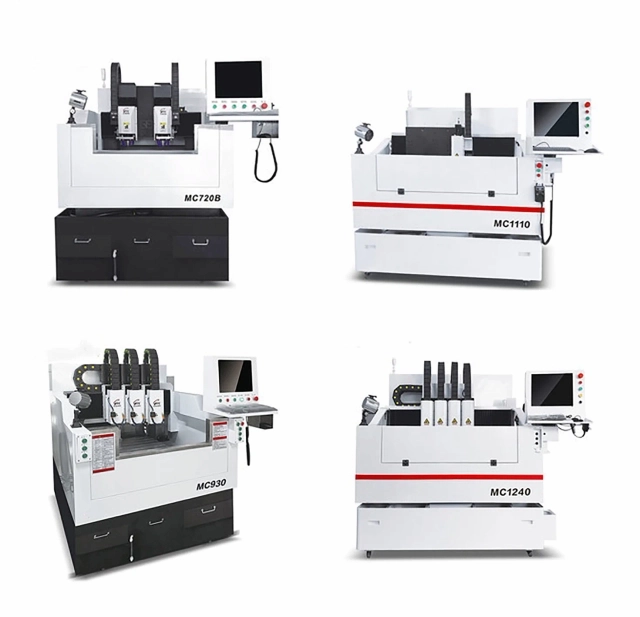
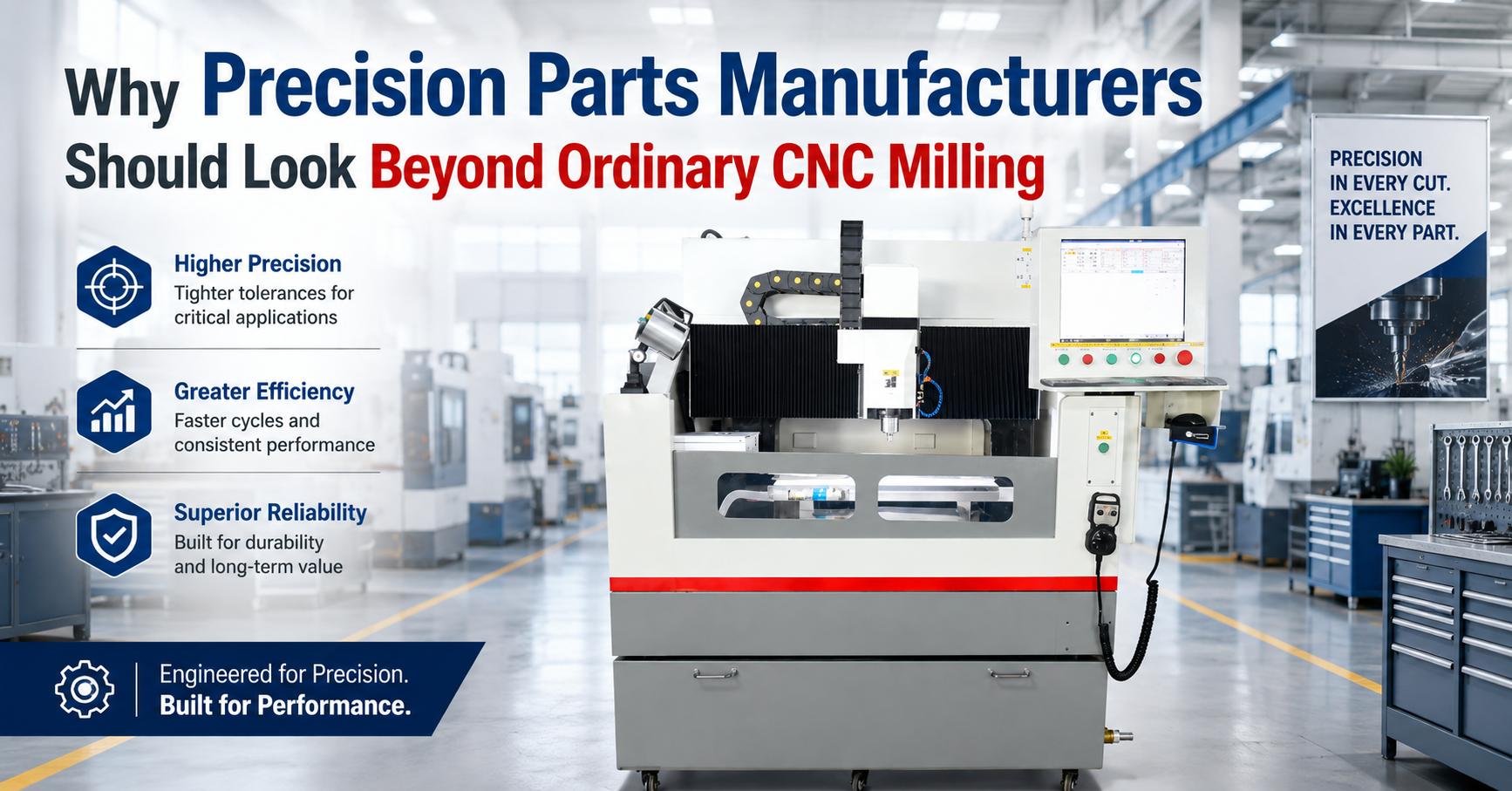
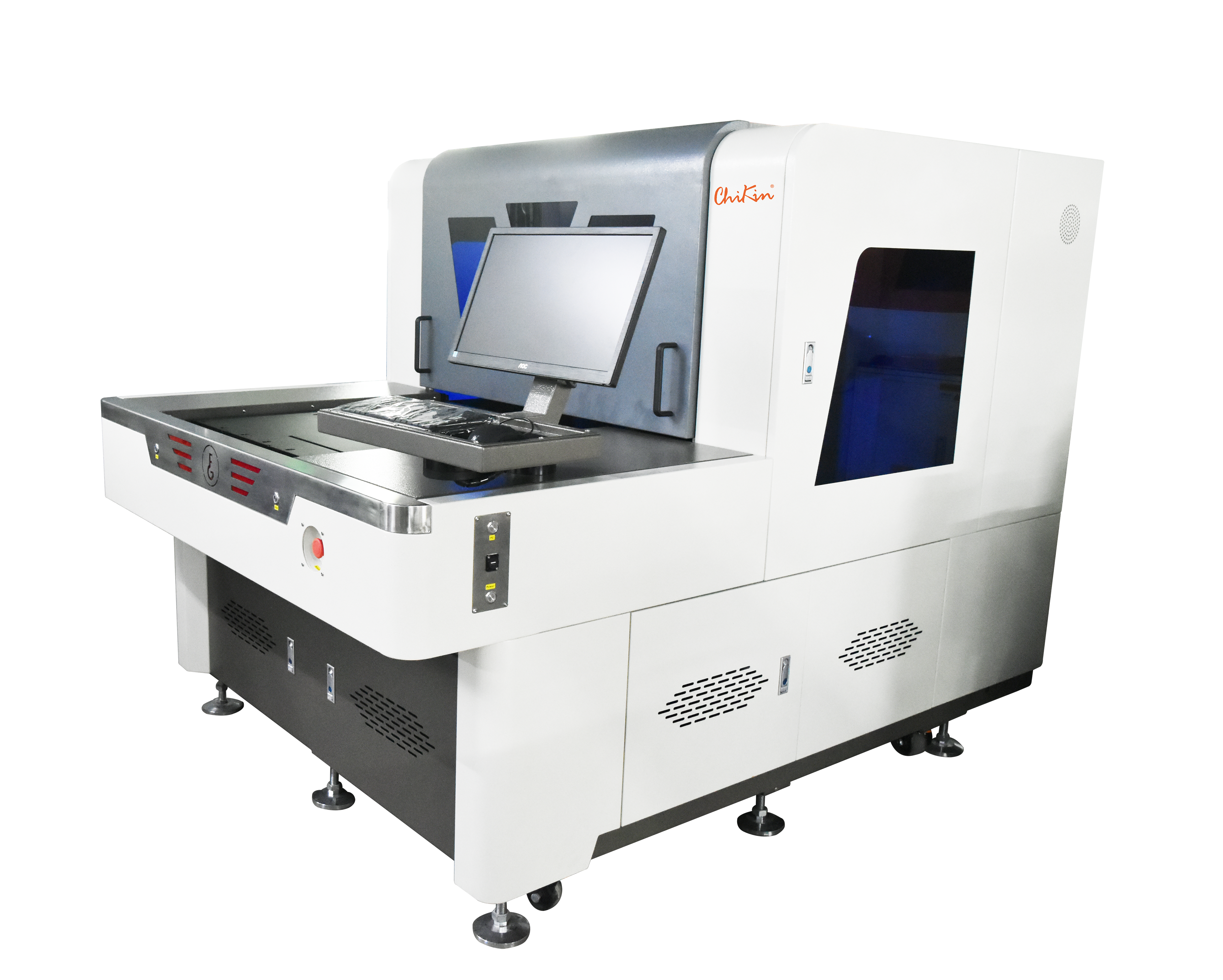
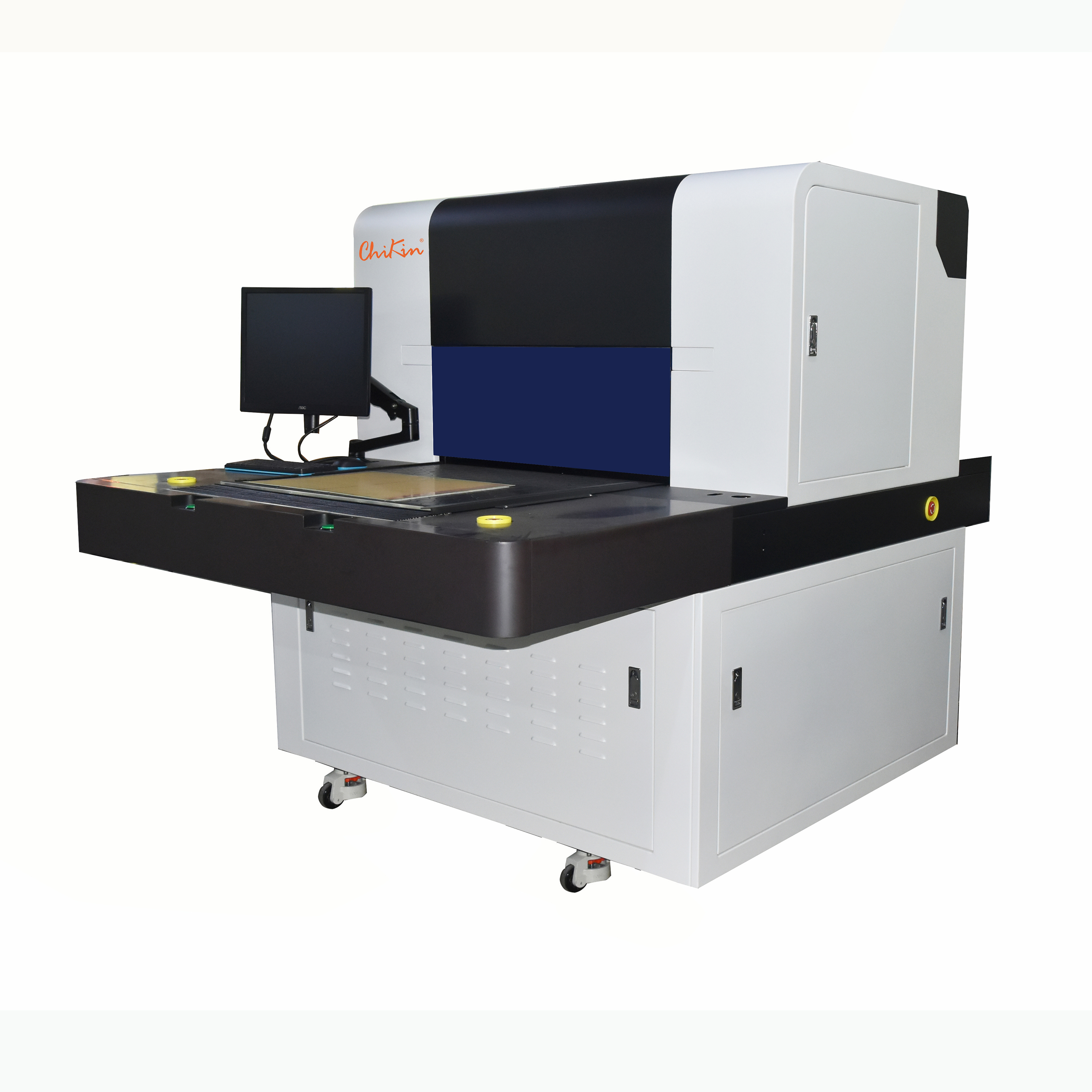
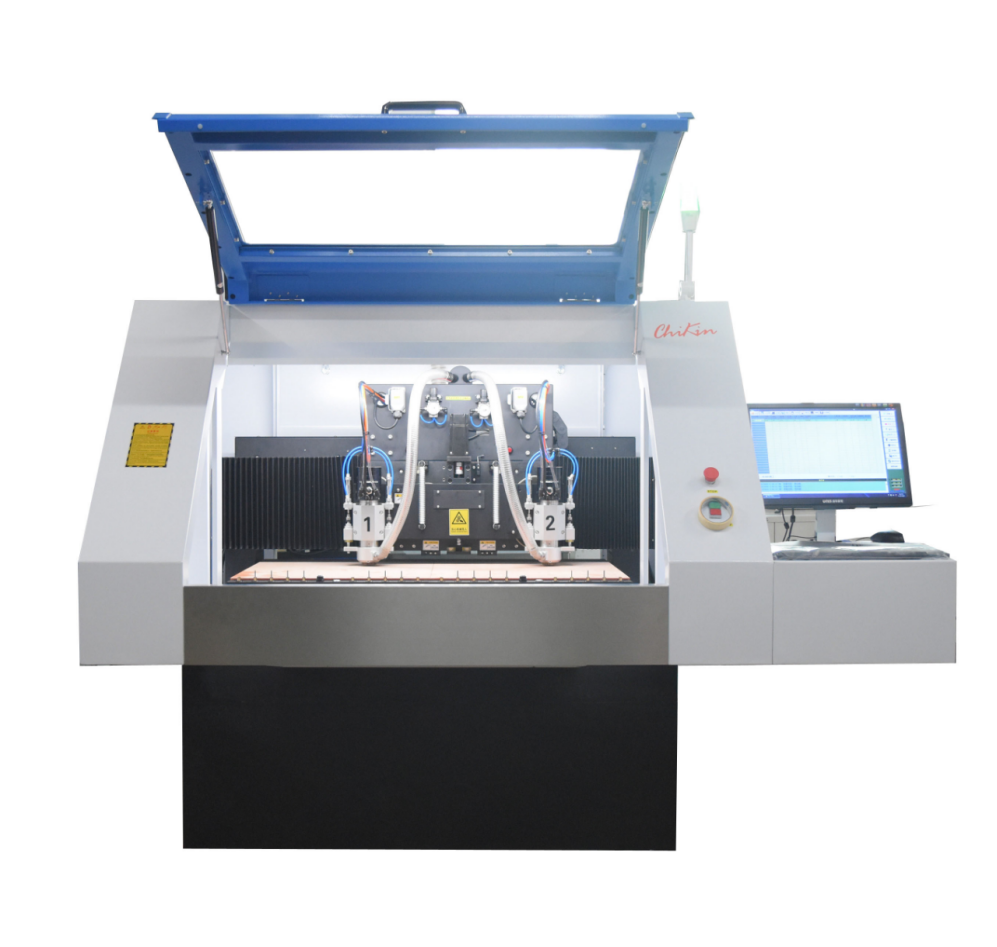
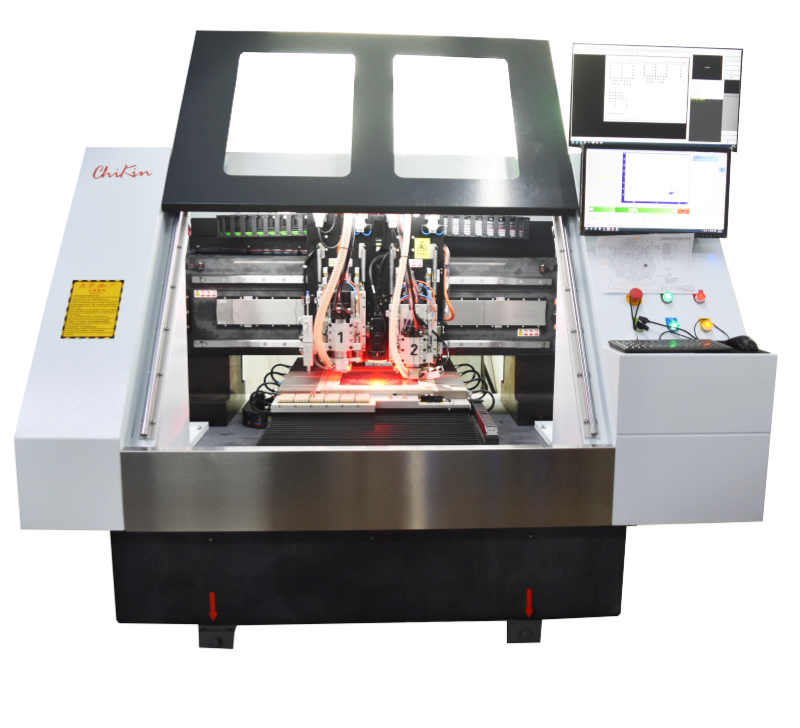
The product page describes the machine as an enclosed industrial unit built around a wire EDM cutting chamber with a separate operator control console. It mentions a floor-standing cabinet, front access area for workpiece setup, protected machining zone, wire feed and guide assembly, cable carrier, machining head, work tank, and dedicated display-and-keyboard control station.
This layout matters in production. Wire EDM is not an open manual cutting process. The machining zone must be controlled. Wire movement, workpiece setup, dielectric fluid, operator access, and process monitoring all need an organized structure. An enclosed cabinet helps keep the cutting area contained, while a separate console gives operators a practical point for setup and monitoring.
For B2B buyers, this structure suggests several practical advantages:
The machining area is protected and better organized.
Operators have a defined access point for setup.
The control console is separated from the cutting chamber.
Wire movement and machining head motion are arranged within a controlled platform.
The system is better suited to factory use than improvised cutting methods.
Maintenance and setup can be planned around a central work chamber.
These details are not just visual. They affect how the machine will behave in a real workshop.
What Are the Main Selling Points of This CNC Wire EDM Machine?
The strongest selling point is precision cutting of conductive metals where fine geometry and burr-free edges matter. The page states that wire EDM is suitable for hard metals and complex profiles because it removes material by electrical discharge instead of direct tool contact.
A second selling point is the ability to handle complex profiles and fine details. According to the product page, wire EDM is better suited than typical CNC engraving or general routing work for internal geometry, sharp corners, and repeatable contour cutting. It is especially useful when a part design has tight internal features that are difficult to machine with conventional methods.
A third selling point is clean, enclosed operation. The page notes that the fully enclosed cabinet helps contain the machining area and supports a cleaner production environment, while the separate console provides a practical control point for setup and process monitoring.
A fourth selling point is process complementarity. The machine can be used alongside CNC milling. Milling may handle roughing, facing, pocketing, and general shaping, while wire EDM can handle the final fine geometry, narrow slots, internal corners, and difficult contours. This combination can be valuable for mold shops, tool-and-die workshops, and precision metal component suppliers.
Product Information and Buyer Meaning
| Product Page Information | What It Means for Factory Buyers |
|---|---|
| The machine is described as a CNC wire EDM system | Buyers should evaluate it as conductive metal cutting equipment, not as an acrylic router |
| Intended for conductive materials and fine-detail cutting | Suitable for metal components, molds, dies, punches, and complex conductive parts |
| Uses wire EDM cutting chamber with protected machining zone | Supports controlled cutting conditions and organized operator access |
| Includes wire feed and guide assembly, cable carrier, machining head, and work tank | Indicates a complete EDM process layout rather than simple mechanical cutting |
| Separate display-and-keyboard control station | Helps operators monitor setup and cutting process from a dedicated console |
| Fully enclosed cabinet | Helps contain the machining area and supports cleaner production environment |
| Useful for internal geometry, sharp corners, and repeatable contour cutting | Valuable where conventional rotating cutters cannot easily create the required shape |
| Exact performance data is not visible on the page | Buyers should request process samples, specifications, and configuration details before purchase |
Where Can This Machine Fit in a Factory?
This machine is most relevant in factories that process conductive metal parts with demanding geometry. Typical application areas include tool and die making, mold inserts, precision punches, dies, aerospace or automotive components, and parts requiring burr-free cutting. Chikin’s product page lists these as common use cases and explains that wire EDM may be used for final geometry where accuracy and surface quality are critical.
A mold shop may use milling to rough a cavity insert, then wire EDM to finish narrow slots or internal profiles. A tool-and-die maker may use wire EDM for punch and die details that require sharp internal shapes. A precision component supplier may use it when small profiles must stay consistent across batches. A repair workshop may use it on hard metal parts that are difficult to machine conventionally.
The machine can be especially useful when the factory faces these situations:
The workpiece is conductive metal.
The geometry includes narrow slots or internal corners.
Burr-free cutting is important.
Cutting forces must be minimized.
The part material is difficult to machine conventionally.
The final contour is more important than fast roughing.
Milling alone creates too much tool limitation.
The part requires repeatable fine-detail cutting.
If the job is acrylic cutting, wood engraving, plastic plate routing, or nonconductive material processing, this machine is not the correct process direction based on the page content.
Why Should Buyers Not Compare This Machine Only by Price?
Wire EDM equipment should be evaluated according to process fit. A low price is not useful if the machine cannot cut the material, support the required geometry, or maintain a practical workflow.
The product page states that surface finish, edge condition, and accuracy depend on setup, wire type, machining parameters, workpiece material, and operator programming. It also advises buyers to request process samples for their own material and geometry before finalizing a purchase because exact performance data is not visible.
That is the right purchasing logic. Buyers should not rely only on product title, machine image, or general claims. They should share drawings, material grades, target tolerances, and production goals with the supplier. The supplier should then explain whether wire EDM is suitable, what configuration is needed, and whether samples can be tested.
Price comparison should come after process confirmation. Otherwise, the buyer may choose a machine that looks competitive but does not solve the actual manufacturing problem.
How Should Buyers Evaluate Workpiece Material?
Material is the first filter. Wire EDM is used for conductive materials. If the material is not conductive, the process is not suitable. The product page explicitly says the focus is conductive metal rather than plastics, wood, or composites.
For a factory buyer, the material review should include:
Material type.
Material hardness.
Conductivity.
Thickness.
Heat treatment condition.
Required edge condition.
Whether burr-free cutting is required.
Whether the part will be rough-machined first.
Whether the final profile requires EDM finishing.
This is also where the buyer should distinguish between milling and EDM. Milling may still be the correct first process for many parts. Wire EDM may be used later for details that are hard to reach or finish with rotating tools.
How Should Buyers Evaluate Part Geometry?
Geometry is the second filter. Wire EDM is especially useful when geometry is difficult for conventional tools. The product page highlights internal geometry, sharp corners, narrow slots, intricate contours, and repeatable contour cutting as areas where this process may be more suitable than typical CNC engraving or routing.
A buyer should review the drawing and ask:
Are there tight internal corners?
Are there long, narrow slots?
Are there profiles that require burr-free edges?
Does the part require fine detail?
Can a rotating cutter reach the feature?
Would milling create tool-radius limitations?
Does the part require low cutting force?
Is the material hard enough to make conventional machining inefficient?
If the answer to several of these questions is yes, wire EDM should be considered.
How Should Buyers Evaluate Machine Layout?
Machine layout affects daily use. The product page describes an enclosed cabinet, front access area, protected machining zone, work tank, machining head, and separate console.
Buyers should ask:
Is the work chamber large enough for our parts?
How easy is workpiece setup?
Can operators access the tank and fixture area safely?
How is wire threading handled?
How are the wire guide and feed assembly maintained?
How is dielectric fluid managed?
Is the control console convenient for the operator?
How much floor space is required?
How are waste wire, filtration, and fluid maintenance handled?
The machine should not only cut accurately. It should also fit the workshop workflow.
What Should Buyers Ask Before Ordering?
Because exact performance data is not visible on the page, buyers should request specific confirmation from the supplier. The product page advises buyers to ask about work envelope, travel range, control usability, wire handling stability, maintenance access, filtration, coolant management, automation options, spare parts availability, and configuration options.
A practical inquiry should include:
Part drawings.
Material grade.
Material thickness.
Target tolerance.
Edge quality requirement.
Surface finish expectation.
Annual or monthly production volume.
Whether milling will be used before EDM.
Required work envelope.
Machine floor space limitation.
Filtration or dielectric fluid requirements.
Operator skill level.
Need for automation or manual setup.
Spare parts expectations.
Sample cutting request.
A supplier who can answer these points clearly is more useful than one who only provides a price.
Buyer Evaluation Checklist
| Evaluation Area | What Buyers Should Confirm | Why It Matters |
| Material fit | Is the workpiece conductive metal? | Wire EDM is intended for conductive materials, not acrylic or nonconductive plastics |
| Geometry fit | Does the part have internal corners, narrow slots, or complex profiles? | These are typical reasons to choose wire EDM over ordinary milling |
| Work envelope | Can the machine handle the part size and setup fixture? | Prevents mismatch with real production parts |
| Accuracy and finish | What tolerance, surface finish, and edge quality can be achieved on the buyer’s material? | Actual results depend on setup, wire type, parameters, and material |
| Wire handling | How stable are wire feed, wire guide, and wire threading operations? | Affects cutting consistency and downtime |
| Work tank and fluid system | How are dielectric fluid, filtration, and maintenance handled? | Important for EDM process stability |
| Control usability | Is the display-and-keyboard console easy for operators? | Affects setup time and process monitoring |
| Maintenance access | Can operators access wire guides, tank, filters, and service areas easily? | Reduces downtime |
| Process samples | Can the supplier cut sample parts from buyer drawings? | Confirms machine suitability before purchase |
| Supplier support | Are spare parts, training, process guidance, and service available? | Protects long-term production use |
How Can CNC Milling and Wire EDM Work Together?
A productive shop does not need to treat CNC milling and wire EDM as competitors. In many cases, they work best as a process pair.
CNC milling may be used for:
Roughing material.
Creating flat faces.
Opening pockets.
Machining holes.
Preparing reference surfaces.
Reducing stock before finish cutting.
Wire EDM may be used for:
Fine internal contours.
Sharp internal corners.
Narrow slots.
Burr-free edges.
Hard conductive materials.
Precision punches and dies.
Features where tool pressure should be minimized.
The product page states that in shops where CNC milling handles roughing or general profiling, wire EDM may be used for the final geometry where accuracy and surface quality are critical.
This process split can help factories use each machine where it is strongest. Milling removes material efficiently. Wire EDM handles geometry that is hard to finish with rotating tools.
Practical Factory Case: Mold Insert with Narrow Internal Slots
Consider a mold shop producing a small hardened steel insert. The part includes flat machined faces, mounting holes, and several narrow internal slots. The workshop first tries to complete the part with standard CNC milling. Roughing and flat machining are successful, but the internal slots create problems. The cutter diameter limits the internal corner radius, and finishing the slot cleanly requires too much manual correction.
The shop then considers adding a wire EDM process. CNC milling can still handle the roughing and general preparation. Wire EDM can cut the internal slots and fine contours after heat treatment. This reduces mechanical cutting force and helps create a cleaner final profile.
This is the kind of case where the Chikin CNC wire EDM machine is relevant. The product page states that wire EDM is often used by tool-and-die shops, mold makers, and precision component suppliers for internal corners, narrow slots, and intricate contours that are hard to finish with standard milling.
The buyer should not simply ask for machine price. The better approach is to send the actual insert drawing, material grade, thickness, target tolerance, and expected annual volume. Then the supplier can advise whether the machine is suitable and whether a sample cut should be tested.
Practical Factory Case: Precision Punch and Die Components
A tool-and-die workshop may need to make punch and die parts from hardened conductive metal. The final cutting edge must be clean, and the profile must match the mating component. Conventional milling can prepare the blank, but the final profile may require finer control.
Wire EDM can be a good process for these parts because it uses electrical discharge instead of direct cutting force. This can be helpful when cutting hard materials and detailed profiles. Chikin’s page lists precision punches and dies as typical application scenarios for this machine category.
In this case, the buyer should evaluate:
Part material.
Thickness.
Profile complexity.
Required tolerance.
Edge finish.
Number of pieces per batch.
Need for repeatable profile cutting.
Work tank capacity.
Wire type and process settings.
Operator programming ability.
This kind of case also shows why wire EDM should be treated as precision process equipment rather than ordinary cutting equipment.
How Should Buyers Choose a Supplier?
Choosing a wire EDM machine supplier is not only about equipment specification. It is about whether the supplier can understand the buyer’s part family and production constraints.
A good supplier should ask for drawings, material grades, target tolerances, and process goals. Chikin’s page recommends that buyers share drawing files, material grades, and target tolerances so the supplier can recommend the right setup. It also says shops that combine CNC milling with EDM should define which operations will be done on each machine before purchasing.
A reliable supplier should help answer:
Which parts should be milled first?
Which features should be cut by wire EDM?
What material limits apply?
What accuracy and finish are realistic?
What wire type and parameters are suitable?
What work envelope is needed?
How much maintenance is required?
What spare parts should be stocked?
What training is available?
Can sample cutting be done before order?
The right supplier does not only sell a machine. It helps the factory prevent process mismatch.
What Mistakes Should Buyers Avoid?
The first mistake is assuming this machine is for acrylic because of the URL wording. The page itself describes a CNC wire EDM system for conductive metal cutting and clearly distinguishes it from acrylic CNC cutting machines.
The second mistake is comparing wire EDM directly with a CNC router. These machines serve different materials and process goals.
The third mistake is choosing by price before confirming material compatibility. If the material is not conductive, wire EDM is not the correct process.
The fourth mistake is ignoring the rest of the workflow. Milling, heat treatment, fixturing, EDM cutting, inspection, and finishing may all be part of the production plan.
The fifth mistake is not requesting sample cutting. The page says surface finish, edge condition, and accuracy depend on setup, wire type, machining parameters, workpiece material, and operator programming. That means sample testing is one of the safest ways to confirm suitability.
The sixth mistake is overlooking maintenance. Wire guide condition, fluid management, filtration, and wire handling all affect long-term performance.
When Is This Machine a Good Fit?
This machine is a good fit when the factory needs:
Conductive metal cutting.
Fine-detail contour machining.
Burr-free edges.
Sharp internal profiles.
Narrow slots.
Precision mold inserts.
Tool and die components.
Punches and dies.
Aerospace or automotive precision parts.
Final geometry after milling.
Controlled enclosed EDM operation.
It is not a good fit when the factory mainly needs:
Acrylic cutting.
Wood engraving.
Plastic routing.
Large-volume soft material carving.
Nonconductive composite machining.
Simple low-cost sheet cutting.
This honest fit analysis helps the buyer avoid overbuying or buying the wrong process.
FAQ
Is this machine an acrylic CNC cutting machine?
No. The product page states that the machine described is a CNC wire EDM system intended for conductive metal cutting, not plastics or soft nonconductive materials.
What is CNC wire EDM used for?
Wire EDM is used for conductive metals, complex profiles, fine details, internal geometry, sharp corners, narrow slots, and burr-free cutting where direct cutting force should be minimized.
How does wire EDM differ from CNC milling?
CNC milling removes material with a rotating cutting tool. Wire EDM removes material through electrical discharge using a thin wire electrode and dielectric fluid. This makes it useful for hard conductive materials and detailed geometry.
What industries can use this type of machine?
Typical use cases include tool and die making, mold inserts, precision punches, dies, aerospace components, automotive components, and other precision metal parts requiring burr-free cutting.
What should buyers confirm before ordering?
Buyers should confirm work envelope, travel range, control usability, wire handling stability, maintenance access, filtration, coolant management, automation options, spare parts availability, and sample cutting results.
Why should buyers send drawings before purchase?
Drawings, material grades, and target tolerances help the supplier determine whether wire EDM is suitable and what configuration is needed. Chikin’s page recommends sharing this information before purchasing.
Conclusion
CNC milling remains one of the most useful processes in precision manufacturing, but it does not solve every geometry problem. When parts require sharp internal corners, narrow slots, complex conductive metal profiles, burr-free edges, or low-force cutting, a CNC wire EDM machine can become a valuable partner to milling.
Chikin CNC’s product page describes this equipment as an enclosed industrial CNC wire EDM system with a protected cutting chamber, wire feed and guide assembly, cable carrier, machining head, work tank, and separate display-and-keyboard control console. The page emphasizes conductive metal cutting, complex profiles, fine detail, enclosed operation, and typical applications such as tool and die making, mold inserts, punches, dies, aerospace parts, automotive components, and precision metalwork.
For B2B buyers, the most important step is to read the machine category correctly. Despite the acrylic-related wording in the URL, the page content supports this machine as wire EDM equipment for conductive metal precision parts, not as acrylic cutting equipment. The safest purchasing process is clear: define the part material, review the geometry, decide which operations belong to milling and which belong to EDM, request process samples, and confirm machine configuration with the supplier before comparing price.
A well-matched CNC milling and wire EDM workflow can help precision parts manufacturers reduce process limitations, improve edge quality, and complete complex metal geometry with more confidence.
Please Send Your Requirements For Quoting