



Why buyers narrow their search to a PCB drilling and routing machine supplier
When a production team starts comparing options for board processing, the search usually begins with one question: which PCB drilling and routing machine supplier can support both throughput and consistency without making the shop floor harder to run? That is not a small purchasing detail. Drilling and routing are the operations that turn a panel into a usable part, and if either one drifts, the rest of the build feels it in scrap, rework, and schedule pressure.
For engineers, the real issue is process stability. For sourcing managers, it is supply risk and service support. For product teams, it is whether the machine choice fits the next few years of board complexity instead of just the current order book. A good supplier conversation should help a buyer decide where the machine belongs in the process chain, what level of automation is justified, and whether the vendor can support the equipment after installation.
Drilling and routing are related, but they are not the same buying problem
The search terms often get used together, yet the equipment needs are different. A PCB drilling machine supplier is usually evaluated on hole quality, repeatability, spindle behavior, and the ability to handle production volumes without drifting. A PCB routing machine supplier is judged more on edge quality, contour accuracy, tool life, and the machine’s ability to manage dust, chips, and operator safety around the cut path.
The combined buyer, however, needs to think one level higher. If your shop is processing panels that require both precision holes and clean separation, it is often better to evaluate the drilling and routing workflow as a system rather than as two unrelated purchases. That is where the supplier matters most. A weak handoff between drilling and routing can create alignment problems, while a poorly matched machine mix can slow down the whole line.
Quick comparison: what buyers usually look for
A drilling-focused machine is often selected for:
- repetitive hole-making on flat workpieces
- stable axis movement and controlled positioning
- production consistency across batches
A routing-focused machine is often selected for:
- panel separation and contour finishing
- controlled edge quality
- cleaner handling of dust and debris around the cut zone
The combined procurement decision is less about labels and more about whether the supplier can explain how the equipment supports real factory work.
What the machine itself tells you before the datasheet arrives
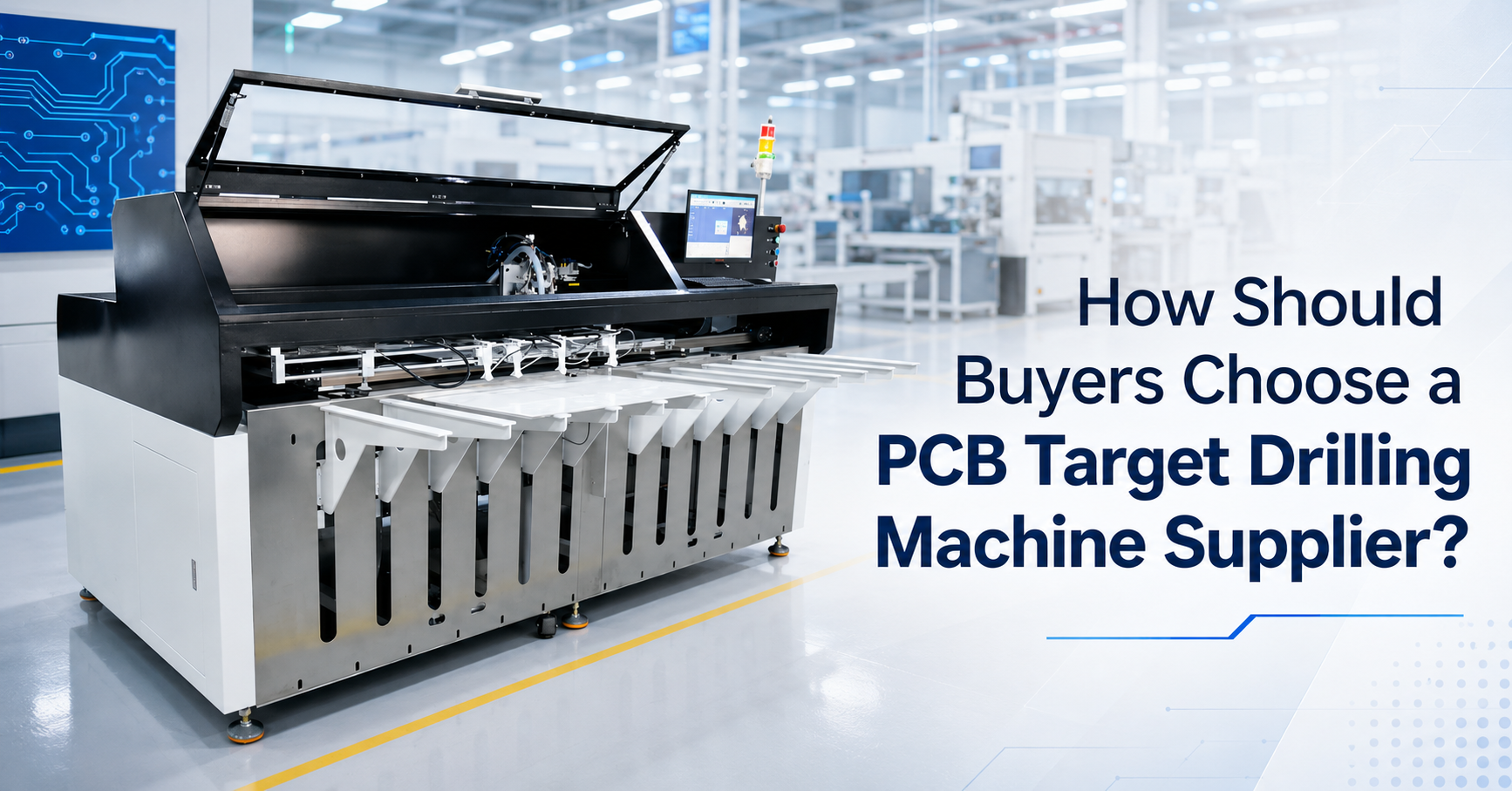
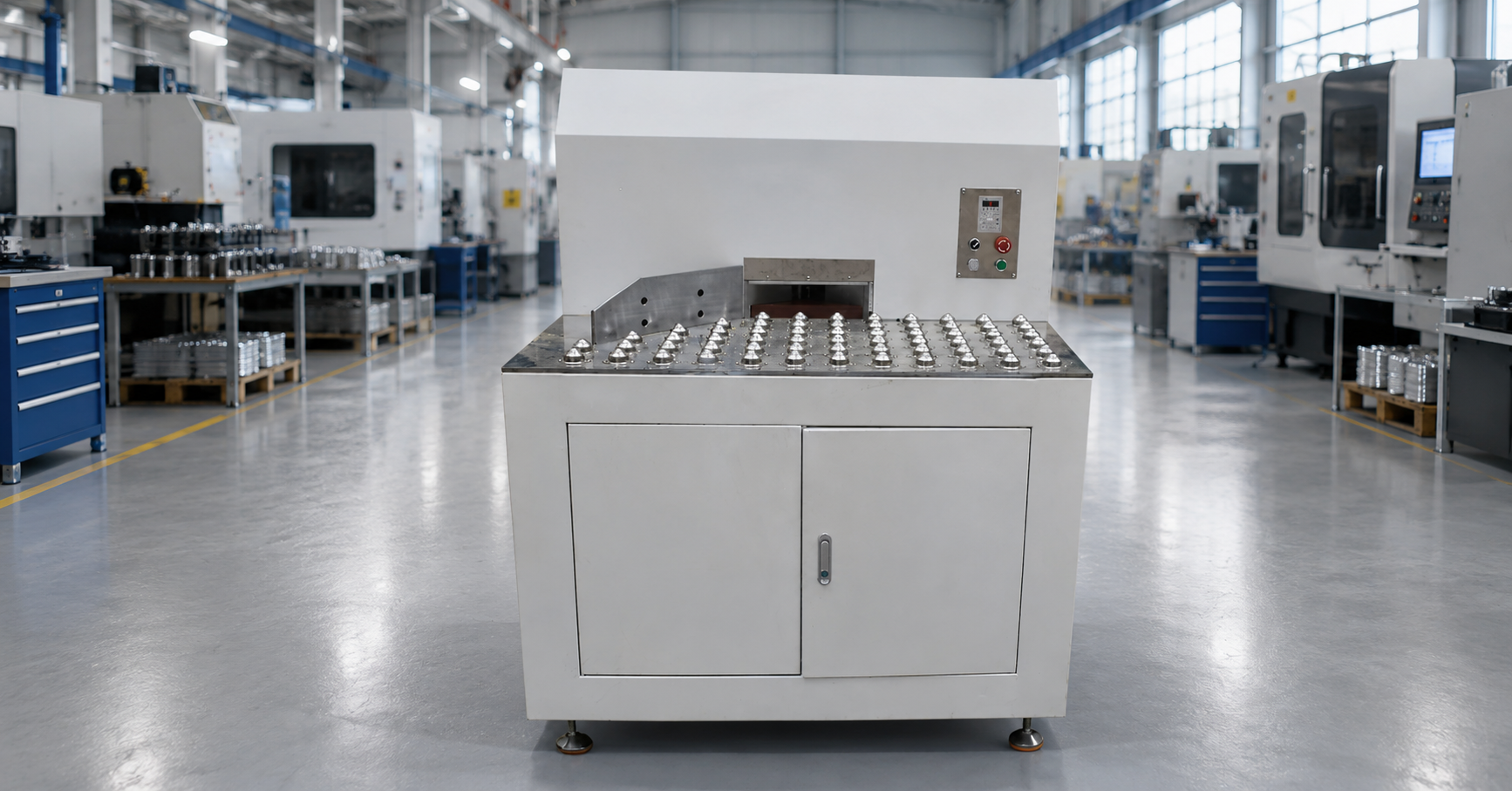
The product notes describe an industrial CNC drilling machine with a two-spindle layout, enclosed sheet-metal body, and an operator interface built into the front. That tells a buyer a few useful things even before the specification sheet appears.
First, the enclosed housing suggests the machine is meant for controlled production use rather than casual bench work. Second, the visible dual spindle heads point to a machine designed for synchronized or paired hole-making on flat components. Third, the likely linear motor drive indicates a focus on fast, precise motion response, although the exact performance numbers are not provided and should not be assumed.
This kind of configuration is attractive when a plant needs repeated hole patterns, fixture plates, panels, or enclosure parts handled with less manual intervention. It is not automatically the right answer for every PCB or fabrication line, but it does hint at a supplier who understands industrial production discipline rather than hobby-level machinery.
Selection criteria that matter more than a sales brochure
A serious buyer should push beyond the headline machine type and ask how the system behaves in daily use.
1. Motion control and repeatability
In drilling work, accuracy comes from more than a strong spindle. The axis system, guides, control software, and machine frame all affect whether the tool lands where it should, shift after shift. If the supplier cannot explain how motion is controlled, that is a warning sign.
2. Fixturing and workpiece handling
Flat parts can look simple until a clamp interferes with a drill path or a routing tool needs a clean approach angle. Ask how the machine supports the part and how easy it is to load, align, and unload. That practical step often decides real productivity.
3. Service support and spare parts
For sourcing teams, this is where a PCB drilling and routing machine supplier proves its value. Documentation, spare parts availability, and response time can matter as much as the machine’s initial specification. A good machine with weak support becomes a long-term headache.
Common mistakes buyers make when comparing suppliers
One common mistake is comparing only spindle count or only enclosure style. Those are visible features, but they do not tell the full story. Another is assuming that a drilling machine suitable for one flat material automatically fits every production route. Material compatibility, tool strategy, and dust or chip control all need to be verified case by case.
It is also easy to underweight operator usability. The visible screen, keyboard, and controls on the machine described here suggest a human-machine interface built for regular floor use. That should be checked closely. If the controls are awkward, production teams find workarounds, and workarounds rarely age well.
What a practical buyer should ask next
Before issuing a final shortlist, ask the supplier for the exact application fit: what parts the machine is intended for, what workpiece sizes it handles, how the drilling and routing workflow is managed, and what maintenance looks like over time. If the supplier can answer clearly without overpromising, that is usually more valuable than a long list of unverified claims.
If you are comparing vendors now, start with the use case first: hole-making, routing, or a combined workflow. Then match that need to the machine architecture and the supplier’s support structure. That is the quickest way to separate a credible partner from a polished brochure.
FAQ
Should I choose a supplier based on drilling or routing first?
Choose based on the operation that creates the bigger production risk. If hole quality and placement drive yield, start with the drilling side. If part separation and edge quality cause more trouble, route that first.
Does a two-spindle machine automatically mean higher output?
Not automatically. Output depends on the whole system: motion control, fixturing, programming, operator flow, and part geometry.
What is the safest buying approach?
Treat the supplier as a process partner. Ask for application details, support terms, and proof that the machine configuration matches your production reality, not just a demo part.
Next step
If your team is shortlisting a PCB drilling and routing machine supplier, start with the real part mix and the workflow bottleneck. That will make the technical discussion far more useful, and it usually exposes whether a vendor is truly fit for production use or only fit for the quotation stage.