



Why Is Chikin’s Vertical Shearing Machine Different from Ordinary PCB Cutting Equipment?
Not every PCB cutting machine is built for the same production purpose. Some machines are suitable for occasional cutting. Some are better for simple raw material trimming. Others are designed as controlled production stations for repeatable PCB panel separation. For a PCB factory, understanding this difference is important before comparing prices.
Chikin CNC’s Vertical Shearing Machine for Controlled PCB Panel Separation is described as a machine for clean, repeatable PCB panel separation with reduced unnecessary stress on boards, components, and operators. The product page also explains that manual breaking or inconsistent cutting can create edge damage, dust, warped panels, and rejected assemblies.
This means the machine should be evaluated as a factory process tool, not only as a cutting device. For B2B buyers, the real value is not just whether the machine cuts. It is whether it improves consistency, safety, maintenance, and workflow control.
What Problems Do Ordinary PCB Cutting Products Often Leave Unsolved?
Ordinary PCB cutting equipment may be attractive because it looks simple, compact, or low-cost. But in production, several issues can remain.
The first issue is operator dependence. If the machine does not guide the cutting path well, results may still depend heavily on operator habits.
The second issue is board stress. If the panel is not held securely, the board may bend or deform during separation.
The third issue is poor process boundary. Open cutting tools may expose more of the working area and require stricter manual discipline.
The fourth issue is limited maintenance planning. A machine that is hard to inspect or service may create downtime once it enters daily use.
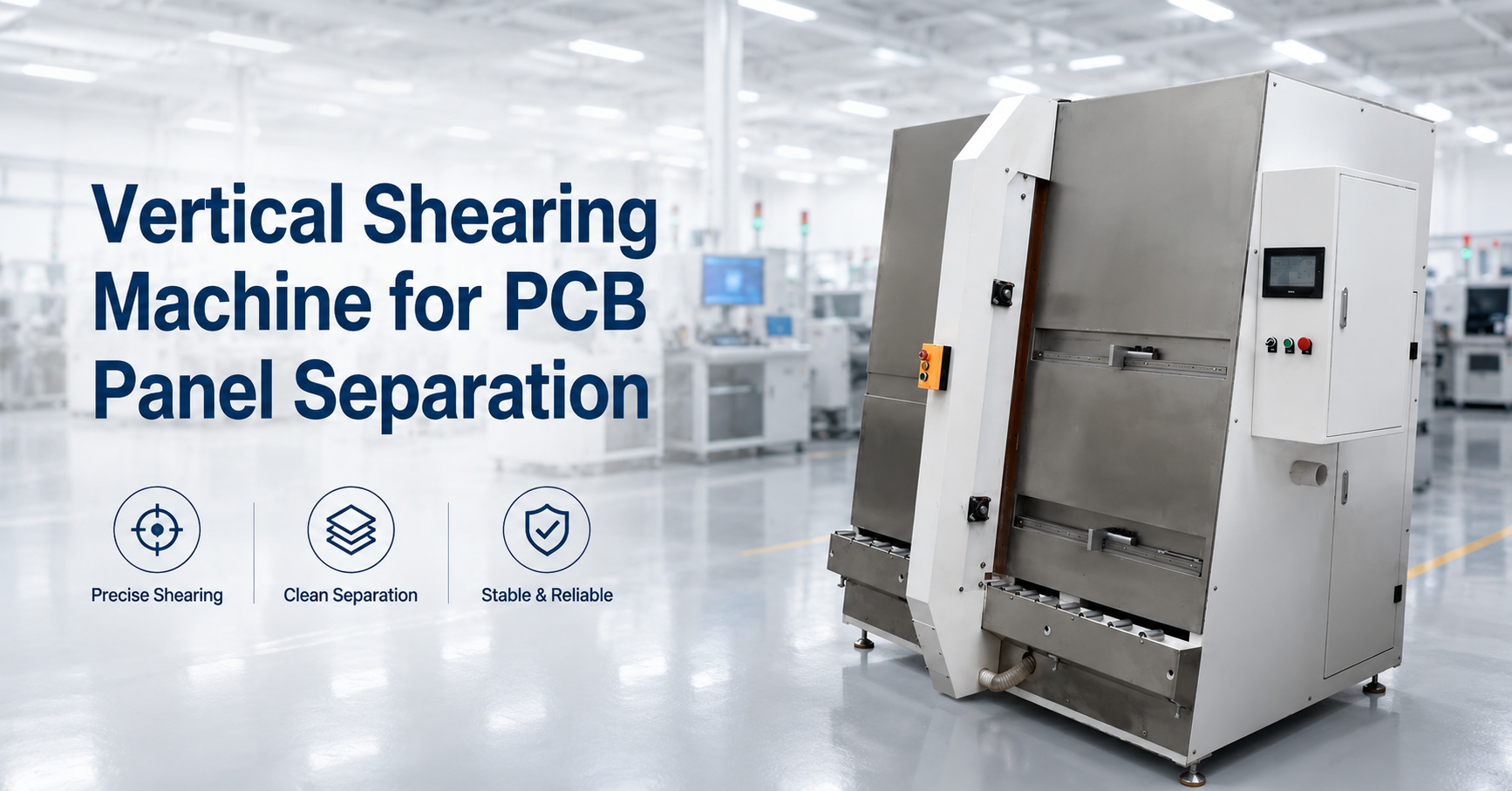
Chikin’s product page emphasizes that a vertical shearing machine should provide a stable, enclosed, and controlled cutting method for PCB panel processing. That phrase is important because it describes a complete process idea, not only a cutting action.
How Does Chikin’s Machine Position Itself?
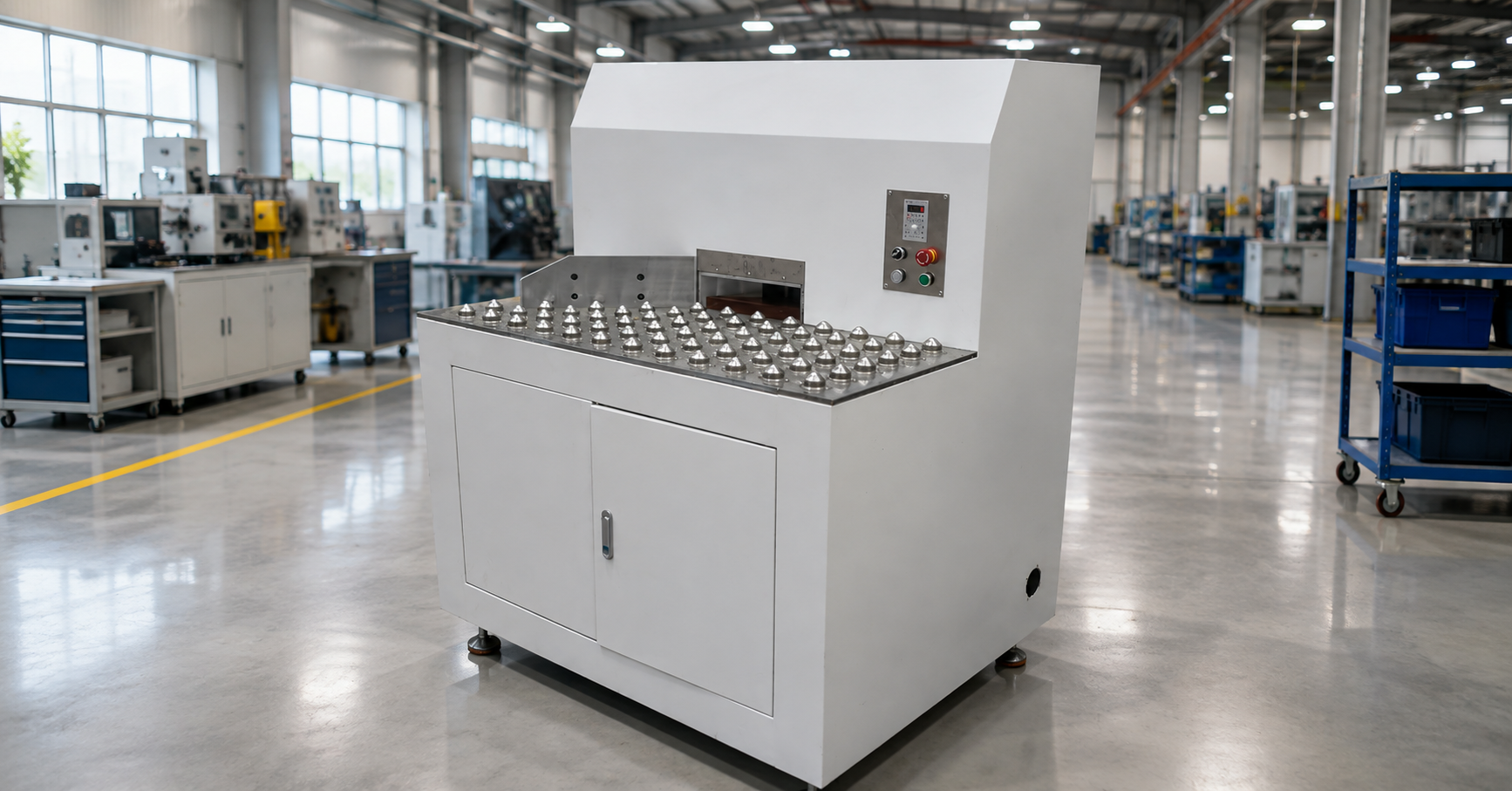
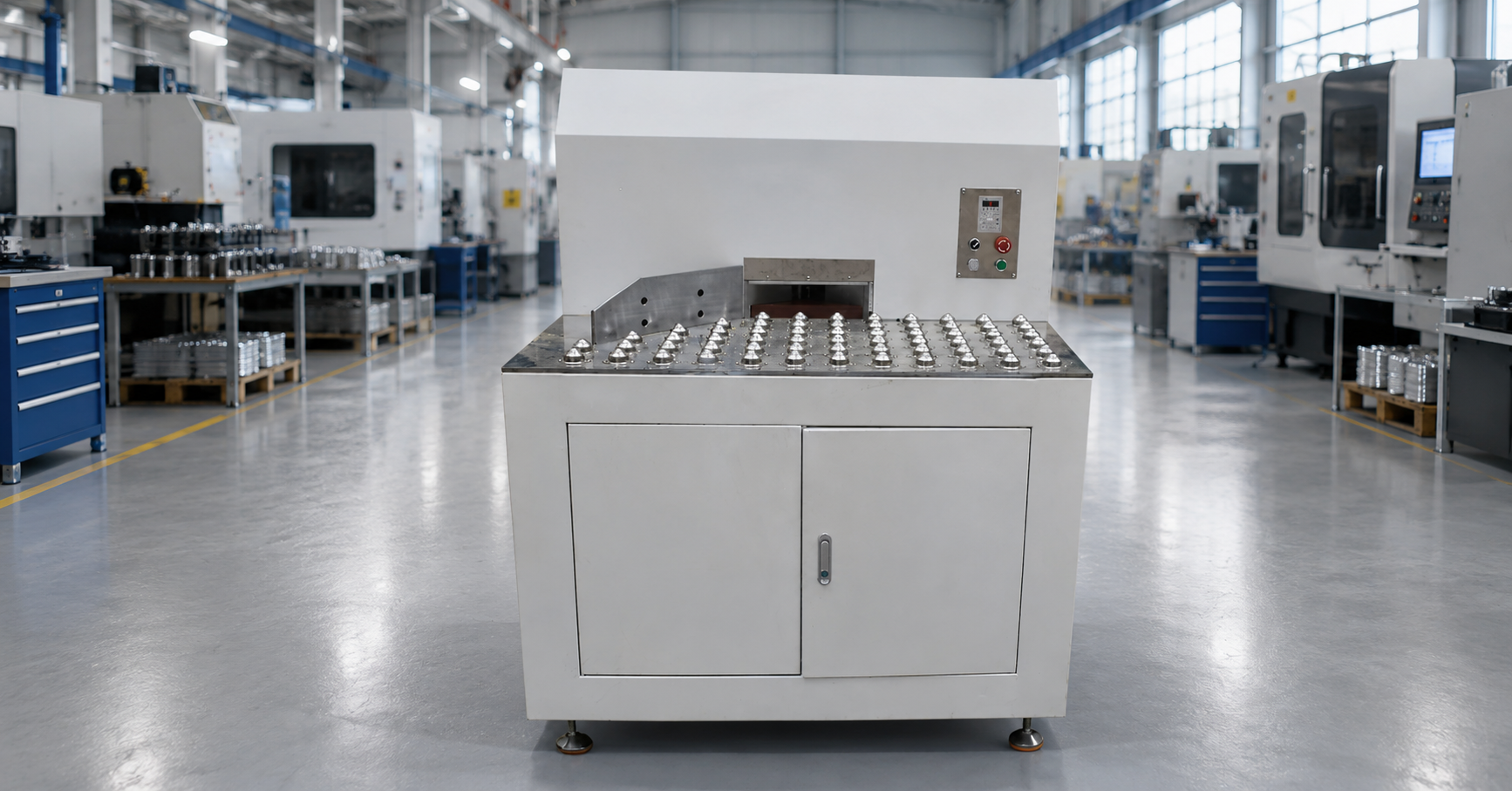
The product page presents the machine as a floor-standing industrial format with enclosed housing, service access points, and a control section designed for line operation. It also notes that this kind of cabinet-style build and mechanical base indicates a production-oriented unit suited to repeated use in electronics manufacturing machinery environments.
This positioning creates several differences from ordinary market products:
- It is designed for repeatable panel separation, not rough manual cutting.
- It uses an enclosed machine body to define the work zone.
- It has service access points that support maintenance and inspection.
- It is relevant for active PCB lines rather than temporary cutting setups.
- It supports customization discussions for enclosure, feeding direction, guarding, controls, and conveyor integration.
For factories that care about stable production, these details matter.
Chikin Vertical Shearing Machine vs Ordinary PCB Cutting Equipment
| Comparison Point | Chikin Vertical Shearing Machine | Ordinary PCB Cutting Equipment |
|---|---|---|
| Main Positioning | Controlled PCB panel separation for production use | Basic cutting or occasional separation |
| Process Stability | Focuses on clean, repeatable cutting and reduced handling variability | May depend more on operator skill |
| Machine Format | Floor-standing, enclosed industrial cabinet-style structure | Often open, semi-open, or lightweight |
| Safety Boundary | Enclosed body helps define the work zone and protect moving parts | Work area may be less clearly separated |
| Line Operation | Control section and access points designed for production-line use | May not be optimized for line integration |
| Maintenance Access | Visible access panels and modular layout suggest easier inspection | Service access may be limited or less organized |
| Customization | Enclosure size, feeding direction, guarding, controls, conveyor integration may be discussed | Customization may be limited |
| Buyer Validation | Supplier recommends confirming cutting width, thickness range, feed method, and panel compatibility | Some products may offer less application review |
| Best Fit | PCB factories needing repeatability, cleaner separation, and process standardization | Low-volume or less demanding cutting tasks |
Why Does Enclosed Machine Structure Matter?
A key difference is the enclosed machine body. Chikin’s product page states that enclosed operation helps protect moving parts, creates a cleaner production layout, and supports safer operator interaction by defining the work zone.
In a B2B factory environment, this is not just a visual upgrade. It changes how the station is managed. Operators have a defined loading and cutting area. Supervisors can standardize the workflow. Maintenance staff can inspect access points more systematically.
Ordinary open equipment may still work, but it often requires stronger manual discipline. If the production line is busy or if operators change frequently, a more enclosed and defined system can be easier to manage.
Why Does Service Access Matter?
Production equipment must be maintained. A machine that cuts well during a demonstration may still create trouble if inspection, adjustment, or repair is difficult.
Chikin’s page notes that visible latch assemblies, access panels, and external control boxes suggest a modular layout that should be easier to maintain than an overly sealed design.
This is a practical advantage over many ordinary products. Some machines are simple but not service-friendly. Others are enclosed but difficult to access internally. A good industrial design should protect the work zone while still giving maintenance staff reasonable access.
B2B buyers should check:
How are the cutting components accessed?
How are service panels opened?
Where are electrical controls located?
How much clearance is needed around the machine?
Can the machine be inspected without excessive disassembly?
Are spare parts available from the supplier?
Why Is Customization Important?
PCB factories do not all operate the same way. Some factories process small panels. Others handle larger rigid boards. Some need manual loading. Others want to connect the cutting station with upstream or downstream equipment.
Chikin’s page states that customization may involve enclosure size, feeding direction, safety guarding, control interface layout, and integration with upstream or downstream conveyors. It also recommends early drawing review so cabinet, access doors, and service clearances match the plant layout.
This is another difference from ordinary market products. A basic cutter may be sold as-is. A production-oriented PCB shearing equipment supplier should help the buyer match the machine to the plant.
Customization does not always mean a completely special machine. Sometimes it means adjusting feeding direction, confirming cabinet space, arranging controls, or planning maintenance clearance correctly. These small details can decide whether the machine is easy to use after installation.
How Should Buyers Evaluate This Product Before Ordering?
Because exact performance data is not fully provided on the page, buyers should validate technical fit directly with the supplier. Chikin recommends confirming cutting width, board thickness range, feed method, and panel compatibility before purchase.
A practical evaluation should include:
| Evaluation Step | Buyer Action | Purpose |
|---|---|---|
| Panel Review | Send board size, material, thickness, and panel style | Confirms whether the machine matches the product |
| Cutting Requirement | Define edge quality, cutting path, and production target | Prevents vague selection |
| Throughput Check | Share expected output per shift | Helps supplier recommend the right configuration |
| Layout Review | Provide available floor space and line direction | Ensures the machine fits the plant |
| Safety Review | Ask about guarding, emergency stop, and operator access | Supports safe factory use |
| Maintenance Review | Ask about service doors, components, and spare parts | Reduces downtime risk |
| Customization Discussion | Discuss enclosure size, feeding direction, controls, and conveyor integration | Improves line compatibility |
| Sample Confirmation | Request cutting validation if possible | Reduces purchase risk |
Why Does This Machine Fit B2B Factory Publishing?
A company blog should not sound like a consumer product advertisement. It should explain buying logic. For this product, the strongest B2B message is that Chikin’s vertical shearing machine helps buyers move from rough or inconsistent cutting toward a more standardized PCB panel separation process.
The product page clearly connects the machine to real factory problems: manual breaking, inconsistent cutting, edge damage, dust, warped panels, rejected assemblies, operator variability, and the need for stable separation.
For factory readers, those points are more persuasive than generic claims such as “high quality” or “advanced design.” Buyers want to know whether the machine will reduce problems they already see on the shop floor.
When Is This Machine More Suitable Than Ordinary PCB Cutting Tools?
This machine is more suitable when:
- the factory processes PCB panels regularly
- edge quality affects downstream assembly
- manual separation causes variation
- operators need a safer and clearer process station
- the line requires cleaner workflow and defined access
- service access matters for uptime
- panel size, feeding direction, or layout needs customization
- the buyer wants a production-oriented machine rather than a temporary cutting setup
It may not be necessary for extremely low-volume, non-critical cutting where manual methods are still acceptable. The best machine depends on production risk.
What Should Be Included in a Buyer Inquiry?
A useful inquiry should include:
PCB panel length and width
board thickness
material type
current separation method
current quality problems
target output
installation space
feeding direction
whether conveyor integration is needed
operator access preference
maintenance clearance limits
required safety features
The supplier can then determine whether the standard configuration is enough or whether a customized version is needed.
Common Mistakes When Comparing This Product with Ordinary Machines
The first mistake is comparing only purchase price. A cheaper tool may create more variation and rework later.
The second mistake is comparing only appearance. A white cabinet, access door, or control box should be checked for real service value, not just looks.
The third mistake is ignoring plant layout. A machine that does not fit the production flow can create handling problems.
The fourth mistake is assuming all PCB shearing machines support the same board thickness and cutting width. The product page itself advises buyers to confirm those values.
The fifth mistake is skipping customization discussion. In many production lines, feeding direction and service clearance decide whether the machine is convenient or frustrating.
FAQ
What makes Chikin’s vertical shearing machine different from ordinary PCB cutting equipment?
It is positioned as an enclosed, production-oriented machine for clean and repeatable PCB panel separation. It emphasizes stable cutting, safer operator interaction, service access, and customization guidance rather than only basic cutting.
Why is an enclosed body useful?
An enclosed body helps define the working zone, protect moving parts, improve production organization, and support safer operator interaction.
What technical data should buyers confirm?
Buyers should confirm cutting width, board thickness range, feed method, and compatibility with their specific panel design.
Can the machine be customized for a production line?
Yes. The product page states that customization may involve enclosure size, feeding direction, safety guarding, control interface layout, and upstream or downstream conveyor integration.
Is this machine only for high-volume factories?
Not necessarily. It can also be relevant for high-mix production lines and contract electronics manufacturing where cleaner board separation and less operator variation are important.
Conclusion
Chikin’s Vertical Shearing Machine for PCB Panel Separation is different from ordinary PCB cutting equipment because it is presented as a controlled production station rather than a simple cutting tool. Its value lies in clean, repeatable panel separation, enclosed operation, stable cutting structure, simple line control, service access, and customization support.
For PCB factories, the right buying decision should begin with the board and the production line. Confirm panel size, board thickness, cutting width, feed method, output target, safety needs, and maintenance access before comparing price. A machine that fits these details can help reduce manual variation, improve process consistency, and make PCB panel separation easier to manage over time.