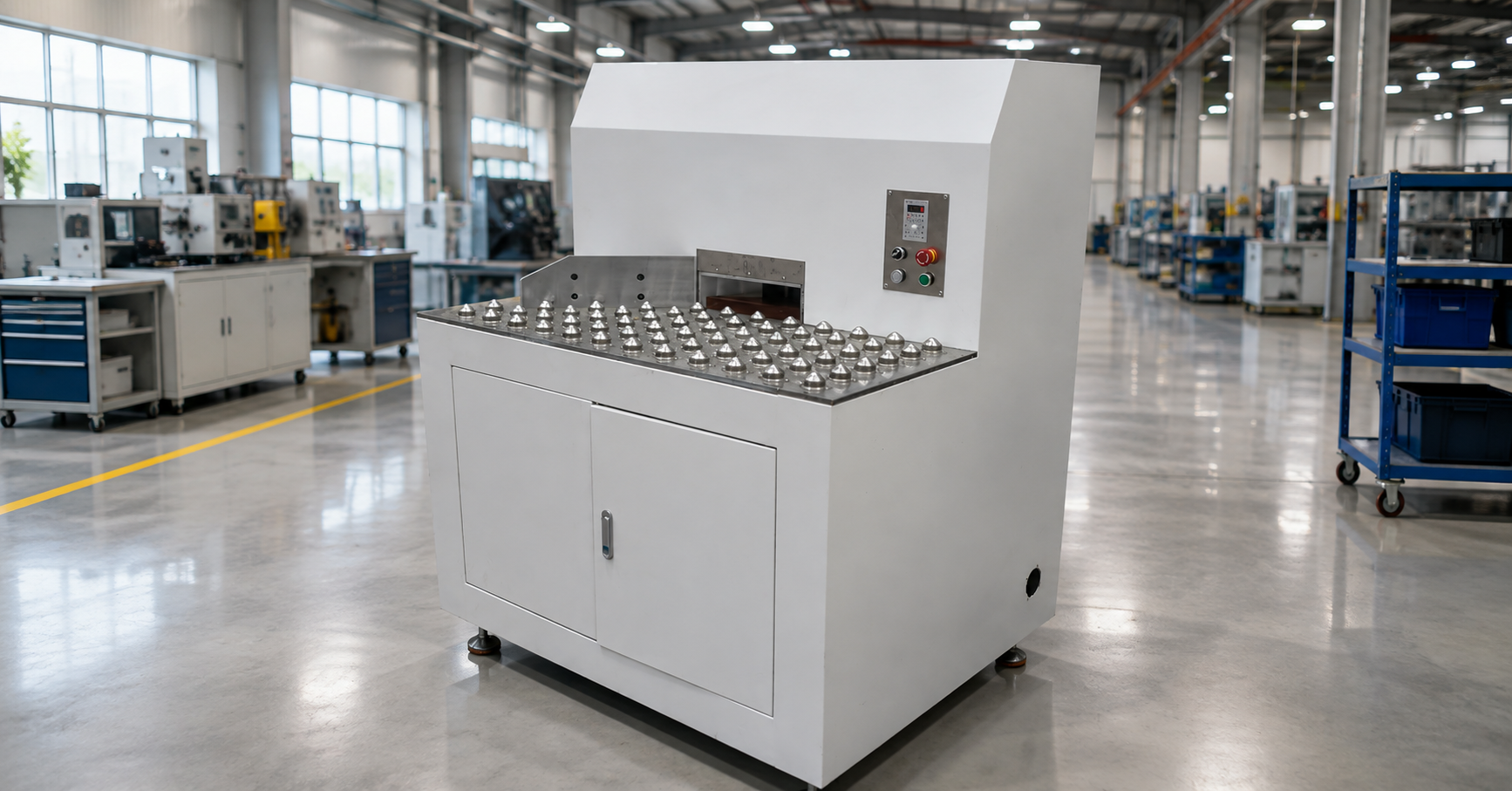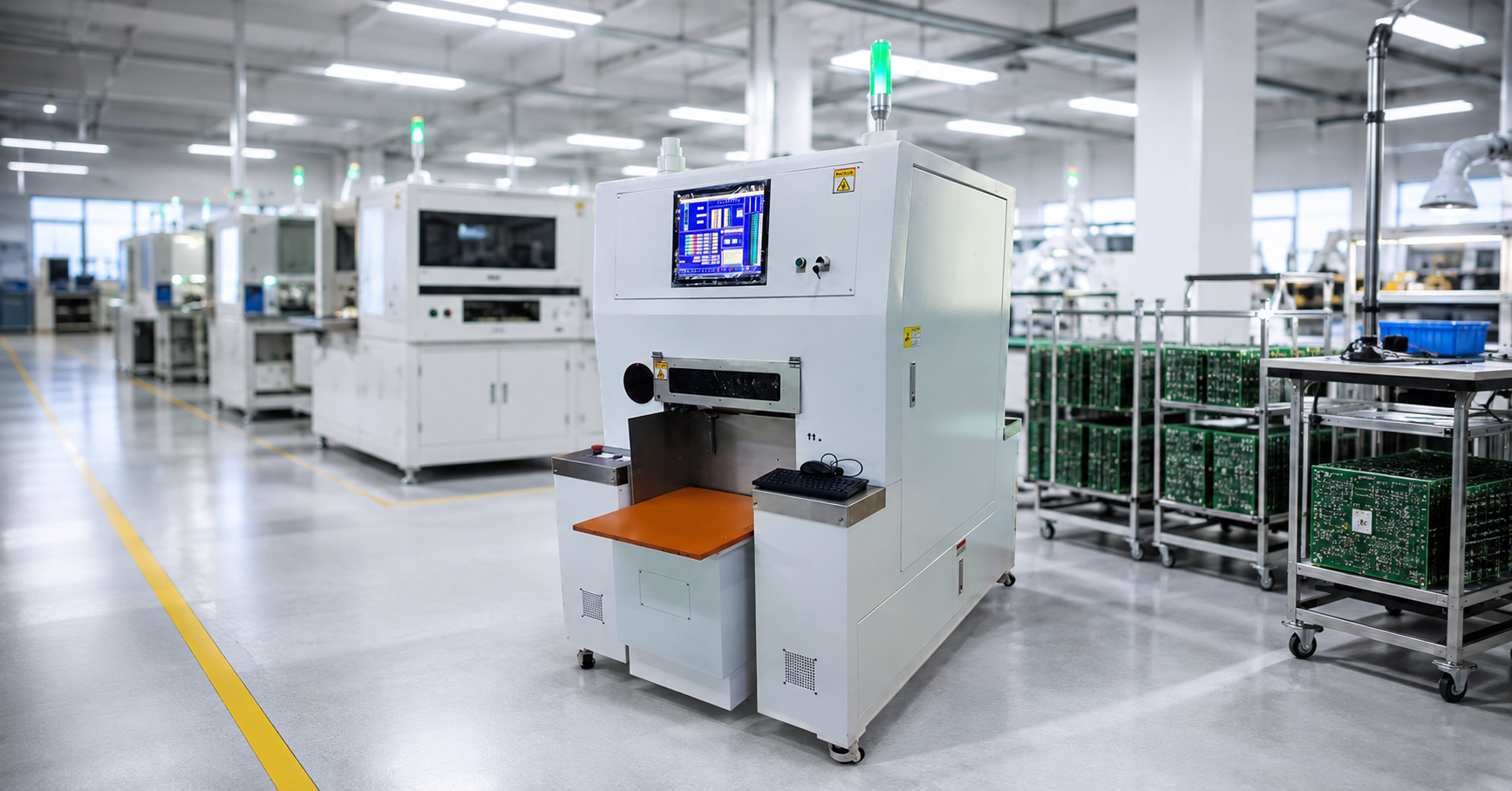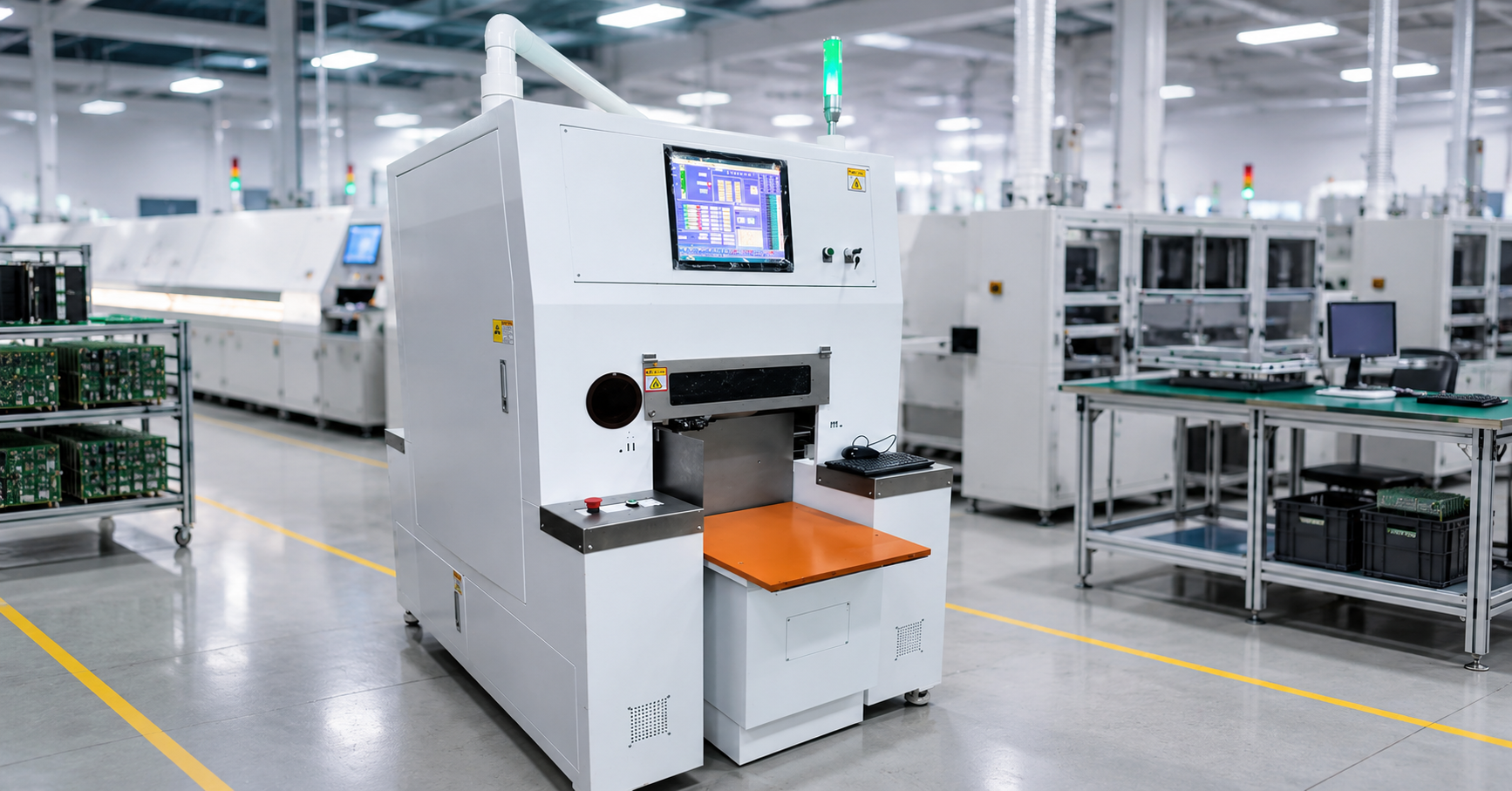




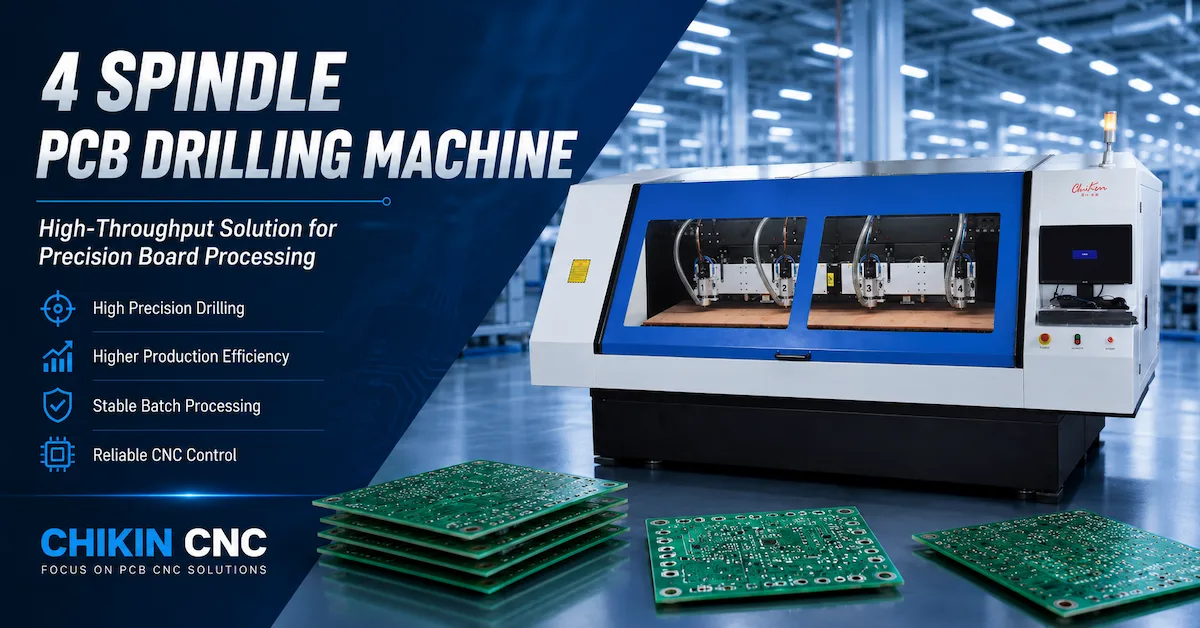
A 4 spindle PCB Drilling machine is built for PCB manufacturers that need higher processing efficiency than single-spindle or dual-spindle equipment can provide. When order volume increases, drilling often becomes a production bottleneck. One or two spindles may still deliver good accuracy, but they may not meet the daily output required by growing PCB factories.
For batch PCB production, buyers usually care about three things: speed, consistency, and process stability. A machine that drills faster but creates hole deviation or rough edges does not improve production value. The right multi-spindle PCB drilling solution should improve throughput while keeping hole position, board alignment, and repeatability under control.
CHIKIN CNC’s related product page describes this equipment category as a PCB drilling machine used for accurate holes and routing paths where consistency, hole position, and clean edge quality matter. It also notes that a computer-controlled motion system, enclosed structure, and multi-head processing layout can support more controlled drilling, marking, or routing operations than hand-guided methods.
What Is a 4 Spindle PCB Drilling Machine?
A 4 spindle PCB Drilling machine is a CNC-controlled PCB processing machine equipped with four processing heads or spindle positions. Depending on final configuration, this kind of machine may support PCB drilling, milling, routing, marking, or related board-processing tasks.
Compared with a 1 spindle PCB drilling machine, a four-spindle model is designed for higher throughput. Compared with a 2 spindle machine, it provides stronger capacity for factories that already have stable production demand and want to reduce cycle time further.
This type of machine is commonly searched as:
- 4 spindle PCB drilling machine
- Multi spindle PCB drilling machine
- 4 spindle PCB drilling and routing machine
- PCB drilling and milling machine with 4 spindles
- High-throughput PCB drilling machine
- Multi-head PCB routing equipment
The core value is production efficiency. A four-spindle layout helps buyers process more boards or more hole patterns in a shorter production window, especially when batch orders are repeated and workflow stability matters.
Who Should Choose a 4 Spindle PCB Drilling Machine?
A 4 spindle PCB Drilling machine is not usually the first machine for a small prototype workshop. It is better suited for buyers who already have stable PCB production demand and need stronger daily output.
| Buyer Type | Main Need | Why 4 Spindles Fit |
|---|---|---|
| Medium-to-large PCB factories | Higher daily output | More processing heads improve throughput |
| Batch PCB manufacturers | Stable repeat production | Supports consistent processing across repeated jobs |
| PCB routing equipment buyers | Drilling and routing flexibility | Suitable when process head configuration is confirmed |
| Electronics production suppliers | Faster board preparation | Helps reduce bottlenecks before assembly |
| Equipment distributors | Higher-value machine category | Easier to sell to factories with capacity needs |
| Production upgrade projects | Replace slower equipment | Improves efficiency compared with 1 or 2 spindle systems |
If your factory mainly handles prototype orders or occasional sample boards, a single-spindle or compact machine may still be more practical. If your factory already has repeated PCB orders and drilling time is limiting delivery, a 4 spindle PCB Drilling machine becomes more attractive.
Main Applications of a 4 Spindle PCB Drilling Machine
A four-spindle PCB machine can be considered for different board-processing scenarios, depending on the installed process heads and final configuration.
Common applications include:
- PCB hole drilling
- PCB routing path processing
- Printed circuit board milling
- Panelized board processing
- Small-to-medium batch PCB production
- Repeated board hole preparation
- Custom board shape processing
- Electronics fabrication workshops
- Production line upgrade projects
- Multi-head PCB processing tasks
CHIKIN CNC’s product page describes the machine format as relevant for electronics workshops, fabrication shops, panel processing lines, and custom part production environments, while also reminding buyers that exact machine scope depends on the head configuration and software package.
4 Spindle vs 2 Spindle PCB Drilling Machine
| Comparison Point | 2 Spindle PCB Drilling Machine | 4 Spindle PCB Drilling Machine |
| Output Capacity | Suitable for mid-volume production | Better for higher-throughput production |
| Investment Level | Moderate | Higher |
| Operation Complexity | Easier than larger multi-head systems | Requires stronger process planning |
| Best For | Growing PCB factories | Batch production and capacity upgrades |
| Floor Space | Smaller | Larger |
| Tool Management | Easier to control | Requires stronger tool monitoring |
| Buyer Focus | Balanced efficiency and cost | Throughput, workflow stability, batch output |
A 2 spindle PCB drilling machine is often a practical upgrade from entry-level equipment. A 4 spindle PCB Drilling machine is better when the factory has stronger capacity requirements and needs to reduce cycle time further.
The key is not only spindle quantity. Buyers should confirm head spacing, whether the heads operate simultaneously or in staged processing, how tool wear is controlled, and whether the machine software supports the intended workflow.
Key Advantages of a 4 Spindle PCB Drilling Machine
1. Higher Production Throughput
The biggest advantage of a 4 spindle PCB Drilling machine is output efficiency. More processing heads can reduce cycle pressure, especially for boards with many holes or repeated hole patterns.
For factories with stable orders, this can help shorten lead time and improve delivery reliability.
2. Better Fit for Batch PCB Production
Four-spindle equipment is more suitable when boards are not changing every few minutes. If your factory runs repeated jobs or similar board layouts, a multi-spindle system can help improve process efficiency.
3. Reduced Bottlenecks in Board Preparation
If drilling or routing slows down downstream assembly, inspection, or delivery, upgrading to a multi-spindle PCB machine can help balance the production line.
4. More Professional Production Layout
A multi-head enclosed PCB machine is usually more suitable for organized industrial workshops than open or manual processing methods. The CHIKIN CNC product page notes that enclosed design helps separate the process area from the operator environment and can support cleaner, safer workshop use.
5. Stronger Upgrade Path for Growing Factories
A factory may start with one spindle, move to two spindles, and later consider four spindles when production volume increases. A 4 spindle PCB Drilling machine is suitable for buyers planning long-term growth rather than only short-term sample work.
Technical Factors Buyers Should Confirm
1. Final Head Configuration
The phrase “4 spindle” should not be treated as enough information by itself. Buyers should confirm what each head does and whether the machine is configured for drilling, milling, routing, marking, or combined processing.
Ask the supplier:
- Are all four heads drilling spindles?
- Can the heads work simultaneously?
- Is the machine designed for drilling only or drilling and routing?
- What tool types are supported?
- How is head spacing adjusted or managed?
CHIKIN CNC’s product page also advises buyers to confirm the final configuration before purchase because exact process type and performance are not visible from the product image alone.
2. Machine Rigidity and Vibration Control
Multi-spindle equipment requires stronger structure. If the frame is not stable, vibration can affect hole position, routing edges, and tool life.
Check:
- Machine base rigidity
- Gantry stability
- Linear rail quality
- Axis repeatability
- Worktable flatness
- Enclosure access and maintenance design
For four-spindle machines, vibration control is especially important because multiple heads create higher mechanical demand.
3. Motion Control and Repeatability
The machine must keep stable movement across repeated cycles. Buyers should ask about axis repeatability, motion system components, software control, and sample processing verification.
Important questions include:
- What is the working area?
- What is the positioning repeatability?
- How is machine accuracy tested?
- Can the supplier provide sample processing?
- How does the system manage repeated jobs?
4. Tool Alignment and Tool Wear Control
A 4 spindle PCB Drilling machine needs better tool management than a single-spindle system. If tool wear is not managed properly, output may become inconsistent across different heads.
Buyers should check:
- Tool alignment method
- Tool replacement workflow
- Tool length measurement
- Broken tool detection
- Maintenance access
- Calibration method
The product page also highlights tool alignment, vibration control, and tool wear management as key questions when evaluating a multi-spindle PCB router.
5. Software and Operator Control
A multi-spindle machine needs clear software. Operators should be able to load programs, set parameters, monitor status, and repeat production without confusion.
Check whether the software supports:
- Program storage
- Parameter management
- Multi-head control
- English interface
- Production monitoring
- Remote troubleshooting
- Operator training
A machine with strong hardware but difficult software may still reduce production efficiency.
Product Match: CHIKIN CNC PCB Drilling Machine for Precision Board Processing
For this article, the most relevant CHIKIN CNC product is:
PCB Drilling Machine for Precision Board Processing
This product page is especially suitable for the topic 4 spindle PCB Drilling machine because its URL refers to a PCB drilling and milling/routing machine with 4 spindles, and the page discusses multi-head processing, enclosed industrial structure, computer-assisted operation, PCB drilling, PCB milling, and routing-related evaluation points.
Recommended product anchor text:
4 Spindle PCB Drilling Machine for Precision Board Processing
Recommended product page:
PCB Drilling Machine for Precision Board Processing
You can also link to:
Specification Checklist for 4 Spindle PCB Drilling Machine Buyers
| Item | What to Confirm | Why It Matters |
| Spindle Quantity | Confirm 4-head layout and function | Avoid misunderstanding machine capability |
| Process Type | Drilling, milling, routing, or combined | Matches real production workflow |
| Working Area | Maximum board size | Ensures panel compatibility |
| Head Spacing | Fixed or adjustable | Affects production flexibility |
| Motion System | Linear rail and axis control | Supports repeatable accuracy |
| Machine Base | Rigidity and vibration control | Protects hole quality |
| Tool Management | Alignment, wear, replacement | Reduces scrap and downtime |
| Software | Multi-head control and program storage | Improves production efficiency |
| Enclosure | Access, safety, cleaning | Supports workshop operation |
| Service Support | Training, spare parts, remote support | Reduces after-sales risk |
Common Buying Mistakes to Avoid
Mistake 1: Assuming All 4-Spindle Machines Work the Same Way
Different machines may use different head layouts. Some may be drilling-focused, while others may support routing, milling, marking, or combined processing. Always confirm the exact configuration.
Mistake 2: Choosing More Spindles Without Checking Workflow
More spindles only help if the production workflow supports them. If your board changes frequently or orders are small, a 4 spindle machine may not be fully utilized.
Mistake 3: Ignoring Tool Alignment
With multiple heads, tool alignment becomes more important. Poor calibration can create inconsistent results between heads.
Mistake 4: Not Asking About Maintenance Access
A larger machine may require more maintenance. Check whether operators can easily access the processing area, tools, enclosure, and control components.
Mistake 5: Comparing Only Purchase Price
A lower-cost machine may not provide stable motion, reliable software, service support, or good tool management. For high-throughput PCB production, downtime can cost more than the price difference between machines.
Buyer Checklist Before Requesting a Quote
Before contacting the supplier, prepare the following information:
| Information | Example |
| Board material | FR4, multilayer PCB, aluminum PCB |
| Board size | Length × width × thickness |
| Process requirement | Drilling, routing, milling, or combined |
| Hole diameter | Minimum and common hole sizes |
| Daily output target | Boards per shift or per day |
| Accuracy requirement | Hole position or routing tolerance |
| Current bottleneck | Slow drilling, routing delay, manual handling |
| Head configuration need | 4 drilling heads or mixed process heads |
| Software requirement | File support, operator interface, program storage |
| Purchase purpose | New line, upgrade, capacity expansion |
This information helps CHIKIN CNC recommend the correct configuration instead of giving a generic machine quotation.
FAQ: 4 Spindle PCB Drilling Machine
1. What is a 4 spindle PCB Drilling machine?
A 4 spindle PCB Drilling machine is a CNC PCB processing machine equipped with four processing heads or spindle positions. Depending on configuration, it may support drilling, milling, routing, or combined PCB processing.
2. Is a 4 spindle PCB drilling machine better than a 2 spindle machine?
It depends on production volume. A 4 spindle machine is better for higher-throughput batch production, while a 2 spindle machine may be more practical for mid-volume factories.
3. Can a 4 spindle PCB drilling machine also do routing?
Some machines may support routing or milling functions, but buyers should confirm the exact head configuration, tool compatibility, and process scope before ordering.
4. Who should buy a 4 spindle PCB drilling machine?
It is suitable for PCB manufacturers with stable batch orders, higher output requirements, and a need to reduce drilling or routing bottlenecks.
5. What affects the performance of a multi-spindle PCB drilling machine?
Performance depends on machine rigidity, motion control, spindle alignment, tool management, software, fixture design, and operator training.
6. What should I confirm before requesting a quotation?
Confirm board material, size, hole diameter, production volume, process steps, spindle function, accuracy requirement, and factory workflow.
7. Is a 4 spindle PCB drilling machine suitable for prototype labs?
Usually not as the first choice. Prototype labs often need flexibility more than high throughput, so single-spindle or compact machines may be more practical.
8. How can I reduce sourcing risk?
Ask for configuration details, sample processing, working area, tool management method, maintenance access, software support, and after-sales service plan before placing an order.
Conclusion: A 4 Spindle PCB Drilling Machine Is Built for Higher Production Efficiency
A 4 spindle PCB Drilling machine is a strong option for PCB factories that need higher throughput, stable board processing, and better production efficiency than one- or two-spindle machines can provide. It is especially suitable for batch production, capacity upgrades, and factories where drilling or routing has become a bottleneck.
However, buyers should not choose a four-spindle machine only because it has more heads. The right decision depends on actual board material, process type, working area, head configuration, tool management, software, and long-term service support.
CHIKIN CNC provides PCB drilling and routing equipment for manufacturers that need controlled board processing and practical machine configuration support.
If you are comparing 4 spindle PCB Drilling machine options, send your board material, board size, process requirement, hole diameter, daily output target, and accuracy requirement. CHIKIN CNC can help review the right configuration for your production line.
Contact CHIKIN CNC to request a 4 spindle PCB drilling machine solution and quotation: