



PCB Drilling Machine Overview
A PCB drilling machine is used to create accurate holes and routing paths in board materials where consistency, hole position, and clean edge quality matter. For manufacturers working on electronics prototypes, small-batch production, or panelized boards, the main challenge is keeping repeatability stable while reducing manual handling errors. A machine with computer-controlled motion, enclosed structure, and a multi-head processing layout can help solve that problem by supporting controlled drilling, marking, or routing operations with better alignment than hand-guided methods.
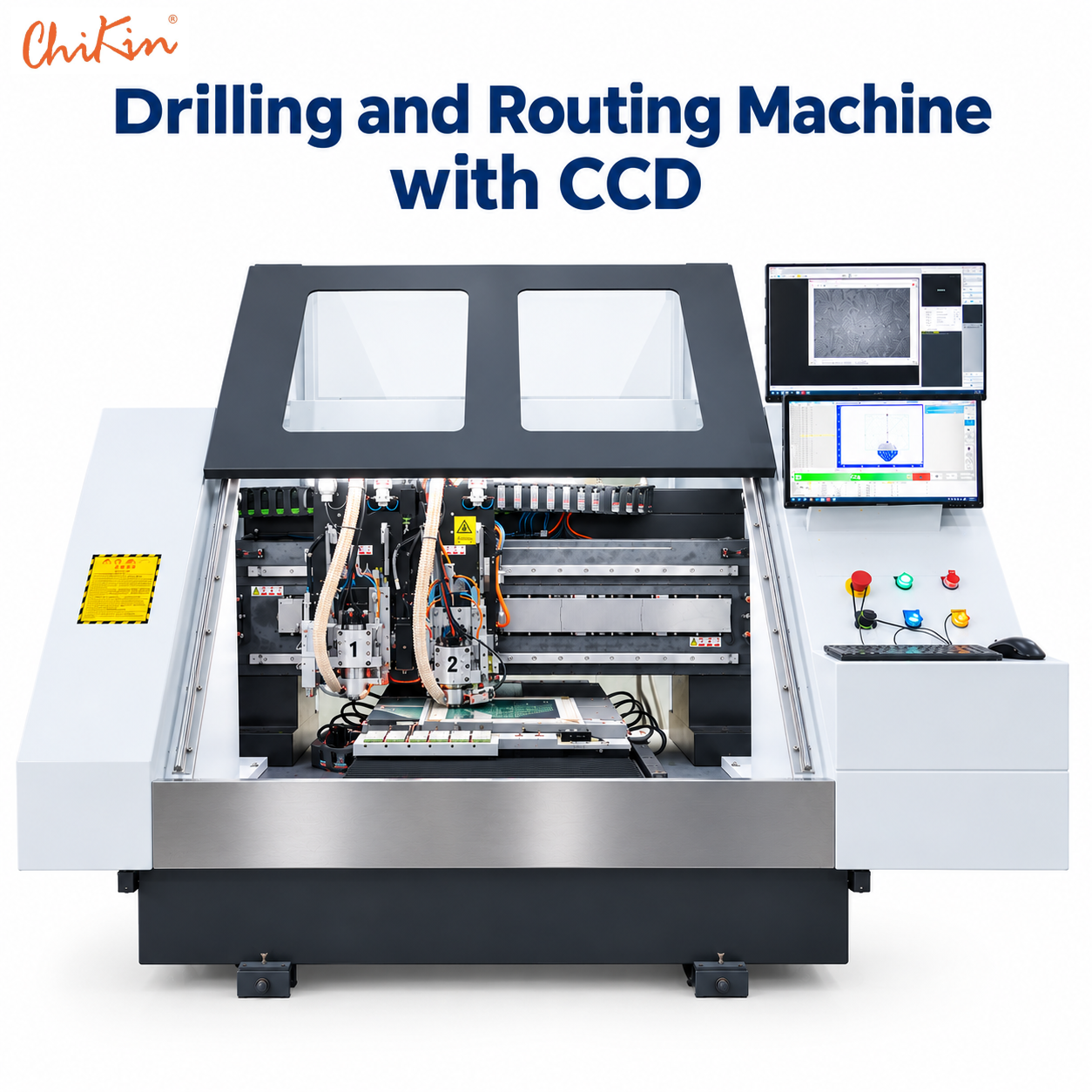
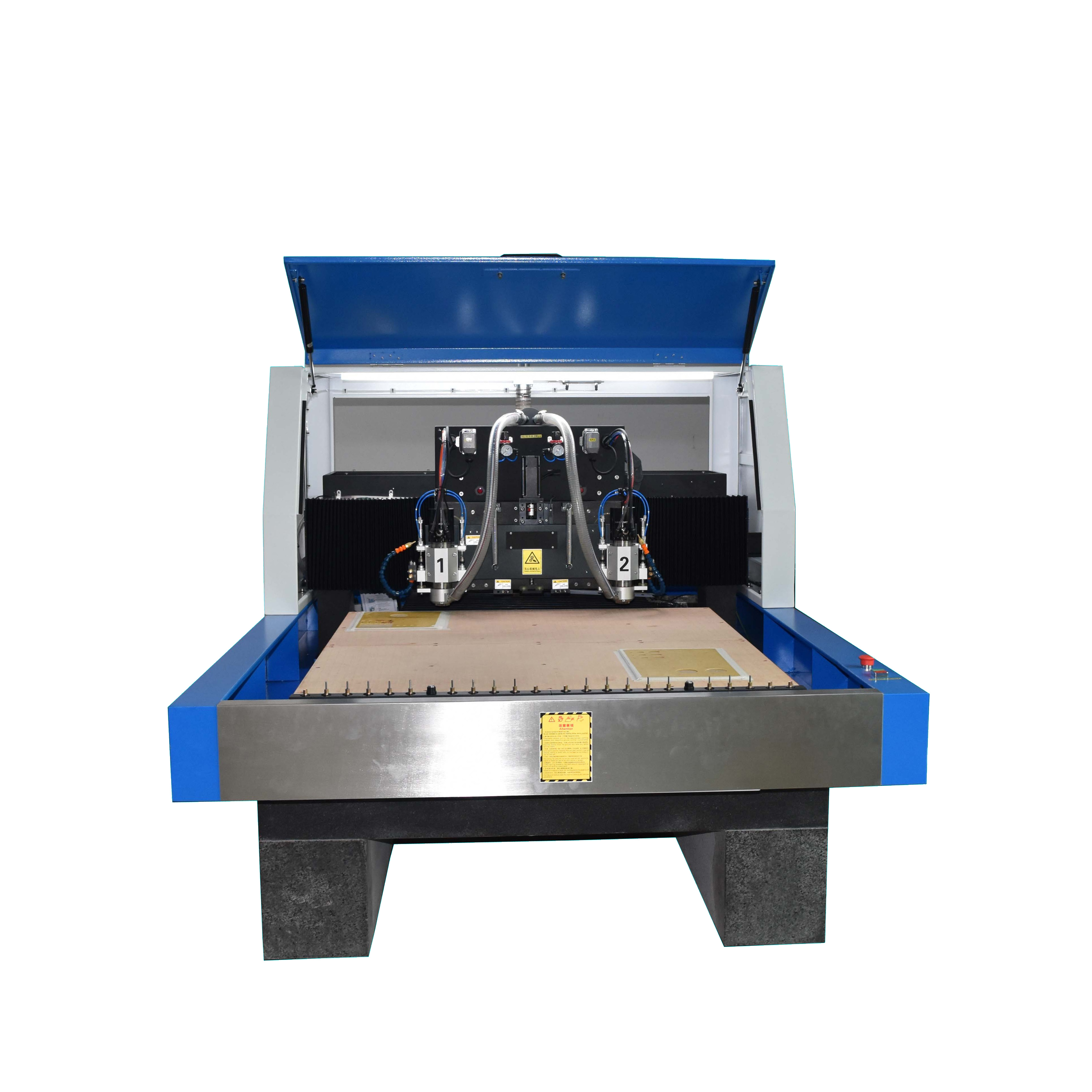
The model shown appears to be an enclosed industrial machine with a gantry-style frame, visible processing heads, cabling, and a side control interface. Based on the visible structure, it may also be suitable for related operations such as printed circuit board drilling, printed circuit board milling, or other precision sheet processing tasks. Exact process type and performance are not visible, so buyers should confirm the final configuration before purchase.
Product Structure and Working Concept
This type of equipment is typically built around a rigid body, linear rail motion, and a controlled working chamber. The enclosed design helps separate the process area from the operator environment, which is useful in busy workshops where dust control, safety, and process monitoring are important. The front working area in the image appears open, while the top access cover and side housings suggest a system designed for industrial use and routine maintenance access.
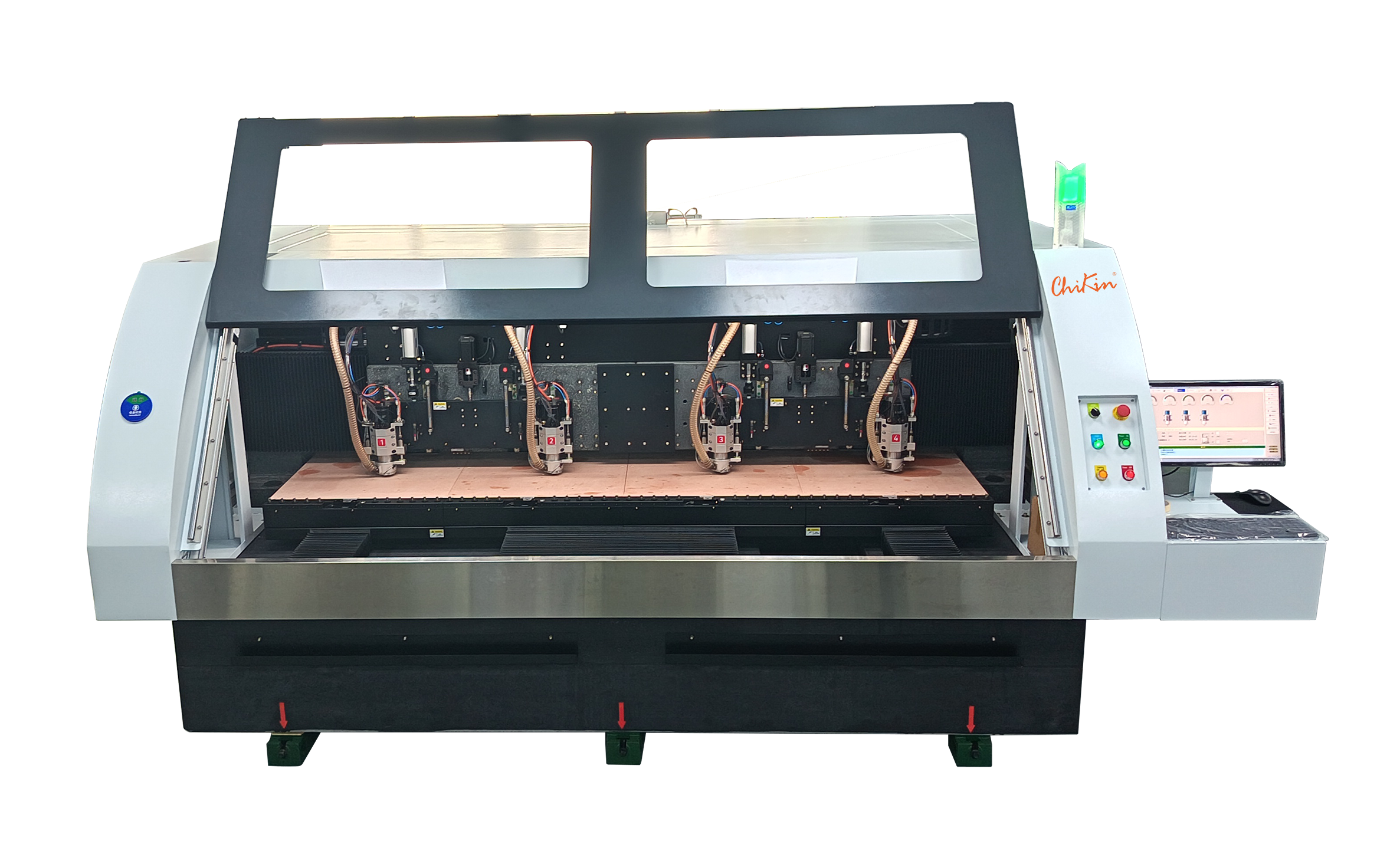
The visible control panel and display indicate computer-assisted operation. In practice, that means the operator can set parameters, load the program, and monitor machine status rather than relying on manual positioning. For buyers comparing a 4 spindle PCB machine or a multi spindle PCB router, this kind of layout is often considered when throughput and workflow stability are both priorities.
Key Specifications and Functional Features
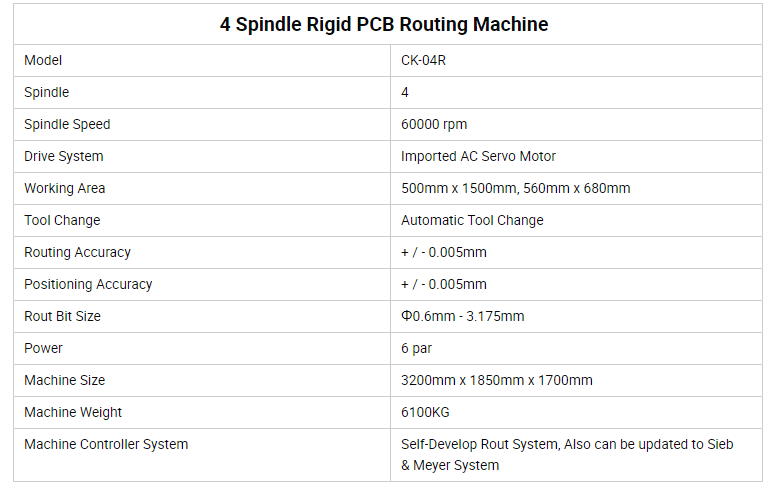
Because the image does not show technical data, the safest way to evaluate this PCB drilling machine is by configuration rather than assumed performance. Important buyer-facing points include the following:
Enclosed industrial frame
The white and blue painted metal body suggests a rigid machine enclosure suited for workshop environments. An enclosed frame can improve operator protection and help keep the process area cleaner.
Multi-head processing zone
Multiple mounted heads or nozzles are visible inside the machine. Depending on the final build, that arrangement may support drilling, marking, or milling-related operations. Buyers should verify whether the system is intended for printed circuit board drilling only or broader PCB routing equipment use.
Gantry and linear motion system
The internal rail and gantry arrangement points to automated axis movement. For precision work, smooth motion control is essential because hole spacing and path alignment affect downstream assembly.
Integrated control interface
A separate keypad panel and monitor make it easier to set parameters and observe operation. This is particularly useful in repeat production, where setup consistency matters from batch to batch.
Materials and Finish Options
The visible construction uses painted metal panels with a smooth industrial finish. White side housings, a blue top cover, and a dark base cabinet suggest a durable production machine appearance rather than a bench-top tool. While material details for internal components are not visible, industrial equipment in this category commonly uses steel structures, precision guides, and protective paneling.
If customization is offered, buyers often ask for enclosure color, access window style, cabling layout, dust extraction interface, or control cabinet placement. These options can improve shop integration without changing the core motion platform.
Manufacturing and Process Considerations
For PCB drilling and printed circuit board milling, machine stability is more important than appearance. The frame should resist vibration, the axes should move predictably, and the control system should support repeatable positioning. In a production setting, a machine like this may be used for hole making, slotting, contour work, or other board-processing steps, depending on the installed toolhead or laser module.
If the machine is configured as laser processing equipment, buyers should confirm the laser source, beam characteristics, and supported materials directly with the supplier. Those details are not visible here and should not be assumed from the enclosure alone.
Typical Application Scenarios
This kind of system is relevant for electronics workshops, fabrication shops, panel processing lines, and custom part production environments. It may suit users who need printed circuit board drilling with consistent positioning, or those looking for a PCB routing equipment platform that can handle small-to-medium batch workflow.
Outside strict PCB work, the same mechanical style is often seen in sheet-based industrial processing, including marking, engraving, or routing tasks on flat materials. The exact scope depends on the head configuration and software package.
Quality Control and Buyer Decision Factors
When comparing machines, focus on the items that affect output reliability: axis repeatability, frame rigidity, enclosure access, dust handling, control software, and serviceability. Ask for the working area size, spindle or laser specification, compatible board thickness range, and maintenance schedule. If a 4 spindle PCB machine is being considered, verify head spacing, independent control options, and whether each spindle is intended for simultaneous operation or staged use.
For a multi spindle PCB router, the most important questions are tool alignment, vibration control, and how the machine manages tool wear across repeated cycles. For laser-based configurations, request the process window, material compatibility list, and safety features before placing an order.
Customization Guidance
Buyers often benefit from tailoring the machine to their production flow. Common customization topics include control software integration, enclosure access design, vacuum or dust removal ports, fixture compatibility, and head configuration. If your factory handles mixed jobs, it may also be worth asking whether the platform can support both PCB drilling and printed circuit board milling with different tooling setups.
Contact for Configuration Review
If you are selecting a PCB drilling machine for a new line or upgrading existing PCB routing equipment, review the machine layout, control system, and process head configuration before purchase. Share your board type, output volume, and required process steps so the supplier can confirm the right setup for your application.