



PCB CNC drilling and routing machine for repeatable board fabrication
A PCB CNC drilling and routing machine helps manufacturers solve a common production problem: how to make precise holes, slots, outlines, and repeatable board features without relying on manual alignment. For prototyping and small-batch PCB work, consistency matters as much as speed. A computer-controlled system reduces positioning errors, supports steady output, and makes it easier to process flat board-like materials with the same geometry from part to part.
Product overview
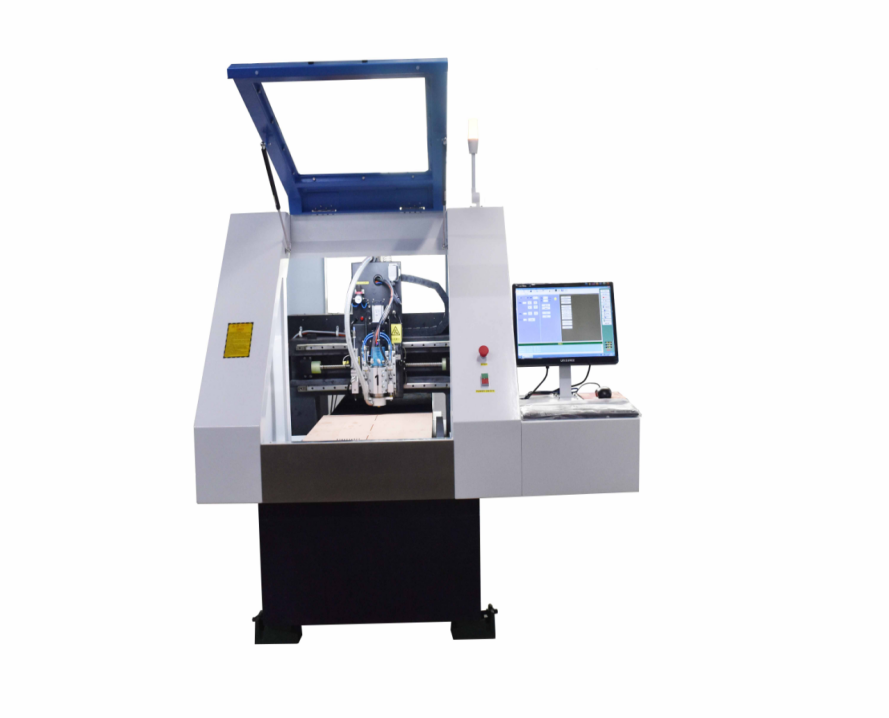
This enclosed CNC machine is built as an industrial automation platform for precision processing of sheet or board materials. Based on the visible structure, it uses a gantry-style motion system, linear rails, a vertical tool head, and a fixture-style worktable. The machine body is floor-standing and fully enclosed, with a front access opening and a top lid for loading and maintenance. A side-mounted control console with a display provides operator interaction and helps keep the work area organized.
For PCB production, this type of machine is typically used for drilling, routing, edge trimming, contour cutting, and similar repeatable fabrication tasks. Because the exact tool type is not identifiable from the image alone, it is safest to describe it as a computer-controlled machining system rather than claim a specific cutting method.
Specification
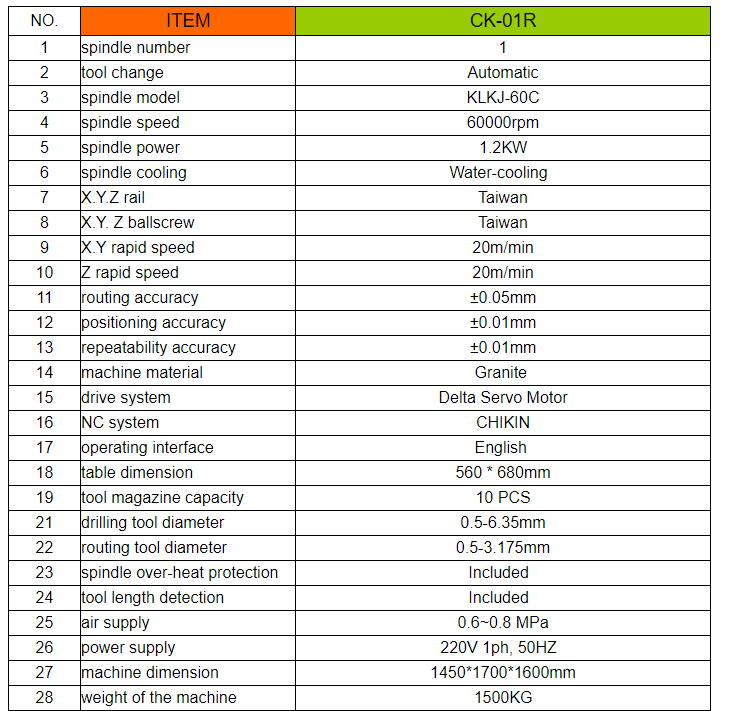
Key capabilities buyers usually look for
Repeatable motion control
The gantry carriage and guided axes indicate a machine designed for stable movement across a work area. In PCB processing, that stability is important for hole placement, panel outlining, and other operations where dimensional consistency affects assembly.
Enclosed processing area
The closed cabinet design helps separate the work zone from the operator side. That layout can improve safety, contain debris, and make the machine more suitable for controlled workshop environments.
Integrated operator interface
The side control console suggests straightforward program loading, machine monitoring, and job setup. For production teams, a dedicated panel can be easier to use than a disconnected laptop-only workflow.
Access for loading and service
The hinged top panel and front access opening provide convenient entry for board loading, tool checks, and maintenance tasks. These design details matter when the machine is used in frequent production cycles.
Materials and finish options
For PCB-related work, the machine may be used with common board materials and other flat substrates, depending on the installed tool and configuration. Typical production environments may include rigid boards, panel materials, plastics, or other machinable sheet goods used in electronics and fixture making. Since the exact cutting head is not confirmed, buyers should verify material compatibility before ordering.
The visible outer enclosure appears to use a light gray industrial finish with a black base, which is practical for workshop use. In many CNC machine projects, enclosure color, panel layout, viewing window style, and access-door design can often be adapted to plant preferences or line integration needs.
Manufacturing process and machine structure
A PCB CNC drilling and routing machine typically follows a simple production logic: the workpiece is fixed on the table, the program defines the motion path, and the tool head moves along programmed axes to complete drilling or contouring operations. The visible linear guides and cable management indicate attention to controlled motion and protected routing of electrical lines. These are important details in any automated machine because they affect reliability and service access.
From a machine-building perspective, the cabinet enclosure, gantry assembly, and operator console suggest a system intended for consistent industrial use rather than a benchtop hobby setup. Buyers comparing options may want to evaluate rigidity, axis travel, dust control, fixture design, and the ease of tool setup.
Application scenarios
This type of system is relevant to prototype labs, electronics workshops, contract manufacturers, and production lines handling short runs or custom orders. It can also support fixture machining, signage-style routing, and other flat-part processing tasks where accurate motion is more important than heavy stock removal.
For PCB users, the machine is especially useful when repeated drilling patterns, board outlines, and panel workflows need to be completed efficiently. In that context, a single spindle PCB drilling machine setup may be attractive for shops that prioritize simple operation and dedicated board processing.
Quality control and buyer decision factors
When evaluating a PCB drilling and milling machine or PCB CNC router, focus on the practical details that affect daily output: axis rigidity, repeatability, enclosure access, tool change workflow, dust extraction compatibility, and control software integration. If boards must be processed in panels, ask how the fixture system handles registration and workpiece flattening. If the machine will run mixed jobs, confirm the supported toolheads and software workflow before committing.
Because the image does not reveal exact specifications, buyers should request working area dimensions, spindle or head details, supported materials, and accuracy data directly from the supplier. That prevents mismatched expectations and helps match the machine to the real production task.
Customization guidance
Many industrial CNC platforms can be configured around the buyer’s workflow. Common customization areas include table size, enclosure layout, viewing access, control interface, axis travel, fixture plates, and dust or chip management. If your production line uses a specific panel size or board handling method, share that information early so the machine configuration can be aligned with the process.
Contact us for a suitable configuration
If you are comparing a PCB CNC drilling and routing machine for prototyping, small-batch output, or board panel processing, send your workpiece size, material type, and required operations. We can help you assess whether this machine layout fits your process and what options should be confirmed before purchase.