



How Can a Single Cutter PCB V Cut Machine Improve Controlled PCB Depaneling?
For a PCB assembly factory, depaneling is not just the last step before packing or transfer. It is the point where a nearly finished assembly can still be damaged by board bending, rough handling, poor alignment, or uncontrolled separation force. A panel may have already passed solder paste printing, component placement, reflow soldering, AOI inspection, and functional checks. If the separation process causes cracks, edge damage, solder joint stress, or component movement, the factory loses value at the final stage.
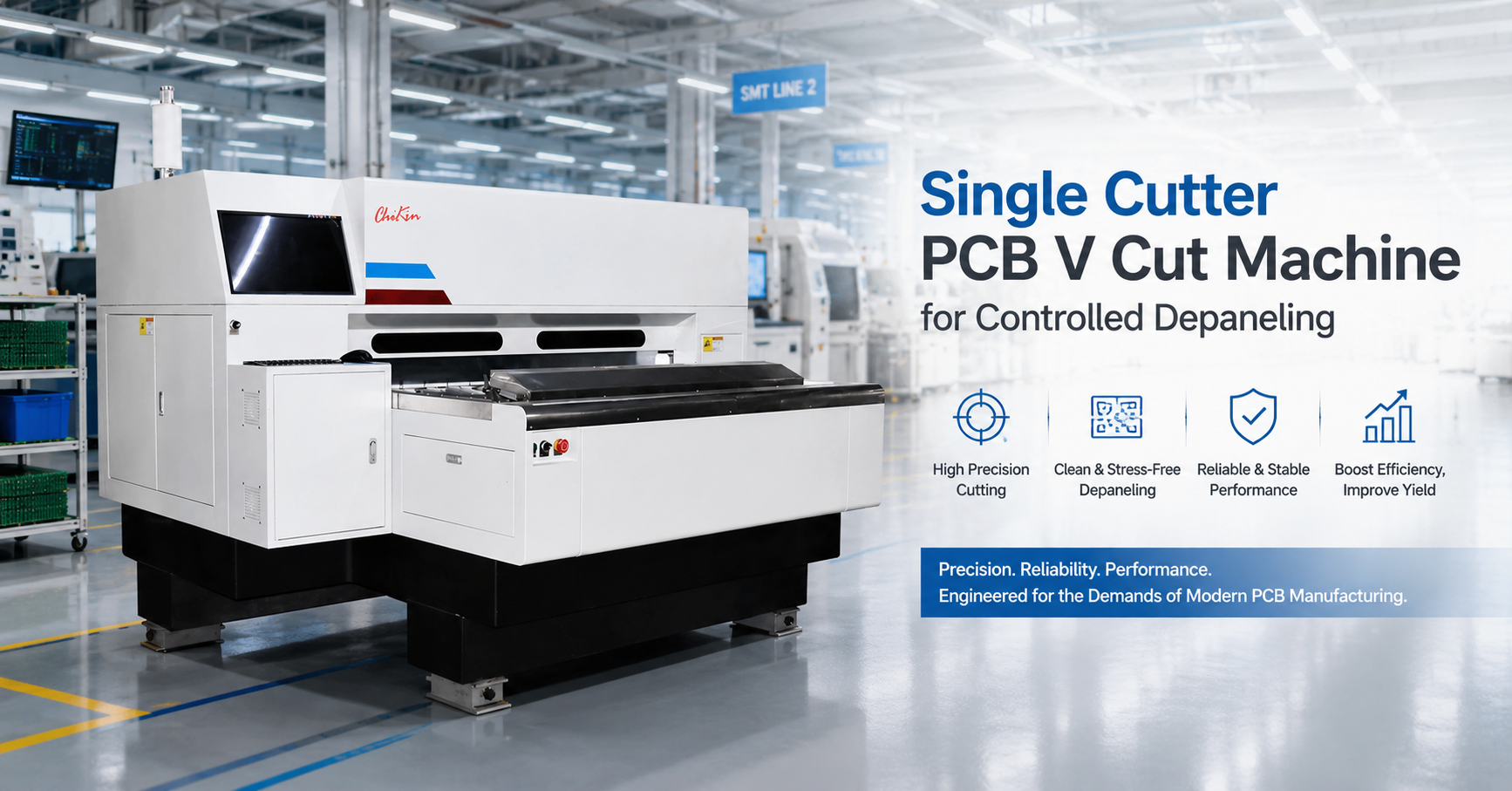
That is why many SMT factories and electronics manufacturers use a single cutter PCB V cut machine for controlled PCB depaneling. Compared with manual snapping, a dedicated PCB V cut machine gives operators a more stable way to separate V-groove PCB panels. The goal is not simply to cut faster. The more important purpose is to control the separation path, reduce unnecessary board flex, and make the depaneling process more repeatable across operators and shifts.
For B2B buyers searching for a PCB depaneling machine supplier, PCB board separator, V groove PCB cutting machine, or PCB V cut machine manufacturer, the buying decision should start with production risk. Can the machine match the factory’s board thickness, panel size, V-groove design, component clearance, output requirement, and operator workflow? If those points are not checked early, even a good-looking machine may fail to fit the actual production line.
Why Does PCB Depaneling Need Better Control?
PCB panels are used because they make assembly more efficient. Multiple boards can move through SMT production together, reducing handling time and improving line productivity. After assembly, each board must be separated from the panel frame or neighboring boards. This is where process control becomes important.
Manual separation may look simple, but it depends heavily on operator skill. One operator may hold the panel carefully. Another may bend it too much. A batch may separate cleanly in the morning and show edge cracks in the afternoon after tools wear or operators change. This kind of variation is difficult for production managers to control.
Chikin’s PCB machine buying guide lists V-CUT / V-grooving solutions as the recommended direction for panel separation when factories need controlled board separation for panelized PCB production. Chikin’s product category page also shows PCB V-cut machines as part of its PCB equipment range, alongside drilling, routing, laser cutting, and mechanical processing machines.
From a factory viewpoint, depaneling should be treated as a controlled production station, not as a simple manual finishing task. IPC-A-610 is a post-assembly acceptance standard used to help ensure electronic assemblies meet acceptance requirements, which is relevant because depaneling happens after much of the board’s production value has already been created.
What Is a Single Cutter PCB V Cut Machine?
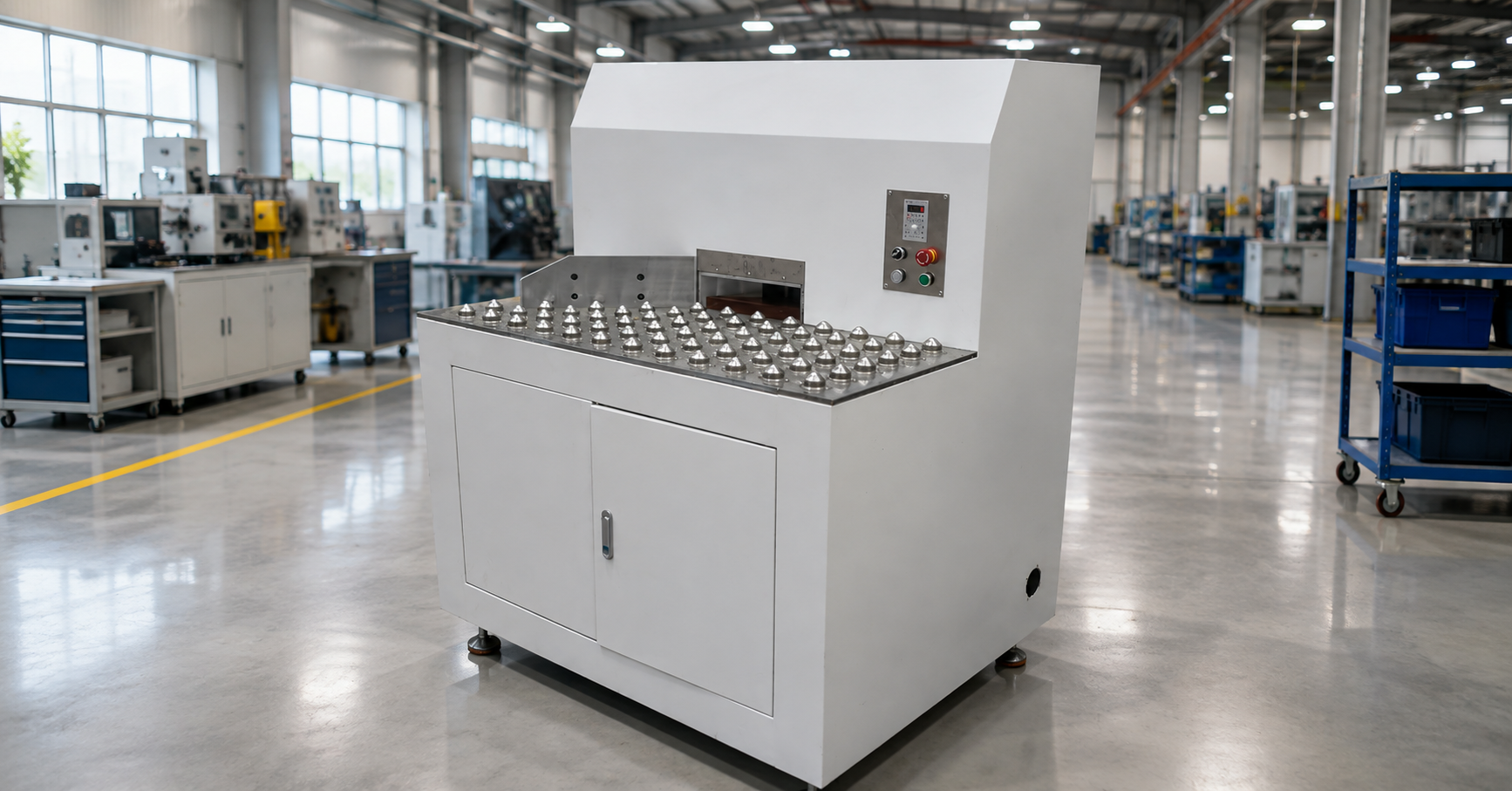
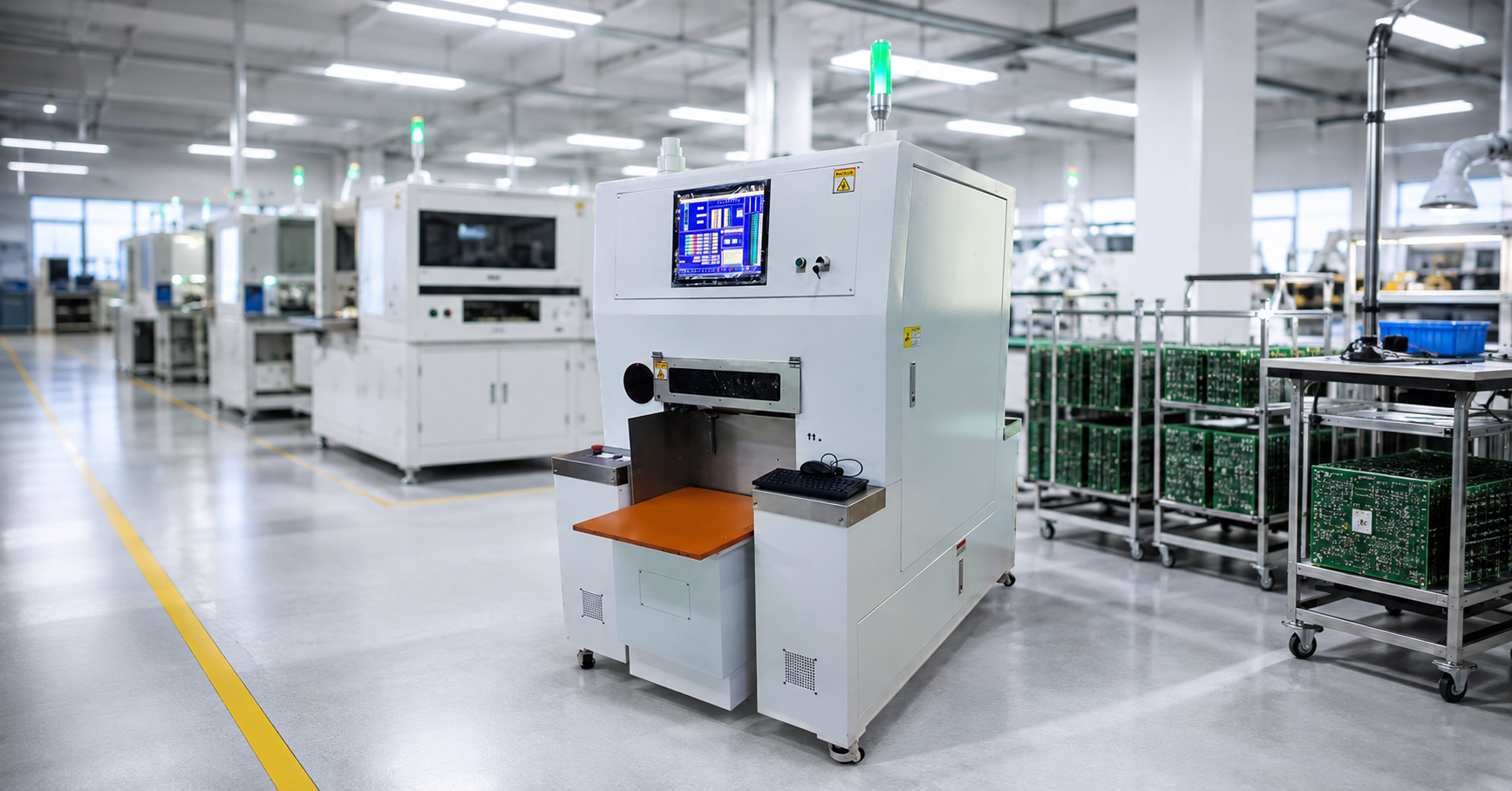
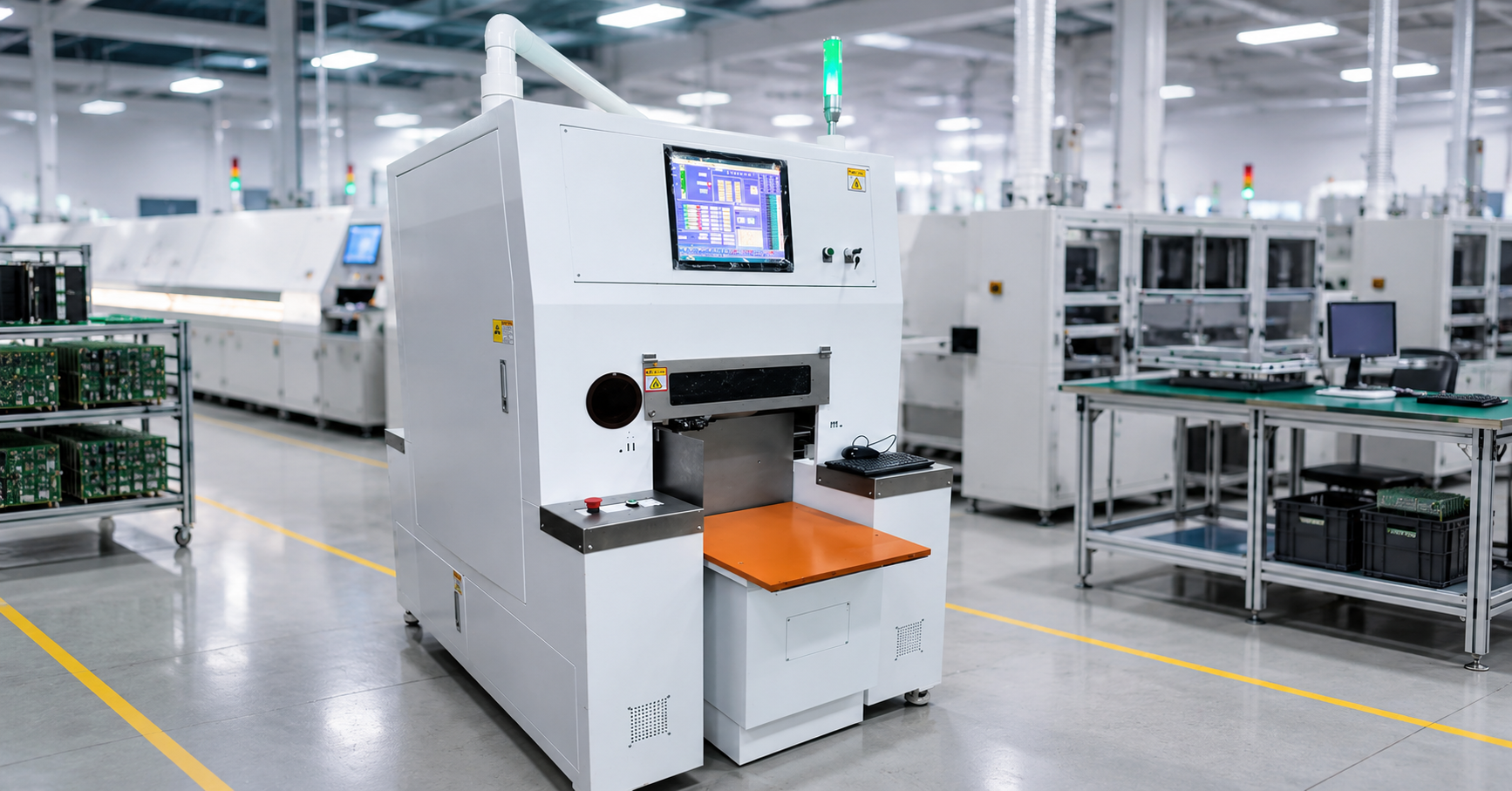
A single cutter PCB V cut machine is a depaneling machine used to separate PCB panels that already have V-groove score lines. Instead of bending the panel by hand, the machine guides the board along the V-cut line and uses a controlled cutting action to separate the boards.
The “single cutter” structure is useful for factories that process straight V-groove PCB panels and want a focused, manageable depaneling method. It is different from multi-cutter systems, routing depaneling machines, punching machines, or laser depaneling systems. Each method has its own place. A single blade PCB separator is usually most practical when the panel design is already suitable for V-score separation and the factory needs a repeatable station without unnecessary process complexity.
A machine like this is commonly considered by:
SMT assembly factories
PCB assembly contractors
Electronics manufacturing service providers
LED PCB assembly lines
Power supply board manufacturers
Consumer electronics assembly plants
Prototype and small-batch assembly workshops
Factories handling repeated V-groove panel designs
For these users, the real benefit is process discipline. The machine gives the operator a defined loading position, a controlled separation direction, and a more stable method than hand breaking.
What Should Factories Check Before Choosing a PCB V Cut Machine?
| Evaluation Point | What Factory Buyers Should Check | Why It Matters |
|---|---|---|
| Board Format | Panel length, width, thickness, and V-groove layout | Ensures the machine can handle the real production panel |
| V-Groove Design | Groove depth, remaining web thickness, straightness, and consistency | Poor scoring can still create damage even with a good separator |
| Component Clearance | Distance from components to the V-cut line | Reduces risk of solder joint stress or component collision |
| Fixture Support | Rail adjustment, table support, clamps, and board positioning method | Keeps the panel stable during separation |
| Cutting Control | Blade path, cutting speed, pressure, and operator adjustment options | Affects edge quality and board stress |
| Operator Interface | Screen, buttons, alarms, and operating language | Reduces training time and handling mistakes |
| Safety Design | Guarding, emergency stop, access control, and warning labels | Helps protect operators during repeated production |
| Maintenance Access | Blade replacement, rail cleaning, adjustment points, and spare parts | Affects long-term uptime |
| Sample Testing | Trial separation using real PCB panels | Confirms whether the machine fits the actual product |
| Supplier Support | Training, documentation, remote support, and spare parts availability | Protects production after installation |
This checklist is more useful than comparing machine photos. A PCB board separator may look compact and professional, but the real test is whether it matches the panel, fixture, operator process, and quality standard.
Why Is Board Stress the Main Risk in V-Cut Depaneling?
When a PCB panel is separated along a V-groove, the board can still bend if the process is not controlled. Bending may not always create visible damage at once. Sometimes the problem appears later as solder joint cracking, intermittent electrical failure, connector misalignment, or customer complaint.
This risk becomes higher when components are placed close to the score line. Large capacitors, connectors, ceramic components, BGAs, LEDs, and edge-mounted parts can be sensitive to mechanical stress. A factory should not only ask whether the PCB depaneling machine can cut the board. It should ask how the machine supports the board while cutting.
A controlled V groove PCB cutting machine helps by reducing freehand force. The operator does not need to snap the panel manually. The machine guides the cut along the existing V-score line, making separation more consistent. Still, board design remains important. If the V-groove is too shallow, too deep, uneven, or too close to sensitive components, the depaneling result may still be unstable.
Why Does Fixture Stability Matter?
Fixture stability is one of the most important details in depaneling. A cutter can only work correctly if the PCB panel is positioned correctly. If the panel shifts, tilts, or flexes during separation, the cutting path may no longer match the V-groove line.
For high-mix production, adjustable rails or supports can be useful because different panel sizes may enter the same depaneling station. For repeat production, a dedicated fixture may improve consistency. For boards with fragile components near the separation line, additional support may be needed under the board.
A factory should send real panel drawings to the supplier before ordering. The drawing should show panel size, board quantity per panel, V-cut location, board thickness, component clearance, and any tall components near the edge. With this information, the PCB V cut machine manufacturer can evaluate whether the standard machine is suitable or whether fixture adjustment is needed.
How Does a Single Cutter PCB V Cut Machine Fit into an SMT Line?
A controlled PCB depaneling machine may work as a standalone station, a semi-automatic station, or part of a broader production flow. The correct layout depends on output, product mix, operator availability, and inspection requirements.
In a small or medium factory, panels may be moved manually from AOI or functional testing to the depaneling station. The operator separates the boards, checks the edge, and places finished boards into trays. In a larger production line, depaneling may be integrated more tightly with upstream and downstream handling.
The factory should map the process before buying:
Where do assembled panels come from?
Who loads the V-cut machine?
How many panels must be separated per hour?
Where do separated boards go after cutting?
Is visual inspection needed immediately after depaneling?
Will operators handle several machines at the same time?
Does the machine need inline communication with other equipment?
These questions decide whether a manual, semi-automatic, or more automated PCB board separator for factories is the better choice.
Single Cutter V-Cut vs Other PCB Depaneling Methods
| Depaneling Method | Best-Fit Application | Main Advantage | Key Limitation |
|---|---|---|---|
| Single Cutter PCB V Cut Machine | Straight V-groove PCB panels | Controlled separation with relatively simple operation | Mainly suitable for V-scored designs |
| Manual Snapping | Very low-volume or non-critical boards | Lowest equipment investment | High operator variation and board stress risk |
| PCB Routing Depaneling | Irregular outlines and complex shapes | Flexible contour cutting | More dust, tool wear, and slower cycle in some cases |
| PCB Punching Machine | High-volume standardized panel designs | Fast cycle and repeatable die-based separation | Requires custom die investment |
| Laser Depaneling | Sensitive boards, fine shapes, low-stress separation | Non-contact, high precision | Higher equipment cost and process setup requirements |
Chikin’s PCB punching article notes that depaneling is a critical final step and compares common methods such as punching, V-cut scoring, routing, and laser depaneling. This comparison is useful because no single method is best for every board. A single cutter PCB V cut machine is practical when the factory already uses V-groove panel designs and wants a controlled, repeatable separation station.
Why Is Machine Safety Important for a Factory-Published Article?
A company blog should not only discuss output and price. It should also reflect the concerns of real factories: operator safety, maintenance access, emergency control, and safe machine operation.
ISO 12100:2010 specifies basic terminology, principles, and methodology for machinery safety risk assessment and risk reduction. For a PCB depaneling machine supplier, this means safety should not be treated as a decorative feature. Buyers should check emergency stop location, guarding, access doors, moving blade protection, warning labels, and maintenance procedures.
A good machine should allow operators to work efficiently without unnecessary exposure to moving parts. At the same time, maintenance staff should be able to access the cutter, fixture, rails, and electrical cabinet without wasting time or creating new safety problems.
What Questions Should Buyers Ask the Supplier?
Before requesting a final quotation, factory buyers should ask direct technical questions.
Can the machine process our panel size and thickness?
What V-groove depth or remaining web thickness is recommended?
How close can components be placed to the V-cut line?
Can the rails or fixtures be adjusted for different panels?
What is the cutting direction and blade path?
How is board flex reduced during separation?
What safety guarding is included?
How often should the blade be checked or replaced?
Can you run a sample test with our real panels?
What spare parts should we keep in stock?
Can you provide training, manuals, and remote support?
These questions help separate a general equipment seller from a real PCB V cut machine manufacturer. A professional supplier should be able to discuss board design, component clearance, tooling condition, fixture stability, and after-sales support in practical language.
Why Sample Testing Should Come Before Bulk Purchase
Sample testing is one of the safest ways to evaluate a PCB scoring machine. The buyer should send real V-scored panels, not only drawings. A sample test can show whether the panel aligns correctly, whether the edge is clean, whether the board bends too much, and whether components near the cut line remain safe.
During sample review, the buyer should inspect:
Edge smoothness
Board cracks or delamination
Component movement
Solder joint risk areas
Cutting consistency across several panels
Operator loading difficulty
Cycle time
Fixture adjustment time
Any abnormal noise or vibration
A sample test is especially useful for overseas buyers. Once a machine is shipped, correcting a mismatch costs more time and money. A short test before purchase can prevent a long correction later.
What Makes a PCB V Cut Machine Suitable for B2B Factory Use?
A machine for factory use should be different from a simple workshop tool. It should support repeated daily operation, clear operator workflow, stable adjustment, safe access, and predictable maintenance.
For a B2B factory buyer, the best single cutter PCB V cut machine should provide:
Stable support for V-scored panels
Repeatable cutting along the groove line
Easy adjustment for production needs
Clear operation interface
Safe guarding and emergency controls
Convenient blade and fixture maintenance
Reliable spare parts supply
Supplier support after installation
These features help factories build a standard process. That is the key difference between “separating a board” and “running a controlled depaneling station.”
Common Mistakes When Buying a PCB Board Separator
One common mistake is choosing only by machine price. A low-cost machine can become expensive if it causes board damage, unstable edge quality, or downtime.
Another mistake is ignoring the PCB panel design. If the V-groove is inconsistent or components are too close to the separation line, the machine may not solve the full problem.
Some buyers focus only on the blade and forget the fixture. In real production, board support is just as important as cutting.
There is also a tendency to compare machines by exterior appearance. A clean cabinet and touchscreen are useful, but they do not prove compatibility with the buyer’s panels.
A final mistake is skipping service questions. A depaneling machine uses cutting parts and mechanical adjustment. The buyer needs spare parts, training, and maintenance guidance. Without support, production teams may struggle after installation.
How Can Chikin CNC Support PCB Depaneling Buyers?
Chikin CNC provides PCB equipment categories that include drilling machines, drilling and routing machines, laser cutting machines, mechanical processing equipment, and PCB V-cut machines. For factories that already use Chikin drilling, routing, AOI, laser cutting, or other PCB equipment, a V-cut solution can be considered as part of a more complete PCB production workflow.
For a buyer, the next step should be technical communication rather than a quick price request. Send the panel drawing, board thickness, V-groove layout, component clearance, current depaneling problem, and production volume. Then ask for machine matching, fixture advice, and sample testing.
That is a more reliable path for factory purchasing. It helps the supplier recommend a machine according to real panel conditions, not just a product category.
FAQ
What is a single cutter PCB V cut machine used for?
A single cutter PCB V cut machine is used to separate V-groove PCB panels into individual boards in a more controlled way than manual snapping. It is suitable for factories that process straight V-scored panels and need repeatable depaneling.
Is a PCB V cut machine suitable for every board?
No. A PCB V cut machine is mainly suitable for boards designed with V-groove score lines. Irregular board outlines, highly sensitive assemblies, or non-scored panels may require routing, punching, or laser depaneling instead.
Why should factories avoid manual board breaking?
Manual breaking can create inconsistent bending force. This may increase the risk of edge damage, solder joint stress, component movement, or operator-to-operator variation.
What should buyers confirm before ordering?
Buyers should confirm panel size, board thickness, V-groove depth, remaining web thickness, component clearance, fixture method, cutting path, automation level, safety design, maintenance access, spare parts, and sample testing.
Is sample testing necessary?
Yes. Sample testing with real panels helps confirm separation quality, fixture suitability, edge condition, board stress, and operator workflow before the machine enters production.
How does this machine help B2B factories?
It helps factories standardize the depaneling process, reduce manual variation, improve edge consistency, protect assembled boards, and make final separation easier to manage across production shifts.
Conclusion
A single cutter PCB V cut machine is valuable when a PCB assembly factory needs controlled separation for V-groove panels. Its purpose is not just to split boards apart. It helps reduce uncontrolled bending, improve operator consistency, protect assembled PCBs, and create a more repeatable depaneling process.
For B2B buyers, the correct evaluation should begin with the panel design. Board thickness, V-groove layout, component clearance, fixture support, output requirement, safety design, and maintenance access all matter. A machine that matches these details can support stable production. A machine chosen only by price or appearance may create hidden risk.
As a factory-published guide, the main message is clear: controlled depaneling protects production value. When a PCB panel has already passed multiple assembly steps, the final separation process deserves the same level of attention as drilling, routing, soldering, and inspection. A well-matched PCB board separator can help factories make that final step safer, cleaner, and more predictable.