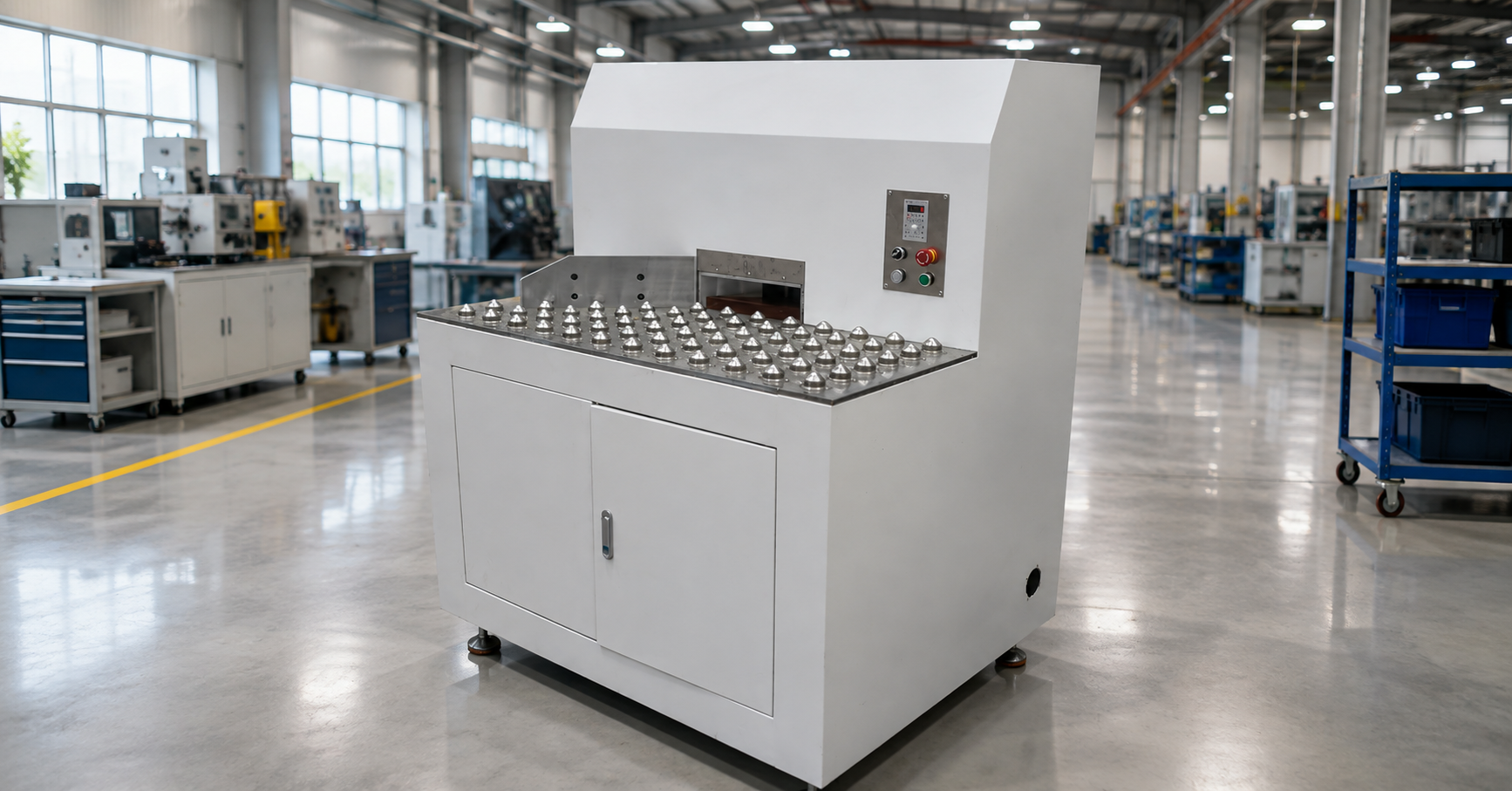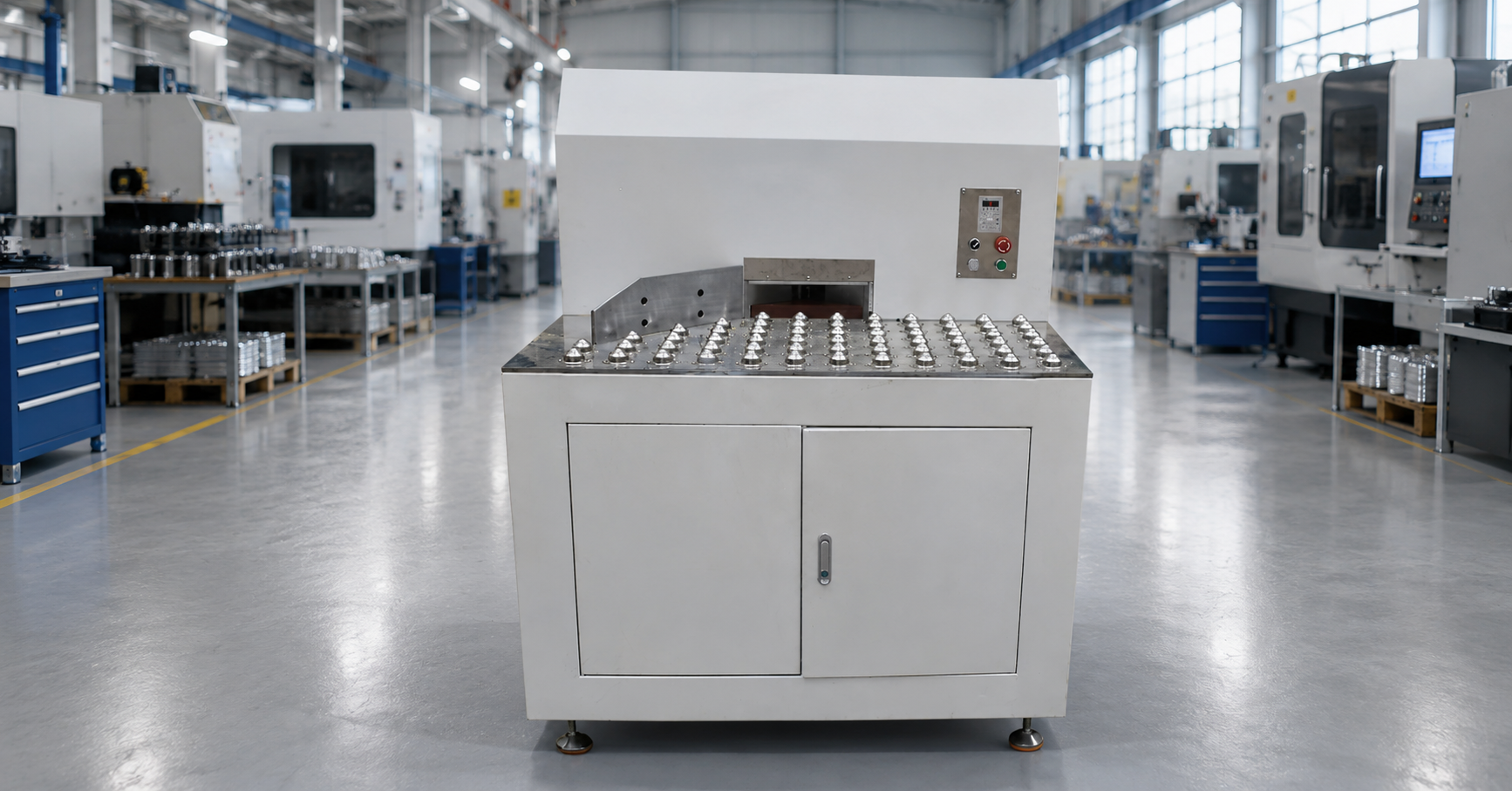




In PCB manufacturing, printing processes play an important role in transferring markings, legends, solder mask patterns, conductive materials, and other functional coatings onto board surfaces.
A reliable PCB Silk Screen Printing Machine Supplier provides more than a printing machine. The supplier should understand:
- PCB material characteristics
- Printing accuracy requirements
- Ink or paste properties
- Board dimensions
- Production capacity
- Automation requirements
- Long-term maintenance needs
Many buyers focus only on machine price or printing speed, but stable PCB printing depends on the complete system:
- Registration accuracy
- Printing pressure control
- Table flatness
- Squeegee movement
- Screen positioning
- Machine rigidity
- Process repeatability
Choosing an unsuitable supplier may result in:
- Misalignment problems
- Uneven ink coverage
- Higher rejection rates
- Longer setup time
- Difficult maintenance
- Limited technical support
A professional PCB screen printing machine manufacturer should help buyers select equipment according to their production process instead of simply providing a standard machine.
What Is a PCB Silk Screen Printing Machine?
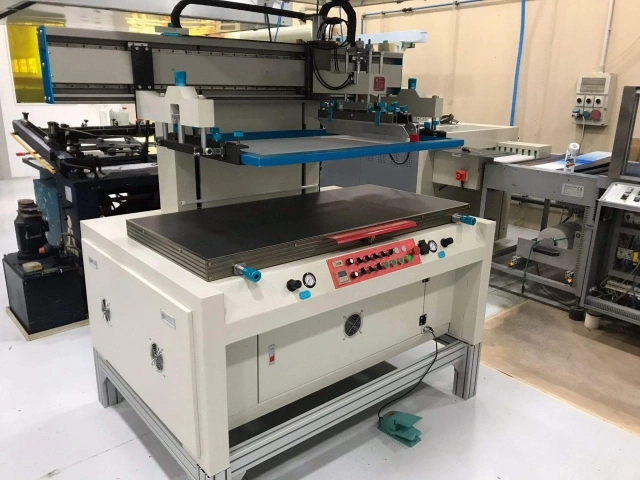
A PCB silk screen printing machine is industrial equipment designed to transfer ink, solder mask, paste, or other materials onto flat PCB boards and panels through a screen-printing process.
The basic working process includes:
- PCB positioning
- Screen alignment
- Ink or paste application
- Squeegee movement
- Pattern transfer
- Board removal and inspection
Compared with manual printing methods, automated PCB screen printing equipment provides:
- Better repeatability
- More stable alignment
- Higher production efficiency
- Reduced operator variation
- Consistent printing quality
For PCB manufacturers producing repeated board designs, automated screen printing systems help improve production stability.
Who Needs a PCB Silk Screen Printing Machine Supplier?
PCB Manufacturing Factories
PCB factories use screen printing equipment for:
- PCB markings
- Legend printing
- Solder mask applications
- Functional coating processes
- Flat panel printing
Their main requirements include:
- Stable registration
- High repeatability
- Production efficiency
- Easy maintenance
Electronics Manufacturing Companies
Electronics manufacturers with internal PCB processing capabilities may require printing systems for:
- Prototype production
- Small-batch manufacturing
- Engineering validation
- Customized products
A suitable supplier helps match the machine with the existing production workflow.
PCB Prototype Facilities
Prototype factories often need flexible equipment for:
- Different board designs
- Frequent product changes
- Short production cycles
- Engineering samples
A reliable PCB silk screen printing machine supplier should provide flexible configuration options.
PCB Equipment Integrators
Equipment integrators and distributors may require:
- OEM cooperation
- Stable supply capability
- Technical documentation
- Customized machine configuration
- Long-term cooperation
Direct manufacturers are usually better suited for these projects.
How to Evaluate a PCB Silk Screen Printing Machine Manufacturer
1. Verify Manufacturing Capability
The first step is confirming whether the supplier has real manufacturing capability.
A professional PCB printing machine manufacturer should have:
- Production workshop
- Mechanical engineering team
- Electrical control experience
- Assembly capability
- Testing procedures
- Technical service team
Buyers should ask:
- Is the machine produced internally?
- Who designs the mechanical structure?
- How is printing accuracy tested?
- What quality checks are completed before shipment?
Direct manufacturers usually provide better technical communication compared with trading companies.
2. Evaluate Printing Accuracy and Registration
Printing accuracy is one of the most important factors for PCB screen printing equipment.
Buyers should evaluate:
- Positioning accuracy
- Screen alignment
- Table flatness
- Printing repeatability
- Squeegee movement stability
- Registration adjustment method
Poor alignment may cause:
- Incorrect markings
- Uneven printing
- Material waste
- Additional rework
A suitable machine should maintain consistent results across repeated production cycles.
3. Check Printing Area and Board Compatibility
Before purchasing, buyers should confirm:
- Maximum printing size
- Minimum board size
- Board thickness range
- Material type
- Production volume
The supplied CK-65120 specification includes:
| Item | Specification |
|---|---|
| Model | CK-65120 |
| Printing table area | 700 × 1450 mm |
| Printing area | 650 × 1200 mm |
| Fine adjustment | ±10 mm |
| Printed panel thickness | ≤20 mm |
| Printing speed | 600 times/hour |
Actual capability should be confirmed according to the final configuration and application.
4. Review Machine Structure and Stability
A PCB silk screen printing machine requires stable mechanical movement.
Important factors include:
- Machine frame rigidity
- Worktable stability
- Rail system quality
- Squeegee movement
- Screen mounting structure
- Vibration control
The presented machine uses an industrial flatbed structure with:
- Floor-standing cabinet design
- Raised worktable
- Moving print head system
- Operator control panel
These features support repeatable printing operations in manufacturing environments.
5. Evaluate Automation Features
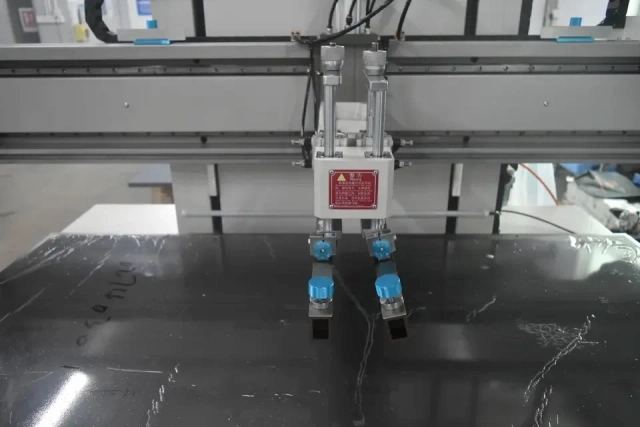
Modern PCB factories require equipment that reduces manual variation.
Useful features include:
- Automatic positioning
- Programmable printing parameters
- Controlled squeegee movement
- Digital operation interface
- Production monitoring
Automation helps improve:
- Production consistency
- Operator efficiency
- Process control
- Repeatability
6. Confirm Ink and Material Compatibility
Different PCB applications require different printing materials.
Buyers should confirm:
- Ink type
- Paste characteristics
- Screen specifications
- Printing pressure requirements
- Drying or curing process requirements
The supplier should understand the relationship between:
- Material viscosity
- Screen mesh
- Squeegee pressure
- Printing speed
- Surface quality
7. Request Sample Printing Tests
Sample testing is an important step before purchasing.
Provide:
- PCB samples
- Artwork files
- Ink information
- Board dimensions
- Quality requirements
Evaluate:
- Registration accuracy
- Ink thickness
- Edge definition
- Printing consistency
- Cycle time
- Repeatability
A supplier should demonstrate actual results instead of only providing technical specifications.
8. Check Quality Control Procedures
A reliable PCB screen printing machine supplier should have quality control covering:
- Mechanical assembly
- Electrical systems
- Motion accuracy
- Printing testing
- Safety inspection
- Final acceptance
Buyers should request:
- Machine testing reports
- Production videos
- Inspection records
- Acceptance standards
9. Evaluate Customization Capability
Different PCB production lines have different requirements.
Customization may include:
- Printing table size
- Board positioning system
- Automation interface
- Software functions
- Production line integration
- Special fixtures
A capable manufacturer should discuss the customer's process before finalizing equipment configuration.
10. Confirm Technical Support and After-Sales Service
PCB printing equipment requires long-term support.
Important services include:
- Installation guidance
- Operator training
- Maintenance support
- Spare parts
- Remote troubleshooting
- Process optimization
For overseas customers, supplier response capability is especially important.
PCB Silk Screen Printing Machine Supplier vs Trading Company
| Factor | Direct Manufacturer | Trading Company |
|---|---|---|
| Engineering support | Direct | Indirect |
| Customization | Strong | Limited |
| Machine knowledge | Complete | Depends on supplier |
| Spare parts | Direct supply | Additional coordination |
| After-sales | Manufacturer team | Third party |
| Process understanding | Stronger | Depends on supplier |
For production equipment, direct communication with the manufacturer often provides better technical support and customization flexibility.
Product Match: CHIKIN CNC PCB Silk Screen Printing Machine
The matching product for this article is:
PCB Silk Screen Printing Machine for Flatbed Board Printing
This equipment is designed for:
- Flatbed PCB printing
- Panel printing
- Repeated marking processes
- Stable ink transfer applications
Reference specifications:
| Item | Specification |
|---|---|
| Model | CK-65120 |
| Printing table area | 700 × 1450 mm |
| Printing area | 650 × 1200 mm |
| Printing speed | 600 times/hour |
| Panel thickness | ≤20 mm |
| Core components | PLC, Motor |
| Weight | 900 KG |
| Warranty | 1 Year |
Why Consider CHIKIN CNC as a PCB Silk Screen Printing Machine Supplier?
CHIKIN CNC provides PCB manufacturing equipment solutions including:
- PCB drilling equipment
- PCB routing equipment
- PCB cutting equipment
- PCB inspection equipment
- PCB testing equipment
- PCB printing-related equipment
As a direct equipment manufacturer, CHIKIN CNC supports customers with:
- Equipment selection
- Technical consultation
- Production workflow planning
- Customized solutions
- After-sales support
Buyers can review the complete CHIKIN CNC PCB equipment portfolio.
Related product:
PCB Silk Screen Printing Machine for Flatbed Board Printing
Buyer Checklist Before Requesting a Quote
| Information | Details |
|---|---|
| Board size | Maximum and minimum dimensions |
| Material | PCB type and substrate |
| Printing purpose | Marking, coating, solder mask |
| Ink type | Required printing material |
| Accuracy | Registration requirement |
| Production volume | Daily output |
| Automation level | Manual or automatic |
| Screen specification | Mesh and frame requirements |
| Service | Installation and training |
FAQ: PCB Silk Screen Printing Machine Supplier
What does a PCB silk screen printing machine supplier provide?
A professional supplier provides printing equipment, configuration support, installation, training, spare parts, and technical service.
Why use automated PCB screen printing equipment?
Automation improves printing consistency, reduces operator variation, and increases production efficiency.
Should I choose a manufacturer or trading company?
A direct manufacturer usually provides better customization, technical communication, and long-term support.
What affects PCB screen printing quality?
Important factors include alignment accuracy, table stability, printing pressure, ink properties, and machine repeatability.
Can PCB printing machines be customized?
Yes. Manufacturers can customize printing areas, fixtures, automation features, and control systems.
What information should buyers provide?
Provide board size, material, printing requirements, production volume, accuracy requirements, and workflow information.
Why is sample testing important?
Sample testing verifies real printing quality and compatibility before purchasing.
How important is after-sales support?
Reliable support helps reduce downtime and maintain stable production.
Conclusion: Choose a PCB Silk Screen Printing Machine Supplier as a Long-Term Partner
Choosing a PCB Silk Screen Printing Machine Supplier requires evaluating more than equipment price.
PCB manufacturers should consider:
- Manufacturing capability
- Printing accuracy
- Machine stability
- Material compatibility
- Customization ability
- Sample testing
- Technical support
- Long-term service
A reliable supplier helps manufacturers improve printing consistency, reduce production variation, and build a more efficient PCB manufacturing workflow.
CHIKIN CNC provides PCB printing equipment solutions for manufacturers looking for stable, customizable, and production-oriented systems.
Request a PCB Silk Screen Printing Machine Consultation from CHIKIN CNC
If you are evaluating PCB screen printing equipment for a new production line or upgrading an existing process, CHIKIN CNC can help review your requirements.
Prepare:
- PCB size
- Printing materials
- Board thickness
- Production volume
- Accuracy requirements
- Automation expectations
- Existing workflow
The CHIKIN CNC team can help recommend a suitable PCB silk screen printing machine configuration, discuss technical requirements, and provide a customized quotation.
Contact CHIKIN CNC for a PCB printing equipment consultation: