



Why Choosing the Right PCB Dry Film Lamination Machine Supplier Matters
In PCB manufacturing, dry film lamination is a critical preparation process before imaging and etching.
A reliable PCB Dry Film Lamination Machine Supplier helps manufacturers achieve stable photoresist transfer by controlling:
- Film alignment
- Roller pressure
- Feeding speed
- Temperature stability
- Surface contact quality
Although dry film lamination is only one step in PCB production, small process variations can create significant downstream problems, including:
- Wrinkles
- Air bubbles
- Uneven adhesion
- Film displacement
- Pattern defects
- Higher rework rates
Choosing the right supplier is therefore not only about purchasing a laminating machine. Buyers need to evaluate:
- Machine structure
- Roller system
- Pressure control
- Process repeatability
- Manufacturing capability
- Customization options
- Technical support
A professional PCB dry film laminator manufacturer should understand the relationship between equipment performance and the complete PCB imaging process.
What Is a PCB Dry Film Lamination Machine?
A PCB dry film lamination machine is equipment used to apply dry film photoresist onto prepared PCB panels through controlled roller pressure and feeding movement.
The basic process includes:
- PCB surface preparation
- Dry film loading
- Film alignment
- Roller pressing
- Photoresist bonding
- Exposure and imaging process
The purpose of the laminator is to create:
- Uniform film attachment
- Stable photoresist transfer
- Reduced surface defects
- Consistent imaging conditions
Compared with manual film application, automated or semi-automatic laminating equipment provides:
- Better repeatability
- More stable pressure
- Reduced operator variation
- Higher production efficiency
Who Needs a PCB Dry Film Lamination Machine Supplier?
PCB Manufacturing Factories
PCB manufacturers use dry film laminators for:
- Inner-layer processing
- Outer-layer processing
- Circuit pattern transfer
- Prototype production
- Small and medium batch manufacturing
Their main concerns include:
- Film adhesion quality
- Production consistency
- Process stability
- Equipment reliability
PCB Prototype Manufacturers
Prototype factories often process:
- Multiple PCB designs
- Engineering samples
- Low-volume orders
- Frequent product changes
A suitable dry film lamination machine helps shorten preparation time between PCB design and imaging.
Electronics R&D Departments
Engineering teams may require dry film processing equipment for:
- Prototype validation
- Process experiments
- New product introduction
- Small-batch PCB development
Compact and stable laminators can support faster development cycles.
PCB Equipment Integrators
System integrators and distributors may require:
- OEM cooperation
- Stable manufacturing capability
- Technical documentation
- Customized configurations
- Long-term supplier relationships
Direct PCB dry film lamination machine manufacturers are usually more suitable for these projects.
How to Evaluate a PCB Dry Film Lamination Machine Manufacturer
1. Confirm Manufacturing Capability
The first step is verifying whether the supplier has real equipment manufacturing capability.
A professional PCB dry film laminator manufacturer should have:
- Mechanical engineering capability
- Equipment assembly experience
- Electrical control integration
- Quality inspection procedures
- Technical support team
Buyers should ask:
- Is the machine produced internally?
- Who designs the roller system?
- How is pressure accuracy tested?
- How is machine performance verified before shipment?
A direct manufacturer usually provides better technical communication than a trading company.
2. Evaluate Lamination Accuracy and Stability
The key value of a dry film laminator is stable film transfer.
Buyers should evaluate:
- Roller pressure consistency
- Feeding accuracy
- Film alignment
- Surface contact quality
- Wrinkle prevention
- Repeatability
A stable lamination process helps reduce:
- Air bubbles
- Film separation
- Pattern defects
- Production waste
3. Check Roller System Design
The roller system is one of the most important components.
Important factors include:
- Roller material
- Roller diameter
- Pressure adjustment
- Parallelism
- Surface condition
- Wear resistance
The supplied CK-680 dry film lamination machine specification includes:
| Item | Specification |
|---|---|
| Model | CK-680 |
| Effective worktable width | 680 mm |
| Feeding speed | 0–4 m/min adjustable |
| Heating method | Resistive 1500W |
| Laminating wheel length | 730 mm |
| Roller pressure | 0–7 kg adjustable |
| Press roller temperature | Around 150°C adjustable |
| Temperature control | PID control |
| Power supply | AC220V 50Hz 4.5KW |
Actual performance should be confirmed according to film type, PCB material, and production requirements.
4. Evaluate Temperature Control Capability
Temperature stability affects dry film adhesion.
Buyers should check:
- Heating method
- Temperature range
- Temperature control accuracy
- Heating uniformity
- Thermal stability
The reference specification includes PID temperature control and adjustable roller temperature.
A stable heating system helps maintain consistent lamination results during continuous production.
5. Confirm PCB Size and Production Capacity
Before purchasing, buyers should provide:
- PCB dimensions
- Film width
- Board thickness
- Production volume
- Process requirements
The CK-680 reference specification lists:
- Effective working width: 680 mm
- Plate thickness range: 0.03–4.0 mm
The supplier should confirm whether the machine matches the customer’s actual production workflow.
6. Review Machine Structure and Stability
A dry film laminator requires stable mechanical movement.
Important factors include:
- Frame rigidity
- Roller support structure
- Feeding stability
- Cabinet protection
- Maintenance accessibility
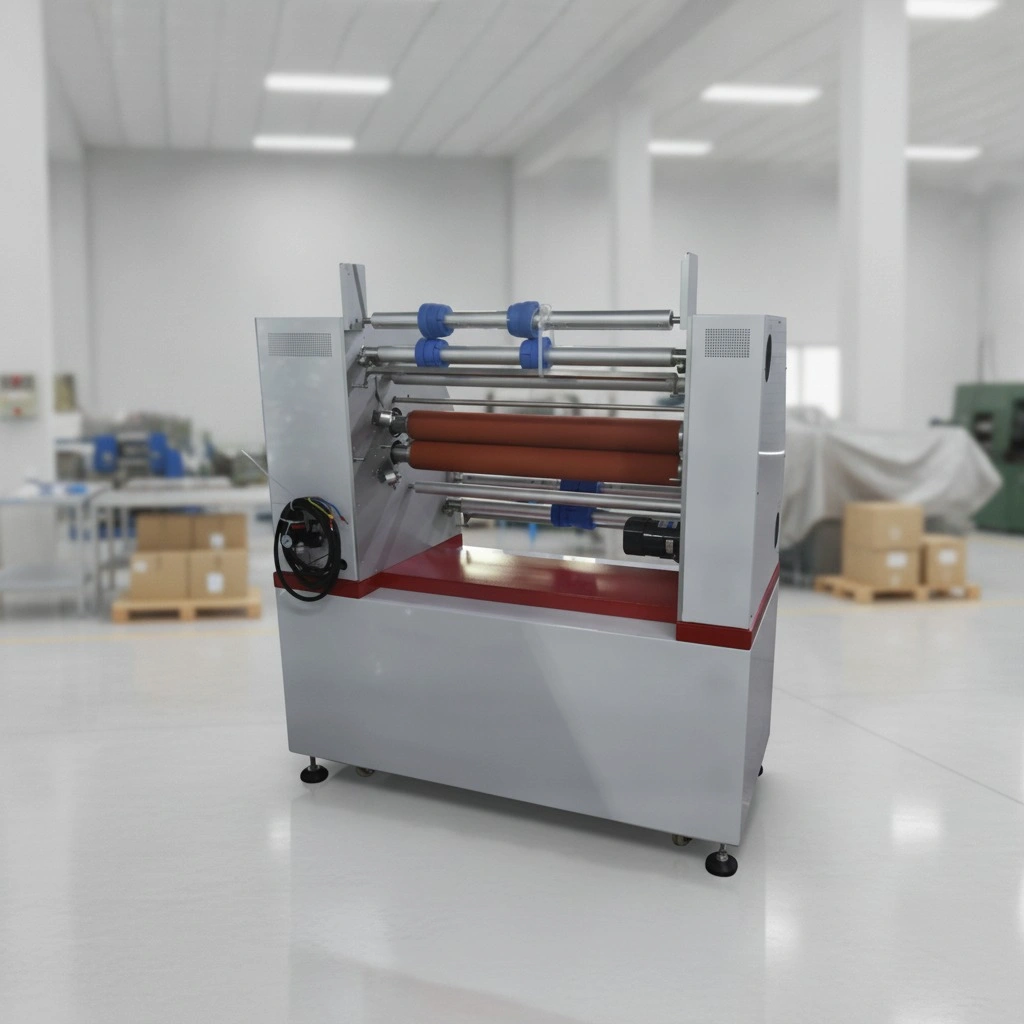
The presented machine uses:
- Enclosed cabinet base
- Multiple roller structure
- Front operation area
- Control panel
- Adjustable support components
These features support controlled production environments.
7. Check Film Handling Capability
Dry film processing requires careful material handling.
Buyers should evaluate:
- Film loading method
- Alignment adjustment
- Tension control
- Dust prevention
- Roller cleaning
- Film guidance system
Poor film handling can create:
- Wrinkles
- Misalignment
- Uneven bonding
- Surface defects
8. Request Sample Lamination Testing
Sample testing is one of the most important purchasing steps.
Provide:
- PCB samples
- Dry film specifications
- Board thickness
- Required output quality
Evaluate:
- Film adhesion
- Surface appearance
- Wrinkle control
- Alignment accuracy
- Production speed
- Repeatability
A supplier should demonstrate actual lamination results before purchase.
9. Review Quality Control Procedures
A reliable PCB Dry Film Lamination Machine Supplier should have quality control covering:
- Mechanical assembly
- Roller inspection
- Temperature testing
- Electrical testing
- Final machine operation
Buyers should request:
- Inspection reports
- Factory testing videos
- Acceptance standards
- Maintenance documentation
10. Confirm Technical Support and After-Sales Service
Dry film laminators require long-term technical support.
Important services include:
- Installation guidance
- Operator training
- Process support
- Spare parts
- Remote troubleshooting
- Maintenance advice
For international buyers, supplier response capability is especially important.
PCB Dry Film Lamination Machine Supplier vs Trading Company
| Factor | Direct Manufacturer | Trading Company |
|---|---|---|
| Equipment knowledge | Direct | Depends on supplier |
| Customization | Stronger | Limited |
| Process support | Direct engineers | Indirect |
| Spare parts | Direct supply | Additional coordination |
| Technical communication | Faster | More complex |
| Long-term support | Better control | Depends on factory |
For PCB process equipment, direct communication with the manufacturer often improves project efficiency.
Product Match: CHIKIN CNC PCB Dry Film Lamination Machine
The matching product for this article is:
PCB Dry Film Lamination Machine for Stable Photoresist Transfer
This equipment supports:
- Dry film photoresist lamination
- Stable film transfer
- Controlled roller pressing
- PCB imaging preparation
Reference specifications:
| Item | Specification |
|---|---|
| Model | CK-680 |
| Effective width | 680 mm |
| Feeding speed | 0–4 m/min |
| Roller pressure | 0–7 kg adjustable |
| Temperature control | PID digital control |
| Heating power | 1500W |
| Motor power | 90W |
| Film alignment | Fine adjustment |
| Power supply | AC220V 50Hz 4.5KW |
Why Consider CHIKIN CNC as a PCB Dry Film Lamination Machine Supplier?
CHIKIN CNC provides PCB manufacturing equipment solutions including:
- PCB drilling equipment
- PCB routing equipment
- PCB cutting equipment
- PCB exposure equipment
- PCB testing equipment
- PCB process equipment
As a direct equipment manufacturer, CHIKIN CNC supports customers with:
- Equipment selection
- Technical consultation
- Production workflow analysis
- Customized solutions
- After-sales support
Buyers can review the complete CHIKIN CNC PCB equipment portfolio.
Related product:
PCB Dry Film Lamination Machine for Stable Photoresist Transfer
Buyer Checklist Before Requesting a Quote
| Information | Details |
|---|---|
| PCB size | Maximum board dimensions |
| Film type | Dry film specification |
| Board thickness | Material range |
| Production volume | Daily output |
| Lamination speed | Required throughput |
| Temperature requirement | Process parameters |
| Pressure requirement | Roller pressure range |
| Automation level | Manual or automatic |
| Service need | Installation and training |
FAQ: PCB Dry Film Lamination Machine Supplier
What does a PCB dry film lamination machine supplier provide?
A professional supplier provides equipment, process guidance, installation, training, spare parts, and technical support.
Why is dry film lamination important in PCB manufacturing?
It creates a stable photoresist layer required for accurate imaging and etching processes.
What affects dry film lamination quality?
Important factors include roller pressure, temperature stability, feeding accuracy, film alignment, and surface cleanliness.
Should I choose a manufacturer or trading company?
Direct manufacturers usually provide better customization, technical support, and long-term service.
Can dry film laminators be customized?
Yes. Manufacturers can customize working width, roller configuration, control systems, and production integration.
Why is sample testing necessary?
Sample testing verifies actual film transfer quality and process compatibility.
What information should buyers provide?
Provide PCB size, film type, thickness range, output requirements, and production conditions.
How important is after-sales support?
Reliable support helps maintain stable production and reduce downtime.
Conclusion: Choose a PCB Dry Film Lamination Machine Supplier as a Long-Term Partner
Choosing a PCB Dry Film Lamination Machine Supplier requires evaluating more than equipment price.
PCB manufacturers should consider:
- Lamination stability
- Roller system quality
- Temperature control
- Machine structure
- Manufacturing capability
- Customization options
- Sample testing
- Technical support
A reliable supplier helps PCB manufacturers achieve more consistent photoresist transfer, reduce production defects, and improve overall process stability.
CHIKIN CNC provides PCB dry film lamination solutions for manufacturers looking for reliable and production-oriented equipment.
Request a PCB Dry Film Lamination Machine Consultation from CHIKIN CNC
If you are evaluating dry film lamination equipment for PCB production or prototype manufacturing, CHIKIN CNC can help review your requirements.
Prepare:
- PCB dimensions
- Dry film specifications
- Board thickness
- Production volume
- Lamination requirements
- Factory conditions
The CHIKIN CNC team can help recommend a suitable dry film laminator configuration, discuss process requirements, arrange technical evaluation, and provide a customized quotation.
Contact CHIKIN CNC for a PCB dry film lamination machine consultation: