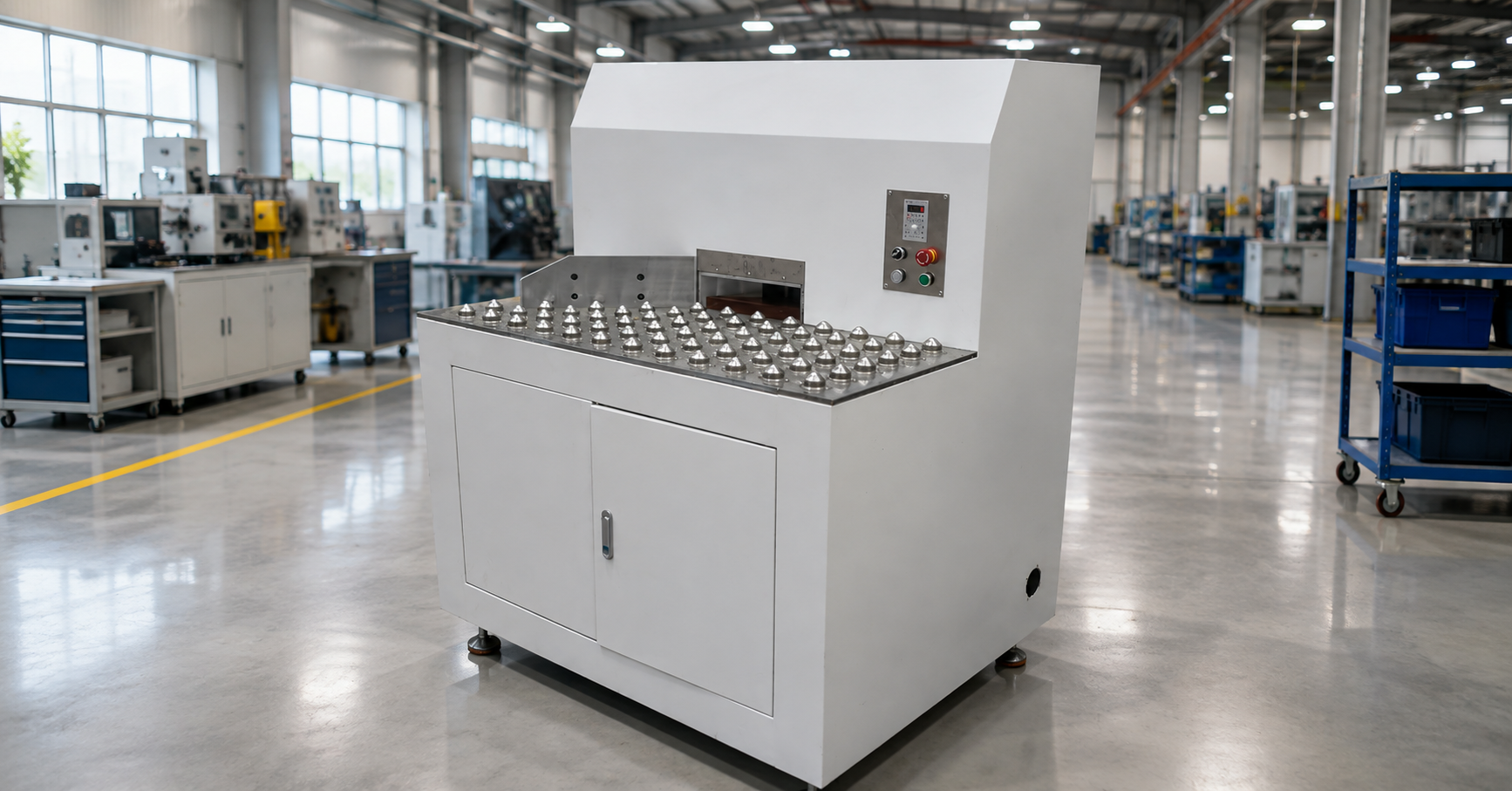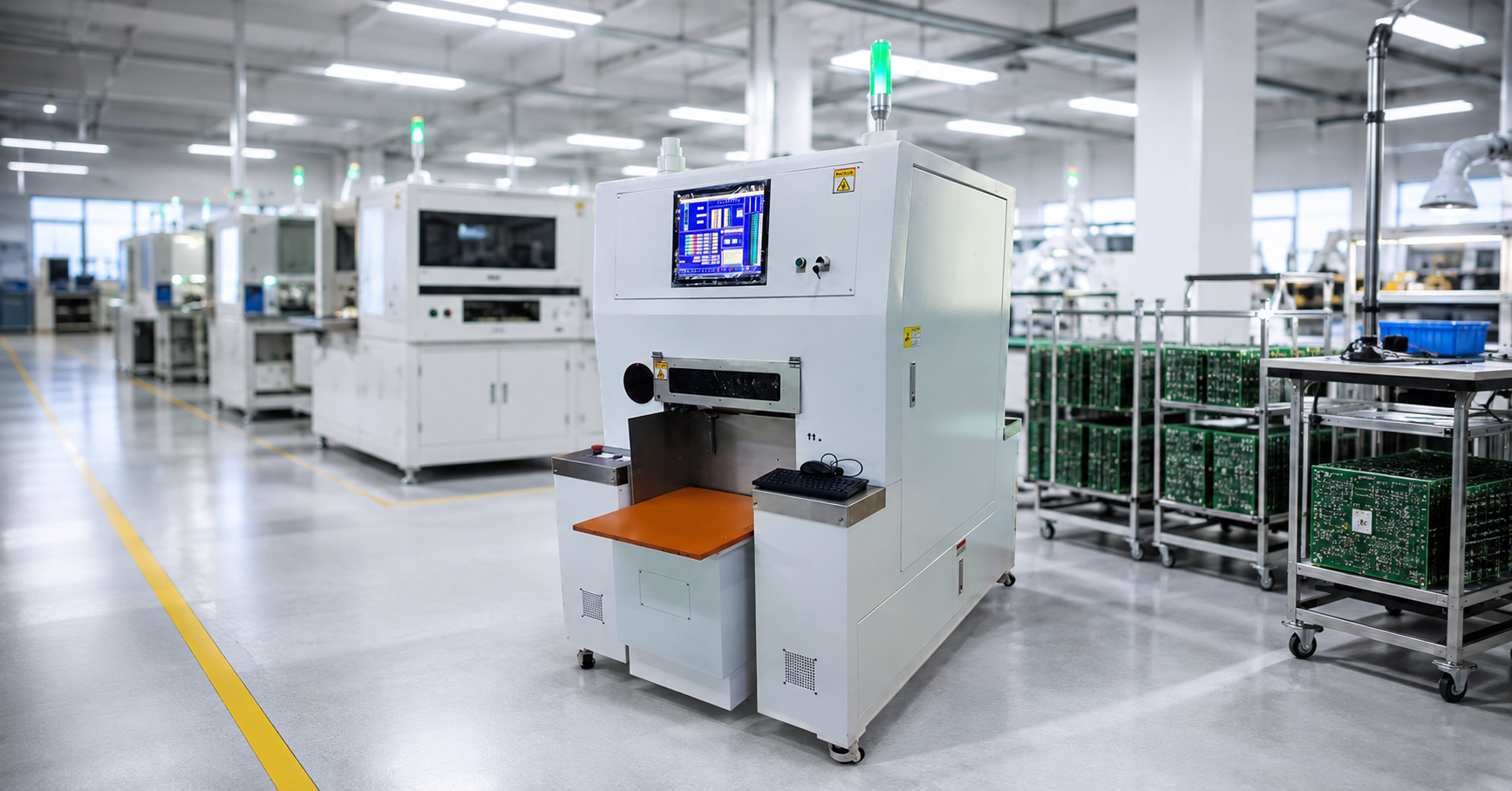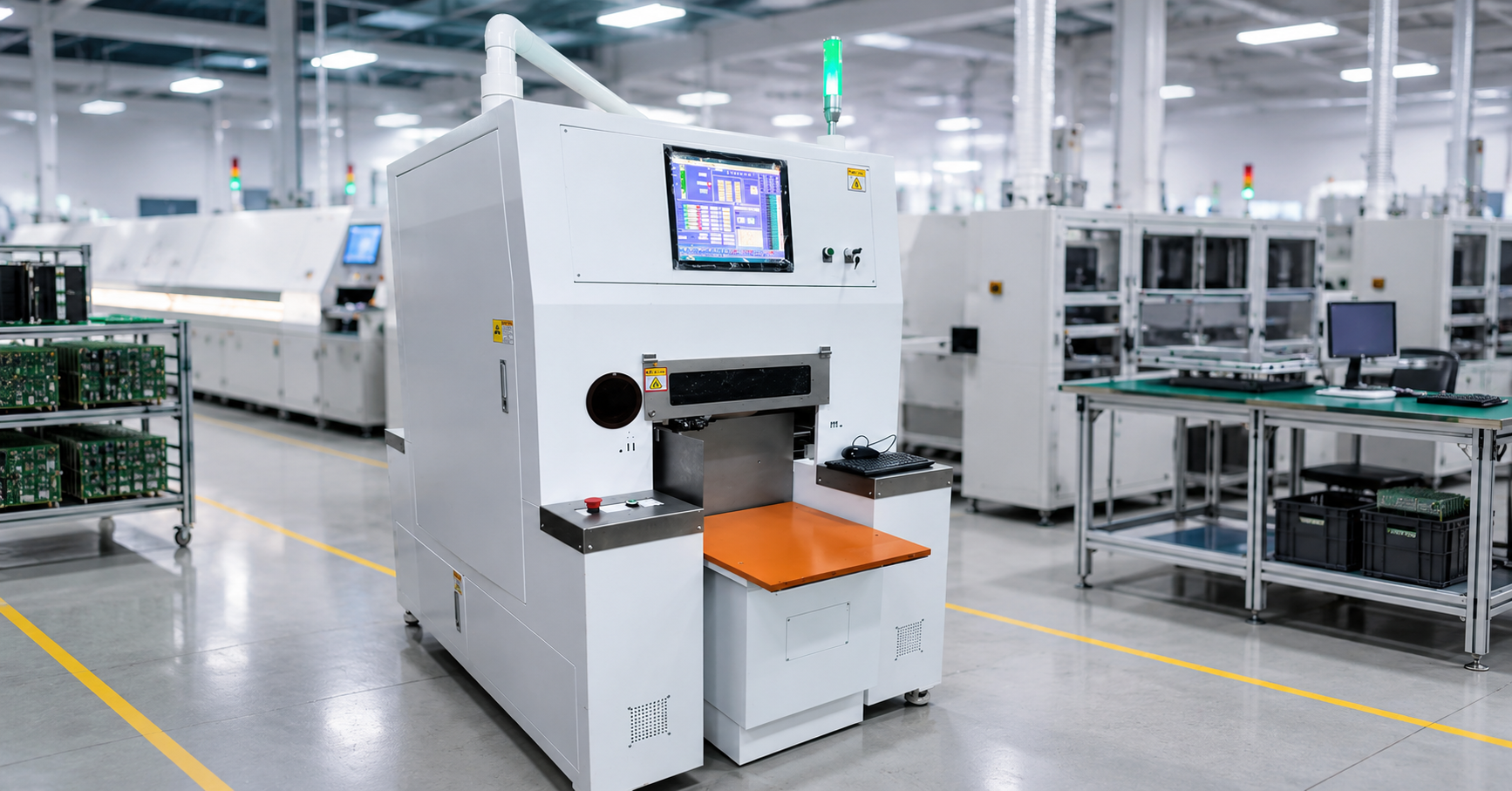




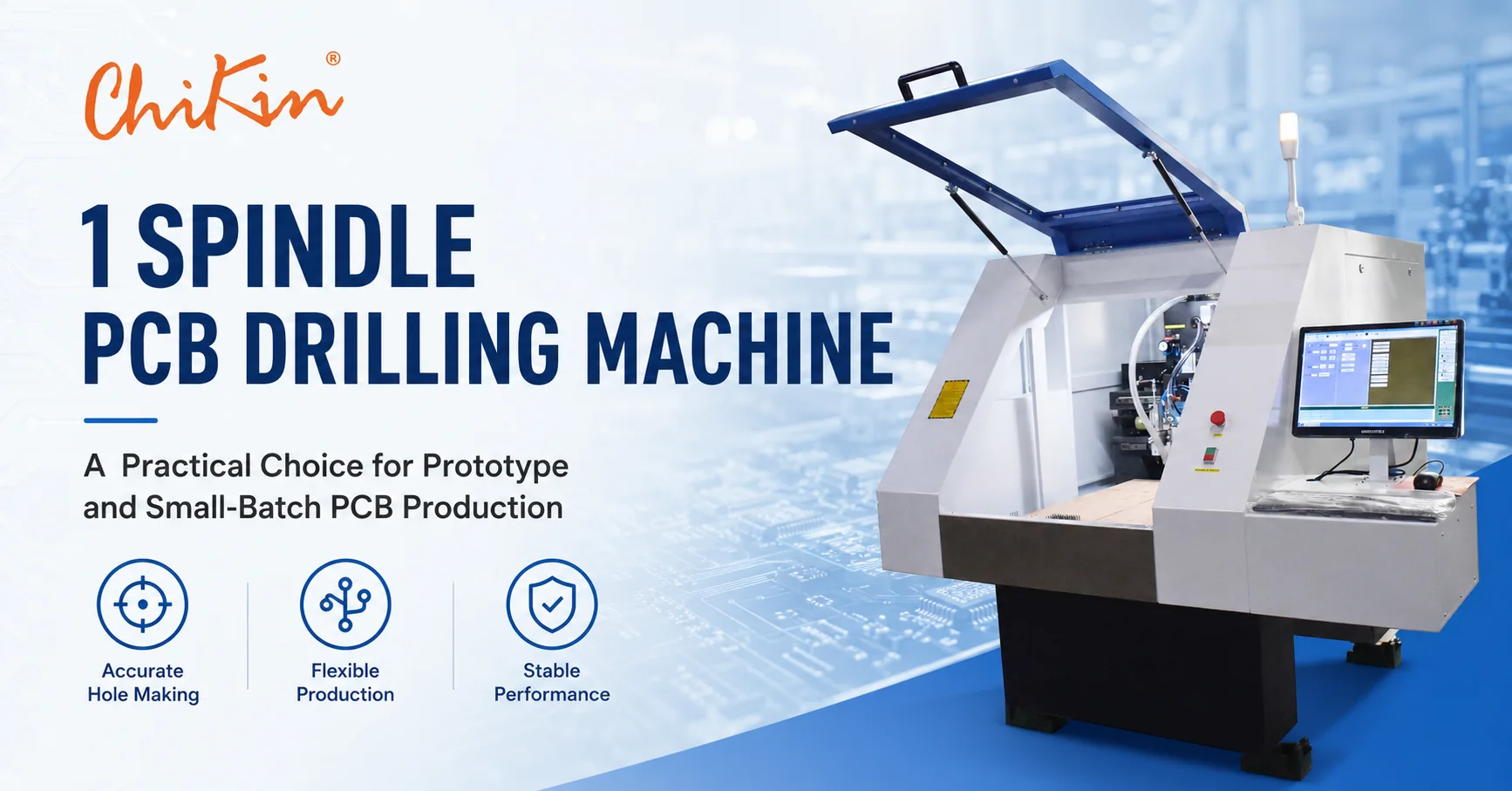
A 1 spindle PCB Drilling Machine is a practical solution for PCB factories that need controlled hole making, flexible operation, and stable drilling accuracy without investing in a more complex multi-spindle system.
For many PCB manufacturers, the first production challenge is not maximum output. It is consistency. Holes must stay aligned, clean, and repeatable from board to board. If hole positions shift, downstream plating, component insertion, testing, and assembly may be affected.
This is especially important for:
- Prototype PCB production
- Small-batch PCB manufacturing
- Electronics workshops
- R&D laboratories
- Teaching and training environments
- Low-to-mid volume PCB processing
- Factories upgrading from manual drilling
Compared with dual-spindle or multi-spindle machines, a single spindle PCB drilling machine is easier to operate, easier to supervise, and more suitable for flexible production tasks. For buyers who need stable performance rather than maximum speed, it can be a smart starting point.
What Is a 1 Spindle PCB Drilling Machine?
A 1 spindle PCB Drilling Machine is a CNC-controlled machine equipped with one drilling spindle for making precise holes in printed circuit boards. It is used for vias, through-holes, tooling holes, mounting holes, and other board features.
The machine moves the drilling tool according to programmed coordinates, helping operators achieve repeatable drilling results. Compared with manual drilling, CNC control improves consistency and reduces dependence on operator skill.
This type of machine is also commonly called:
- Single spindle PCB drilling machine
- One spindle PCB drilling machine
- PCB CNC drilling machine
- PCB hole drilling machine
- PCB drilling equipment for small-batch production
The main value of a 1 spindle machine is controlled accuracy. It gives factories a reliable way to process PCB holes without the higher cost, size, and complexity of multi-head equipment.
Who Should Use a 1 Spindle PCB Drilling Machine?
A 1 spindle PCB Drilling Machine is not suitable for every production line. It is best for buyers who value flexibility, precision, and manageable investment.
| Buyer Type | Main Need | Why 1 Spindle Fits |
|---|---|---|
| Prototype PCB labs | Flexible drilling for different board designs | Easy setup and controlled operation |
| Small PCB factories | Stable hole making without high machine cost | Practical for low-to-mid volume production |
| Electronics workshops | In-house PCB processing | Compact and easier to manage |
| R&D departments | Test boards and sample production | Suitable for frequent design changes |
| Training centers | Teaching PCB fabrication workflow | Simpler than multi-spindle systems |
| Equipment distributors | Entry-level PCB drilling solution | Easier to position for small buyers |
If your factory processes thousands of panels every day, a dual-spindle or multi-spindle machine may be more efficient. But if your priority is flexible production, sample work, and controlled hole accuracy, a 1 spindle system is often enough.
Main Applications of a Single Spindle PCB Drilling Machine
A single spindle PCB drilling machine can be used in many PCB-related workflows.
Typical applications include:
- Prototype board drilling
- FR4 PCB hole drilling
- Tooling hole preparation
- Via hole drilling
- Through-hole component drilling
- PCB positioning hole drilling
- Small-batch PCB production
- Educational PCB fabrication
- Controlled sample processing
- Rework and support drilling tasks
For high-mix production, where different board designs change frequently, one spindle gives operators better control over setup and production checking.
Key Advantages of a 1 Spindle PCB Drilling Machine
1. Lower Investment Cost
Compared with multi-spindle equipment, a 1 spindle PCB drilling machine usually requires a lower initial investment. This makes it suitable for small factories, prototype labs, and buyers who want to start PCB drilling production without over-expanding equipment cost.
2. Easier Operation
A single spindle layout is easier to understand and supervise. Operators can focus on one drilling head, one tool path, and one controlled workflow. This helps reduce training difficulty.
3. Flexible for Small-Batch Orders
Many PCB factories handle mixed orders instead of large repeated batches. A single spindle machine can be practical when product changeover is frequent and flexibility is more important than maximum throughput.
4. Compact Production Footprint
A 1 spindle machine normally takes less space than larger multi-spindle equipment. For workshops with limited floor area, this is an important advantage.
5. Better Control for Sample Processing
During prototype or sample work, operators often need to check drilling quality carefully. A single spindle system makes the process easier to monitor.
1 Spindle vs Multi-Spindle PCB Drilling Machine
| Comparison Point | 1 Spindle PCB Drilling Machine | Multi-Spindle PCB Drilling Machine |
| Investment Cost | Lower | Higher |
| Output Speed | Moderate | Higher |
| Operation Complexity | Easier | More complex |
| Best For | Prototype and small-batch production | Mass production |
| Setup Flexibility | High | Medium |
| Floor Space | Smaller | Larger |
| Maintenance | Simpler | More components to maintain |
| Buyer Focus | Accuracy, flexibility, cost control | Capacity, speed, batch output |
The choice depends on production goals. A 1 spindle PCB Drilling Machine is better when the factory needs flexible, controlled processing. A multi-spindle system is better when production volume is high and cycle time is the biggest concern.
Technical Factors Buyers Should Check
1. Drilling Accuracy
Accuracy is the most important factor. Buyers should check positioning accuracy, repeatability, and whether the supplier can provide sample testing.
Important questions include:
- What is the positioning accuracy?
- What is the repeatability?
- Can the machine handle my minimum hole diameter?
- Can sample drilling be tested before order confirmation?
2. Spindle Performance
The spindle affects drilling speed, hole quality, and tool life. For PCB drilling, small drill bits require stable spindle performance.
Check:
- Spindle speed
- Drill bit compatibility
- Tool holding method
- Cooling or dust management
- Tool replacement convenience
3. Machine Structure
A stable machine structure helps reduce vibration and accuracy drift. Buyers should pay attention to the machine base, guide rails, motion system, fixture design, and enclosed protection.
4. Board Compatibility
Different PCB materials require different settings. Before choosing a machine, confirm whether it can process your actual materials.
Common materials include:
- FR4 PCB
- Prototype PCB panels
- Multilayer PCB
- Thin PCB boards
- Rigid-flex PCB
- Aluminum PCB
5. Software and Operation
The machine should be easy for operators to use. Software should support production program management, parameter setting, and repeat job operation.
Ask the supplier:
- What file formats are supported?
- Is the interface easy to learn?
- Can drilling parameters be saved?
- Is training provided?
- Can remote support help with setup?
Specification Checklist for Buyers
| Item | What to Confirm | Why It Matters |
| Working Area | Maximum PCB size | Ensures board compatibility |
| Spindle Type | Speed and tool support | Affects drilling performance |
| Minimum Hole Size | Drill bit range | Matches PCB design needs |
| Accuracy | Positioning and repeatability | Controls final hole quality |
| Motion System | Guide rail and drive system | Supports stable movement |
| Fixture Method | Clamp, vacuum, or custom fixture | Prevents board movement |
| Software | File handling and parameter storage | Improves operator efficiency |
| Safety Design | Enclosure and emergency stop | Protects operators |
| Service Support | Training and spare parts | Reduces downtime |
| Application Fit | Prototype, sample, or small batch | Helps avoid wrong configuration |
Product Match: CHIKIN CNC Single Spindle PCB Drilling Machine
For this topic, the most relevant CHIKIN CNC product is the Single Spindle PCB Drilling Machine.
This product is suitable for buyers who need controlled PCB hole making without the complexity of a multi-spindle system. It is a practical option for prototype PCB production, small-batch output, controlled drilling tasks, and flexible workshop use.
It is especially suitable when buyers need:
- Controlled PCB hole preparation
- Cleaner and more repeatable drilling results
- A compact PCB drilling solution
- Flexible production for different board designs
- Easier operation than multi-spindle equipment
- A practical entry-level CNC PCB drilling machine
Recommended product page:
Single Spindle PCB Drilling Machine
You can also view all product categories here:
CHIKIN CNC Products
Common Buying Mistakes to Avoid
Mistake 1: Choosing Only by Price
A cheaper machine may not provide stable accuracy, reliable service, or proper tooling support. For PCB drilling, poor accuracy can lead to higher scrap and rework cost.
Mistake 2: Ignoring Production Volume
A 1 spindle machine is suitable for prototype and small-batch production. If your factory needs high-volume output, you may need a dual-spindle or multi-spindle model.
Mistake 3: Not Confirming Board Material
Different boards require different drilling parameters. Always share material type, thickness, hole diameter, and board size with the supplier.
Mistake 4: Forgetting After-Sales Support
Even a simple machine needs training, spare parts, troubleshooting, and maintenance guidance. For overseas buyers, service support should be considered before purchase.
Buyer Checklist Before Requesting a Quote
Before asking for a quotation, prepare this information:
| Information | Example |
| Board material | FR4, prototype PCB, multilayer PCB |
| Board size | Length × width |
| Board thickness | 0.8mm, 1.6mm, 2.0mm |
| Minimum hole diameter | 0.2mm, 0.3mm, 0.5mm |
| Production volume | Daily or monthly board quantity |
| Accuracy requirement | Hole position tolerance |
| Application | Prototype, small batch, sample processing |
| Automation need | Manual setup or optional support |
| Factory space | Available machine area |
| Purchase goal | New setup, upgrade, replacement |
This information helps the supplier recommend the right configuration instead of providing a generic quote.
FAQ: 1 Spindle PCB Drilling Machine
1. What is a 1 spindle PCB Drilling Machine?
A 1 spindle PCB Drilling Machine is a CNC machine with one drilling spindle used to make accurate holes in printed circuit boards.
2. Is a single spindle PCB drilling machine suitable for small factories?
Yes. It is suitable for prototype labs, small PCB factories, electronics workshops, and buyers who need controlled hole making with manageable investment.
3. What is the difference between 1 spindle and multi-spindle PCB drilling?
A 1 spindle machine uses one drilling head and is better for flexibility and lower-volume work. A multi-spindle machine uses several heads for higher output and mass production.
4. Can a 1 spindle PCB drilling machine process FR4 boards?
Yes, it can be used for FR4 PCB drilling, but buyers should confirm board thickness, hole diameter, tool type, and machine configuration with the supplier.
5. Is a 1 spindle PCB drilling machine good for prototype production?
Yes. It is well suited for prototypes because it supports flexible setup, smaller batches, and easier process monitoring.
6. What affects the drilling quality?
Drilling quality depends on spindle stability, drill bit condition, feed speed, board fixation, machine structure, and operator parameter settings.
7. Should I choose a 1 spindle or dual-spindle machine?
Choose a 1 spindle machine for flexible and small-batch work. Choose a dual-spindle machine if production volume is higher and drilling speed becomes a bottleneck.
8. What should I send before requesting a quote?
Send your board material, size, thickness, minimum hole diameter, production volume, accuracy requirement, and application scenario.
Conclusion: A Practical PCB Drilling Solution for Flexible Production
A 1 spindle PCB Drilling Machine is a practical choice for factories that need accurate, repeatable, and controlled PCB hole making without the cost and complexity of multi-spindle equipment.
It is especially suitable for prototype labs, small-batch PCB manufacturers, electronics workshops, R&D teams, and buyers who need flexible production rather than maximum output.
CHIKIN CNC provides single spindle PCB drilling equipment for buyers who need stable board hole preparation, manageable operation, and practical CNC PCB production support.
If you are comparing 1 spindle PCB Drilling Machine options, send your board material, board size, hole diameter, production volume, and accuracy requirement. CHIKIN CNC can help recommend a suitable machine configuration for your PCB production needs.
Contact CHIKIN CNC to request a single spindle PCB drilling machine solution and quotation:
Contact CHIKIN CNC