



A CCD drilling machine is designed to solve one of the most common problems in PCB production: hole misalignment. In circuit board manufacturing, even a small positioning error can affect vias, component mounting holes, test points, panel separation, and later assembly quality.
Traditional drilling equipment depends heavily on manual positioning, fixtures, or mechanical reference points. This can work for simple boards, but it becomes risky when factories handle high-density layouts, multilayer boards, small batches, different board sizes, or panels with slight material deformation.
CCD vision alignment helps the machine identify fiducial marks or reference points before drilling. Instead of assuming the board is perfectly placed, the system checks the real board position and adjusts the drilling path accordingly.
For PCB manufacturers, prototype labs, electronics factories, and overseas equipment buyers, a CCD drilling machine can improve accuracy, reduce rework, and make production more stable.
What Is a CCD Drilling Machine?
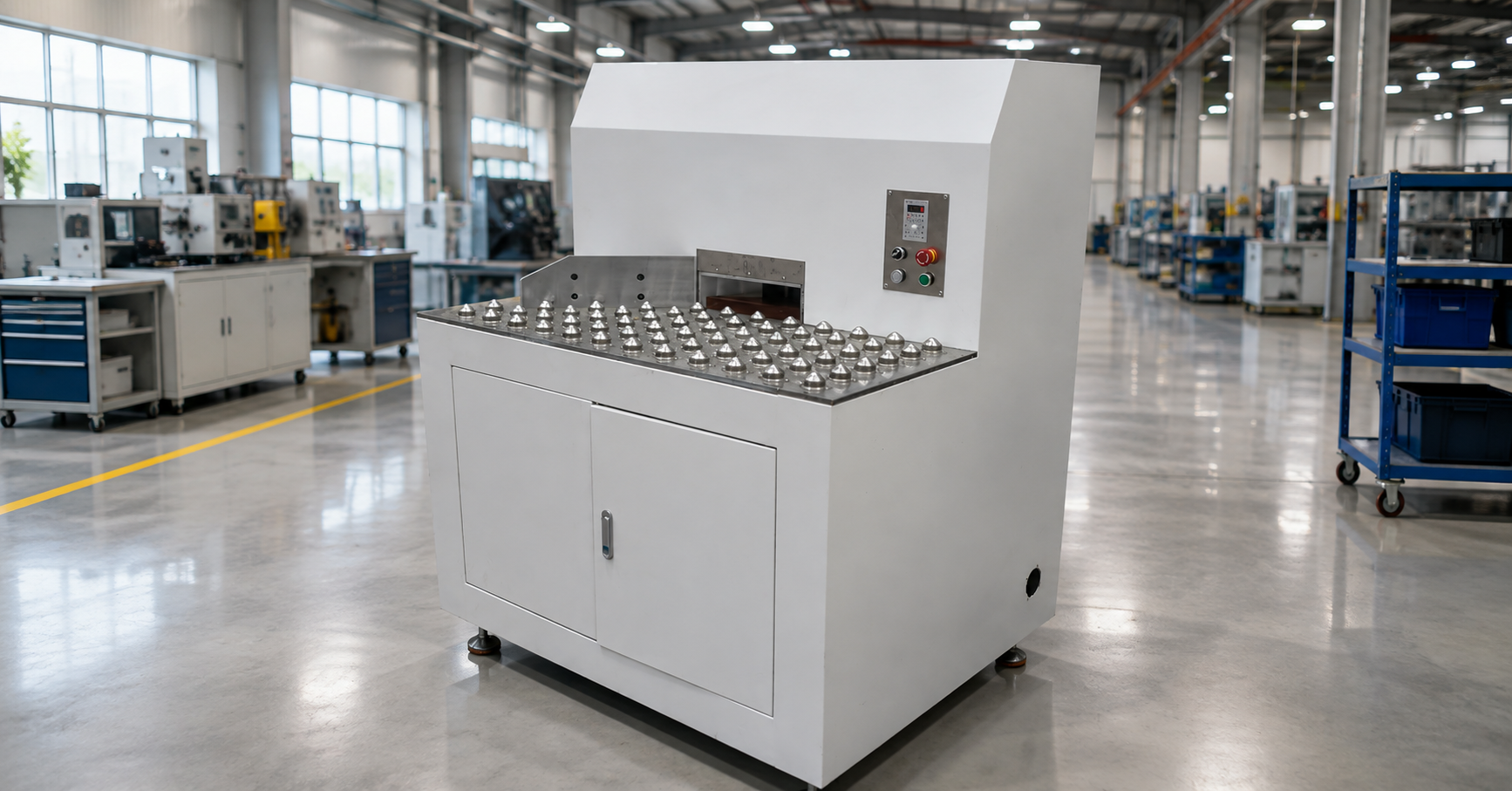
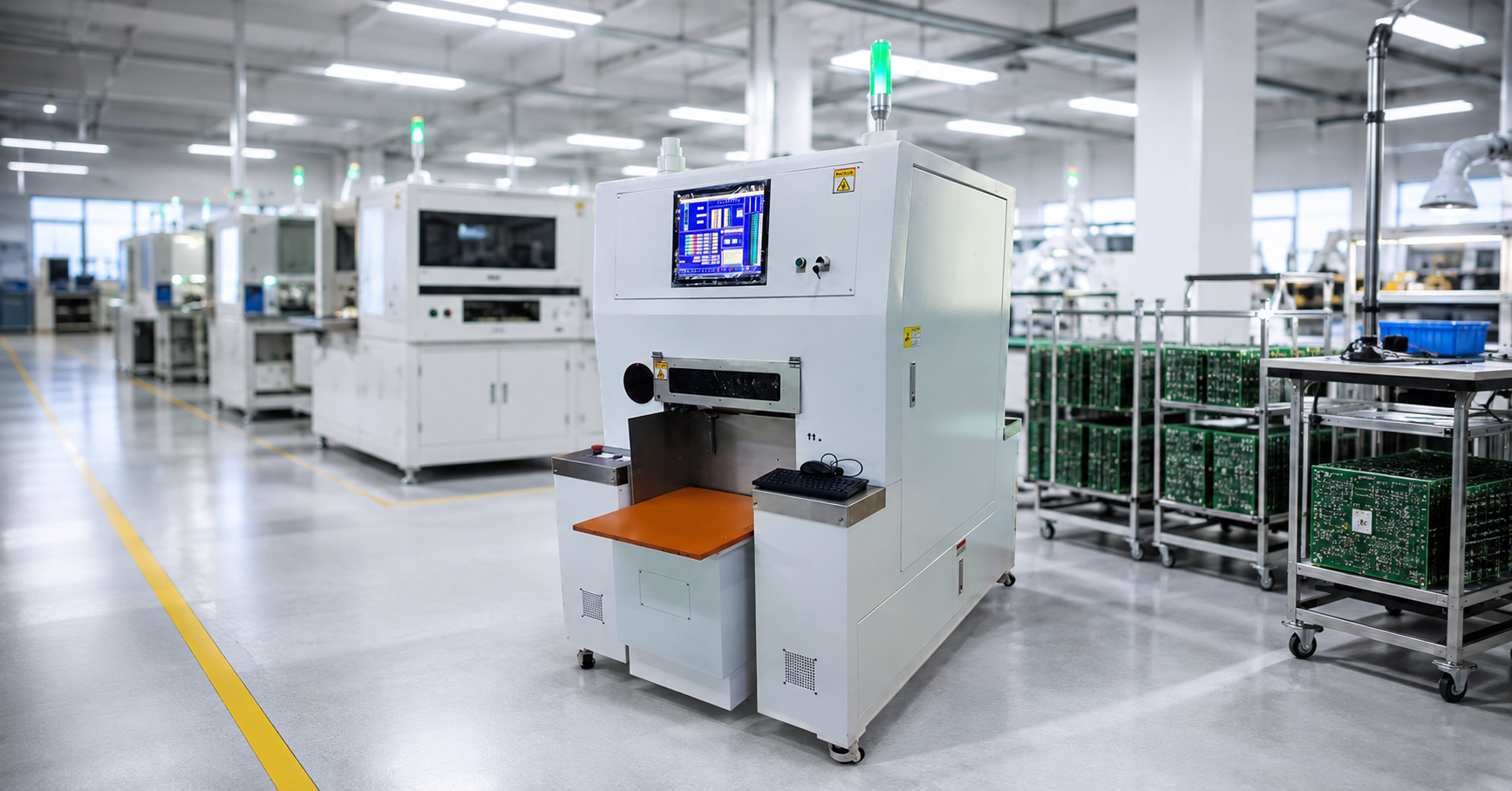
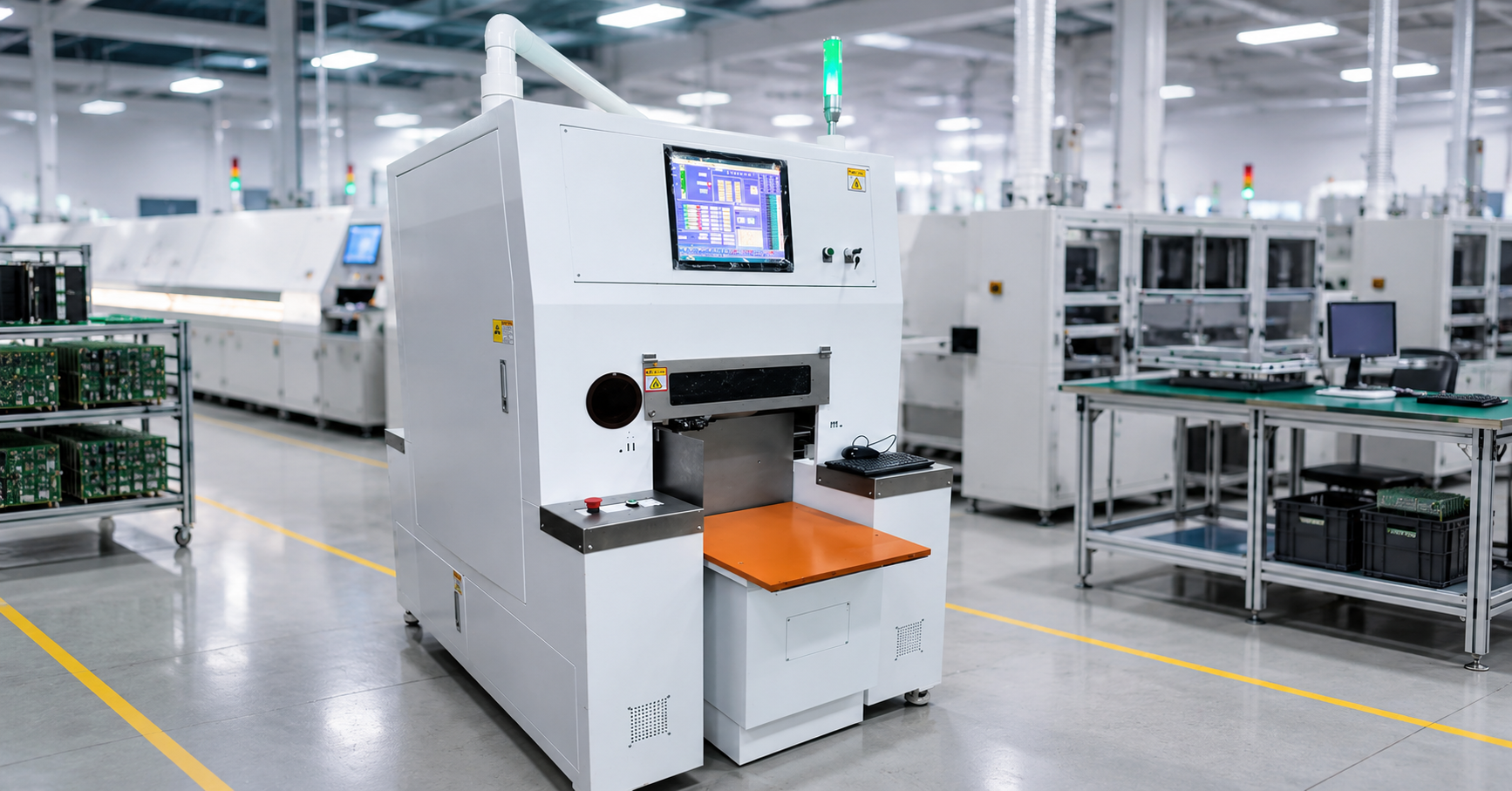
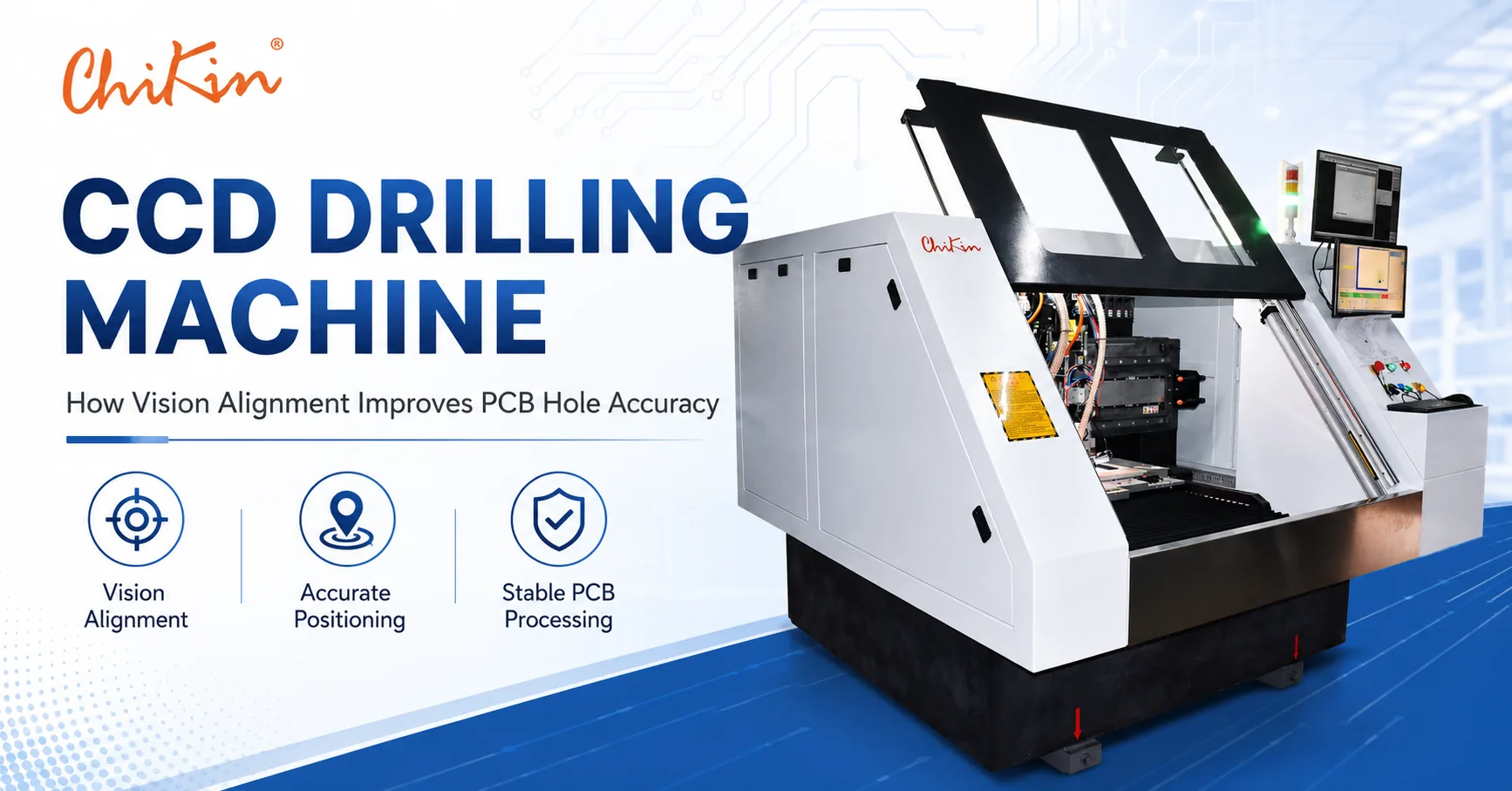
A CCD drilling machine is a CNC drilling system equipped with a CCD camera or vision alignment system. The camera detects reference points on the PCB, compares the actual board position with the program data, and helps correct alignment before drilling.
In PCB production, this is especially useful because boards may shift slightly during loading, clamping, or handling. Some materials may also expand, shrink, or deform during previous processes. CCD alignment helps compensate for these variations.
A CCD drilling machine is commonly used for:
- PCB guide hole drilling
- Fiducial hole drilling
- Multilayer PCB drilling
- Prototype PCB drilling
- High-density board processing
- PCB drilling and routing integration
- Small-batch and high-mix production
In simple terms, CCD vision gives the machine “eyes” so it can locate the board before cutting or drilling.
How CCD Vision Alignment Works
The working process usually includes several steps:
- The operator loads the PCB panel onto the machine table.
- The board is fixed by vacuum, clamps, pins, or a custom fixture.
- The CCD camera scans reference points or fiducial marks.
- The control system compares actual board position with program coordinates.
- The machine corrects offset, rotation, or minor positioning deviation.
- The spindle starts drilling according to the corrected path.
- The finished board is checked for hole position and consistency.
This process helps reduce human positioning errors and improves repeatability between batches.
For factories handling frequent model changes, CCD alignment also makes setup easier. Operators do not need to rely only on manual adjustment, which saves time and reduces training pressure.
Why CCD Alignment Matters in PCB Drilling
1. Better Hole-to-Pattern Registration
In PCB production, holes must match copper patterns, pads, vias, and component positions. If the hole is slightly off, plating, soldering, or assembly may fail.
CCD alignment improves hole-to-pattern registration by locating the real board position before drilling.
2. Reduced Manual Setup Errors
Manual alignment depends on operator experience. In high-mix production, where many board types change frequently, manual setup can create inconsistency.
A CCD drilling machine reduces this risk by using vision-based reference detection.
3. Better Support for Small-Batch Orders
Small-batch PCB production often requires fast changeover. CCD alignment helps operators switch between board types more efficiently because the machine can identify board position automatically.
4. Improved Accuracy for Multilayer Boards
Multilayer boards require strict registration. If drilling is not aligned correctly, internal layer connection quality may be affected. CCD alignment helps support more reliable drilling for complex board structures.
5. More Stable Drilling and Routing Integration
For machines that combine drilling and routing, CCD alignment can help both processes follow the correct board reference. This is useful when the machine performs hole drilling first and then outline routing.
Who Should Choose a CCD Drilling Machine?
A CCD drilling machine is especially suitable for buyers with higher accuracy requirements or frequent product changes.
| Buyer Type | Main Need | Why CCD Helps |
|---|---|---|
| PCB manufacturers | Stable hole accuracy | Reduces alignment deviation |
| Prototype PCB labs | Fast model changeover | Makes setup easier |
| Multilayer PCB factories | High registration accuracy | Improves hole-to-pattern matching |
| High-mix production lines | Many board types | Reduces manual adjustment |
| PCB drilling and routing users | Integrated processing | Keeps drilling and routing aligned |
| Equipment distributors | Higher-value solution | Easier to position as precision equipment |
If your factory only processes simple boards with loose tolerances, CCD may not always be necessary. But if your work involves dense circuits, multilayer boards, small-batch production, or frequent changeovers, CCD alignment can provide real value.
CCD Drilling Machine vs Standard Drilling Machine
| Comparison Point | Standard Drilling Machine | CCD Drilling Machine |
| Board Alignment | Manual or fixture-based | Vision-assisted alignment |
| Setup Efficiency | Depends on operator skill | Faster and more repeatable |
| Accuracy Control | More affected by loading error | Better offset correction |
| Best For | Simple boards, stable batches | High-mix and precision PCB work |
| Operator Requirement | Higher manual experience | Easier setup support |
| Cost Level | Lower | Higher |
| Long-Term Value | Suitable for basic production | Better for precision and growth |
The key difference is not only the camera. The real value comes from how the CCD system works with the CNC control system, software, spindle, fixture, and motion structure.
Key Technical Factors to Check Before Buying
1. CCD Camera Resolution and Recognition Ability
The CCD system must clearly identify fiducial marks or reference features. Poor recognition may cause unstable alignment or repeated setup failure.
Buyers should ask:
- What type of CCD system is used?
- What reference marks can it recognize?
- Can it handle different board colors or surface finishes?
- Is lighting adjustable?
- Can the system support small fiducials?
2. Alignment Software
The camera is only one part of the system. The software must convert vision data into accurate machine correction.
Ask whether the software supports:
- Offset correction
- Rotation compensation
- Multi-point alignment
- Parameter storage
- Easy operator interface
- Repeat job settings
3. Machine Structure
Even with CCD alignment, the machine still needs a stable structure. If the machine base, guide rails, or spindle system are unstable, vision alignment cannot fully solve precision problems.
Important points include:
- High-rigidity machine base
- Precision linear guide
- Stable worktable
- Vibration control
- Reliable spindle system
- Enclosed safety design
4. Spindle and Tool System
A CCD drilling machine still depends on spindle performance. Buyers should check spindle speed, tool compatibility, tool change method, and broken tool detection.
For PCB drilling, small drill bits need stable speed and controlled feed parameters.
5. Board Compatibility
Before choosing a model, confirm whether the machine can handle your materials:
- FR4 PCB
- Multilayer PCB
- HDI board
- Rigid-flex board
- Aluminum PCB
- Thin PCB panels
- Prototype PCB
- High-mix small-batch boards
Different materials may require different clamping, drilling, and alignment settings.
Specification Checklist for CCD Drilling Machine Buyers
| Item | What to Check | Why It Matters |
| CCD Vision System | Camera resolution and recognition ability | Affects alignment reliability |
| Alignment Method | Single-point or multi-point correction | Affects registration accuracy |
| Software | Offset, rotation, and parameter storage | Improves repeat production |
| Working Area | Maximum PCB panel size | Ensures board compatibility |
| Spindle | Speed and tool compatibility | Affects drilling quality |
| Motion System | Guide rail and ballscrew precision | Supports stable movement |
| Machine Base | Rigidity and vibration control | Maintains accuracy over time |
| Fixture Method | Vacuum, clamp, or custom fixture | Prevents board movement |
| Tool Detection | Tool length or broken tool detection | Reduces drilling risk |
| Service Support | Training and remote troubleshooting | Reduces downtime |
Common Applications of CCD Drilling Machines
A CCD drilling machine can be used in many PCB production environments.
Typical applications include:
- Guide hole drilling
- Fiducial hole drilling
- PCB positioning hole drilling
- Multilayer board drilling
- Prototype circuit board production
- High-density PCB processing
- PCB drilling and routing integration
- Small-batch board manufacturing
- Electronics production tooling support
The machine is especially valuable when the board position may vary slightly but the final hole accuracy must remain consistent.
Why Choose CHIKIN CNC for CCD Drilling Machine Solutions?
CHIKIN CNC provides PCB CNC and automation equipment for circuit board production, including PCB drilling machines, PCB drilling and routing machines, CCD-based PCB equipment, laser cutting systems, AOI inspection machines, and related production solutions.
For CCD drilling machine buyers, CHIKIN CNC can help evaluate:
- Board material and thickness
- Required drilling accuracy
- Fiducial recognition needs
- Working area and board size
- Spindle configuration
- CCD alignment method
- Tool change and tool detection needs
- Production volume and factory workflow
CHIKIN CNC’s CCD-based drilling and routing solutions are suitable for factories that need better alignment accuracy, faster changeover, and more stable PCB processing.
Learn more about CHIKIN CNC:
About CHIKIN CNC
View related PCB equipment:
CHIKIN CNC Products
Check service questions:
CHIKIN CNC FAQ
Buyer Checklist Before Requesting a Quote
Before asking for a CCD drilling machine quotation, prepare the following information:
| Information | Example |
| Board material | FR4, HDI, rigid-flex, aluminum PCB |
| Board size | Length × width × thickness |
| Fiducial mark type | Round mark, copper mark, tooling point |
| Hole diameter | Minimum and common hole sizes |
| Accuracy requirement | Hole position tolerance |
| Production volume | Prototype, small batch, or mass production |
| Current issue | Misalignment, slow setup, rework, manual error |
| Automation need | CCD, tool change, tool detection |
| Software requirement | File support and program storage |
| Purchase goal | New production line, upgrade, replacement |
Providing these details helps the supplier recommend a machine configuration that fits your real production workflow.
FAQ: CCD Drilling Machine
1. What is a CCD drilling machine?
A CCD drilling machine is a CNC drilling system equipped with a camera vision alignment function. It detects board reference points before drilling to improve positioning accuracy.
2. Why is CCD alignment important for PCB drilling?
CCD alignment helps reduce board placement errors and improves hole-to-pattern registration, especially for high-density, multilayer, or small-batch PCB production.
3. Is a CCD drilling machine better than a standard drilling machine?
For precision PCB production, yes. A CCD drilling machine provides better alignment support and reduces dependence on manual positioning.
4. What boards are suitable for CCD drilling?
CCD drilling is suitable for FR4, multilayer PCB, HDI boards, rigid-flex boards, aluminum PCB, and prototype boards that require accurate hole positioning.
5. Can CCD drilling reduce scrap?
Yes. By improving board alignment before drilling, CCD positioning can reduce hole misalignment, rework, and production waste.
6. Does a CCD drilling machine support routing?
Some machines combine drilling and routing functions with CCD alignment. This helps keep both hole drilling and outline routing aligned to the same board reference.
7. What affects CCD alignment accuracy?
Camera quality, lighting, software correction, fiducial clarity, board fixation, machine structure, and motion system all affect final alignment accuracy.
8. What should I send before requesting a CCD drilling machine quote?
Send your board material, size, fiducial type, hole diameter, accuracy requirement, production volume, and current process problems.
Conclusion: CCD Vision Makes PCB Drilling More Accurate and Repeatable
A CCD drilling machine is a practical upgrade for PCB manufacturers that need better hole accuracy, faster setup, and more stable production. By using vision alignment, the machine can identify the real board position and reduce errors caused by manual loading or slight board deviation.
For factories handling multilayer PCB, prototype orders, high-mix production, or integrated drilling and routing, CCD alignment can improve both quality and efficiency.
CHIKIN CNC provides CCD-based PCB drilling and routing equipment for manufacturers that need reliable board processing solutions.
If you are comparing CCD drilling machine options, share your board material, fiducial type, hole size, production volume, and accuracy target. CHIKIN CNC can help recommend a suitable configuration for your PCB production line.
Contact CHIKIN CNC to request a CCD drilling machine solution and quotation.