Classification and Advantages of Metal Substrates
May 05, 2023
Classification and Advantages of Metal Substrates
As society continues to develop and technology advances, we are witnessing the emergence of various cutting-edge technologies such as self-driving cars, smart homes, and wearable technology. The core components of these products include circuit boards, and in the current market, PCB circuit board products can be broadly classified into three main categories based on their materials: ordinary substrates, metal substrates, and ceramic substrates.
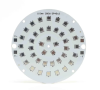
Among these categories, metal substrates have gained widespread attention due to their unique advantages. Metal substrates are typically made of aluminum or copper, and their key advantages include:
1. Excellent thermal conductivity: Metal substrates have high thermal conductivity, which helps to dissipate heat generated during operation. This property is particularly important for high-power devices, as it can significantly extend their lifespan.
2. High mechanical strength: Metal substrates are more robust than ordinary substrates, which makes them more resistant to damage from external forces such as vibration, shock, and thermal expansion.
3. Superior electrical performance: Metal substrates have lower dielectric constant and loss, which leads to less signal distortion and better electrical performance.
4. Better compatibility with surface mount technology (SMT): Metal substrates are more compatible with SMT than other substrate types, which makes them ideal for high-density and high-frequency applications.
In summary, metal substrates offer a unique set of advantages that make them an attractive choice for a wide range of electronic applications.


Recent Posts

October 26, 2016
The Most Successful Engineering Contractor
May 12, 2025
China PCB Drilling Routing machine Development
May 06, 2025
PCB Design Process and Key PointsCONTACT US
Contact US
Product Information
Quantity
Unit
Piece
Support order samples, customization, wholesale direct, and complete payment. If the product you look for does not have corresponding customized content, pls fill out the form below to contact us, and we will reply ASAP.