



How Should PCB Factories Choose a Vertical Shearing Machine for Panel Separation?
For PCB factories, panel separation is not a minor finishing step. It can affect board edge quality, operator workload, downstream assembly consistency, and final yield. A PCB panel may already pass drilling, routing, soldering, inspection, and handling before it reaches the separation stage. If cutting is unstable at this point, the factory may face edge damage, warped panels, dust, rejected assemblies, or inconsistent production results.
That is why many manufacturers evaluate a vertical shearing machine when they need a cleaner and more repeatable way to separate PCB panels. Chikin CNC describes this machine type as a solution for clean, repeatable panel separation without placing unnecessary stress on boards, components, or operators. The product page also explains that manual breaking or inconsistent cutting can cause edge damage, dust, warped panels, and rejected assemblies.
For B2B buyers searching for a PCB panel separation machine, PCB board shearing machine, rigid printed circuit board cutting machine, or PCB shearing equipment, the right question is not only “Can this machine cut the board?” A better question is: can it help the factory build a stable, repeatable, and operator-friendly cutting process?
Why Should PCB Panel Separation Be Treated as a Controlled Process?
In many production lines, PCB panels are used to improve handling and assembly efficiency. Multiple boards can move through upstream processes together. This helps production flow, but it also means the final separation step must be handled carefully.
If operators break panels manually, the result may depend on hand force, experience, and fatigue. If the cutting path is unstable, the edge may not remain consistent. If board support is weak, the panel may bend during separation. For dense layouts or delicate assemblies, Chikin notes that the right vertical shearing machine can improve consistency at the cutting stage and support downstream assembly quality.
A PCB panel cutting solution should therefore be judged by process stability. The goal is not only to finish cutting. The goal is to keep panel separation controlled enough that operators can repeat the same result across different shifts, batches, and production conditions.
What Makes a Vertical Shearing Machine Different from Ordinary Cutting Methods?
Ordinary market solutions may include manual breaking, simple open-frame cutters, lightweight bench-type equipment, or general-purpose cutting stations. These options may work for low-risk boards or small batches. But once a factory needs repeatable panel separation, the limits become clear.
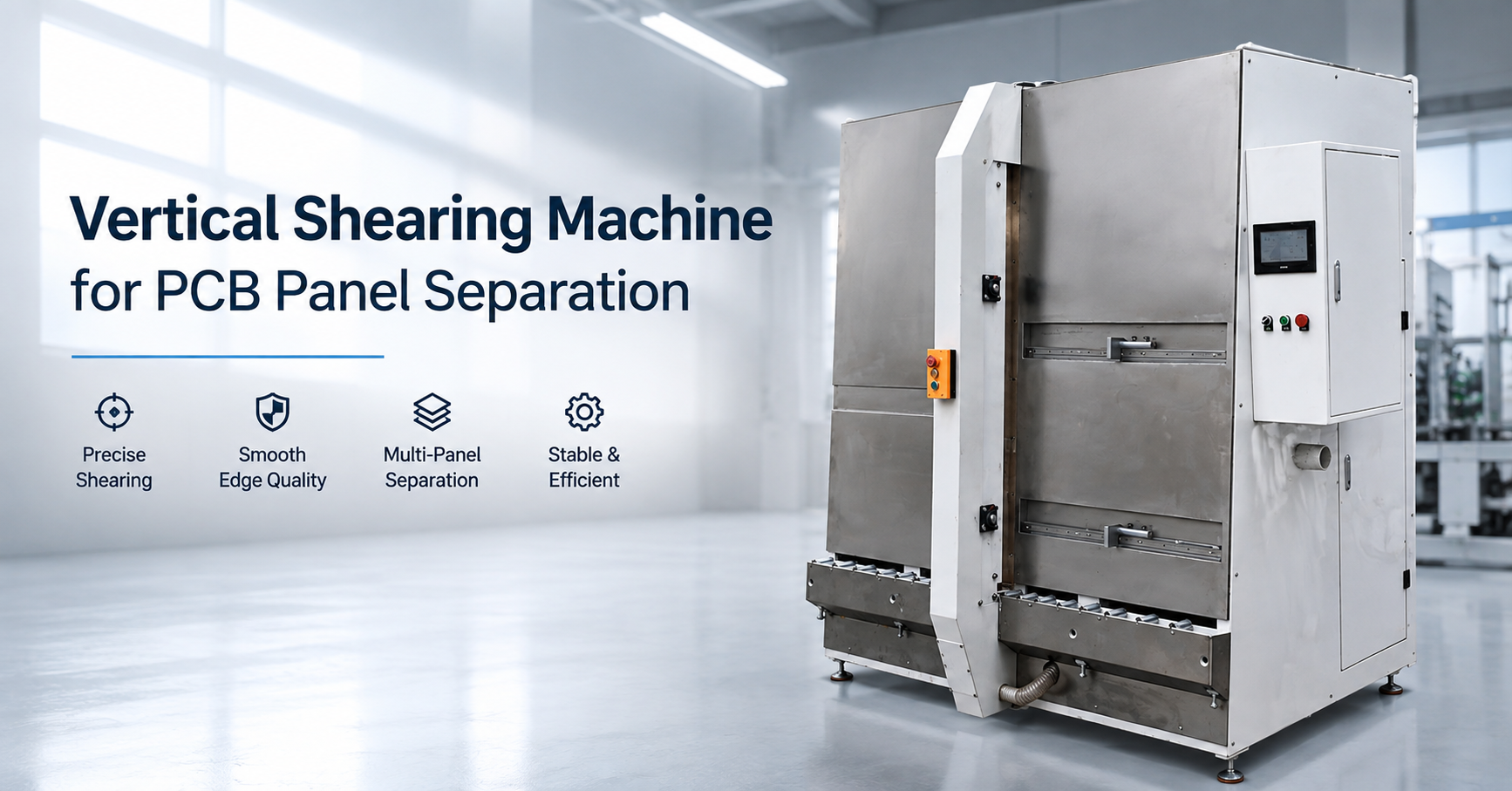
The Chikin product page positions the vertical shearing machine as a compact, guided cutting solution for PCB panels. Compared with rough manual methods, the machine structure helps keep the separation path more controlled and reduces handling variability.
This is the first major difference: the machine is not only replacing manual labor; it is standardizing the cutting step.
A standard cutting station may focus mainly on blade action. A more production-oriented PCB board shearing machine should also focus on board support, operator interaction, enclosed operation, maintenance access, and line integration.
Key Features Buyers Should Notice
Chikin’s product page highlights several practical points that B2B buyers should pay attention to: stable cutting structure, enclosed operation, simple line control, service access, and customization possibilities. These are not decorative details. They directly affect daily production.
| Key Feature | What Chikin’s Product Page Indicates | Why It Matters for PCB Factories |
|---|---|---|
| Controlled panel separation | Designed for clean, repeatable separation with less unnecessary stress | Helps reduce board handling variation |
| Stable cutting structure | Board should be held securely so the cut line remains consistent | Important for panels with small components, routed edges, or narrow tabs |
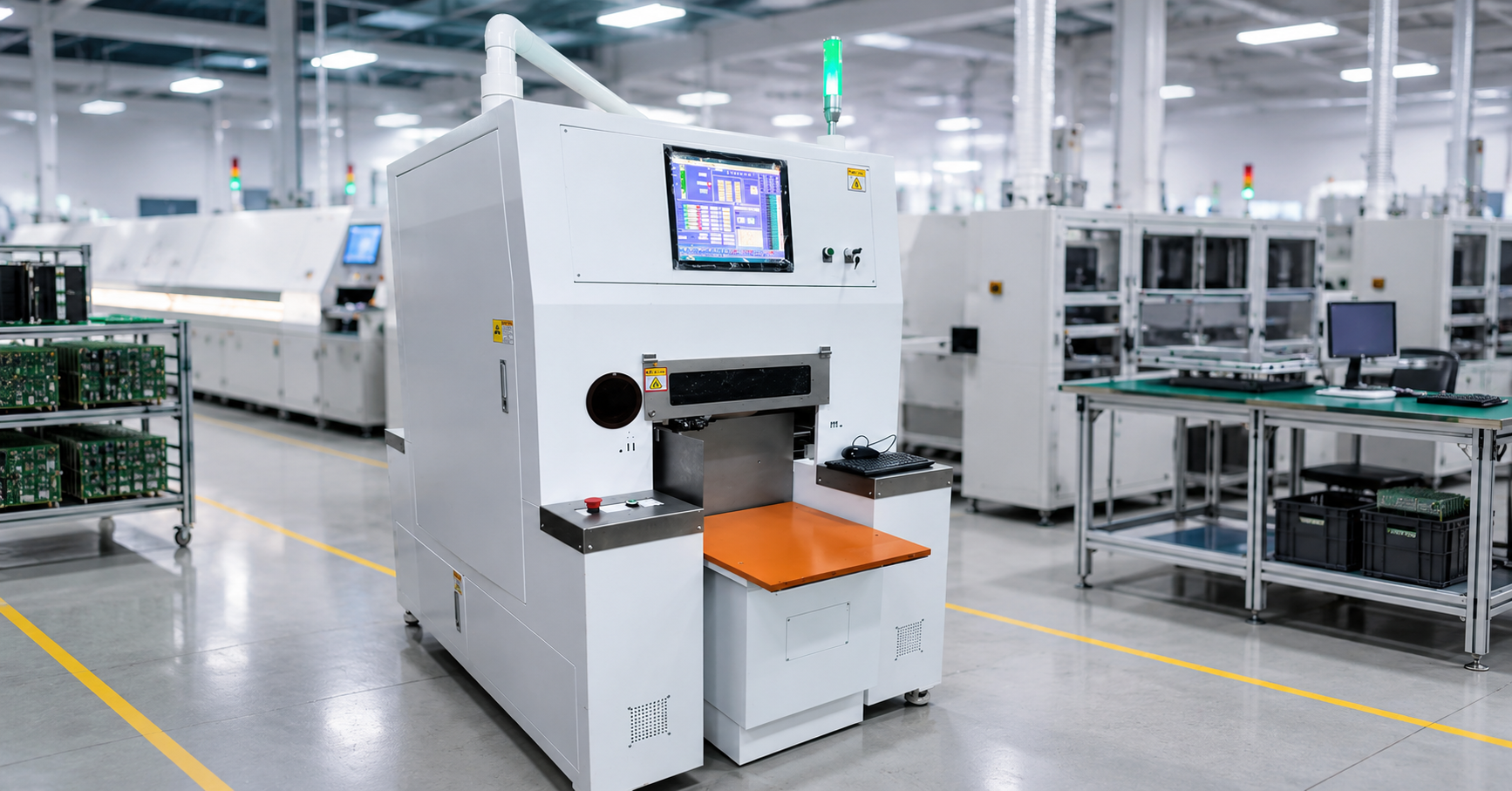
| Enclosed operation | Enclosed body helps define the work zone and protect moving parts | Supports safer, cleaner, more organized production |
| Simple line control | Easy controls, emergency stop functions, and access doors are practical advantages | Useful when the machine enters an active PCB line |
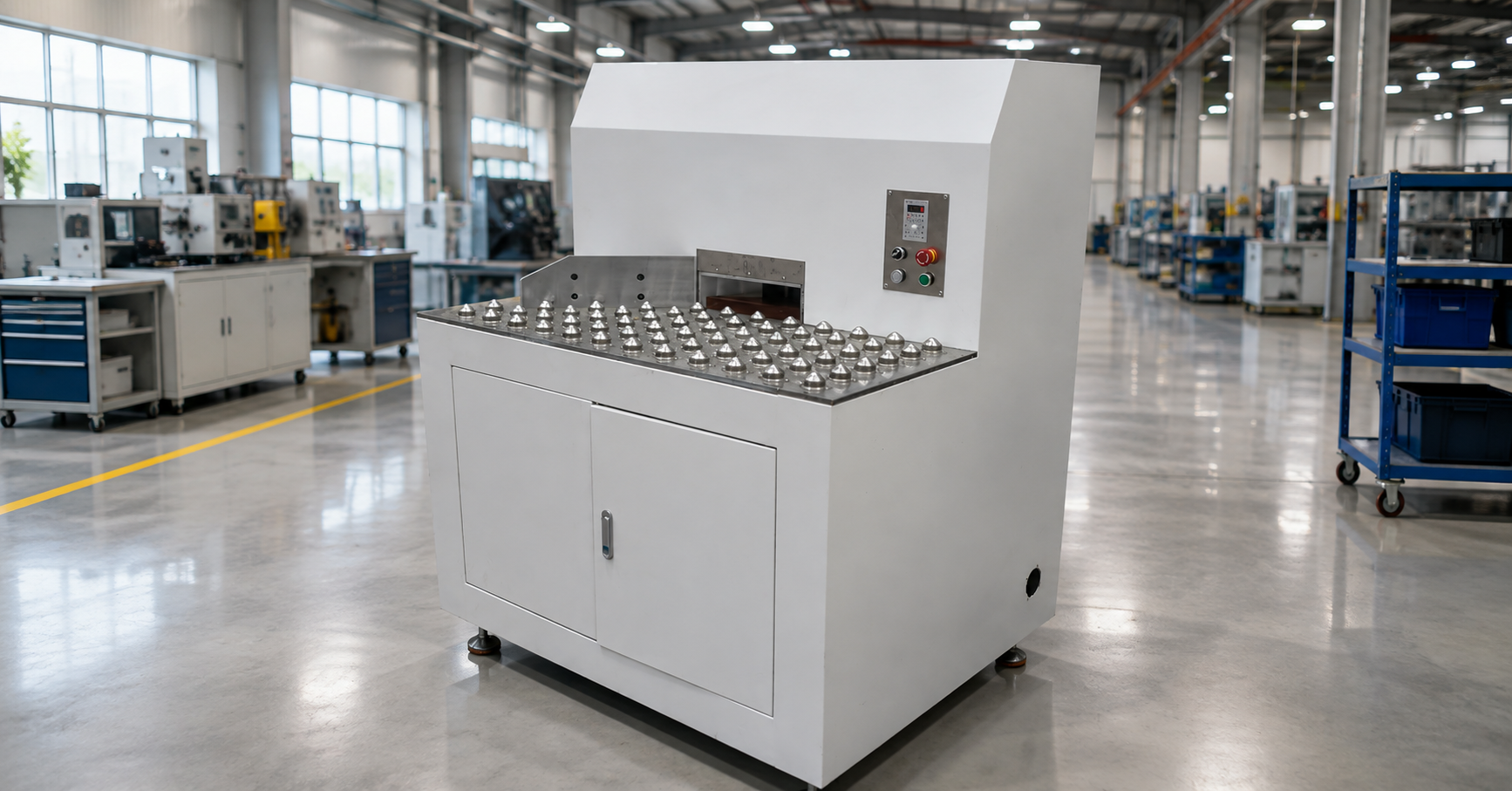
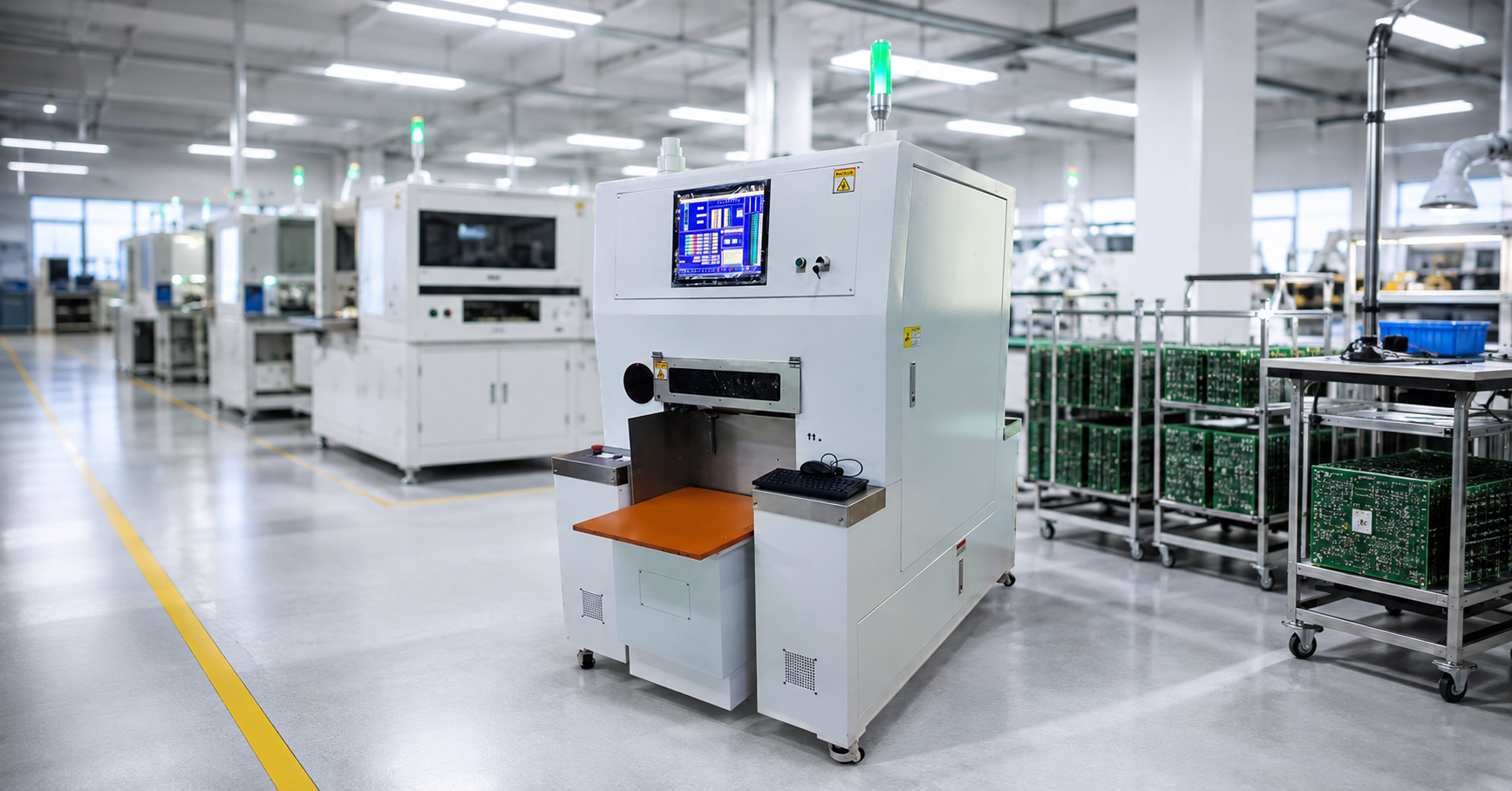
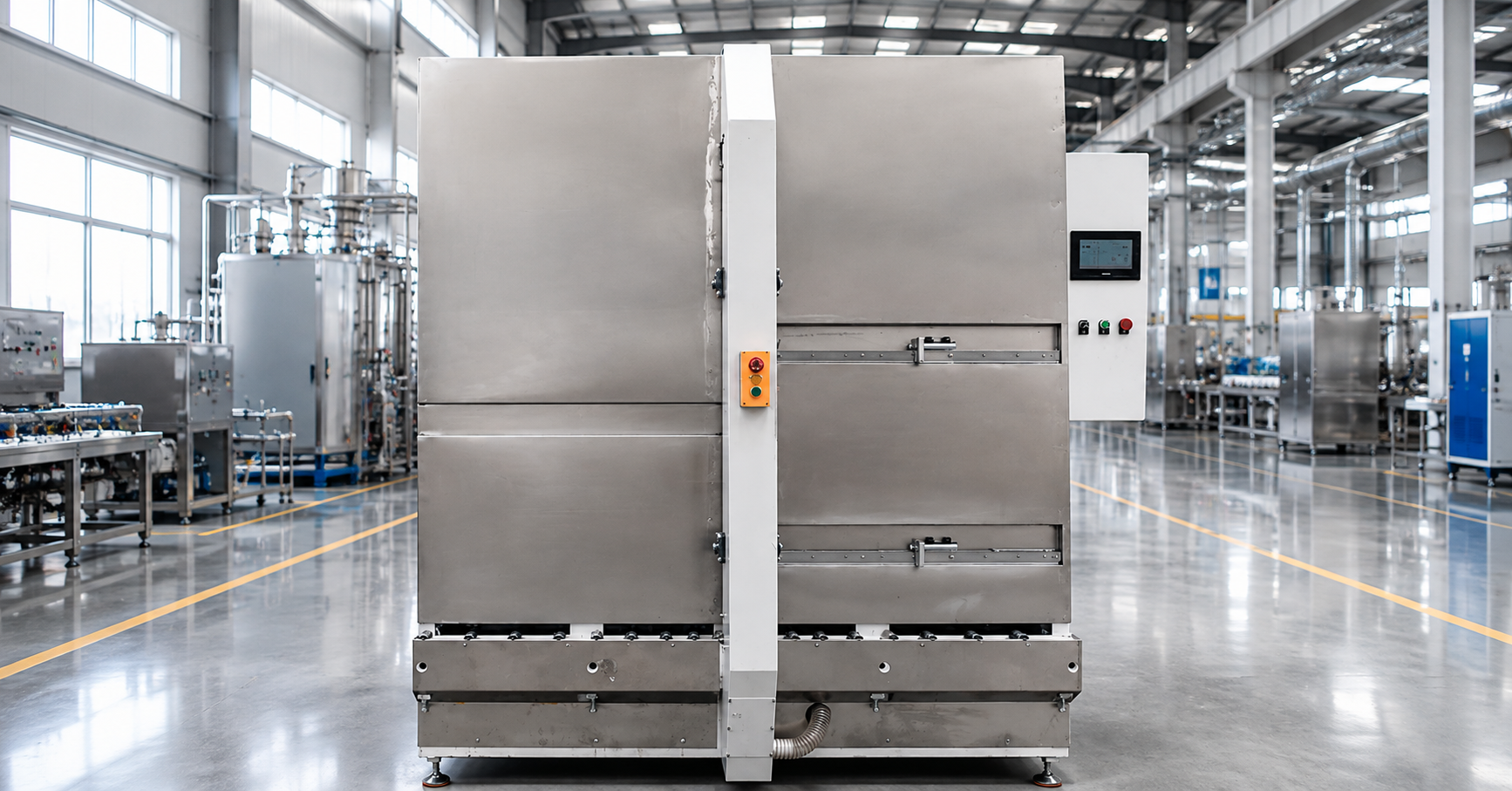
| Industrial cabinet format | Visible floor-standing housing, service access points, and control section | Suggests production-oriented use rather than improvised cutting |
| Maintenance access | Visible latches, access panels, and external control boxes suggest modular service layout | Can reduce inspection and servicing difficulty |
| Customization support | Enclosure size, feeding direction, guarding, controls, and conveyor integration may be discussed | Helps match the machine to different plant layouts |
| Buyer validation needed | Cutting width, board thickness range, feed method, and panel compatibility should be confirmed | Avoids wrong machine selection when data is incomplete |
Why Does Stable Cutting Structure Matter?
A vertical shearing machine should hold the PCB panel securely during separation. Chikin’s page notes that stable board holding is important because the cut line must remain consistent, especially for boards with small components, routed edges, or narrow panel tabs.
This point separates a professional rigid printed circuit board cutting machine from ordinary manual cutting methods. If the panel shifts, flexes, or twists during cutting, the result may be inconsistent even if the cutting blade itself is sharp. Board support, alignment, and cutting path control all matter.
In real factory production, this stability can influence:
- edge appearance after separation
- rejection caused by board cracks or deformation
- operator confidence during repeated cutting
- consistency between different shifts
- downstream packaging or assembly handling
A machine with stronger support and a clearer cutting path can make the separation process easier to standardize.
Why Is Enclosed Operation Better for Factory Use?
Many ordinary cutting tools are open or semi-open. They may allow fast access, but they also place more responsibility on operator discipline, guarding, cleaning, and supervision. Chikin’s product page states that an enclosed machine body helps protect moving parts, gives the production area a cleaner layout, and supports safer operator interaction by keeping the work zone defined.
For a factory, enclosure design helps in three ways.
First, it creates a clear work boundary. Operators know where loading, cutting, and unloading happen.
Second, it supports safer use. A defined work zone helps reduce casual contact with moving areas.
Third, it makes the production cell look and behave more like industrial equipment rather than a temporary workstation.
This is one difference from many ordinary market products. A basic machine may be able to cut panels, but it may not provide the same level of process boundary, service organization, or line-ready structure.
What Should Buyers Confirm Before Purchase?
Because the product page does not publish full numerical specifications, buyers should not assume board thickness range, cutting width, feed method, or automation level. Chikin itself recommends validating cutting width, board thickness range, feed method, and compatibility with panel design before purchase.
Before requesting a quotation, factories should prepare:
- PCB panel size
- board thickness
- material type
- separation line design
- required edge quality
- expected output per shift
- current cutting problem
- available installation space
- manual, semi-automatic, or line-connected workflow
- safety and maintenance requirements
A good PCB cutting machine supplier should not only send a price. It should ask these details before recommending a configuration.
How Is This Product Different from Ordinary Market Products?
The most important difference is the production-oriented format. Chikin’s product page describes the machine as a floor-standing industrial unit with enclosed housing, service access points, and a control section designed for line operation.
Ordinary market products may focus only on low cost or basic cutting. They may be open, lightweight, less integrated, or more dependent on operator skill. In contrast, this vertical shearing machine format is worth considering because it offers a clearer process boundary, more stable operation, and a cleaner path toward production standardization.
For B2B buyers, this difference matters because factory equipment is not judged only by the first week of use. It must be easy to operate, clean, inspect, maintain, and adjust over time.
Common Mistakes When Choosing a PCB Shearing Machine
One common mistake is choosing only by price. A lower-cost cutter may seem attractive, but if it causes inconsistent edge quality or operator variation, the factory may lose more through rework and rejection.
Another mistake is ignoring board format. A machine may be suitable for one panel size but unsuitable for another. Buyers should confirm panel dimensions and cutting requirements before ordering.
A third mistake is assuming all “PCB cutting machines” are the same. A PCB raw material cutting machine, a board separator, and a production-line shearing machine may serve different tasks. Buyers should define whether the machine will cut raw material, separate processed panels, or support assembly-line depaneling.
A fourth mistake is overlooking service access. Chikin’s page notes that visible latch assemblies, access panels, and external control boxes suggest a modular layout that can make maintenance easier than an overly sealed design.
What Questions Should a Buyer Ask the Supplier?
Before choosing a PCB depaneling machine manufacturer, buyers should ask:
Can this machine process our panel size and board thickness?
What board materials are suitable?
How is the panel held during cutting?
Is the machine for raw material cutting or finished panel separation?
What cutting width can it handle?
What feed method is used?
Is the machine manual, semi-automatic, or suitable for line integration?
Can the enclosure size or feeding direction be customized?
Can the control interface layout be adjusted?
What maintenance access is provided?
What spare parts should be stocked?
Can you review our panel drawings before quotation?
These questions help buyers avoid selecting a machine based only on appearance.
Where Does This Machine Fit in a PCB Factory?
The product page states that a vertical shearing machine is commonly considered in electronics facilities that process panelized boards before final assembly, testing, or packing. It may sit between upstream fabrication and downstream assembly operations.
This makes it relevant for:
- PCB production workshops
- electronics assembly lines
- contract manufacturing facilities
- high-mix PCB processing lines
- factories replacing manual separation
- plants that need cleaner board edges
- production cells with stricter operator control
It is especially useful where repeatable separation is preferred over hand-breaking and where board edge appearance matters.
FAQ
What is a vertical shearing machine used for in PCB production?
A vertical shearing machine is used for controlled PCB panel separation. Chikin describes it as equipment for clean, repeatable panel separation without unnecessary stress on boards, components, or operators.
How is this machine different from manual PCB separation?
Manual separation depends heavily on operator force and experience. A vertical shearing machine provides a more guided and controlled cutting method, reducing handling variability.
What should buyers confirm before purchase?
Buyers should confirm cutting width, board thickness range, feed method, panel compatibility, operator workflow, installation space, maintenance access, and required automation level.
Is the machine suitable for all PCB panels?
Not necessarily. The supplier should review board size, panel style, cutting requirements, and installation conditions before recommending a configuration.
Can this machine be customized?
The product page states that customization may involve enclosure size, feeding direction, safety guarding, control interface layout, and integration with upstream or downstream conveyors.
Conclusion
Choosing a vertical shearing machine should not be treated as a simple equipment purchase. For PCB factories, the right machine should improve panel separation stability, reduce manual variation, support cleaner operation, and fit into the production line with reasonable maintenance access.
Chikin’s vertical shearing machine format is worth considering because it focuses on clean, repeatable panel separation, enclosed industrial construction, stable cutting structure, simple line control, service access, and customization possibilities.
Compared with ordinary market cutting tools, this product is more production-oriented. It is not only a cutter; it is a controlled PCB panel separation station. For buyers who want to replace manual separation or standardize PCB cutting quality, the best next step is to share panel size, board style, and process requirements with the supplier before comparing price.