



Why a PCB drilling machine supplier matters more than the catalog page suggests
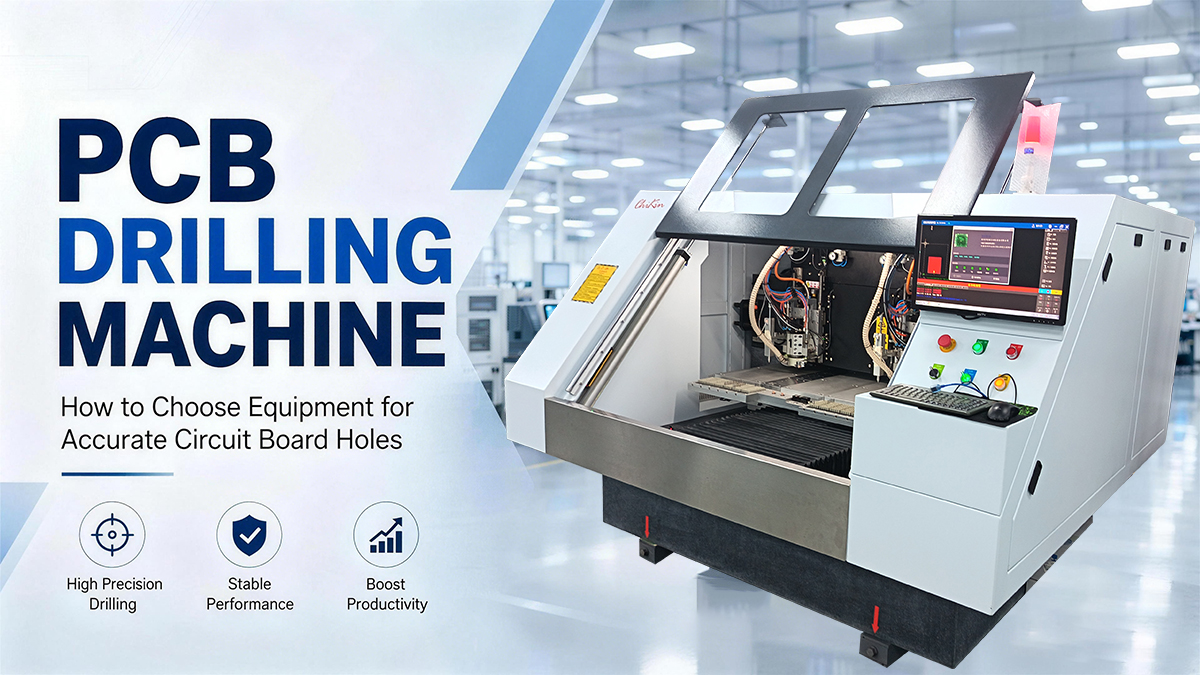
If you are comparing a PCB drilling machine supplier, you are rarely buying a machine in isolation. You are buying hole quality, repeatability, service support, and the confidence that your PCB fabrication line can keep moving when the schedule gets tight. For board shops, electronics manufacturers, and prototype teams, drilling is not just a step in the process; it is one of the places where small errors become expensive very quickly.
That is why the decision is usually about more than brochures. The right supplier should help you match machine capability to your board mix, your production rhythm, and the level of automation your shop can actually use. A machine that looks impressive on paper may still be the wrong fit if it is awkward to maintain, difficult for operators to set up, or mismatched to your typical panel sizes and drill patterns.
What buyers are usually trying to solve
Most sourcing teams come to this category with a practical problem: they need cleaner, more consistent holes with less manual intervention. In PCB processing, drilling supports vias, component leads, and other board machining operations where positional accuracy matters. When the drill hits off-center, the defect is not only cosmetic. It can affect assembly yield, signal integrity, or downstream routing work.
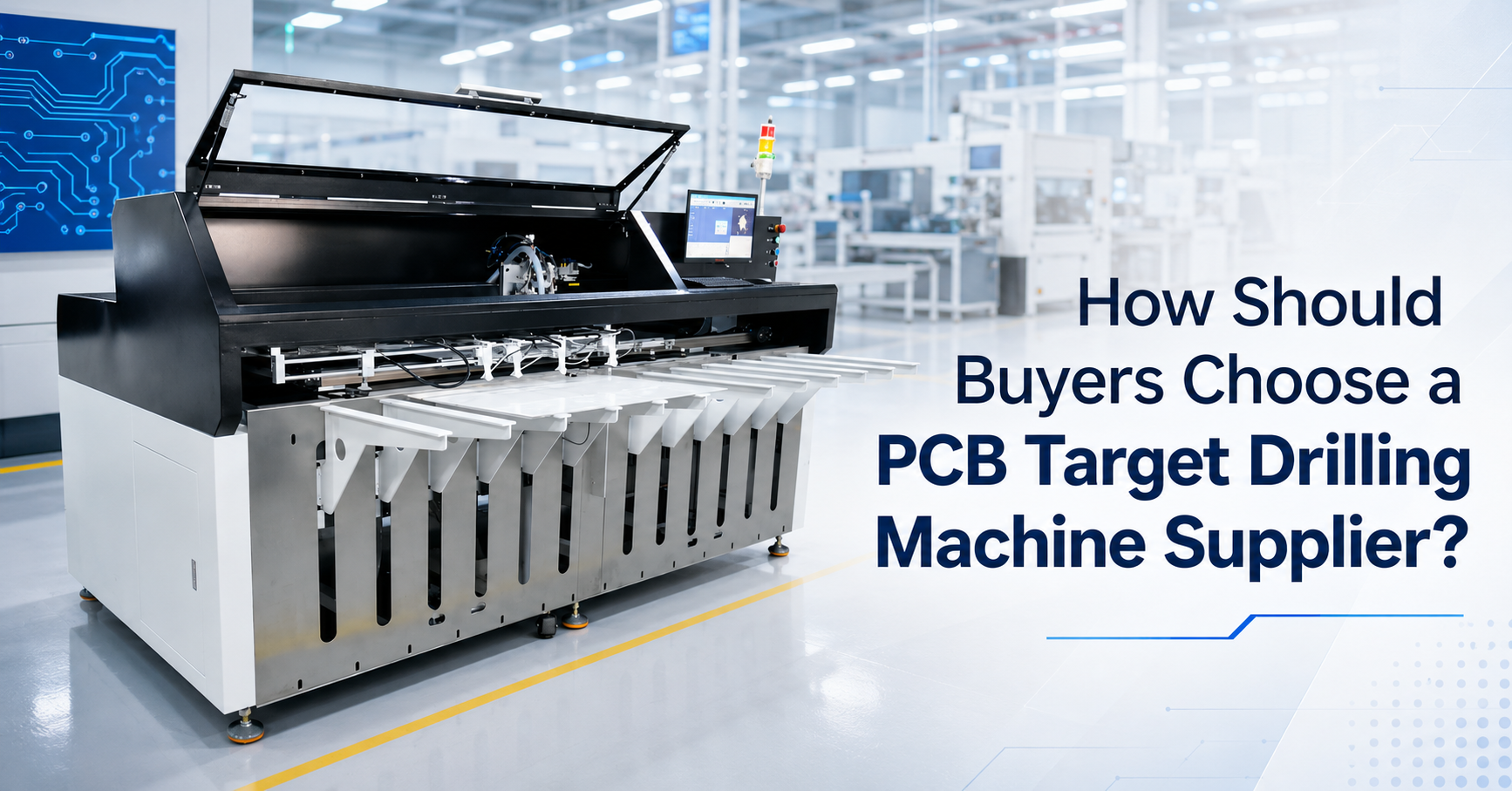
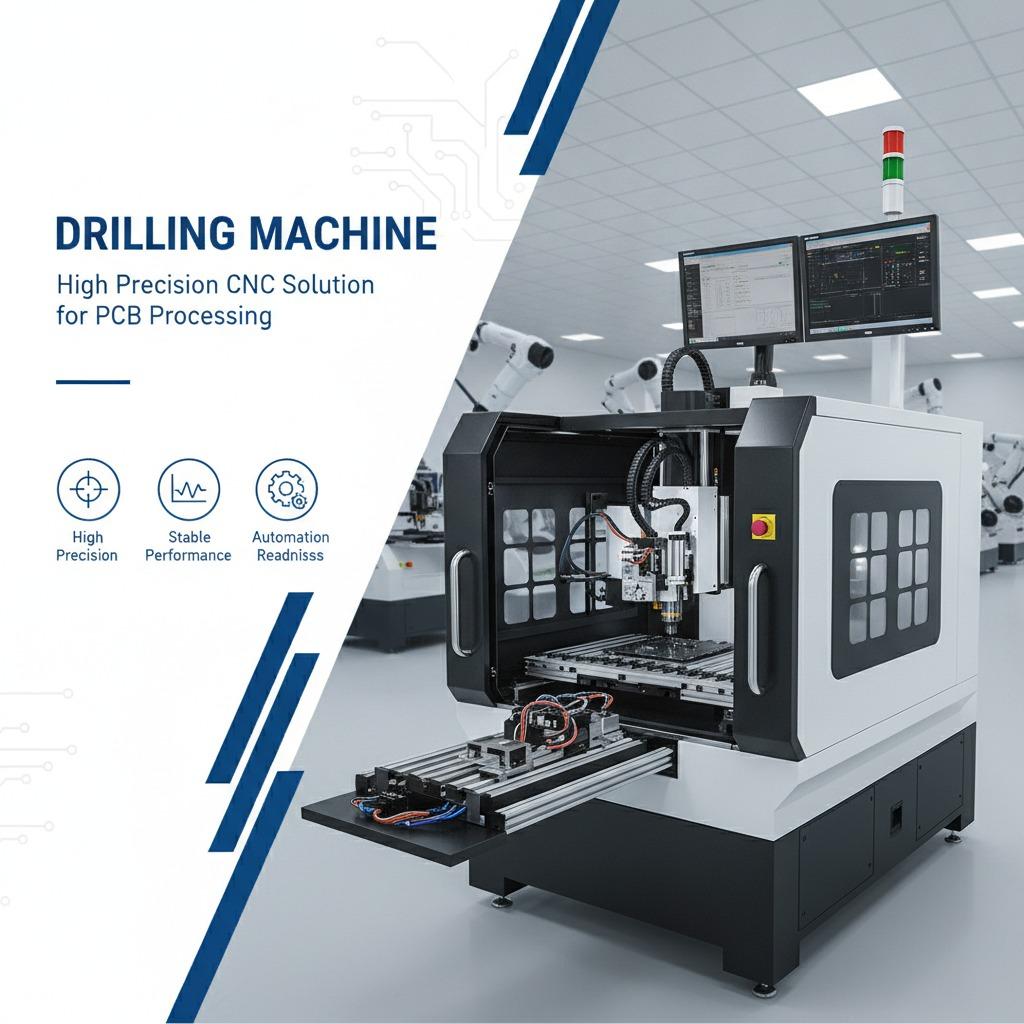
A proper PCB drilling machine supplier should therefore be evaluated on how well the equipment supports repeatable production. That means looking at machine stability, control layout, enclosure design, and the degree of automation available for your workflow. The visible machine type here, for example, is an enclosed CNC drilling system with a cabinet-style body, a protected work area, and a control panel on the right side. Those are the kinds of features that often matter in a production floor environment because they help contain the process and keep the operator interface straightforward.
How drilling equipment fits into PCB fabrication
Mechanical PCB drilling is a core part of many fabrication lines. It is commonly used in PCB manufacturing plants, electronics assembly support operations, and prototyping lines where repeatable hole placement is required. Depending on the shop, the machine may be used alone or alongside a PCB routing machine supplier relationship if the line also includes profiling and edge-cutting equipment.
That distinction matters. Drilling and routing are related, but they are not the same buying decision. A PCB drilling and routing machine may combine operations or sit within a broader automated cell, yet the exact configuration should always be checked carefully. Some buyers assume a routing-capable system automatically covers all drilling needs, or vice versa. In practice, the better question is whether the machine matches the board types and process steps you actually run.
What to look for in a supplier, beyond the headline claim
1. Process fit
Start with your boards. Are you running high-mix prototypes, repeat production, or larger-volume fabrication? Do your jobs require tight hole placement and frequent setup changes? The machine should support the pace and variability of your operation rather than forcing your team to work around it.
2. Machine stability and enclosure design
The machine shown has a heavy industrial cabinet, a black structural base, and a protected viewing area. That kind of physical design usually points to a focus on stability and operator safety. In a drilling environment, that is not decorative. A rigid structure helps keep motion consistent, and enclosure design can reduce contamination and improve visibility during operation.
3. Automation readiness
Marketing phrases such as “high precision,” “stable performance,” and “automation ready” are useful signals, but they are not substitutes for specifications. Ask what automation functions are actually supported: loading method, control integration, program handling, and whether the interface is practical for your team. A buyer should be cautious whenever a supplier leans on broad performance claims without giving enough process detail.
4. Service and support
For capital equipment in PCB fabrication, local responsiveness matters. Downtime in a board shop is expensive, and a drilling platform is not the kind of machine you want waiting on vague parts support. Even if the supplier is technically strong, ask how commissioning, maintenance guidance, and operator training are handled.
Common mistakes buyers make
One common mistake is overbuying capability. A shop may choose a machine with more features than it can realistically use, then discover that setup and maintenance take longer than expected. Another mistake is the opposite: buying for today’s simplest job and leaving no room for product mix changes. PCB production rarely stays static for long.
Another practical caution is assuming all “precision” claims are equal. Without numeric accuracy data, drill size range, spindle configuration, or board size limits, the safe move is to treat the machine as promising rather than proven. That is not a criticism; it is just normal sourcing discipline.
Questions worth asking before you request a quote
What board formats does the machine support? How is the work area arranged? Is the control system suited to your operators’ skill level? What preventive maintenance is expected? Can the supplier explain how the machine supports your mix of drilling and possible routing work?
If you are comparing multiple vendors, ask for process photos, application notes, and a clear explanation of what is included with installation and training. Those details often reveal more than the headline specs.
Buying advice for engineering and sourcing teams
For engineering teams, the key question is whether the machine can hold the process you need without creating new variation. For sourcing managers, it is whether the supplier can support the machine over time. For product teams, it is whether the equipment can adapt as the board design changes.
A good PCB drilling machine supplier should make those answers easier, not harder. Look for a vendor that can discuss the machine in the language of production: hole consistency, line stability, automation fit, and shop-floor practicality. That is usually where the real value sits.
Next step
If you are evaluating equipment for PCB fabrication or prototype production, request a technical discussion rather than a generic sales pitch. Ask the supplier to map the machine against your board types, workflow, and automation goals. A short, specific conversation will save more time than a stack of marketing PDFs.