



Why the choice of PCB drilling machine manufacturer matters
If you are sourcing from a PCB drilling machine manufacturer, you are not just buying a piece of equipment. You are deciding how cleanly holes will land, how repeatable production will be, and how much time your team will spend chasing scrap, rework, or alignment problems. In PCB production, small errors multiply quickly. A slightly off-center hole can affect vias, component leads, downstream assembly, and ultimately the reliability of the finished board.
That is why buyers often compare a PCB drill machine manufacturer on more than price alone. The real question is whether the machine can support accurate circuit board hole drilling day after day, in a production environment that may include prototypes one week and larger lots the next. Stability matters. So does operator control, fixture handling, and the ability to keep throughput steady without turning every setup into a manual correction exercise.
What this type of machine is expected to do
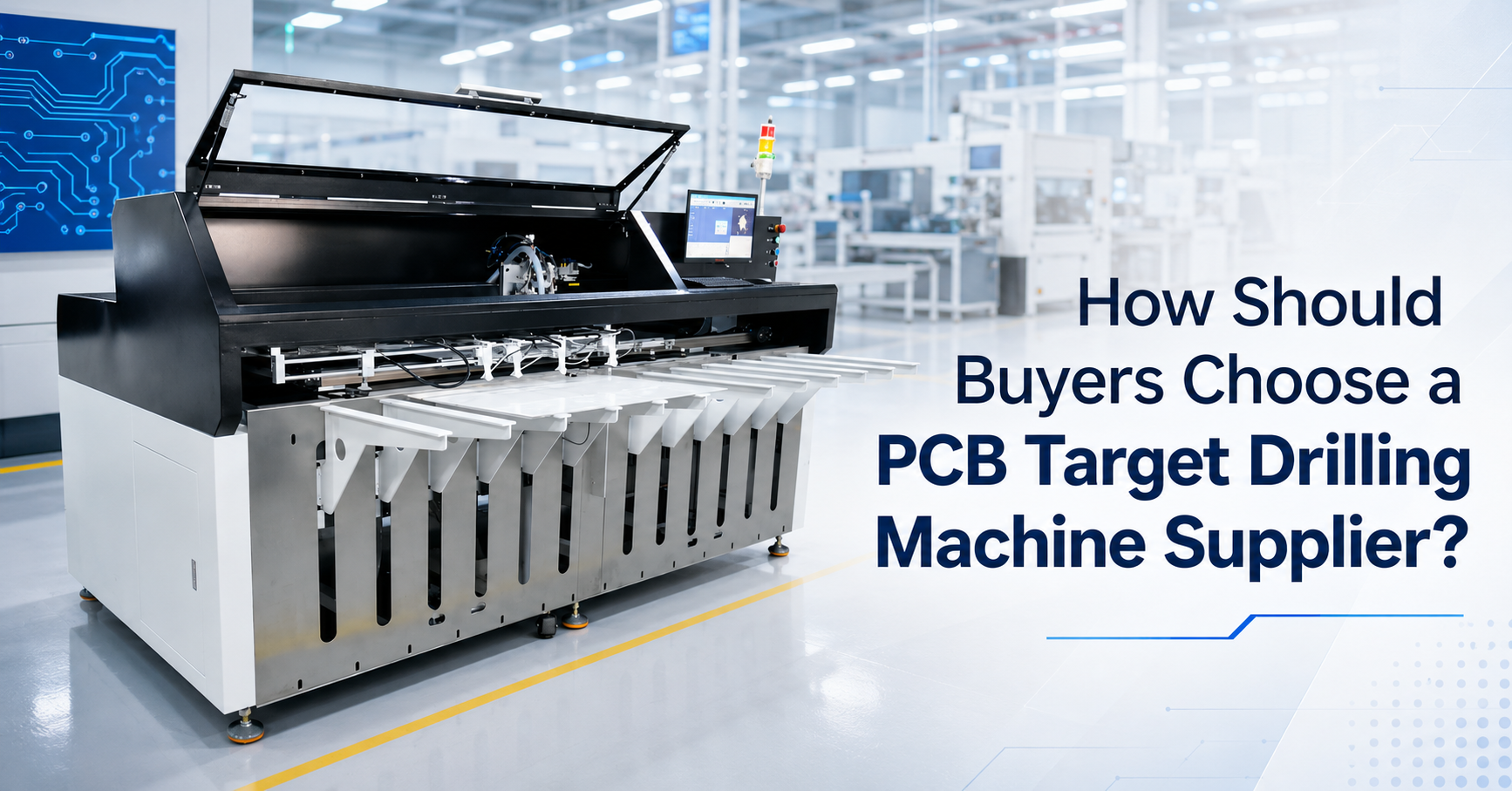
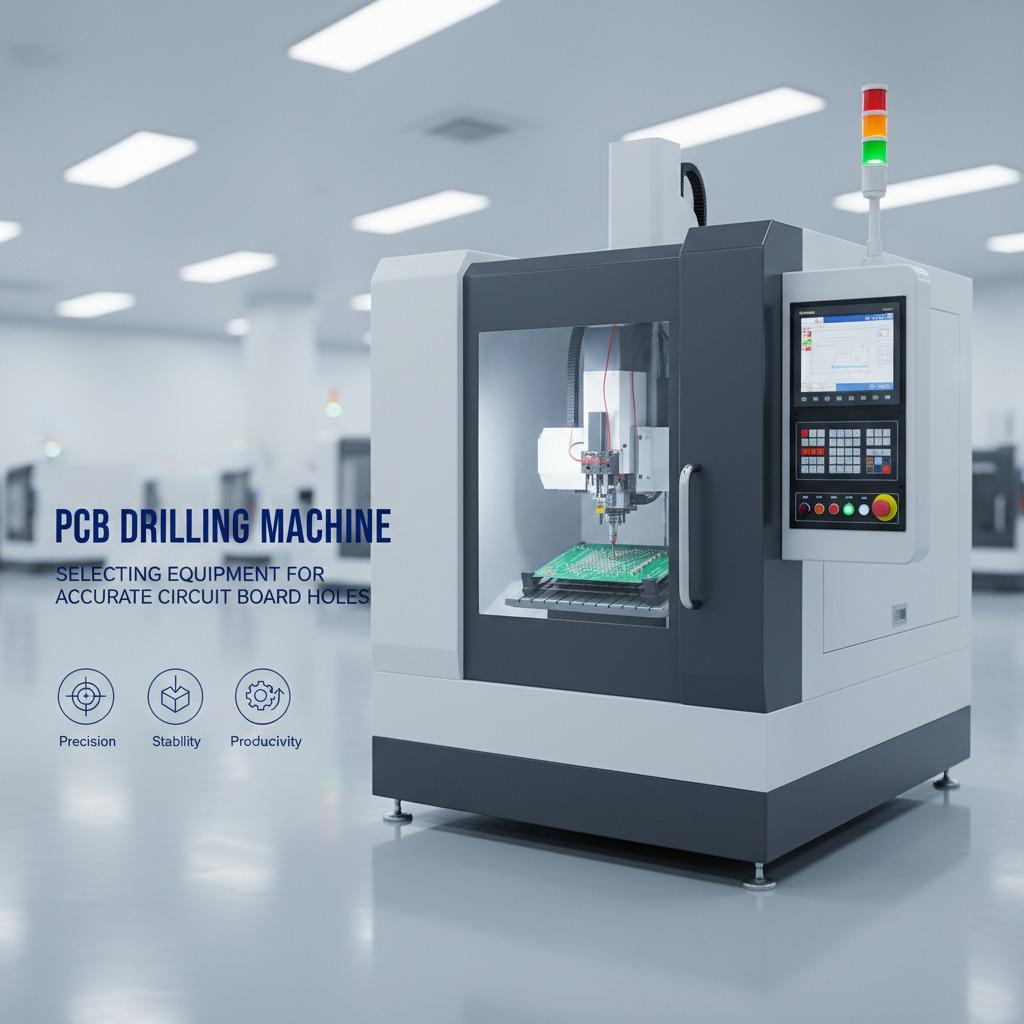
A printed circuit board drilling machine is built for one job: creating precise holes in PCB material using a CNC-controlled drilling process. In practice, those holes may be used for vias, component leads, mounting points, or other board features that demand consistent placement. The cabinet-style machine described here appears to be an enclosed industrial unit with a rigid frame, a front viewing window, a visible drilling head, and a worktable or fixture area for holding the board in position.
That enclosure is not just a cosmetic detail. It helps separate the operator from the cutting area and supports a more controlled production setup. The side-mounted control panel also suggests a workflow designed for monitoring and machine interaction at the point of use, rather than a stripped-down bench tool. For many buyers, that is the difference between a machine that can technically drill holes and one that can survive a factory floor.
Key buying considerations for PCB production teams
Precision before speed
Marketing language often leans on fast cycle times, but in PCB drilling the more useful question is whether the machine holds position accurately across repeated runs. The visible selling points here emphasize high precision drilling and stable performance. Those are the phrases buyers should care about first. If hole placement drifts, productivity gains are quickly lost to inspection and rework.
Repeatability under routine factory conditions
A machine may perform well in a demonstration and still struggle when boards, fixtures, and operators change through the week. For sourcing managers, repeatability is usually more valuable than a dramatic top-end spec that only appears under ideal conditions. A solid PCB drill machine manufacturer should be able to explain how the machine handles board positioning, tooling consistency, and operator workflow.
Ease of operation and oversight
The pictured machine includes a screen-based control panel and a tower light, both of which point to an industrial setup intended for monitored production. That matters because drilling work is often one part of a longer line. Operators need clear status feedback. Supervisors need to know when a machine is running, waiting, or needs attention. Small usability details can save more time than an extra feature nobody uses.
What to ask before you compare suppliers
A practical buyer should ask for the specifications that affect real use: drill diameter range, positioning accuracy, spindle configuration, supported board size, software interface, and tool-change approach. Those details are not visible here, so they should not be assumed. If a supplier cannot provide them clearly, that is a warning sign.
You should also ask how the machine supports your actual workload. A prototype shop may value flexibility and short changeovers. A high-volume electronics manufacturer may care more about throughput and uptime. The same printed circuit board drilling machine can be a good fit for one plant and an awkward compromise for another.
Common mistakes when sourcing drilling equipment
One common mistake is treating all drilling equipment as interchangeable. It is not. PCB drilling is a precision process, and the machine’s structure, control system, and workholding all shape the final result. Another mistake is overfocusing on headline productivity claims without checking whether the machine can maintain hole quality over time.
It is also easy to overlook service support. Even a well-built machine will eventually need maintenance, spare parts, or process tuning. A PCB drill machine manufacturer that understands industrial production should be able to support those needs in a straightforward way. Buyers should ask early, not after delivery, because a delayed response on a production-critical machine can cost more than the equipment itself.
Who this machine category fits best
This type of CNC PCB drilling machine is most relevant for PCB manufacturing lines, electronics contract manufacturers, prototype laboratories, and facilities that need accurate circuit board hole drilling at a repeatable pace. It is especially useful where hole location consistency affects assembly yield or downstream electrical performance.
If your operation is still drilling by a more manual method, the jump to CNC-controlled drilling can feel like a larger investment than expected. That said, the process usually pays for itself in reduced variation, fewer handling errors, and a cleaner production rhythm. The caveat, as always, is that the machine has to match the board types and volumes you actually run.
Next step for buyers
Before shortlisting a PCB drilling machine manufacturer, build a simple comparison sheet around your own production needs: board size, hole precision expectations, shift volume, operator skill level, and service requirements. Then ask suppliers to map their machine against those realities, not just against a brochure.
If you are evaluating options now, request a full specification sheet, a sample process description, and clarification on the machine’s drilling capacity and control features. That is the fastest way to separate a capable PCB drilling machine manufacturer from one that only looks good in a product image.