



Why PCB drilling machine selection matters more than it first appears
A PCB drilling machine manufacturer is not just selling a piece of equipment. They are influencing hole quality, panel yield, downstream assembly fit, and even how calmly a production line runs on a busy shift. In PCB work, drilling is one of those steps that seems straightforward until a board comes back with misaligned vias, burrs, or inconsistent hole placement. Then everyone in the chain feels it, from engineering to sourcing to final test.
For buyers, the real question is rarely “Can it drill?” It is more often “Can it drill repeatably, at the required pace, without creating hidden problems?” That is why the choice of machine and supplier deserves a closer look than a simple spec-sheet comparison. A well-built PCB drill machine manufacturer should help a factory hold process stability, while keeping maintenance and operator handling sensible.
What this type of equipment is meant to do
A Printed circuit board drilling machine is used to make precise holes in PCB panels. Those holes may support vias, component leads, interlayer connections, or other board-processing needs depending on the production flow. In practice, the machine has to manage a delicate balance: it needs enough rigidity to stay accurate, but enough speed and throughput to keep up with manufacturing demand.
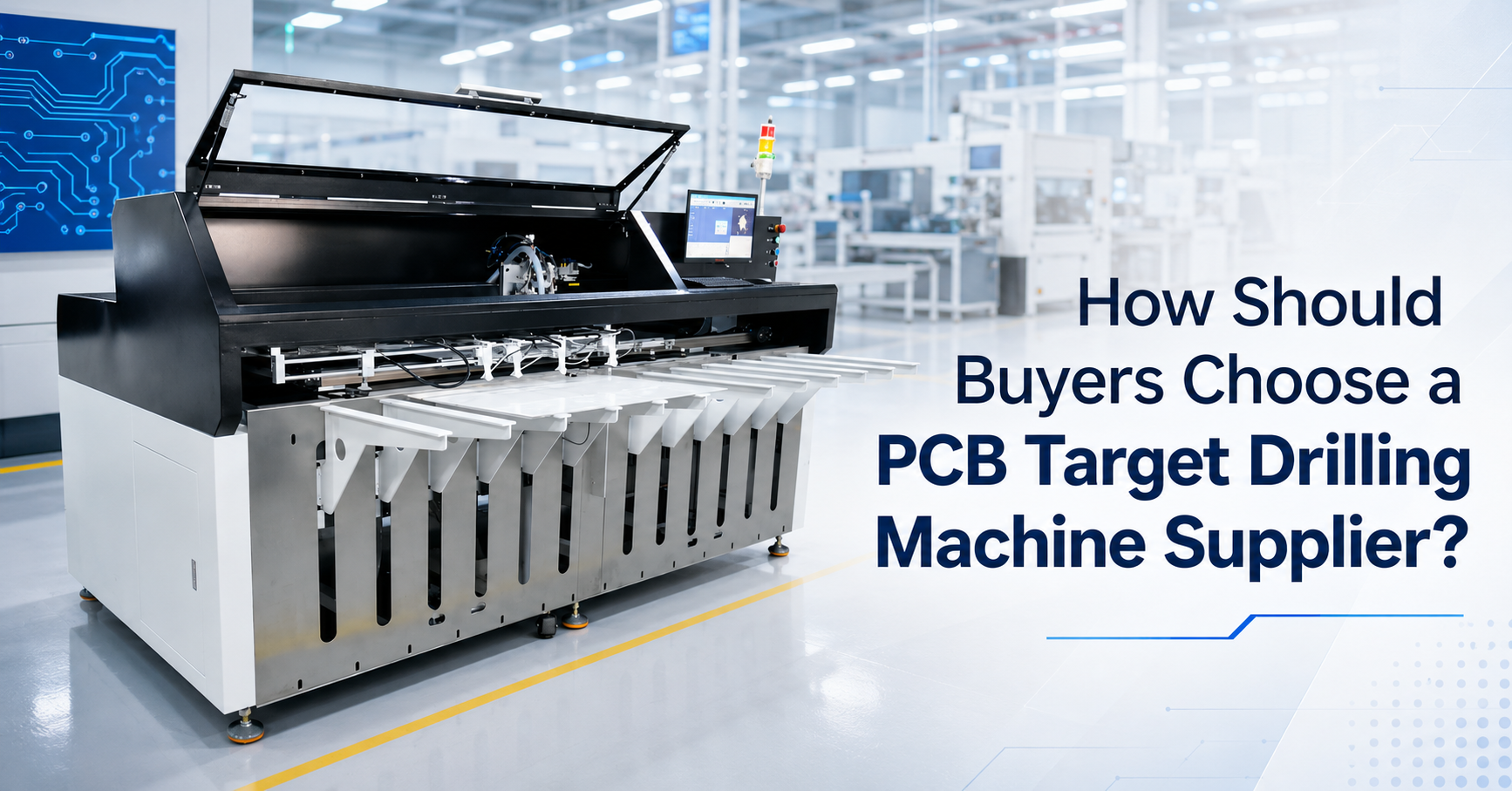
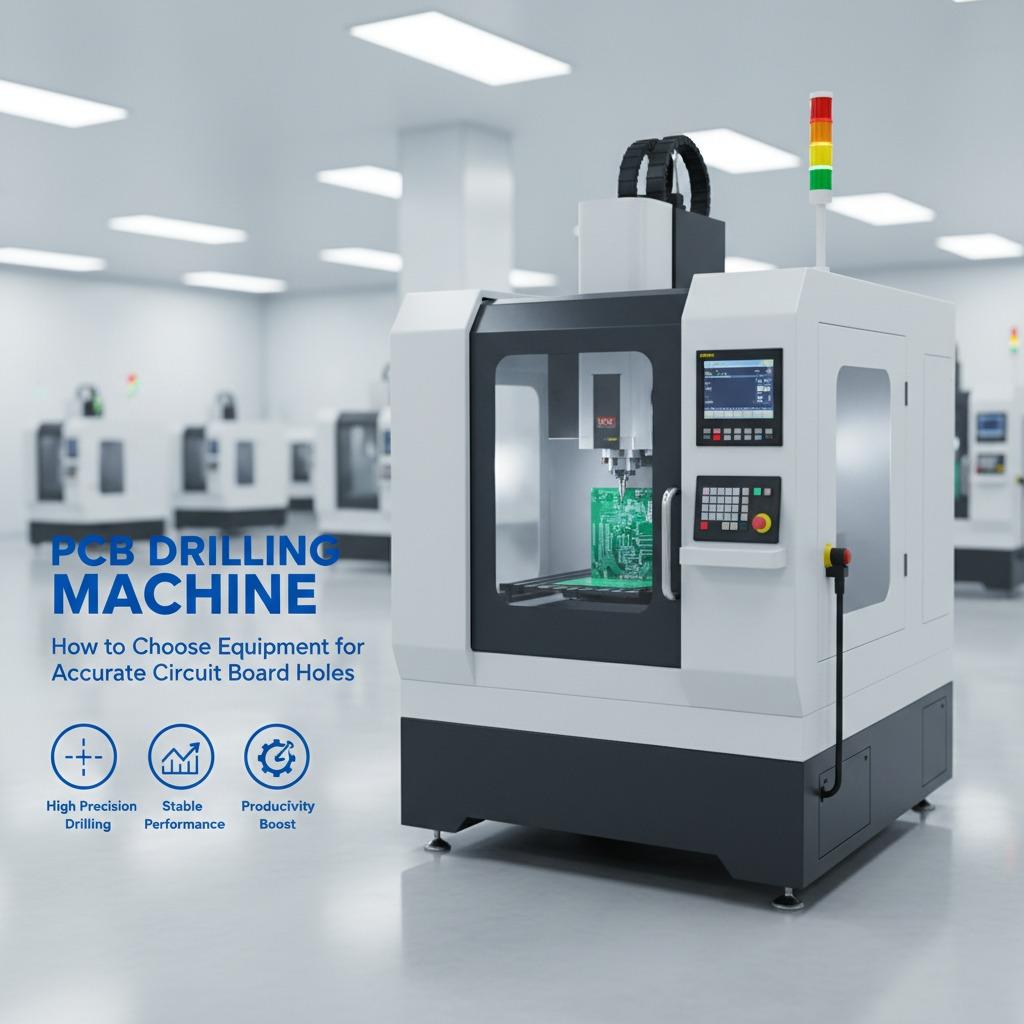
The visible machine structure described here points to a box-type enclosed cabinet, an internal drill head mounted on a moving gantry or Z-axis assembly, a panel-style worktable, and a side control interface. Those are sensible features for a controlled industrial environment. The enclosure helps keep the process contained, while the control panel and status light support day-to-day operation and monitoring. That said, exact drilling parameters are not provided, so buyers should not assume performance just from appearance.
Quick buyer takeaways before you compare suppliers
When evaluating a supplier in this category, it helps to separate marketing language from production reality. Terms like “High Precision Drilling,” “Stable Performance,” and “Boost Productivity” sound encouraging, but they are not substitutes for process data. The safer approach is to ask how the machine supports hole placement consistency, panel handling, tool wear management, and routine maintenance.
If you are sourcing for a PCB factory or electronics contract manufacturing line, the practical goal is to reduce variation. That means less scrap, fewer rework loops, and less operator dependence. A machine that looks robust but is awkward to load or hard to service can become expensive in a hurry.
Key features to examine on the machine itself
Enclosure and safety layout
An enclosed cabinet design is common in industrial drilling equipment because it improves process control and helps protect operators from debris and moving parts. The front access opening or viewing area is useful, but buyers should also check how easy it is to load panels and perform inspection without slowing the line.
Machine bed and panel support
The worktable matters more than many first-time buyers expect. If the PCB panel is not supported properly, even a capable spindle can produce poor outcomes. The best drilling setup is one where the board stays stable, alignment is clear, and fixturing does not become a daily frustration.
Control interface and operator workflow
A side-mounted control panel with display and keypad suggests the machine is designed for production use rather than occasional lab work. That is a good sign, but the real test is usability. Can operators confirm jobs quickly? Are alarms understandable? Is routine adjustment straightforward? A complicated interface can quietly reduce output, especially on multi-shift lines.
How to judge a supplier beyond the brochure
When comparing a PCB drilling equipment supplier, look at the parts of the relationship that affect uptime. Can they explain service support clearly? Do they provide enough documentation for maintenance teams? Are replacement parts and consumables manageable to source? Buyers often focus on the machine’s first-day performance and underweight the cost of keeping it productive six months later.
Another practical point: if the vendor cannot clearly describe the drilling range, spindle details, board capacity, or control logic, proceed carefully. That does not necessarily mean the machine is poor, but it does mean the buyer should demand more information before committing. In PCB production, ambiguity tends to show up later as delay.
Common mistakes buyers make
One mistake is choosing a drilling machine only on visible build quality. A solid enclosure is helpful, but it does not reveal spindle behavior, positioning stability, or long-run repeatability. Another mistake is assuming a machine marketed for one PCB application will fit every board mix. Prototyping shops, high-volume factories, and multilayer board lines often have very different priorities.
It is also easy to overlook the downstream effect of drilling quality. A small issue at this stage can create larger problems in plating, assembly, or final electrical test. That is why sourcing teams should treat drilling equipment as process-critical rather than merely mechanical.
Questions worth asking before purchase
Before you shortlist a manufacturer, ask for the specifics that matter to your production reality: supported panel size, hole diameter capability, spindle and control details, maintenance requirements, and the recommended operating workflow. If the machine will be integrated into an existing line, also ask how it fits with handling, inspection, and housekeeping around dust or debris.
For many buyers, the right decision is not the fanciest machine. It is the one that matches the board mix, the operator skill level, and the factory’s pace without constant supervision.
What a practical next step looks like
If you are comparing options from a PCB drilling machine manufacturer, start with your real production needs: board type, expected volume, hole consistency targets, and available floor space. Then request a detailed equipment description, not just a sales summary. That is the fastest way to separate a dependable production tool from a glossy brochure.
If you want to evaluate a specific machine for your line, gather the board samples, process requirements, and maintenance expectations first. A good supplier conversation becomes much easier when the buyer brings actual production constraints to the table.