



PCB CNC Drilling and Routing Machine: A Practical Guide for Prototype and Small-Batch PCB Production
For PCB manufacturers, electronics workshops, prototype labs, and contract production teams, not every production challenge requires a large multi-spindle drilling line. In many factories, the more urgent problem is repeatability. A board design may need precise holes, clean routed edges, stable slots, controlled outlines, or repeated panel features. If these operations depend too much on manual alignment, production becomes slow, inconsistent, and difficult to scale.
A PCB CNC drilling and routing machine is built to solve this kind of problem. It uses computer-controlled motion to complete drilling, routing, edge trimming, contour cutting, and similar repeatable board fabrication tasks. For small-batch PCB work, engineering samples, prototype production, fixture machining, and short-run electronics manufacturing, this type of machine gives buyers a practical balance between automation, flexibility, and cost control.
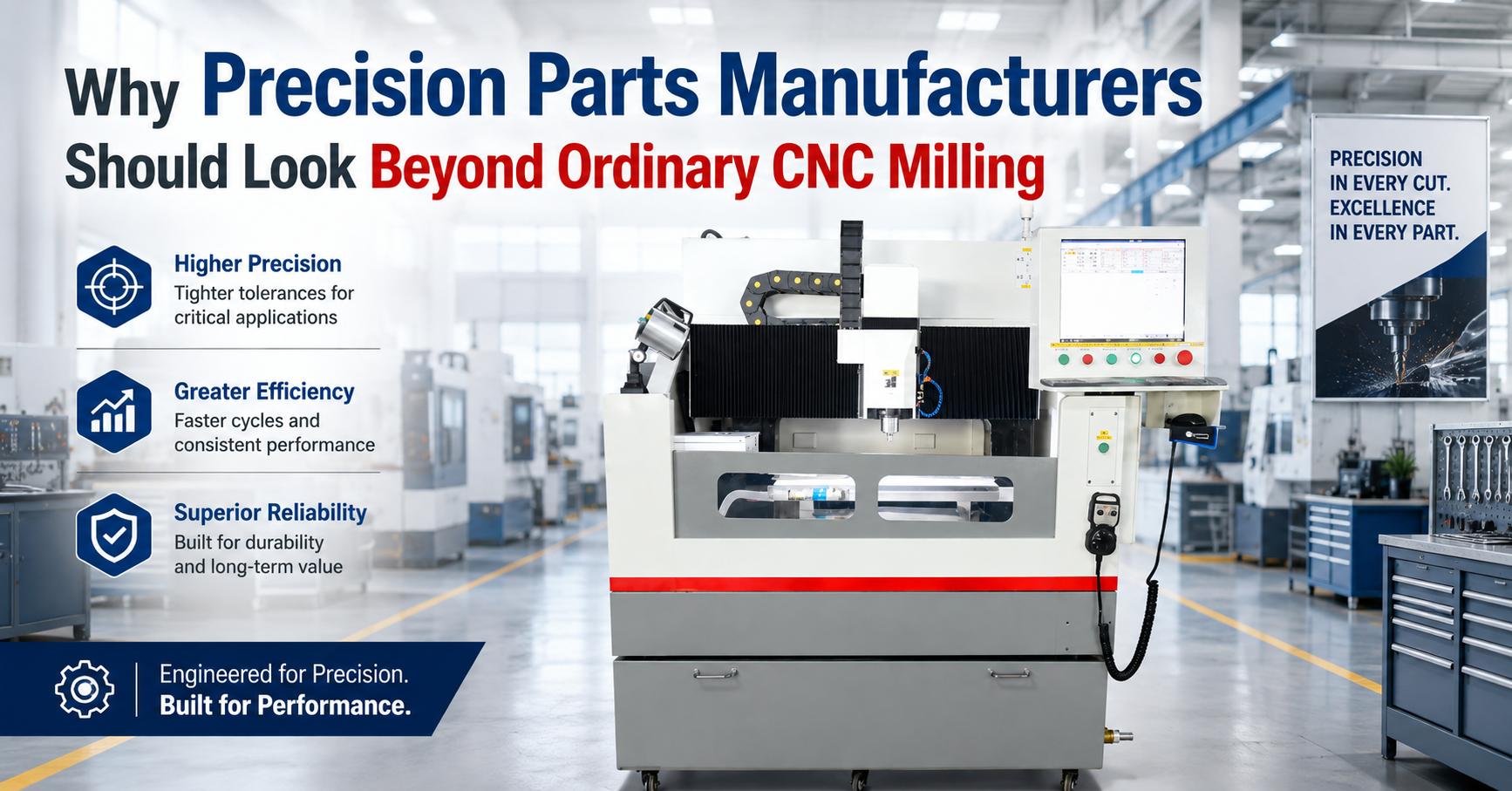
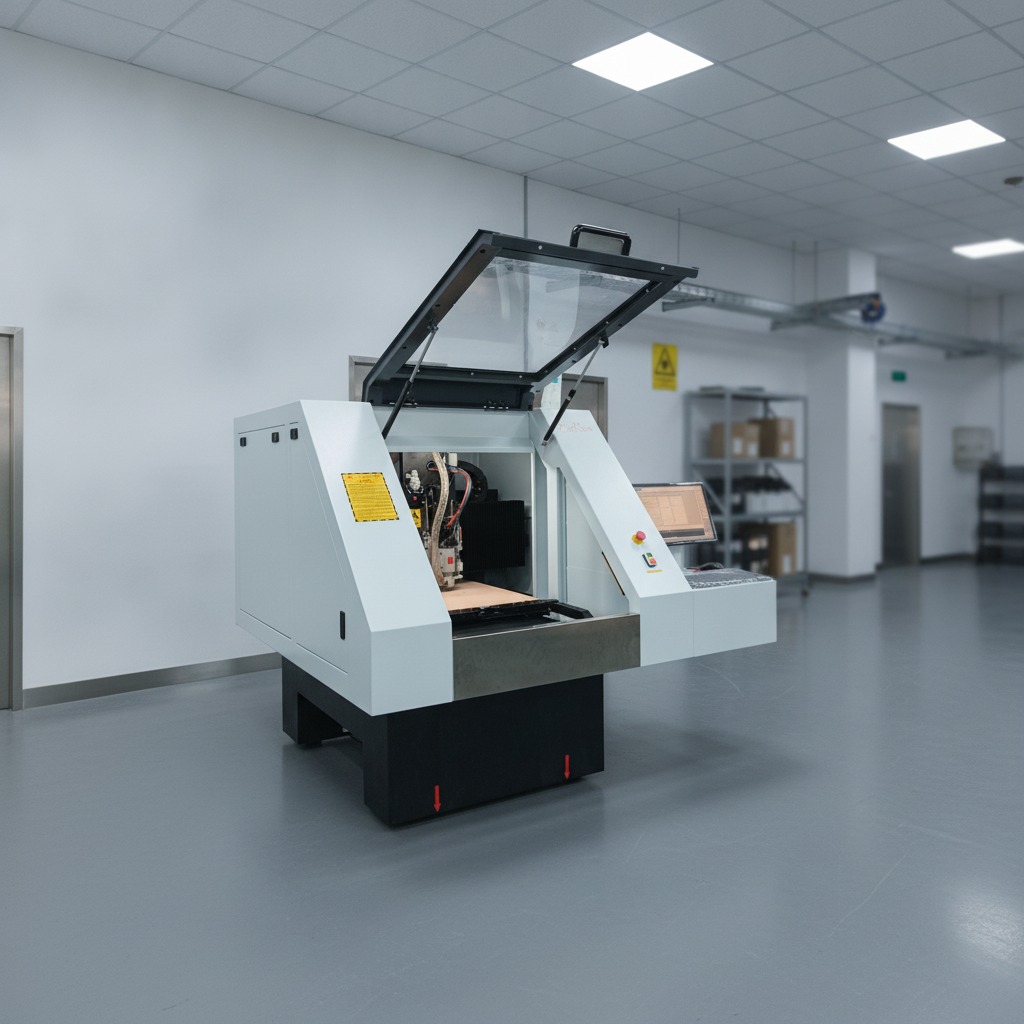
The Chikin CK-01R is a single spindle PCB CNC drilling and routing machine designed for repeatable board fabrication. According to the product page, the machine is an enclosed industrial automation platform with a gantry-style motion system, linear rails, vertical tool head, fixture-style worktable, side-mounted control console, front access opening, and top lid for loading and maintenance. The page positions it as useful for precise holes, slots, outlines, and repeatable board features without relying on manual alignment.
Why Prototype and Small-Batch PCB Production Needs CNC Control
Prototype and small-batch PCB production often sits in a difficult middle area. It is not always large enough to justify a high-capacity four-spindle drilling line, but it is still too demanding for manual drilling or inconsistent workshop methods. Engineers may need fast board iterations. Contract manufacturers may need short-run jobs from several customers. Electronics workshops may process PCB panels, plastics, fixture plates, or other flat board-like materials in the same space.
In this type of environment, repeatability is often more important than raw speed. If the first panel is correct but the second panel shifts slightly, the process is not stable enough. If every board needs manual alignment, the operator becomes the weak point of the production flow. If a routed outline changes from one board to the next, downstream assembly may become more difficult.
A single spindle PCB drilling and routing machine helps reduce these risks by using CNC motion instead of hand positioning. The machine follows programmed coordinates, which makes it easier to repeat hole patterns, slots, contours, and board outlines. The product page also notes that this type of computer-controlled system reduces positioning errors and supports steady output for flat board-like materials with the same geometry from part to part.
This matters because even small production errors can create hidden costs. One misplaced hole may damage a prototype board. One uneven routed edge may affect mechanical assembly. One wrong contour may delay sample approval. In small-batch production, the material cost may not be the only issue. The bigger cost is often lost time.
What Is a PCB CNC Drilling and Routing Machine?
A PCB CNC drilling and routing machine is a computer-controlled machining system used to create holes, slots, outlines, and routed features on PCB panels or other flat board-like materials. It normally uses a programmed tool path and a controlled worktable or fixture system. The machine moves the spindle along defined axes so that drilling and routing operations can be repeated with much higher consistency than manual methods.
The CK-01R is described as a floor-standing, fully enclosed CNC machine with a front access area, top lid, and side-mounted control console. Its structure suggests a system intended for controlled workshop use rather than a simple benchtop hobby machine. For buyers, this is important because a full enclosure can help separate the work zone from the operator side, contain debris, and make the machine more suitable for regular production environments.
Unlike a large multi-spindle PCB production machine, a single spindle system focuses on flexibility and manageable operation. It may not offer the highest throughput for mass production, but it can be highly practical for:
Prototype PCB fabrication
Small-batch PCB production
Engineering sample processing
Repeated drilling patterns
PCB outline routing
Slot cutting and contour processing
Fixture plate machining
Electronics workshop machining
Educational or laboratory PCB work
Short-run contract manufacturing
This makes the machine especially relevant for buyers who need a PCB prototyping machine or a PCB drilling machine for prototype labs rather than a large production line.
CK-01R Technical Overview
| Item | CK-01R Specification / Feature | Practical Value for Buyers |
|---|---|---|
| Machine Type | PCB CNC drilling and routing machine | Supports drilling, routing, slots, outlines, and repeatable board fabrication |
| Spindle Number | 1 | Suitable for prototype, small-batch, and flexible workshop production |
| Tool Change | Automatic | Reduces manual tool handling and improves workflow efficiency |
| Spindle Model | KLKJ-60C | Defines the installed spindle platform |
| Spindle Speed | 60,000 RPM | Supports PCB drilling and routing with small tools |
| Spindle Power | 1.2KW | Provides practical cutting power for board-like materials |
| Spindle Cooling | Water cooling | Helps control spindle temperature during operation |
| X/Y/Z Rail | Taiwan | Supports guided axis movement |
| X/Y/Z Ballscrew | Taiwan | Helps provide controlled motion and positioning |
| X/Y Rapid Speed | 20m/min | Reduces non-cutting movement time |
| Z Rapid Speed | 20m/min | Supports efficient vertical movement |
| Routing Accuracy | ±0.05mm | Relevant for board outlines and routed features |
| Positioning Accuracy | ±0.01mm | Helps match programmed coordinates with actual machining |
| Repeatability Accuracy | ±0.01mm | Supports repeated board fabrication |
| Machine Material | Granite | Improves machine stability and vibration control |
| Drive System | Delta servo motor | Supports controlled axis movement |
| NC System | CHIKIN | Provides machine control platform |
| Operating Interface | English | Useful for international buyers and overseas operators |
| Table Dimension | 560×680mm | Suitable for many prototype and small-batch PCB panels |
| Tool Magazine Capacity | 10 pcs | Supports multiple tools in one workflow |
| Drilling Tool Diameter | 0.5–6.35mm | Covers common PCB hole-making requirements |
| Routing Tool Diameter | 0.5–3.175mm | Supports routing, slots, and contour processing |
| Spindle Overheat Protection | Included | Helps protect spindle during operation |
| Tool Length Detection | Included | Supports safer and more consistent tool setup |
| Air Supply | 0.6–0.8 MPa | Installation requirement for production planning |
| Power Supply | 220V 1ph, 50Hz | Easier to install than some higher-power industrial systems |
| Machine Dimension | 1450×1700×1600mm | Helps buyers plan workshop space |
| Machine Weight | 1500KG | Indicates a stable industrial machine body |
The CK-01R specification table shows why this machine is positioned differently from high-capacity multi-spindle models. It is not designed primarily for maximum throughput. Its value is in automated single-spindle processing, repeatable CNC motion, compact industrial structure, automatic tool change, and practical use in prototype or small-batch production.
The Main Production Problem: Manual Alignment Is Not Scalable
In early-stage PCB development, manual drilling or simple routing methods may feel acceptable. Engineers can adjust by hand. Operators can correct small errors. A skilled technician may produce a good sample. But this approach becomes weaker when the same board must be repeated several times.
Manual alignment depends heavily on operator attention. Even experienced operators may introduce small position differences. When hole centers, board edges, mounting slots, or cutouts must match a mechanical housing, connector layout, or assembly fixture, those differences can cause problems.
For example, a prototype board may pass electrical testing but fail during enclosure assembly because the mounting holes are slightly off. A routed slot may be too narrow or shifted. A repeated panel may not align with the next production step. These problems are not always dramatic, but they waste engineering time.
A PCB CNC drilling and routing machine addresses this by turning the process into a programmed workflow. Once the fixture, tool, and coordinates are correctly prepared, the machine can repeat the same movement pattern. This does not remove the need for good setup, but it reduces dependence on hand positioning.
Why a Single Spindle Machine Still Matters
In the PCB equipment market, multi-spindle machines often attract more attention because their throughput is higher. A four-spindle machine can process more boards in less time. A two-spindle drilling and routing machine can improve output for mid-volume production. But that does not mean every buyer should start with a multi-spindle machine.
A single spindle PCB drilling and routing machine still has clear value in the right production environment. It is easier to understand, usually more manageable for small teams, and suitable for flexible production tasks. It can support prototype labs, R&D centers, electronics workshops, educational facilities, and small-batch factories that need CNC precision without oversized capacity.
A single spindle machine may be the right choice when:
Production volume is small or moderate.
Board designs change frequently.
The factory needs drilling and routing flexibility.
The buyer wants a more compact CNC platform.
The workflow involves prototypes, samples, and custom orders.
The team values repeatability over maximum throughput.
The workshop needs one machine for several flat-part tasks.
The investment budget does not justify a larger multi-spindle system.
Enclosed Structure and Workshop Safety
The CK-01R product page highlights the enclosed processing area, front access opening, top lid, and side-mounted control console. These structural details are not only about appearance. They affect daily use.
An enclosed work zone helps separate the cutting area from the operator side. For drilling and routing, this can be useful because machining may create dust, chips, and debris. The enclosure can also make the machine feel more controlled in a workshop environment, especially compared with open-frame equipment.
The front access opening and hinged top panel make loading, tool checking, and maintenance easier. This matters because prototype and small-batch production often requires frequent setup changes. If the machine is difficult to access, the operator loses time during every job change.
The side-mounted control console provides a dedicated place for program loading, machine monitoring, and job setup. For production teams, this is often easier than relying on a disconnected laptop-only workflow. A fixed operator interface also helps keep the work area organized.
For overseas buyers, the English interface is another practical advantage. It can reduce training difficulty and make it easier for local operators to interact with the machine directly. The CK-01R specification table lists English as the operating interface.
Motion Control and Repeatability
The value of a CNC machine depends heavily on motion control. In PCB drilling and routing, each operation is based on coordinates.If motion is unstable, hole positions may shift. If repeatability is poor, repeated boards may not match. If routing accuracy is weak, board outlines may require extra finishing work.
The CK-01R specification table lists Taiwan X/Y/Z rails and ballscrews, Delta servo motor drive, 20m/min rapid speed for X/Y and Z movement, ±0.01mm positioning accuracy, ±0.01mm repeatability accuracy, and ±0.05mm routing accuracy.
For prototype and small-batch PCB production, these specifications support practical repeatability. The goal is not only to complete one successful board. The goal is to reproduce the same geometry across multiple panels with less variation.
This is especially useful when boards must fit into enclosures, align with connectors, match mechanical brackets, or repeat mounting structures. In these cases, dimensional consistency can be as important as electrical performance.
IPC-6012 covers qualification and performance requirements for rigid printed boards, including single-sided, double-sided, plated-through-hole, multilayer, blind/buried via, and metal core boards. While a CNC drilling and routing machine alone does not determine full PCB compliance, stable mechanical processing supports the physical consistency that serious PCB production depends on.
Granite Machine Material and Stability
The CK-01R uses granite as the machine material. In precision machining equipment, granite is valued because it supports stability and helps reduce vibration. For PCB drilling and routing, this matters because vibration can affect both hole quality and routed edges.
A lightweight or weak machine body may appear acceptable during simple testing, but repeated production can reveal problems. Vibration may increase tool wear. Routing edges may become rougher. Small holes may lose consistency. The machine may require more frequent adjustment.
A 1500KG machine body also suggests that the CK-01R is designed as an industrial floor-standing system rather than a small desktop router. The weight helps support stable operation, especially when paired with guided rails, ballscrews, and servo motion.
For evaluating a PCB CNC machine supplier, machine material should be considered together with spindle speed, tool range, control system, and service support. A machine is not only a spindle mounted on a frame. The whole structure affects long-term process reliability.
Spindle Performance and Tool Range
The CK-01R uses one KLKJ-60C spindle with 60,000 RPM speed, 1.2KW power, and water cooling. It supports drilling tools from 0.5–6.35mm and routing tools from 0.5–3.175mm.
For a PCB CNC drilling and routing machine, this range is practical for many board fabrication tasks. The drilling range covers common hole sizes used in prototypes, fixtures, mounting points, and board processing. The routing range supports edge profiling, slots, outlines, and contour machining.
Water cooling helps protect spindle stability during operation. Spindle overheat protection is also included, which is useful for workshops that may run repeated jobs over longer periods.
The automatic tool change system further improves workflow. The CK-01R has a 10-piece tool magazine and tool length detection. For small-batch production, this helps reduce manual interruption. If a board requires several drill sizes and routing tools, the machine can support a more organized tool workflow.
Automation Features That Matter to Buyers
The phrase “full automation” can mean different things in different equipment categories. For the CK-01R, the practical automation value appears in automatic tool change, CNC motion, tool length detection, spindle protection, and controlled operator interface.
These features matter because they reduce the number of manual decisions during production. The machine still needs proper setup, programming, fixturing, and operator supervision. But once prepared, it can follow a controlled process more consistently than manual machining.
For buyers, this is especially relevant when the same job repeats. A prototype shop may need to produce ten samples after the first design is approved. A contract manufacturer may need to process several customer boards in one day. An electronics workshop may need repeatable mounting holes and outlines for product testing.
An automatic PCB CNC drilling machine does not only save labor. It reduces variation. That is often the greater value.
Application Scenarios for CK-01R
The CK-01R product page states that this type of system is relevant to prototype labs, electronics workshops, contract manufacturers, and production lines handling short runs or custom orders. It may also support fixture machining, signage-style routing, and other flat-part processing tasks where accurate motion is more important than heavy stock removal.
It is not mainly a mass-production machine for very high-volume PCB drilling. It is a flexible CNC platform for repeatable board fabrication.
Typical application scenarios include:
Prototype PCB drilling for engineering development.
Small-batch PCB routing for short-run production.
Board outline processing for custom electronics.
Slot cutting for mechanical fit and assembly needs.
Fixture plate machining for electronics testing or assembly.
Flat substrate routing in workshops or labs.
Educational PCB machining demonstrations.
Custom sample processing for contract manufacturers.
Repeated hole pattern processing for panel workflows.
Comparison: CK-01R vs Larger PCB Drilling and Routing Machines
| Evaluation Point | CK-01R Single Spindle PCB CNC Drilling and Routing Machine | 2 Spindle PCB Drilling and Routing Machine | 4 Spindle PCB Drilling and Routing Machine |
|---|---|---|---|
| Main Positioning | Prototype, small-batch, repeatable board fabrication | Mid-volume PCB drilling and routing | High-volume PCB drilling and routing |
| Spindle Quantity | 1 | 2 | 4 |
| Best Use | Flexible jobs, samples, short runs, workshop production | Mixed production with higher output needs | Mass production and higher throughput demand |
| Investment Logic | Practical entry into automated CNC drilling/routing | Balanced capacity and flexibility | Higher output and stronger production capacity |
| Tool Magazine | 10 pcs | Usually configured for automated production needs | Usually configured for high-output production needs |
| Production Focus | Repeatability, simple operation, flexible setup | Efficiency plus flexibility | Maximum productivity plus integrated routing |
| Typical Buyer | Prototype lab, electronics workshop, small-batch manufacturer | Growing PCB factory or contract manufacturer | Established PCB factory with high order volume |
| Advantage | Compact, automated, repeatable, easier to adopt | Better throughput than single spindle | Stronger capacity for larger production loads |
| Limitation | Lower throughput than multi-spindle machines | Not as fast as four-spindle systems | Higher investment and more capacity than some buyers need |
This comparison shows that CK-01R should not be judged as a lower-value version of larger machines. It is built for a different buying scenario. For a small-batch manufacturer or prototype lab, a four-spindle machine may be unnecessary. The CK-01R can be more suitable because it offers CNC repeatability and automation without oversized capacity.
Buyer Decision Factors
When evaluating a PCB drilling and routing machine supplier, buyers should focus on practical production details rather than only the product title. Buyers should request working area dimensions, spindle or head details, supported materials, and accuracy data directly from the supplier because machine configuration must match the real production task.
A professional buyer should check the following points before ordering:
Board size and table area.
Common drilling diameters.
Common routing diameters.
Required routing accuracy.
Fixture method and panel registration.
Material compatibility.
Dust or debris management.
Tool change workflow.
Control software and file preparation.
Operator language requirements.
Machine installation space.
Air and power supply conditions.
Warranty and after-sale service.
Spare parts availability.
Remote support or training options.
For this product, the specification table provides several useful installation and production planning details: 560×680mm table dimension, 0.6–0.8 MPa air supply, 220V 1ph 50Hz power supply, 1450×1700×1600mm machine dimension, and 1500KG machine weight. These details should be checked against the buyer’s workshop before purchase.
Why After-Sale Service Matters in PCB Making Equipment Procurement
For CNC equipment, after-sale service is not a secondary issue. It directly affects whether the machine can be installed, tested, maintained, and used correctly over time.
A machine may perform well in a product description, but buyers still need support after shipment. Operators may need training. Parameters may need adjustment. Tools may need replacement. Fixtures may need modification. The factory may need help confirming cutting conditions or workflow steps.
For overseas buyers, these issues become even more important. Time zone, language, spare parts logistics, and remote troubleshooting can affect production continuity. A reliable PCB drilling and routing machine manufacturer should provide clear communication before and after the sale.
Before you make your decision, you should ask:
What training is included?
Is remote technical support available?
How are spare parts supplied?
What is the response time for service questions?
Can the supplier help with tool setup?
Can the supplier provide sample machining guidance?
Is installation support available?
Are user manuals and interface language suitable for the local team?
A machine purchase should not end when the shipment leaves the factory. For industrial CNC equipment, after-sale support is part of the product value.
Quality Control in Repeatable Board Fabrication
For prototype and small-batch PCB production, quality control is not only about large-volume statistical inspection. It is about preventing avoidable mistakes before they delay development or delivery.
A CNC drilling and routing machine helps quality control by making the machining path repeatable. If the setup is correct, the machine can repeat the same coordinates more consistently than manual processes. This is important for hole positions, board edges, slots, and custom profiles.
The CK-01R supports repeatability through guided axes, ballscrews, Delta servo drive, CHIKIN control system, granite structure, automatic tool change, and tool length detection. Its listed positioning and repeatability accuracy are both ±0.01mm.
However, machine accuracy is only one part of quality control. Buyers should also pay attention to fixture design, board flatness, tool condition, dust extraction, material behavior, program preparation, and operator training.
A good machine gives the production team a stable foundation. Good process control makes that foundation useful.
Material Compatibility and Configuration Confirmation
The product page notes that the machine may be used with common board materials and other flat substrates depending on the installed tool and configuration. It also advises buyers to verify material compatibility before ordering because the exact cutting head and supported materials should be confirmed with the supplier.
This point is important and should not be ignored. PCB-related work may involve FR4, aluminum substrate, plastics, composite materials, fixture boards, or other machinable sheets. Each material behaves differently during drilling and routing. Tool type, spindle speed, feed rate, clamping, dust control, and cooling requirements may change.
Before purchasing, buyers should send the supplier:
Material type.
Board thickness.
Panel size.
Hole diameter range.
Routing width or tool size.
Required tolerance.
Sample drawings or files.
Expected monthly volume.
Production environment details.
This helps the PCB CNC machine supplier confirm whether CK-01R is the right model or whether another machine configuration would be more suitable.
ROI for Small-Batch and Prototype Users
For a small-batch buyer, ROI is not always measured by maximum panels per hour. It may be measured by reduced manual mistakes, faster prototype iteration, less outsourcing, better in-house control, and shorter development cycles.
A prototype lab may use the machine to reduce waiting time for simple board fabrication tasks. An electronics workshop may use it to process custom outlines without relying on external machining suppliers. A contract manufacturer may use it to handle urgent short-run jobs. A school or lab may use it for controlled demonstrations and engineering training.
The ROI can come from:
Lower manual alignment error.
Faster internal sample preparation.
Reduced outsourcing for simple machining tasks.
Improved repeatability for repeated prototypes.
More flexible response to engineering changes.
Better control over board and fixture geometry.
Reduced operator fatigue during repeated drilling or routing.
This is why the CK-01R’s value should be evaluated according to the buyer’s workflow. If the buyer needs large-scale mass production, a multi-spindle machine may be more suitable. If the buyer needs flexible and repeatable board fabrication, the CK-01R is more relevant.
FAQ
What is a PCB CNC drilling and routing machine?
A PCB CNC drilling and routing machine is a computer-controlled machining system used to create holes, slots, outlines, and routed features on PCB panels or other flat board-like materials. It helps reduce manual alignment errors and supports repeatable board fabrication.
What is the CK-01R mainly used for?
The CK-01R is suitable for prototype labs, electronics workshops, contract manufacturers, short-run production, custom board processing, and repeatable flat-part fabrication tasks. The product page describes it as useful for repeated drilling patterns, board outlines, and panel workflows.
Is CK-01R a single spindle machine?
Yes. The specification table lists the spindle number as 1. This makes it a single spindle PCB drilling and routing machine suitable for flexible small-batch and prototype production.
What is the spindle speed of CK-01R?
The CK-01R spindle speed is listed as 60,000 RPM. It uses a 1.2KW water-cooled spindle with overheat protection.
What tool sizes does the CK-01R support?
The CK-01R supports drilling tools from 0.5–6.35mm and routing tools from 0.5–3.175mm.
Does CK-01R support automatic tool change?
Yes. The CK-01R includes automatic tool change and a 10-piece tool magazine. It also includes tool length detection.
Is this machine suitable for mass production?
The CK-01R is better positioned for prototype, small-batch, short-run, and repeatable board fabrication. For high-volume PCB manufacturing, a 2 spindle or 4 spindle PCB drilling and routing machine may be more suitable.
What should buyers confirm before ordering?
Buyers should confirm board material, panel size, hole diameter, routing tool diameter, required tolerance, fixture method, dust management, software workflow, installation space, power supply, air supply, and after-sale service.
Why is the enclosed structure useful?
The enclosed structure helps separate the work zone from the operator side, contain debris, improve workshop safety, and make the machine more suitable for controlled production environments. The product page also highlights the front access opening and top lid for loading and maintenance.
Who should buy this machine?
This machine is suitable for repeatable CNC drilling and routing but do not require high-volume multi-spindle throughput. Typical buyers include PCB prototype labs, electronics workshops, contract manufacturers, R&D centers, small-batch PCB producers, and educational laboratories.
Conclusion
A PCB CNC drilling and routing machine is valuable when a factory or lab needs repeatable board fabrication without relying too heavily on manual alignment. For prototype work, small-batch production, engineering samples, fixture machining, and short-run PCB processing, the ability to repeat holes, slots, outlines, and routed features can be more important than maximum production speed.
The Chikin CK-01R is positioned as a single spindle PCB CNC drilling and routing machine for repeatable board fabrication. Its 60,000 RPM water-cooled spindle, automatic tool change, 10-piece tool magazine, tool length detection, granite machine body, Delta servo drive, English interface, 560×680mm table, and ±0.01mm positioning and repeatability accuracy make it a practical option for small batch PCB drilling equipment, PCB prototyping machine, automatic PCB CNC drilling machine, or PCB drilling and routing machine supplier.
For procurement teams, the best decision should not be based only on machine price or spindle speed. A better evaluation should include production volume, material compatibility, routing requirements, fixture method, operator workflow, tool change needs, after-sale service, installation conditions, and long-term repeatability.
If your workshop needs flexible CNC drilling and routing for prototype boards, short-run orders, or repeatable flat-part processing, the CK-01R is worth evaluating as a practical single spindle solution for controlled PCB fabrication.