



Why the PCB Target Drilling Machine Manufacturer Matters
Selecting a PCB target drilling machine manufacturer is fundamentally an alignment, process-control, and supplier-risk decision.
For multilayer PCB production, the machine must reliably identify target features, create registration holes at the required positions, and repeat that operation across panels without introducing unnecessary manual alignment variation.
A low quotation is therefore not enough. Buyers should evaluate the complete system: CCD recognition, mechanical stability, motion control, spindle and tool management, software, sample-testing capability, customization, technical support, and spare-parts availability.
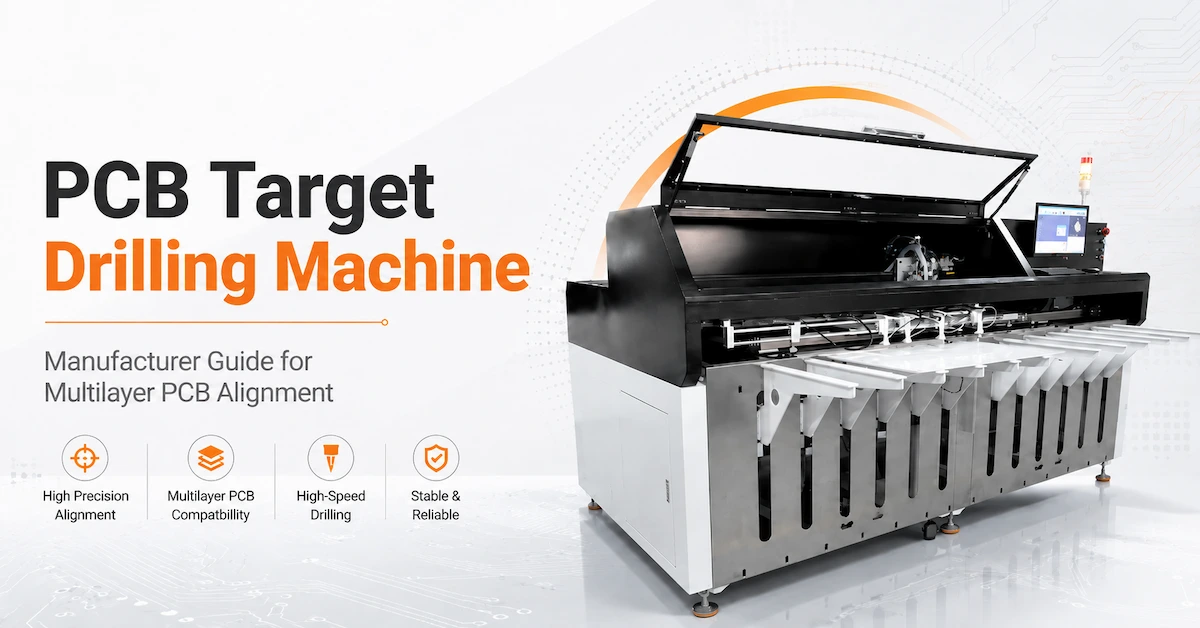
CHIKIN's current PCB Target Drilling Machine is positioned specifically for target holes, fiducials, and registration marks. Its published configuration includes CCD vision, granite construction, precision linear motion, automatic tool change, tool detection, and configurable working dimensions.
What Does a PCB Target Drilling Machine Actually Do?
A PCB target drilling machine is not simply another general-purpose CNC drill.
Its primary job is to detect a target or registration reference on a PCB panel and create an accurately positioned hole that can be used for alignment or downstream processing.
Typical applications include:
- multilayer PCB registration
- target-hole drilling
- fiducial recognition
- tooling and guide-hole preparation
- HDI panel alignment
- process positioning before subsequent drilling or inspection
- panels requiring repeatable positional references
Vision alignment is particularly important when the reference position cannot be assumed solely from the panel edge or fixture.
IPC technical material also describes fiducial targets as positional references used by camera-assisted systems to correct X/Y positional offsets and rotational offsets. While that IPC material discusses PCB assembly alignment rather than CHIKIN's target-drilling process specifically, it demonstrates why reliable visual reference recognition is important in precision PCB positioning. See the IPC technical resource.
Target Drilling vs General PCB Drilling
These machines solve different production problems.
| Machine Type | Primary Function | Best Fit |
|---|---|---|
| PCB target drilling machine | Target, fiducial and registration-hole processing | Multilayer alignment |
| Standard PCB drilling machine | Via, component and tooling-hole drilling | General PCB production |
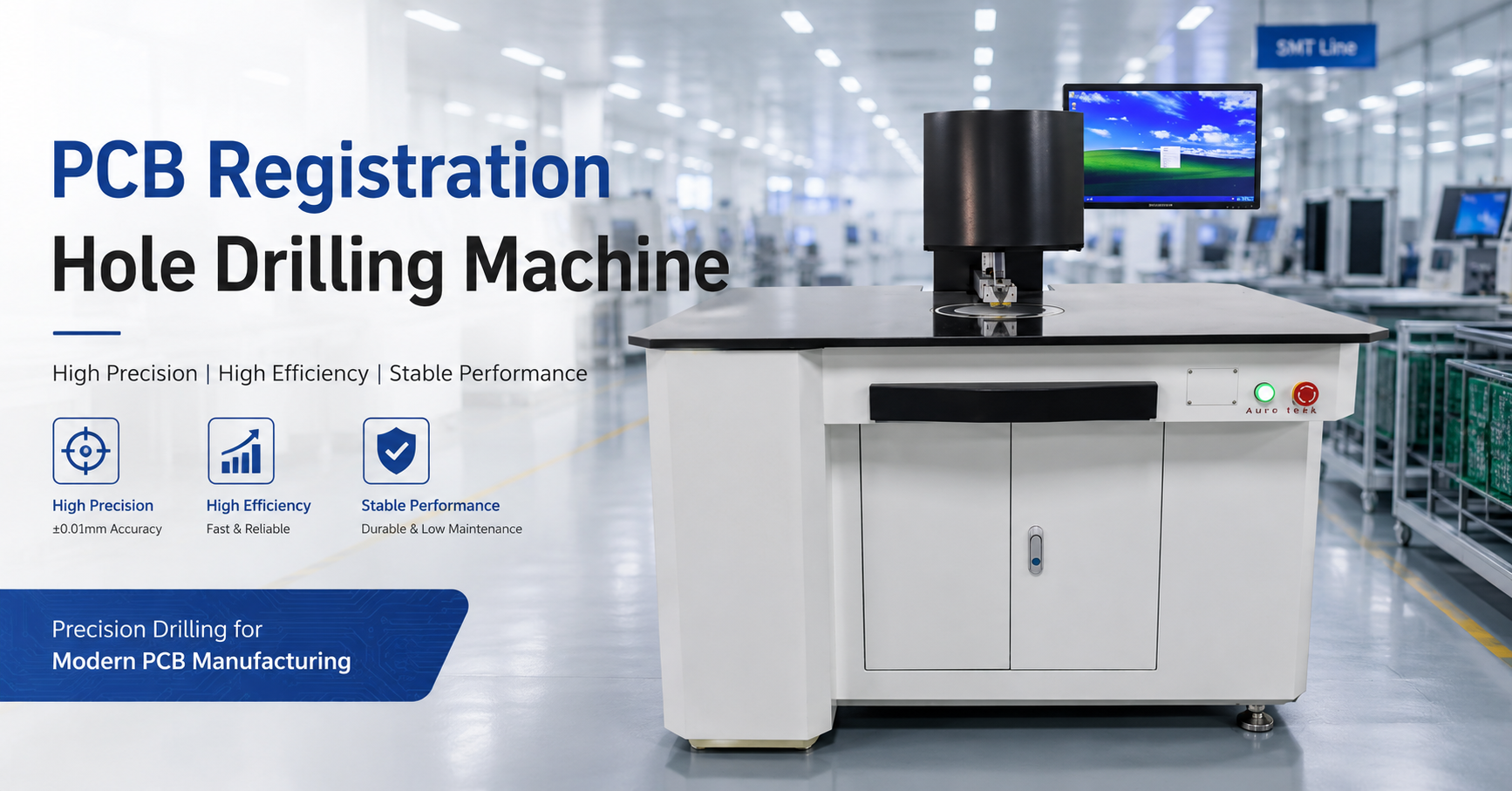
| PCB drilling & routing machine | Holes, slots and board contours | Combined processing |
| Laser processing system | Non-contact cutting or marking | FPC and special materials |
If your main requirement is mass drilling of electrical vias or component holes rather than target registration, a conventional drilling platform may provide a better production match.
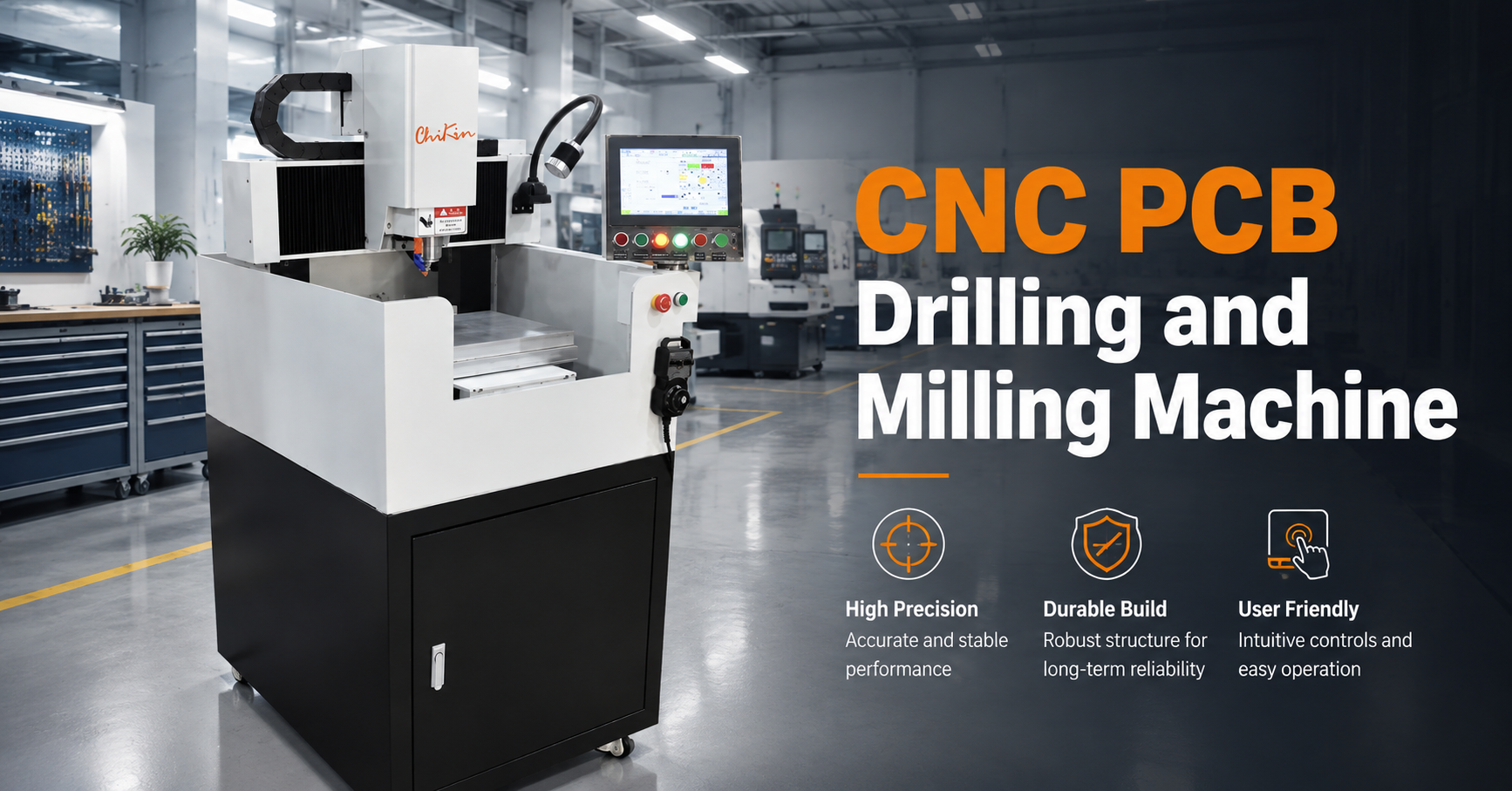
If drilling and outline routing must be completed within one production system, buyers should also compare PCB drilling and routing machines. CHIKIN's current drilling/routing range includes multi-spindle and CCD-equipped configurations for different production requirements.
Which PCB Factories Need a Target Drilling Machine?
The best fit depends more on the process than on factory size.
| Buyer Type | Typical Need | Purchasing Priority |
|---|---|---|
| Multilayer PCB factory | Layer registration | Recognition stability and repeatability |
| HDI PCB manufacturer | Tight positional control | Accuracy and process consistency |
| Rigid-flex producer | Variable panel characteristics | CCD recognition and flexible setup |
| High-mix PCB factory | Frequent product changeovers | Software and setup flexibility |
| Large-volume PCB plant | Continuous production | Automation and tool management |
| PCB R&D facility | Development and verification | Flexible configuration |
| Equipment distributor | Multiple customer requirements | Customization and technical support |
A target drilling machine may be unnecessary for a workshop that only needs basic prototype drilling and has no dedicated registration process.
That distinction matters because buying more automation than the process requires increases capital cost without necessarily improving output.
Technical Specifications to Verify With a PCB Target Drilling Machine Supplier
Supplier comparison should begin with the application and only then move to specifications.
CCD Vision and Target Recognition
Ask how the CCD system identifies the target under your actual production conditions.
Important variables include:
- target shape
- target diameter
- copper contrast
- surface condition
- image quality
- panel variation
- recognition speed
- correction method
- acceptable target-position deviation
Do not evaluate a vision system only from a demonstration using an ideal reference panel.
A more meaningful test uses your real production samples.
Positioning Accuracy, Repeatability, and Resolution
These terms should not be treated as interchangeable.
Positioning accuracy describes how closely the machine reaches the commanded position.
Repeatability describes how consistently it returns to the same position.
Resolution describes the smallest increment that a measuring or control system can distinguish.
A machine can have a very fine measurement resolution without guaranteeing that its complete production process will achieve the same absolute accuracy.
CHIKIN currently lists ±0.005 mm repeatability/positioning accuracy for its target drilling machine and an optional linear scale with ±0.001 mm resolution. Buyers should therefore evaluate these as separate specifications and confirm the applicable test conditions during the RFQ process.
Why Mechanical Construction Matters
Target recognition is only one part of the positioning chain.
After a target is identified, the motion platform must move the spindle to the calculated position consistently.
This makes several components important:
Machine Base
CHIKIN lists a high-density granite base for the current target drilling platform. The purpose of a stable machine base is to reduce mechanical movement and vibration that could interfere with repeatable positioning.
Linear Guides and Ballscrews
The current product page specifies German Rexroth or Japanese linear rails and ballscrews.
For procurement teams, the important question is not simply the brand name. Ask the manufacturer how the complete axis system is assembled, calibrated, lubricated, and verified before shipment.
Drive and Control System
The listed configuration includes Panasonic/Delta drives and CHIKIN CNC or SIEB & MEYER control with English/Chinese interfaces.
For overseas buyers, confirm:
- interface language
- program format
- operator permissions
- parameter backup
- error diagnostics
- remote troubleshooting method
- software update policy
These issues can become more important than controller brand after the machine enters daily production.
Tool Management Should Be Part of Supplier Evaluation
A broken or incorrect tool can interrupt production even when the positioning system is accurate.
CHIKIN's published target drilling configuration includes:
- automatic tool changer
- tool length detection
- tool diameter detection
- broken tool detection
- pressure foot switch
The page also lists typical target-hole capability in the 0.15–3.175 mm range, depending on the actual setup and application.
For production buyers, automatic detection can help reduce operator-dependent checks, but the RFQ should still establish:
- required drill diameters
- drill-bit shank specifications
- tool magazine capacity
- permitted tool runout
- tool replacement rules
- broken-tool response
- spare tooling requirements
What Specifications Should Be Confirmed Before Ordering?
The current CHIKIN product information provides a useful starting point, but every buyer should convert specifications into a signed technical agreement.
| Item | Current Listed Configuration | What Buyer Should Confirm |
|---|---|---|
| Vision | High-resolution CCD | Target type and recognition conditions |
| Positioning / repeatability | ±0.005 mm listed | Test method and panel conditions |
| Target hole range | 0.15–3.175 mm typical | Actual required drill range |
| Base | Granite | Machine installation requirement |
| Motion system | Precision linear guides / ballscrews | Calibration and maintenance |
| Drive | Panasonic / Delta | Exact ordered configuration |
| Controller | CHIKIN CNC / SIEB & MEYER | Software and language |
| Table | 560 × 680 mm or custom | Maximum panel and fixture size |
| Linear scale | Optional | Required resolution |
| Power | 220V / 380V, 3PH | Destination factory supply |
| Tool management | ATC + detection | Tool quantity and workflow |
Never assume every published option is standard equipment. The final configuration should be written into the quotation and purchase specification.
Manufacturer, Supplier, or Factory: What Should B2B Buyers Verify?
Searches for PCB target drilling machine supplier, manufacturer, and factory often come from buyers at essentially the same purchasing stage.
Creating separate articles for each near-identical phrase would add little value. A better procurement question is:
Who actually controls the machine design, configuration, testing, and technical support?
1. Does the Company Have Relevant Engineering Capability?
CHIKIN describes itself as a technology enterprise integrating R&D, manufacturing, and sales. Its About page currently lists five software copyrights and three utility-model patents, including a CNC Target Drilling Machine System V1.0 software copyright.
Buyers can review more company information on the CHIKIN About Us page.
That type of product-specific engineering documentation is more relevant than a generic claim such as "professional factory."
2. Can the Supplier Explain Your Process?
A capable supplier should ask about:
- PCB material
- panel size
- stack-up
- target geometry
- required hole diameter
- required positional tolerance
- target recognition conditions
- daily output
- operator skill level
- downstream process
If a quotation is generated without these questions, the buyer should investigate further.
3. Can the Factory Run Your Sample?
Sample testing is one of the strongest ways to reduce procurement risk.
Do not send only a drawing.
When possible, send actual production panels and evaluate:
- recognition success
- hole-position consistency
- cycle time
- tool performance
- repeatability across multiple panels
- changeover procedure
One perfect sample is less meaningful than repeatable results over a realistic test batch.
How to Audit PCB Target Drilling Machine Factory Capability
A remote or on-site factory audit should focus on evidence.
Review Machine Assembly
Ask to see how:
- axes are assembled
- motion components are installed
- spindle alignment is checked
- CCD systems are calibrated
- electrical cabinets are wired
Review Final Testing
Request the acceptance procedure.
A useful FAT should define:
- test material
- target geometry
- quantity
- tolerance
- measurement method
- repeatability criteria
- alarm and tool-detection tests
Review Quality Documentation
Instead of asking only "Do you have QC?", request examples of:
- inspection records
- calibration records
- electrical checks
- machine configuration sheets
- packing lists
- acceptance reports
This turns a marketing statement into something procurement and engineering teams can evaluate.
Installation, Training, and After-Sales Support
Machine procurement continues after shipment.
CHIKIN's published one-stop PCB machine service covers equipment planning, procurement management, installation, operation and maintenance training, pre-sales selection, in-sale coordination, and after-sales troubleshooting. The company states that technical staff can provide operation guidance, maintenance training, processing guidance, and remote diagnosis based on customer information and machine conditions.
Before purchasing from any PCB target drilling machine factory, clarify:
- who installs the machine
- whether remote commissioning is available
- training scope
- response time
- spare-parts availability
- software support
- controller backup
- troubleshooting process
- warranty scope
- paid service after warranty
Put commercially important support terms into the contract rather than relying only on website descriptions.
Machine Price Is Only One Part of Procurement Cost
The lowest machine price is not automatically the lowest-cost solution.
A better comparison includes total operating risk.
| Cost Factor | Potential Impact |
|---|---|
| Machine purchase price | Initial capital expenditure |
| Tool consumption | Recurring operating cost |
| Recognition failure | Rework and downtime |
| Position variation | Registration defects |
| Setup time | Lost production capacity |
| Operator dependency | Labor and consistency |
| Spare-part lead time | Extended downtime |
| Service availability | Recovery speed |
| Software limitations | Future process flexibility |
For a production factory, an inexpensive machine that requires frequent manual correction may cost more over time than a higher-specification machine matched correctly to the application.
What Information Should You Send for an Accurate Quotation?
A serious RFQ should contain enough information for engineering review.
Send the manufacturer:
- PCB type and application
- panel dimensions
- panel thickness
- material and stack-up
- target type
- target dimensions
- target-hole diameter
- required positioning tolerance
- typical production quantity
- maximum daily throughput target
- sample PCB or panel
- drawings or processing files
- required table size
- local power supply
- preferred controller language
- automation requirements
- required spare-parts package
For a custom configuration, providing this data is more effective than simply asking:
"What is your best PCB target drilling machine price?"
Why Consider CHIKIN as a PCB Target Drilling Machine Manufacturer?
CHIKIN's relevance to this application comes from the combination of a dedicated target-drilling product and broader PCB CNC engineering capability.
The company states that it integrates R&D, manufacturing, and sales, and its intellectual-property portfolio includes a CNC target drilling machine control system.
Its current PCB Target Drilling Machine combines CCD target recognition with a granite platform, precision motion components, ATC, tool detection, configurable table size, and bilingual control options.
More importantly for an overseas buyer, machine selection should be verified against actual panels rather than relying exclusively on catalog specifications.
FAQ About PCB Target Drilling Machine Manufacturers
What does a PCB target drilling machine do?
It identifies PCB targets or fiducial references and drills registration or guide holes at controlled positions. It is primarily used where repeatable alignment is required in multilayer PCB processing.
Is a target drilling machine the same as a PCB CNC drilling machine?
No. A general PCB drilling machine is primarily used for vias, component holes and other board holes. A target drilling machine focuses on targets, fiducials and registration references.
Why is CCD vision used in target drilling?
CCD vision allows the machine to locate the actual reference position rather than relying only on nominal panel coordinates. This is useful when the production process requires visual positional correction.
What accuracy should I ask a PCB target drilling machine supplier for?
Do not ask only for one number. Confirm positioning accuracy, repeatability, measurement resolution, recognition performance, test method and the conditions under which each specification applies.
Is ±0.001 mm resolution the same as ±0.001 mm machining accuracy?
No. Resolution and final process accuracy are different specifications. CHIKIN, for example, lists an optional ±0.001 mm linear-scale resolution while separately listing ±0.005 mm positioning/repeatability for the current machine configuration.
What PCB materials can be used with a target drilling machine?
Compatibility should be verified using the actual panel, thickness, stack-up and target structure. Multilayer and HDI PCB production are among the applications identified for CHIKIN's current target drilling platform.
How should I compare a PCB target drilling machine factory?
Compare engineering capability, sample-testing results, vision recognition, repeatability, machine construction, tool management, configuration documentation, installation support and spare-parts service—not only price.
Should I request sample drilling before placing an order?
Yes. For a precision machine, processing actual customer panels is one of the most useful ways to verify whether the proposed configuration matches the application.
Can the working table be customized?
CHIKIN currently lists a 560 × 680 mm table with custom sizing as an available configuration direction. Exact dimensions and additional cost should be confirmed before ordering.
What should I prepare before requesting a quotation?
Prepare panel dimensions, material, thickness, target geometry, hole diameter, required tolerance, production capacity, drawings or processing files, power supply and preferably actual sample panels.
Conclusion
Choosing a PCB target drilling machine manufacturer should be based on process capability rather than supplier labels alone.
For multilayer, HDI, or other registration-sensitive PCB production, evaluate CCD recognition, positioning and repeatability separately, verify machine construction and tooling automation, run real sample panels, and document the final configuration, acceptance criteria, training, spare parts, and after-sales responsibilities before ordering.
CHIKIN provides a dedicated PCB Target Drilling Machine and related PCB CNC equipment for manufacturers requiring automated target and registration-hole processing. For a project-specific configuration, sample evaluation, or quotation, buyers can contact the CHIKIN engineering and sales team.