



Understanding PCB V Cut Machine
PCB panel separation is an important process in PCB manufacturing. During PCB production, multiple circuit boards are usually manufactured together as one panel and need to be separated before assembly or further processing.
A PCB V Cut Machine helps manufacturers achieve accurate PCB panel separation through controlled V-groove cutting technology. Compared with manual breaking methods, professional PCB V cut equipment improves cutting consistency, reduces PCB edge damage, and increases production efficiency.
For manufacturers purchasing PCB cutting equipment, selecting the right machine requires careful evaluation of:
- Cutting accuracy
- Blade configuration
- PCB thickness compatibility
- Production capacity
- Equipment stability
CHIKIN CNC provides PCB V Cut Machine solutions for global PCB manufacturers requiring reliable panel separation equipment.
Explore CHIKIN CNC’s complete range of PCB Manufacturing Equipment for different PCB processing applications.
What Is a PCB V Cut Machine?
A PCB V Cut Machine is specialized equipment designed to separate PCB panels along pre-designed V-grooves.
During PCB fabrication, V-shaped grooves are created on the PCB panel to make board separation easier. The V cut machine uses precision blades to cut along these grooves, allowing manufacturers to separate individual circuit boards efficiently.
Compared with manual PCB separation methods, a PCB V Cut Machine provides:
- Higher cutting consistency
- Better edge quality
- Reduced risk of PCB damage
- Improved production efficiency
- More stable processing results
PCB manufacturers usually select different V cut machines based on production volume, automation requirements, and PCB specifications.
Types of PCB V Cut Machines
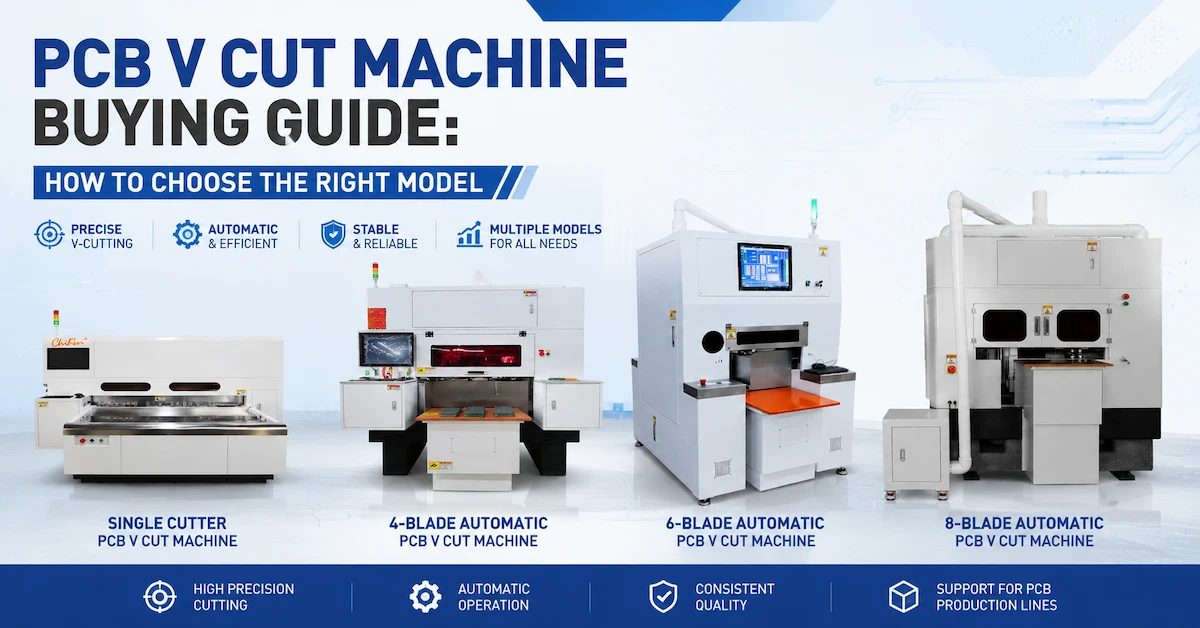
Different production environments require different PCB cutting solutions. CHIKIN CNC provides multiple PCB V Cut Machine models to meet different manufacturing requirements.
Single Cutter PCB V Cut Machine
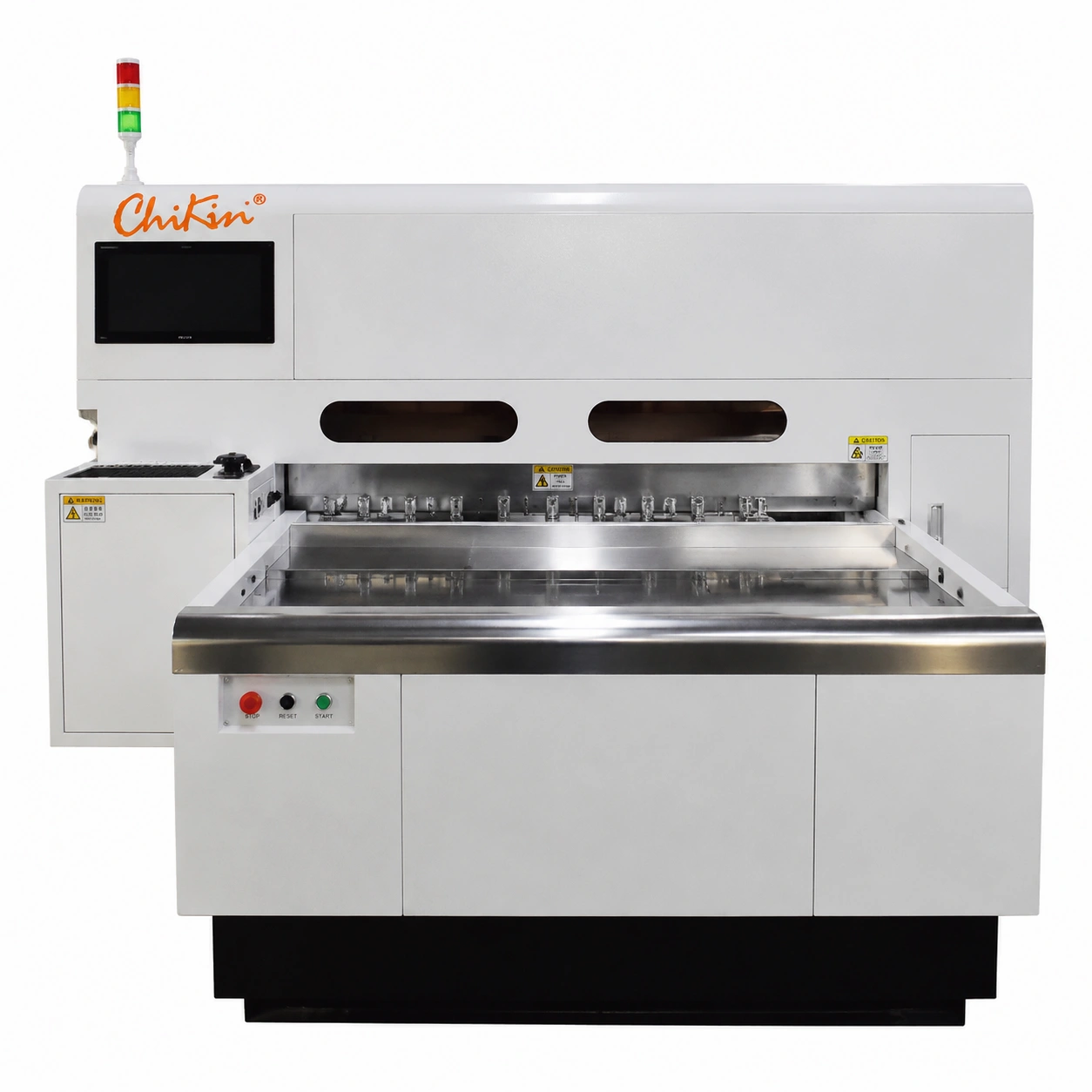
The Single Cutter PCB V Cut Machine is suitable for manufacturers requiring flexible PCB panel separation with stable cutting performance.
This machine is commonly used for:
- PCB prototype production
- Small and medium batch manufacturing
- Flexible production environments
Compared with manual PCB separation, the single cutter design provides more consistent cutting results and helps reduce production errors.
For manufacturers with moderate production requirements, this type of PCB V Cut Machine provides a practical and cost-effective solution.
Product Link:
→ Single Cutter PCB V Cut Machine
4-Blade Automatic PCB V Cut Machine
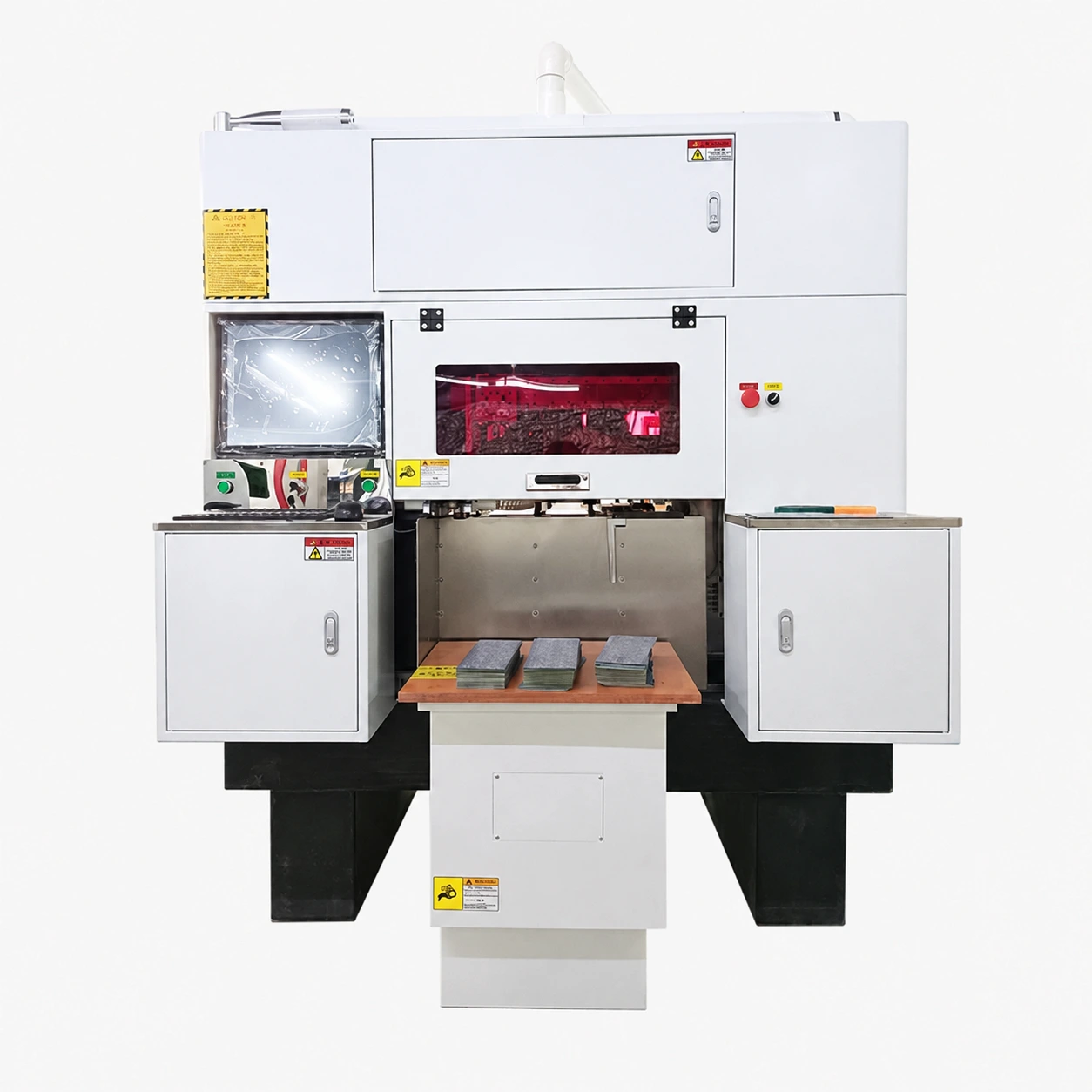
For manufacturers requiring higher production efficiency, the 4-Blade Automatic PCB V Cut Machine provides improved automation and processing capability.
It is suitable for:
- Medium-volume PCB production
- Continuous PCB processing
- Electronics manufacturing applications
The multi-blade configuration helps improve cutting efficiency while maintaining stable PCB separation quality.
Product Link:
→ 4-Blade Automatic PCB V Cut Machine
6-Blade Automatic PCB V Cut Machine
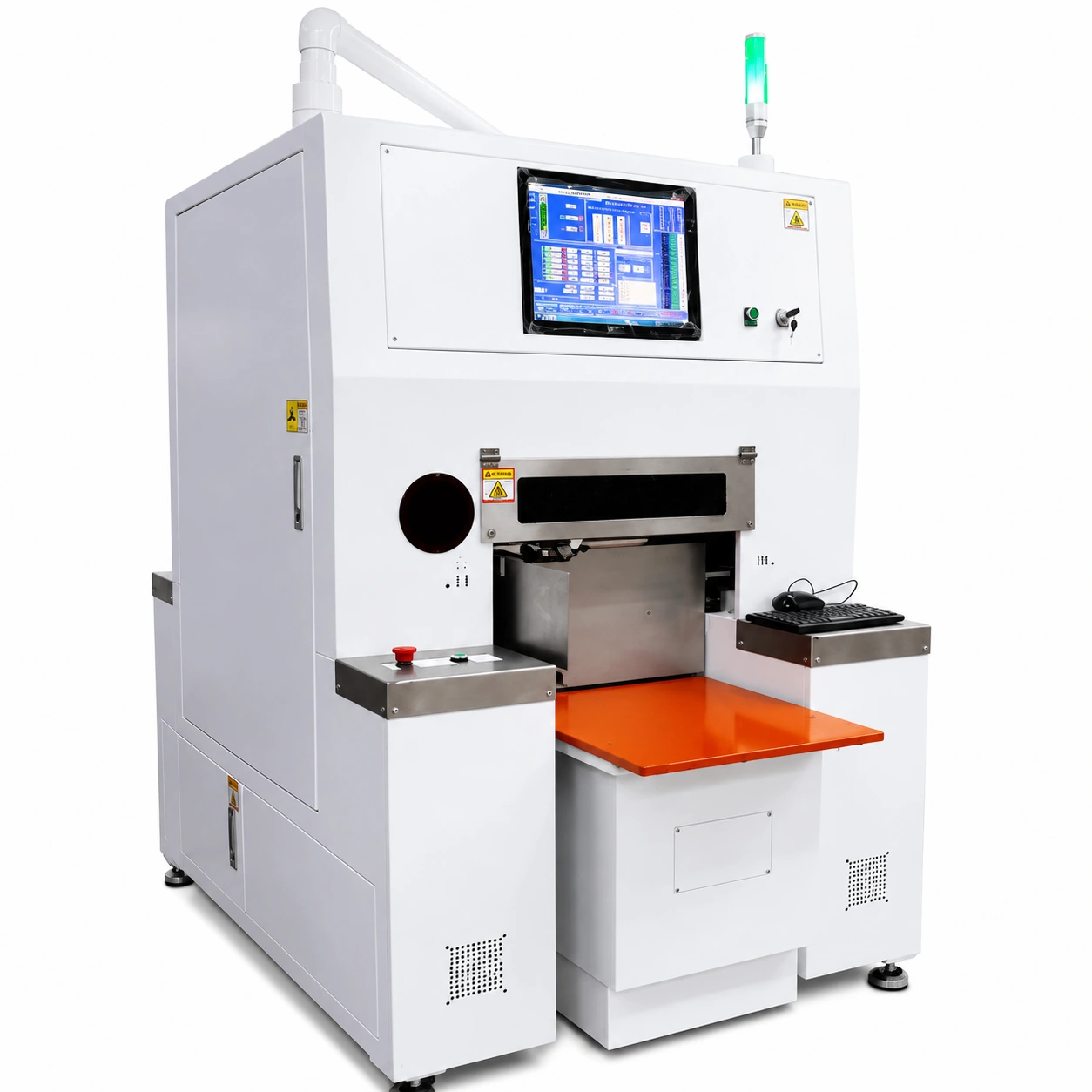
The 6-Blade Automatic PCB V Cut Machine is designed for manufacturers requiring faster and more stable PCB panel separation.
Typical applications include:
- Large-scale PCB manufacturing
- High-efficiency production lines
- Electronics factories with continuous output requirements
Automatic operation reduces manual intervention and helps manufacturers achieve consistent production performance.
Product Link:
→ 6-Blade Automatic PCB V Cut Machine
8-Blade Automatic PCB V Cut Machine
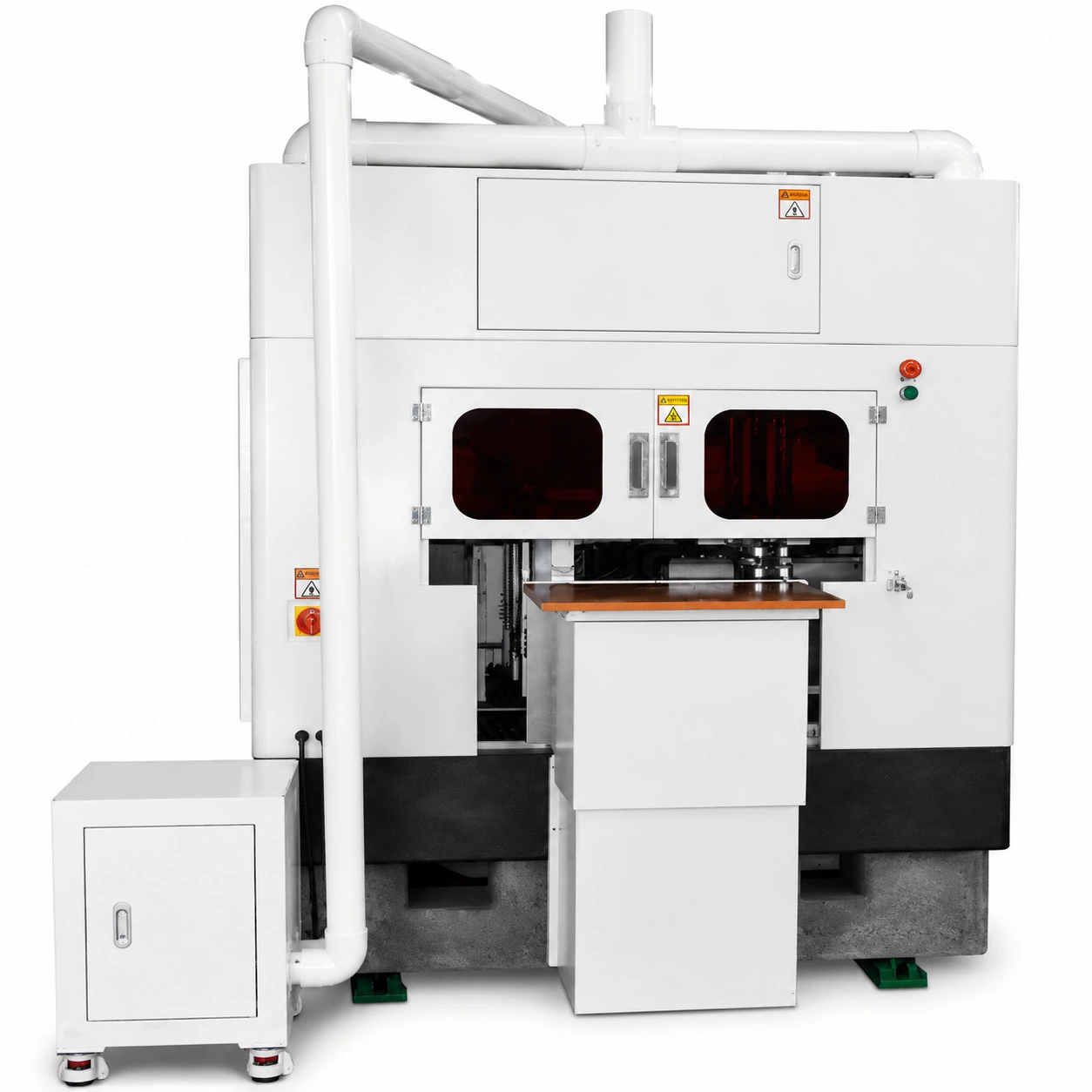
For high-volume PCB production environments, the 8-Blade Automatic PCB V Cut Machine provides advanced cutting efficiency and stable processing capability.
It is suitable for:
- Large PCB factories
- High-volume production
- Automated manufacturing environments
The multi-blade structure improves production efficiency while maintaining accurate PCB panel separation.
Product Link:
→ 8-Blade Automatic PCB V Cut Machine
How to Choose the Right PCB V Cut Machine
Selecting the right PCB V Cut Machine depends on several important factors, including production requirements, PCB specifications, and automation needs.
Consider Production Volume
Production capacity is one of the most important factors when choosing PCB cutting equipment.
| Production Requirement | Recommended Equipment |
|---|---|
| Prototype and small batch production | Single Cutter PCB V Cut Machine |
| Medium-volume manufacturing | 4-Blade Automatic PCB V Cut Machine |
| Large-volume production | 6-Blade / 8-Blade Automatic PCB V Cut Machine |
Manufacturers should select equipment that matches current production needs while considering future expansion.
Evaluate Cutting Accuracy
Cutting accuracy directly affects PCB quality after panel separation.
Important factors include:
- Blade precision
- Cutting depth control
- Machine structure stability
- Processing repeatability
A stable PCB V Cut Machine helps reduce edge damage and improves finished PCB quality.
Check PCB Compatibility
Before purchasing a PCB V Cut Machine, manufacturers should confirm:
- PCB thickness range
- Panel size requirements
- Board material compatibility
- V-groove specifications
Different PCB applications may require different machine configurations.
Manual vs Automatic PCB V Cut Machine
| Factor | Single Cutter Type | Automatic Type |
|---|---|---|
| Production volume | Small-medium | Medium-high |
| Operation | Manual assistance | Automated |
| Efficiency | Moderate | High |
| Labor requirement | Higher | Lower |
| Best application | Flexible production | Mass production |
For manufacturers with continuous production requirements, automatic PCB V Cut Machines usually provide better long-term efficiency.
Why Choose CHIKIN CNC PCB V Cut Machine?
Choosing the right supplier is as important as selecting the right equipment.
A reliable PCB V Cut Machine Manufacturer should provide:
Professional Manufacturing Experience
PCB equipment requires accurate mechanical design and stable processing performance.
CHIKIN CNC focuses on PCB processing equipment development and provides solutions for different manufacturing requirements.
Complete Product Range
CHIKIN CNC provides different PCB V Cut Machine solutions, including:
- Single Cutter PCB V Cut Machine
- 4-Blade Automatic PCB V Cut Machine
- 6-Blade Automatic PCB V Cut Machine
- 8-Blade Automatic PCB V Cut Machine
This allows manufacturers to select suitable equipment based on production volume and application needs.
Technical Support and Service
A professional supplier should provide:
- Equipment selection guidance
- Technical consultation
- Installation support
- After-sales service
Working with an experienced PCB equipment manufacturer helps reduce purchasing risks and improve long-term equipment reliability.
PCB V Cut Machine Buying Checklist
| Evaluation Factor | What Buyers Should Check |
|---|---|
| Machine Type | Single cutter or automatic solution |
| Blade Configuration | Suitable blade number |
| Cutting Accuracy | Stable separation quality |
| Production Capacity | Match factory output |
| Supplier Capability | Technical support and service |
Frequently Asked Questions
What is a PCB V Cut Machine?
A PCB V Cut Machine is equipment used to separate PCB panels by cutting along pre-designed V-grooves with precision blades.
How do I choose a PCB V Cut Machine?
Manufacturers should consider PCB specifications, production volume, cutting accuracy requirements, automation level, and supplier capability.
What is the difference between single cutter and automatic PCB V Cut Machines?
Single cutter machines are suitable for flexible and small-to-medium production, while automatic PCB V Cut Machines are designed for higher production efficiency.
Which PCB V Cut Machine is suitable for mass production?
For high-volume PCB manufacturing, 6-Blade and 8-Blade Automatic PCB V Cut Machines are generally more suitable due to higher processing efficiency.
Can PCB V Cut Machines be customized?
Professional PCB equipment manufacturers can provide different configurations based on PCB size, production requirements, and application conditions.
Conclusion
Choosing the right PCB V Cut Machine helps PCB manufacturers improve panel separation efficiency, maintain cutting accuracy, and reduce production risks.
Before purchasing PCB cutting equipment, manufacturers should evaluate:
- Machine type
- Blade configuration
- Production capacity
- Cutting accuracy
- Supplier technical capability
CHIKIN CNC provides reliable PCB V Cut Machine solutions for manufacturers looking for stable performance, precision processing, and professional technical support.
From Single Cutter PCB V Cut Machine for flexible production to automatic PCB cutting solutions for high-volume manufacturing, CHIKIN CNC offers suitable equipment options for different PCB production requirements.
Explore CHIKIN CNC’s complete PCB Manufacturing Equipment range and contact our team for professional equipment recommendations based on your production needs.