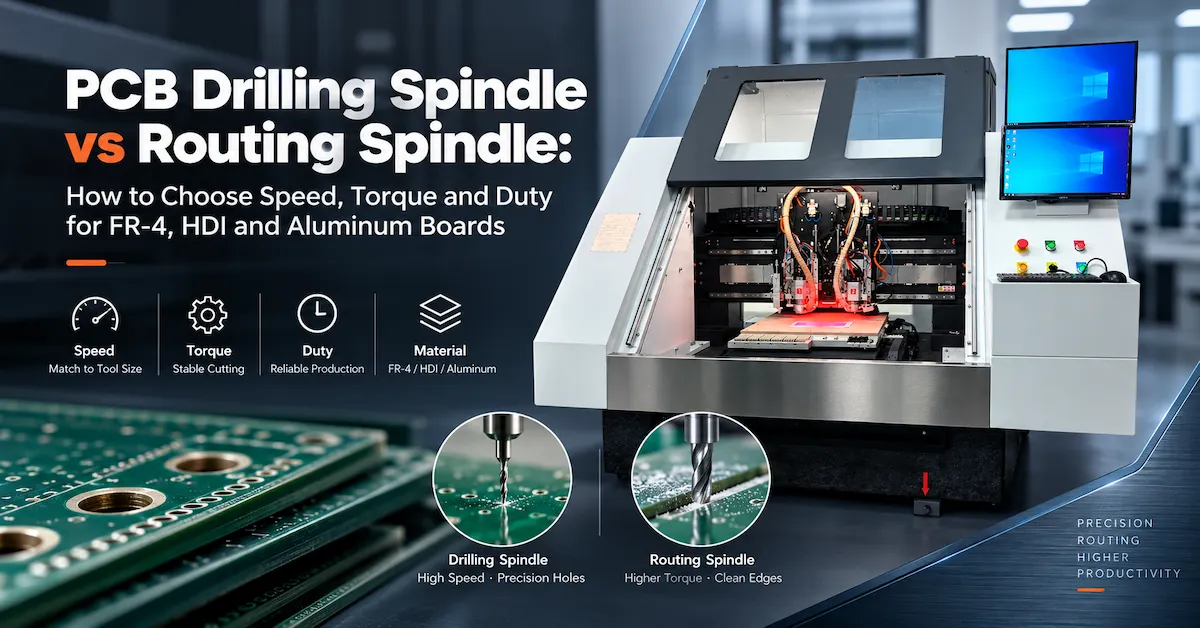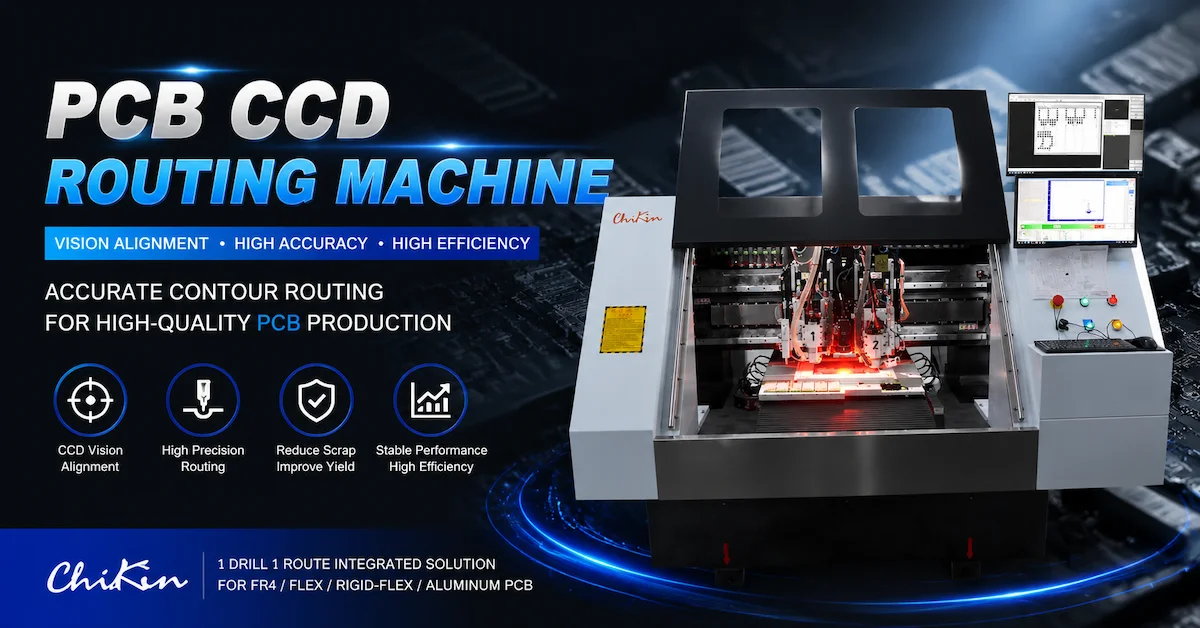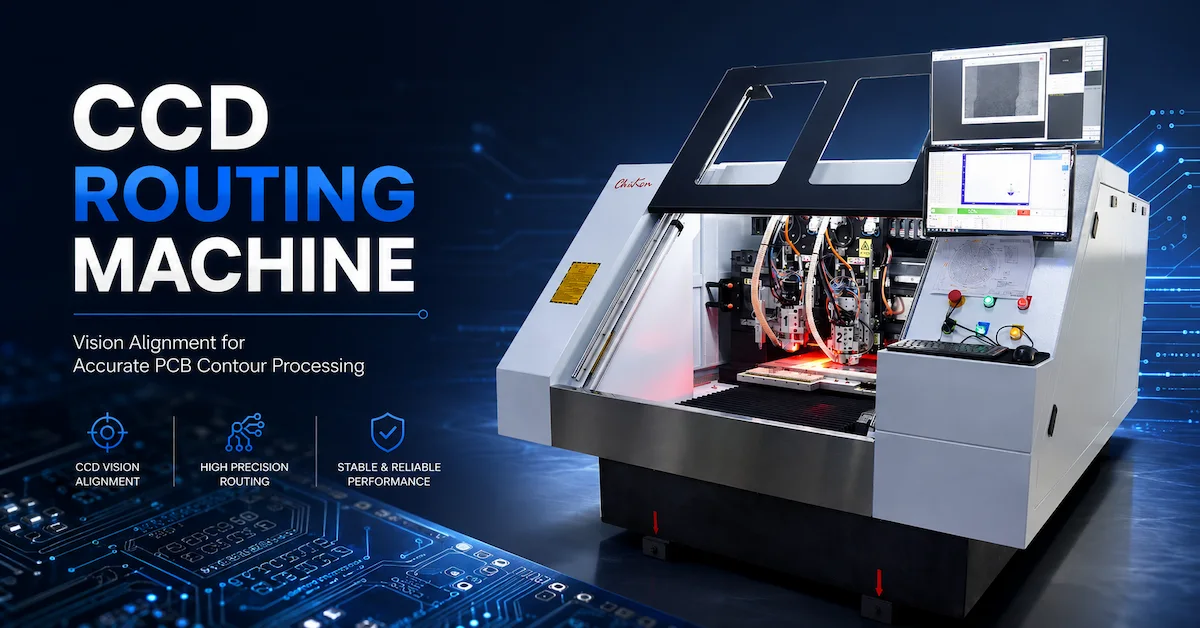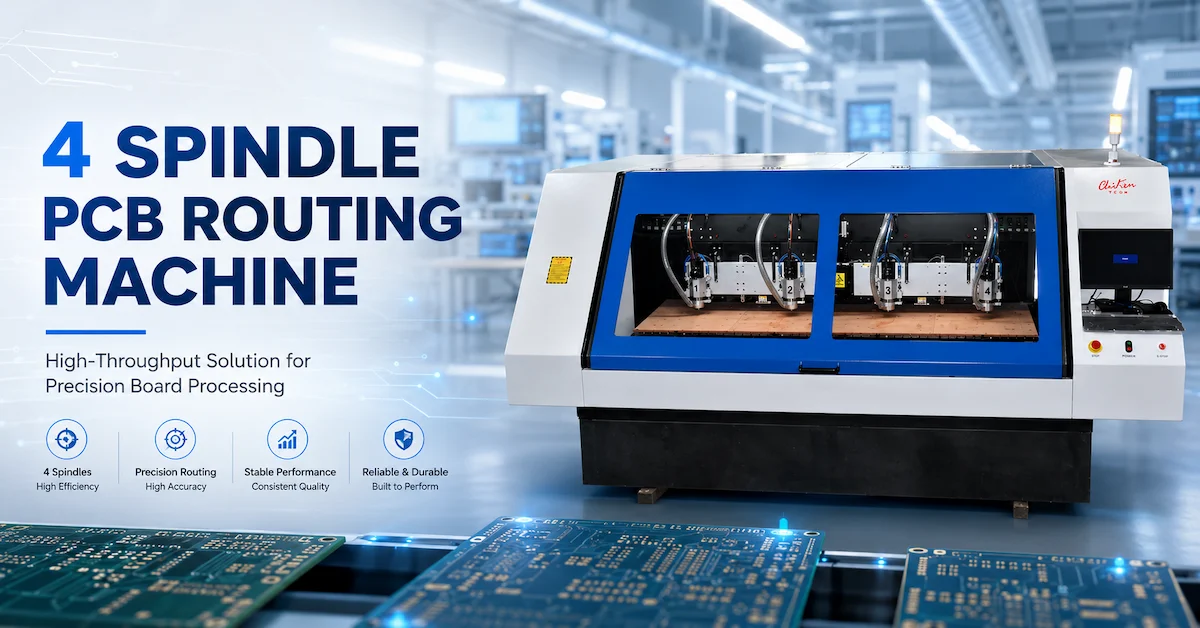




A PCB Depth Control Routing Machine is designed for PCB manufacturers that require precise control over routing depth instead of simply cutting through the entire board.
In modern PCB production, many applications require partial-depth processing rather than full cutting. Examples include controlled grooves, shallow slots, step routing, mechanical pockets, and special board structures where the tool must remove material to a specific depth while protecting internal layers.
Without accurate depth control, manufacturers may experience:
- Over-cutting into copper layers
- Incorrect groove depth
- Board damage
- Poor assembly fit
- Increased scrap rate
- Inconsistent production results
For PCB factories producing FR4 boards, multilayer PCBs, rigid-flex boards, aluminum PCBs, or customized electronic components, a PCB Depth Control Routing Machine provides better process control and repeatability.
The challenge is not only cutting the PCB. The real challenge is cutting to the correct depth every time.
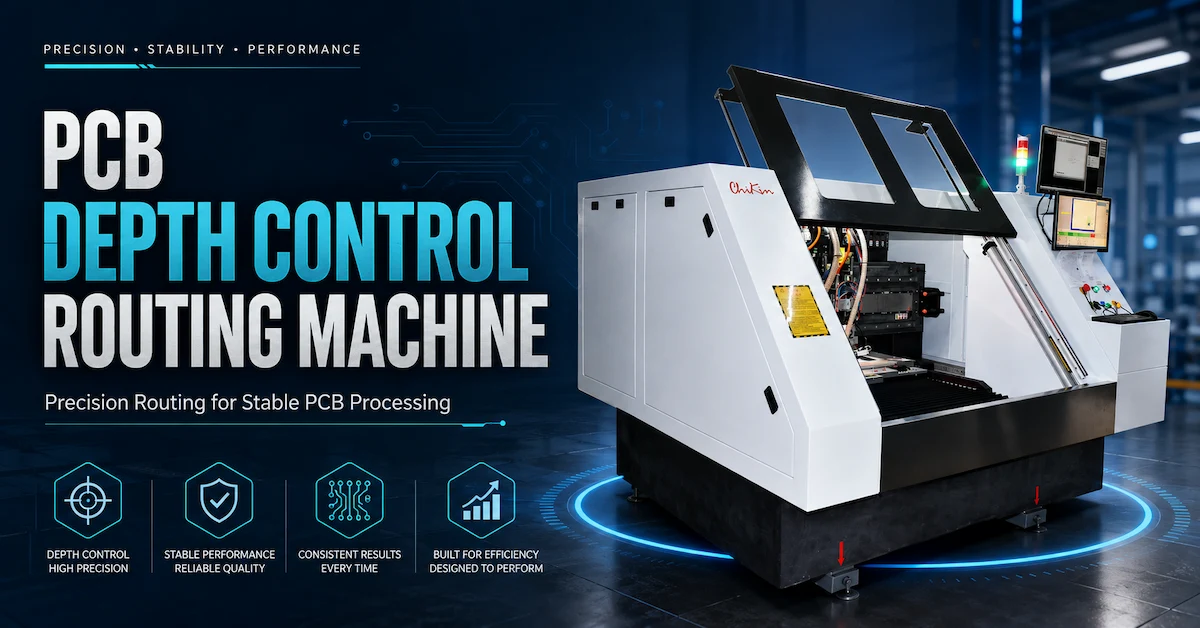
What Is a PCB Depth Control Routing Machine?
A PCB Depth Control Routing Machine is a CNC routing system designed to precisely control the Z-axis movement during PCB routing operations.
Unlike standard PCB routing machines that mainly focus on complete profile cutting, depth control routing equipment allows operators to define how deep the router bit enters the PCB material.
This makes it suitable for:
- Partial-depth routing
- PCB groove processing
- Controlled slot cutting
- Step routing
- Surface material removal
- Mechanical pocket processing
- Special PCB structure preparation
The machine uses CNC programming, spindle control, fixture stability, and Z-axis accuracy to maintain consistent routing depth across different boards.
A professional PCB Depth Control Routing Machine is not only a cutting tool. It is a precision processing system for controlling material removal.
Why Depth Control Is Important in PCB Routing
1. Prevents Over-Cutting Damage
One of the biggest risks in PCB routing is cutting deeper than required.
For multilayer PCBs, excessive routing depth may damage internal copper layers or weaken the board structure.
Depth control helps the machine stop at the programmed position and reduces unnecessary material removal.
2. Improves Routing Consistency
For batch PCB production, one successful sample is not enough.
Manufacturers need every board to have:
- The same groove depth
- The same slot dimensions
- The same routing quality
- The same mechanical performance
A CNC depth control system improves repeatability compared with manual adjustment.
3. Supports Complex PCB Designs
Modern electronic products often require special PCB structures.
Examples include:
- Embedded components
- Mechanical clearance areas
- Custom slots
- Partial board removal
- Housing fitting areas
Depth-controlled routing provides more flexibility for these applications.
4. Reduces Scrap and Rework
Incorrect routing depth can damage expensive PCB panels.
By controlling Z-axis movement accurately, manufacturers can reduce:
- Damaged boards
- Manual correction
- Additional inspection
- Production delays
5. Improves Production Efficiency
Once routing parameters are saved, operators can repeat the same process without manually adjusting every board.
This is especially valuable for:
- Small-batch production
- High-mix PCB factories
- Prototype-to-production transition
Common Applications of PCB Depth Control Routing Machines
A PCB Depth Control Routing Machine can be used in different PCB manufacturing environments.
Typical applications include:
| Application | Processing Purpose |
|---|---|
| PCB Groove Routing | Create controlled-depth grooves |
| Partial Depth Cutting | Remove selected material areas |
| PCB Slot Processing | Produce accurate mechanical slots |
| Step Routing | Create different board levels |
| FR4 Processing | Controlled routing on fiberglass boards |
| Multilayer PCB Processing | Protect internal layers |
| Aluminum PCB Routing | Controlled mechanical machining |
| Prototype Development | Test special PCB structures |
For factories producing customized electronic products, depth-controlled routing provides more options than standard full-depth cutting.
Who Needs a PCB Depth Control Routing Machine?
| Buyer Type | Main Requirement | Why Depth Control Helps |
|---|---|---|
| PCB Manufacturers | Stable production quality | Improves routing repeatability |
| Multilayer PCB Factories | Protect inner layers | Controls cutting depth |
| Prototype Labs | Flexible processing | Supports special designs |
| Electronics Manufacturers | Accurate mechanical fit | Improves assembly compatibility |
| Rigid-flex PCB Producers | Controlled processing | Reduces material damage |
| PCB Equipment Distributors | Higher-value solutions | Meets precision buyer demand |
A standard routing machine may be enough for simple board outlines. However, buyers working with complex PCB structures should consider depth control capability.
PCB Depth Control Routing Machine vs Standard PCB Routing Machine
| Comparison Point | Standard PCB Routing Machine | PCB Depth Control Routing Machine |
|---|---|---|
| Main Function | Full profile cutting | Controlled-depth routing |
| Z-axis Control | Basic movement | Precise depth adjustment |
| Best For | Board outlines and separation | Grooves, slots, partial cutting |
| Layer Protection | Limited | Better control |
| Process Flexibility | General routing | Special PCB processing |
| Scrap Risk | Higher for depth-sensitive jobs | Lower with correct parameters |
| Buyer Focus | Speed and outline accuracy | Depth accuracy and repeatability |
The main difference is not routing speed. It is the ability to control exactly how much material is removed.
Key Technical Factors Buyers Should Check
1. Z-Axis Depth Accuracy
The Z-axis is the most important system for depth-controlled routing.
Buyers should confirm:
- Depth setting accuracy
- Repeatability
- Z-axis resolution
- Calibration method
- Sample processing capability
A machine with excellent X/Y accuracy but unstable Z-axis control cannot achieve reliable depth routing.
2. Spindle Stability
The spindle directly affects routing quality.
Important factors include:
- Spindle speed
- Runout control
- Tool compatibility
- Cooling system
- Cutting stability
Stable spindle performance helps maintain consistent groove depth and cleaner edges.
3. Machine Structure
Depth routing requires stable mechanical movement.
Important structure features include:
- Rigid machine base
- Precision linear guides
- Stable worktable
- Vibration control
- Strong gantry structure
Mechanical stability directly affects routing consistency.
4. PCB Fixture System
The PCB must remain flat during routing.
Buyers should check:
- Vacuum holding
- Custom fixtures
- Panel positioning
- Thin board support
- Repeat positioning accuracy
Even small board movement can affect actual routing depth.
5. Tool Management
Routing tools wear over time.
Useful functions include:
- Automatic tool change
- Tool length detection
- Tool diameter detection
- Broken tool detection
- Tool life management
Proper tool management helps maintain stable production quality.
6. Software Capability
Depth control requires practical CNC software.
Important functions include:
- Z-axis parameter setting
- Program storage
- Repeat job management
- Tool path control
- Production monitoring
- Operator-friendly interface
Good software reduces setup mistakes and improves production efficiency.
Product Match: CHIKIN CNC PCB Drilling & Routing Equipment
For this topic, the most suitable product direction is:
Depth Control PCB CNC Routing Machine
If your website does not currently have a separate depth control routing product page, this article should be associated with:
PCB Drilling & Routing Equipment
Recommended product category:
https://www.chikincnc.com/products
Recommended anchor text:
PCB Depth Control Routing Machine
or
PCB drilling and routing equipment
CHIKIN CNC’s PCB drilling and routing solutions are suitable for factories requiring controlled routing depth, contour processing, PCB grooves, slots, and precision board machining.
Specification Checklist for Buyers
| Item | What to Confirm | Why It Matters |
|---|---|---|
| Z-Axis Control | Depth accuracy and repeatability | Controls routing depth |
| Spindle | Speed and stability | Affects cutting quality |
| Working Area | PCB panel size | Ensures compatibility |
| Fixture System | Vacuum or custom fixture | Prevents board movement |
| Tool Support | Router bit compatibility | Matches application |
| Software | Depth parameter control | Improves repeatability |
| Machine Structure | Rigidity and vibration control | Maintains accuracy |
| Sample Testing | Trial routing | Reduces purchasing risk |
| Service Support | Training and spare parts | Reduces downtime |
| Application Match | Groove, slot, partial cutting | Avoids wrong configuration |
Common Buying Mistakes to Avoid
Mistake 1: Treating Depth Control as Only Software
Depth control depends on the entire machine system, including Z-axis accuracy, spindle stability, fixture design, and tooling.
Mistake 2: Ignoring PCB Thickness Variation
Different PCB panels may have thickness differences. Buyers should provide material information before machine selection.
Mistake 3: Choosing Only by Price
Low-cost machines may not provide stable depth accuracy or reliable long-term performance.
Mistake 4: Not Testing Samples
For depth-sensitive routing applications, sample testing is highly recommended.
Mistake 5: Ignoring Tool Wear
Worn routing tools can change the actual cutting depth and affect production consistency.
Buyer Checklist Before Requesting a Quote
Before contacting a supplier, prepare:
| Information | Example |
|---|---|
| PCB Material | FR4, multilayer, aluminum PCB |
| Board Thickness | 0.8mm, 1.6mm |
| Required Depth | Exact routing depth |
| Depth Tolerance | Allowed variation |
| Routing Type | Groove, slot, partial cutting |
| Board Size | Panel dimensions |
| Production Volume | Prototype or mass production |
| Accuracy Requirement | Depth and outline tolerance |
| Tool Requirement | Router bit type |
| Current Problem | Over-cutting, inconsistency |
FAQ: PCB Depth Control Routing Machine
1. What is a PCB Depth Control Routing Machine?
A PCB Depth Control Routing Machine is CNC equipment designed to control router depth during PCB processing, allowing precise grooves, slots, and partial-depth cutting.
2. Why is depth control important for PCB routing?
Depth control prevents over-cutting, protects internal layers, improves repeatability, and reduces production scrap.
3. Can a PCB routing machine create partial-depth grooves?
Yes. A depth control routing machine is designed for partial cutting, grooves, slots, and special PCB structures.
4. What affects routing depth accuracy?
Depth accuracy depends on Z-axis control, spindle stability, fixture design, tool wear, software settings, and board thickness.
5. Is depth control useful for multilayer PCBs?
Yes. It helps avoid damaging internal layers during controlled mechanical processing.
6. What PCB materials can be processed?
Depending on configuration, machines can process FR4, multilayer PCB, rigid-flex PCB, and aluminum PCB.
7. Should buyers request sample testing?
Yes. Sample testing helps confirm whether the machine can achieve the required depth and edge quality.
8. What information should be provided for quotation?
Provide PCB material, thickness, routing depth, tolerance, board size, production volume, and processing requirements.
Conclusion: PCB Depth Control Routing Improves Precision and Production Stability
A PCB Depth Control Routing Machine is an important solution for PCB manufacturers that need controlled grooves, partial routing, and accurate material removal.
Unlike standard routing equipment, depth control routing focuses on controlling how deep the tool cuts into the PCB. This helps protect internal layers, improve repeatability, reduce scrap, and support more complex PCB designs.
For buyers evaluating PCB routing solutions, the key factors are not only machine price but also Z-axis accuracy, spindle stability, fixture design, tooling management, software capability, and supplier support.
CHIKIN CNC provides PCB drilling and routing solutions for manufacturers that require stable, accurate, and flexible PCB processing.
If you are comparing PCB Depth Control Routing Machine options, send your PCB material, thickness, routing depth, tolerance, and production requirements. CHIKIN CNC can help recommend a suitable solution.
Contact CHIKIN CNC to request a PCB depth control routing solution and quotation: