



A drilling machine is one of the most important pieces of equipment in printed circuit board production. In many industries, drilling simply means making holes in metal, plastic, or wood. But in PCB manufacturing, drilling is more demanding because each hole must match the circuit design, layer registration, component layout, and later assembly process.
For PCB factories, a small hole deviation can cause serious problems. It may affect plated through-holes, vias, component mounting, board alignment, or final testing. Poor drilling can also lead to broken drill bits, rough hole walls, low yield, and higher rework cost.
That is why buyers should not choose a drilling machine only by price. A better decision starts from the board material, hole diameter, production volume, accuracy requirement, spindle configuration, software, and after-sales support.
For PCB manufacturers, electronics assembly factories, prototype labs, and equipment distributors, this guide explains how to choose the right drilling machine for stable board production.
What Is a Drilling Machine in PCB Production?
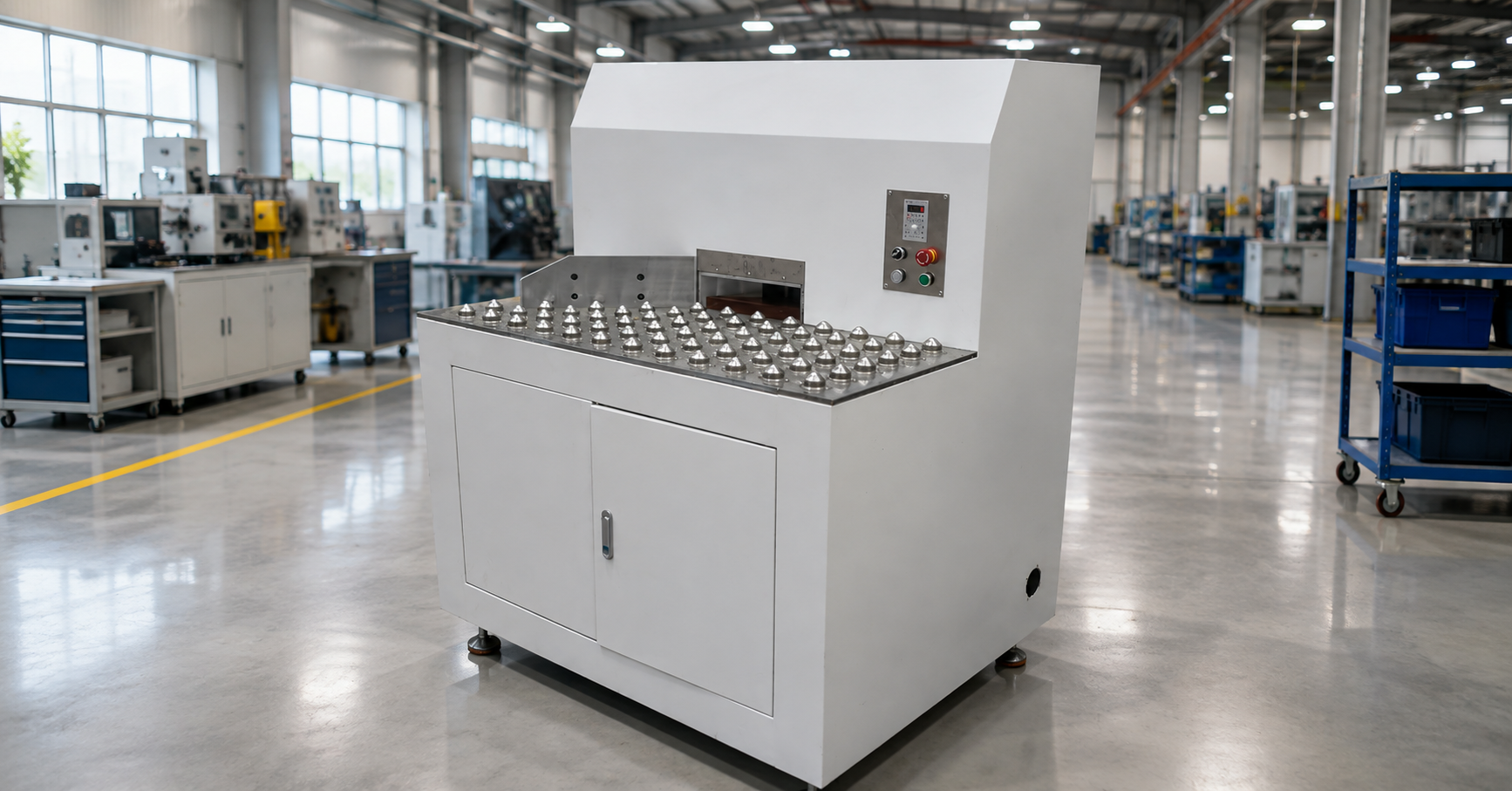
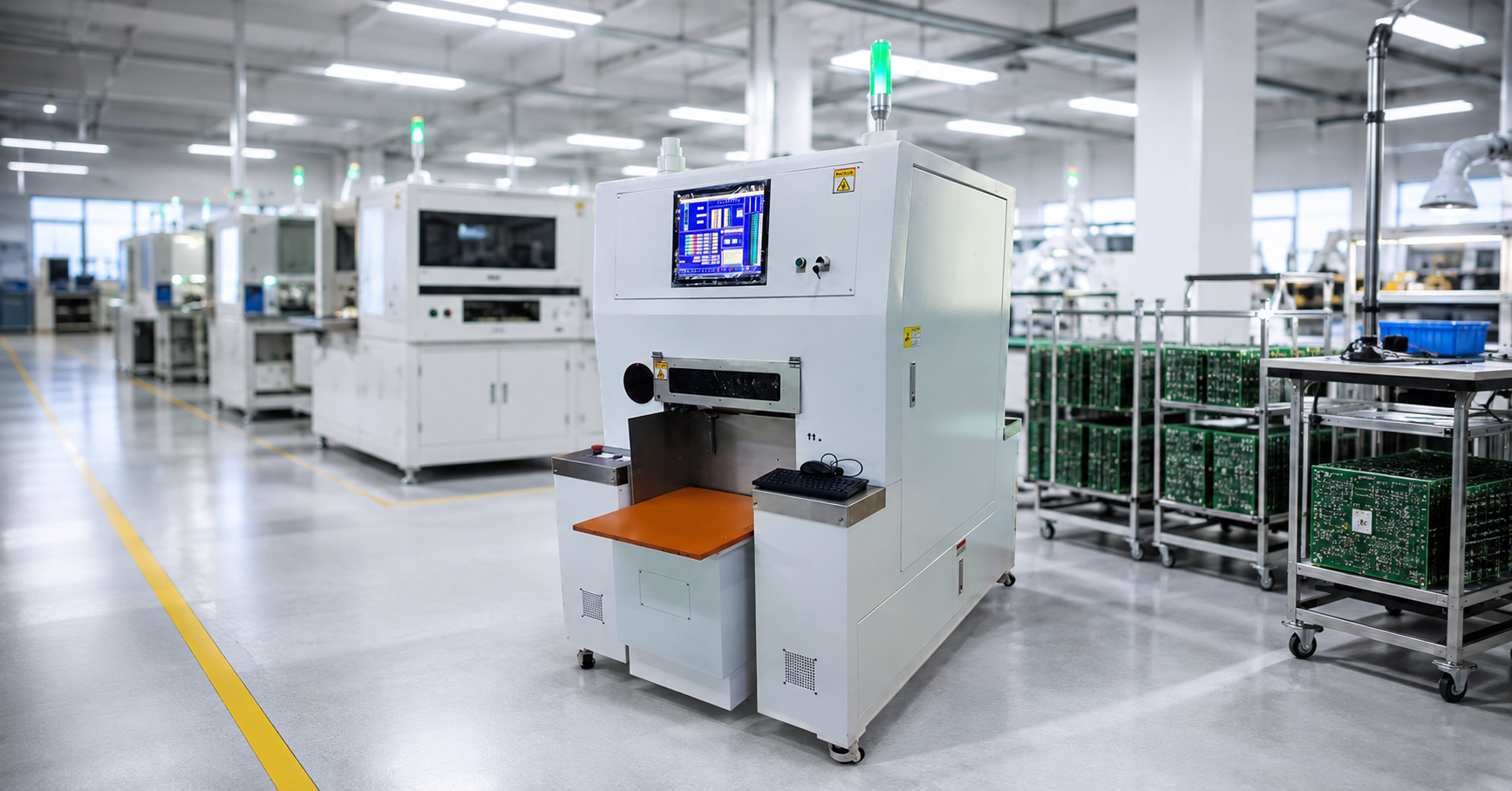
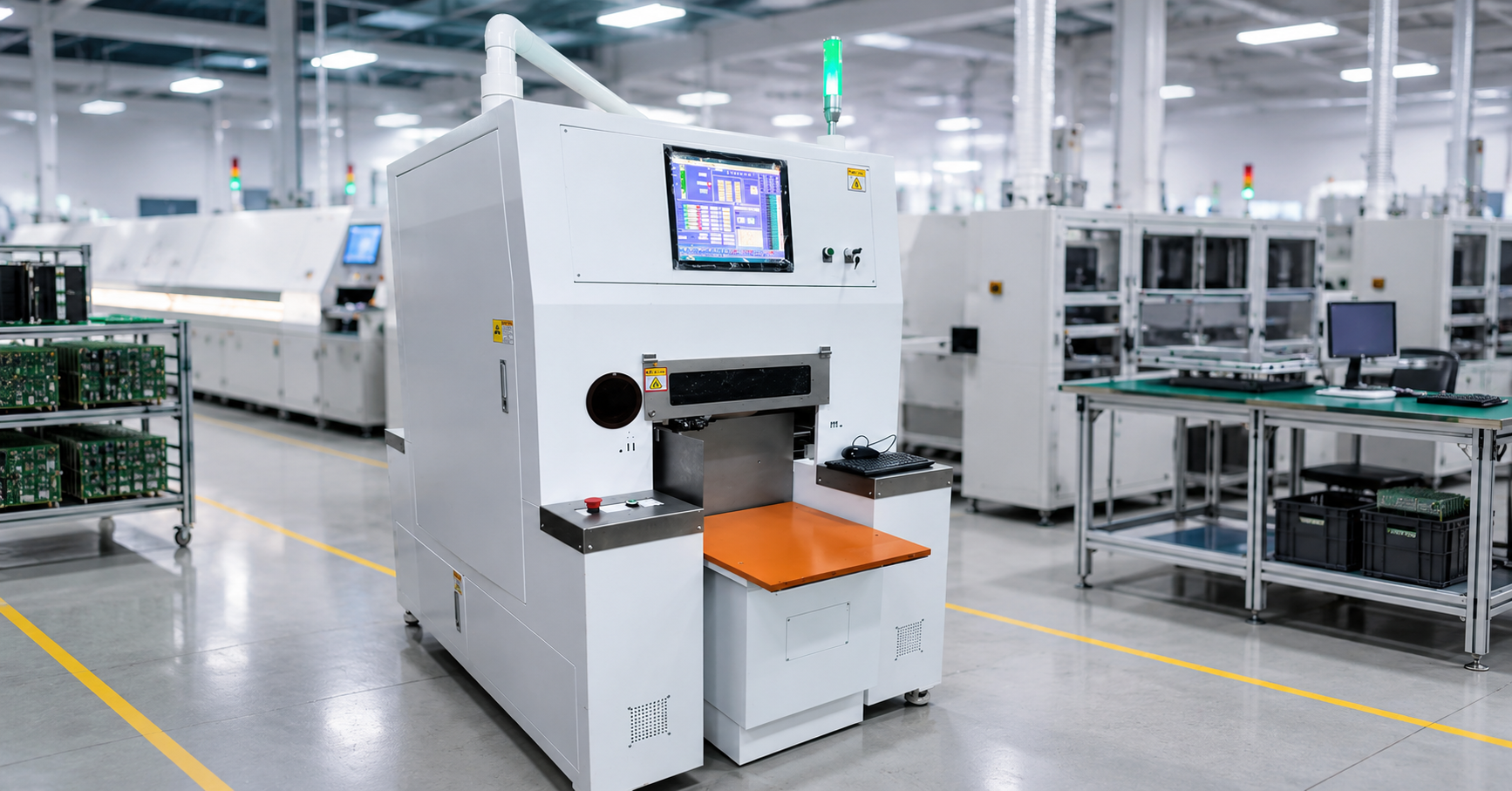
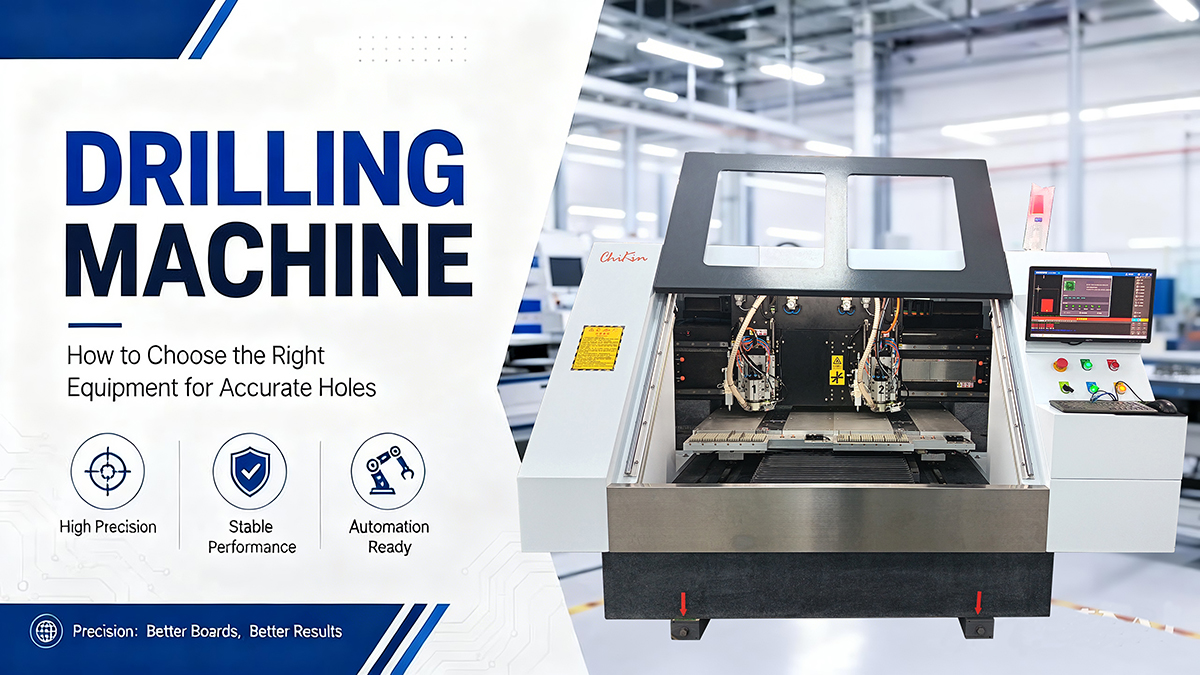
A drilling machine for PCB production is CNC-controlled equipment used to create precise holes in printed circuit boards. These holes may be used for vias, through-hole components, mechanical fixing, tooling, alignment, or later routing and assembly processes.
Compared with general industrial drilling equipment, a PCB drilling machine usually requires:
- Higher positioning accuracy
- Smaller drill bit compatibility
- Stable spindle speed
- Cleaner drilling edges
- Better repeatability
- Board alignment support
- Tool detection or broken tool detection
- Software control for repeated production
In short, a PCB drilling machine is not just a hole-making tool. It is a precision production system that affects board quality, production efficiency, and factory yield.
Common Problems Buyers Want to Solve
1. Hole Position Error
Hole position error is one of the most common issues in PCB drilling. It can happen when the board is not fixed properly, the machine structure is unstable, the motion system has poor repeatability, or the alignment method is not accurate enough.
For high-density boards, even small deviations can create assembly or electrical reliability problems.
2. Broken Drill Bits
PCB drill bits are small and fragile. If spindle speed, feed rate, clamping, or tool condition is not controlled well, broken drill bits can increase downtime and damage boards.
A modern drilling machine should help reduce this risk through stable spindle control and optional tool detection features.
3. Rough Hole Quality
Rough holes may affect plating quality and long-term circuit reliability. Hole wall quality depends on spindle stability, drill bit condition, material type, drilling parameters, and vibration control.
4. Low Production Efficiency
Some factories can drill accurately, but the process is too slow. When order volume increases, drilling becomes the bottleneck. This is where dual-spindle or multi-spindle drilling equipment can improve output.
5. Inconsistent Batch Results
PCB production requires repeatability. If the same drilling program produces different results between batches, the factory may face extra inspection, rework, and delivery delays.
Main Types of Drilling Machines for PCB Buyers
| Drilling Machine Type | Main Feature | Best For |
|---|---|---|
| Single Spindle Drilling Machine | One spindle, flexible operation | Prototype labs, small-batch PCB production |
| Dual-Spindle Drilling Machine | Two spindles for faster processing | Mid-volume PCB manufacturers |
| Multi-Spindle Drilling Machine | Multiple heads for higher output | Large PCB production lines |
| CNC Drilling Machine with CCD | Vision alignment for better registration | High-mix or accuracy-sensitive boards |
| Drilling and Routing Machine | Combines drilling and routing | Factories needing process integration |
| Enclosed Drilling Machine | Protected chamber design | Cleaner, safer production environments |
For a small factory, a single spindle machine may be enough. For growing production lines, a dual-spindle or drilling and routing machine may offer better long-term value.
Key Factors When Choosing a Drilling Machine
1. Accuracy and Repeatability
Accuracy is the first point buyers should check. In PCB drilling, the machine must maintain stable hole positioning across many boards.
Important questions include:
- What is the positioning accuracy?
- What is the repeatability?
- How is accuracy tested?
- Does the machine support CCD alignment?
- Can the supplier provide sample drilling?
Accuracy should not only be written in the catalog. It should be supported by machine structure, motion components, spindle quality, testing process, and actual sample performance.
2. Machine Structure and Vibration Control
A drilling machine must remain stable during high-speed operation. If the structure vibrates, the hole position and edge quality can become unstable.
Buyers should pay attention to:
- Machine base rigidity
- Worktable stability
- Linear guide quality
- Ballscrew or motion system
- Gantry structure
- Enclosed cabinet design
- Maintenance access
A strong machine structure helps maintain precision during long production cycles.
3. Spindle Configuration
The spindle is the core of a drilling machine. It determines drilling speed, tool compatibility, and processing stability.
When comparing machines, check:
- Spindle speed
- Spindle cooling method
- Drill bit size range
- Tool holder design
- Automatic tool change
- Tool length detection
- Broken tool detection
For PCB production, high-speed and stable spindle performance is especially important because the drill bits are small and the hole patterns can be dense.
4. Board Material Compatibility
Different board materials require different process settings. A drilling machine must match the actual board types used in your factory.
Common PCB materials include:
- FR4
- Multilayer PCB
- HDI board
- Rigid-flex board
- Aluminum PCB
- Copper substrate
- Prototype PCB panels
If your factory processes several materials, share the board thickness, hole diameter, and production target with the supplier before choosing the machine.
5. Automation Features
Automation can reduce operator errors and improve production consistency. However, buyers should choose automation based on real workflow needs.
Useful features include:
- CCD vision alignment
- Automatic tool change
- Broken tool detection
- Tool diameter detection
- Tool length measurement
- Touchscreen operation
- Program storage
- Enclosed safety protection
- Optional loading and unloading support
For high-mix production, CCD alignment and easy program switching may be more valuable. For batch production, spindle quantity and tool automation may matter more.
6. Software and Operation
A good drilling machine should be easy to operate and manage. Software affects setup time, production repeatability, and operator training.
Buyers should ask:
- What file formats are supported?
- Can drilling programs be saved?
- Is the interface easy for operators?
- Can parameters be adjusted quickly?
- Is remote software support available?
- Does the supplier provide training?
A machine with strong hardware but poor software may still slow down daily production.
Single Spindle vs Dual-Spindle Drilling Machine
| Comparison Point | Single Spindle Drilling Machine | Dual-Spindle Drilling Machine |
| Investment Cost | Lower | Higher |
| Production Speed | Moderate | Faster |
| Operation Complexity | Easier | More setup required |
| Best For | Samples and small batches | Mid-volume PCB production |
| Flexibility | High | Medium to high |
| Floor Space | Smaller | Larger |
| Long-Term Output | Limited | Better for growth |
A single spindle drilling machine is practical for small factories and prototype labs. A dual-spindle drilling machine is better when production volume increases and drilling becomes a bottleneck.
Specification Checklist for Buyers
| Item | What to Check | Why It Matters |
| Working Area | Maximum PCB size | Ensures the board fits the machine |
| Accuracy | Positioning and repeatability | Affects hole alignment |
| Spindle | Speed and stability | Affects drilling quality |
| Tool System | Drill bit range and tool change | Supports different hole sizes |
| CCD Alignment | Vision registration | Reduces placement error |
| Motion System | Guide rail and ballscrew quality | Affects long-term stability |
| Safety Design | Enclosed chamber and emergency stop | Protects operators |
| Software | Program storage and file support | Improves production efficiency |
| Service | Training and spare parts | Reduces downtime |
| Supplier Experience | PCB production knowledge | Helps match machine to real needs |
Why Choose CHIKIN CNC for Drilling Machine Solutions?
CHIKIN CNC focuses on PCB CNC and automation equipment for circuit board production. Its product range includes PCB drilling machines, PCB drilling and routing machines, CCD-based PCB machines, laser cutting equipment, AOI inspection machines, and related PCB production solutions.
For drilling machine buyers, CHIKIN CNC can support:
- PCB hole drilling applications
- Single-spindle and dual-spindle equipment selection
- High-precision CNC drilling requirements
- CCD alignment configuration
- Automatic tool change and tool detection options
- FR4, multilayer, rigid-flex, and aluminum PCB processing
- Machine selection based on board size and production volume
Instead of simply recommending a model, CHIKIN CNC helps buyers evaluate production needs before choosing equipment.
Learn more about the company:
[About CHIKIN CNC]
View related products:
[CHIKIN CNC Products]
Check common service questions:
[CHIKIN CNC FAQ]
Buyer Checklist Before Requesting a Quote
Before asking for a drilling machine quotation, prepare these details:
| Information | Example |
| Board material | FR4, HDI, rigid-flex, aluminum PCB |
| Board size | Length × width |
| Board thickness | Example: 0.8mm, 1.6mm, 2.0mm |
| Minimum hole diameter | Example: 0.2mm, 0.3mm, 0.5mm |
| Production volume | Daily or monthly board quantity |
| Accuracy requirement | Hole position tolerance |
| Current problem | Broken tools, slow speed, hole deviation |
| Automation needs | CCD, tool change, tool detection |
| Factory space | Available installation area |
| Purchase goal | New line, upgrade, replacement, distributor supply |
The more complete your information is, the more accurate the supplier’s machine recommendation will be.
FAQ: Drilling Machine for PCB Production
1. What is a drilling machine used for in PCB production?
A drilling machine is used to create accurate holes in printed circuit boards for vias, through-holes, mounting holes, tooling holes, and alignment points.
2. What is the difference between a drilling machine and a PCB drilling machine?
A general drilling machine may be used for many materials, while a PCB drilling machine is designed for circuit boards and requires higher accuracy, smaller drill tools, better alignment, and stable repeatability.
3. Is a CNC drilling machine better for PCB manufacturing?
Yes. A CNC drilling machine provides better positioning control, repeatability, and production consistency than manual drilling methods.
4. When should I choose a dual-spindle drilling machine?
Choose a dual-spindle drilling machine when production volume increases and one spindle cannot meet your cycle time requirements.
5. Why is CCD alignment useful?
CCD alignment helps the machine locate board reference points before drilling. This reduces placement errors and improves hole-to-pattern registration.
6. What materials can a PCB drilling machine process?
Common materials include FR4, multilayer PCB, HDI board, rigid-flex board, aluminum PCB, and prototype PCB panels.
7. What causes broken drill bits?
Broken drill bits may be caused by wrong feed rate, unstable spindle, poor clamping, worn tools, incorrect parameters, or unsuitable board material settings.
8. What should I check before buying a drilling machine?
Check accuracy, spindle speed, machine structure, board compatibility, software, automation features, safety design, spare parts, and after-sales support.
Conclusion: Choose a Drilling Machine Based on PCB Production Needs
A drilling machine for PCB production should be selected based on board material, hole size, accuracy requirement, production volume, automation needs, and long-term service support.
For factories that need stable hole accuracy, lower scrap, and better repeatability, a CNC PCB drilling machine is a practical investment. For buyers planning production growth, dual-spindle or drilling and routing equipment may provide stronger long-term value.
CHIKIN CNC provides PCB drilling and CNC automation solutions for factories that need reliable board processing equipment.
If you are comparing drilling machine options, share your board size, material, hole diameter, production volume, and accuracy requirement. CHIKIN CNC can help recommend a suitable machine configuration for your production line.
Contact CHIKIN CNC to request a drilling machine solution and quotation.