



How to Choose the Right PCB Machine Factory for Your Production Line
 Choosing a PCB machine factory is not only about finding a machine that looks strong, modern, or well enclosed. For most PCB manufacturers, the real decision is deeper than that. Buyers are usually asking a more practical question: will this equipment fit our board flow, our operators, our production space, and the level of process control we need every day?
That is why comparing machine architecture is just as important as comparing price. A machine may look advanced from the outside, but if it does not match the factory’s real production rhythm, it can become difficult to operate, maintain, or integrate into the existing line.
For engineers, sourcing teams, and factory managers, the right printed circuit board machine factory should provide more than a machine. It should help buyers understand how the equipment works inside the production flow, what type of process it supports, and what kind of long-term service can be expected after installation.
What Buyers Usually Notice First
When buyers visit or review a PCB machine factory, they often begin with what they can see: the enclosure, control screen, access doors, warning lights, machine frame, loading area, and overall footprint. These details are useful. They can tell whether the machine is designed for a professional production environment or a lighter workshop setting.
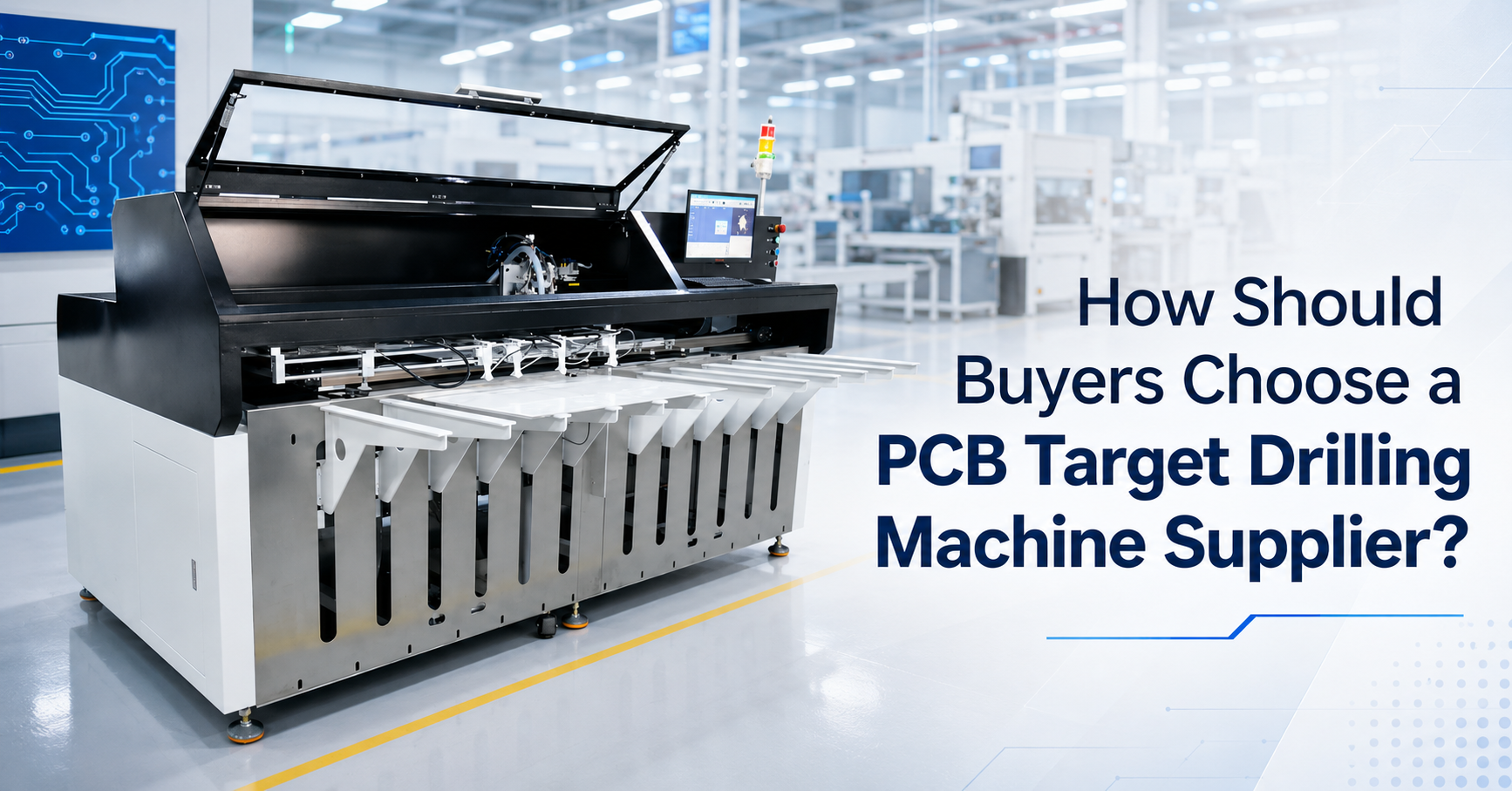
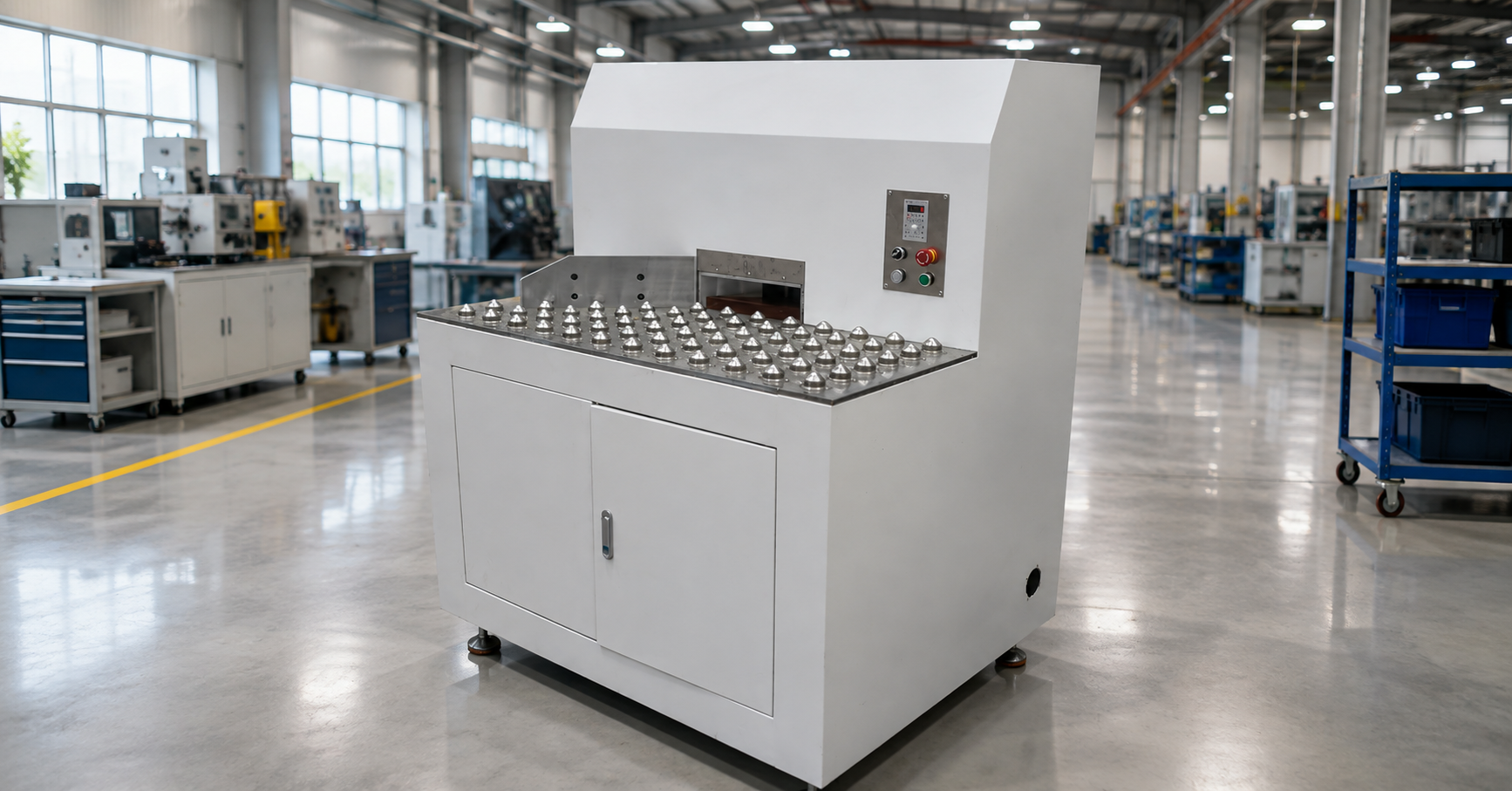
For example, a floor-standing enclosed machine from Chikin CNC suggests a production-oriented design. The white metal housing, dark base, front access opening, integrated control pedestal, and stack light all point to equipment built for operator supervision and regular factory use.
Still, appearance should only be treated as the first clue. It does not fully explain the process. A similar enclosure may be used for PCB drilling, routing, inspection, loading and unloading, or another board-handling operation. A careful buyer should not assume too much from the exterior alone.
The better approach is to ask: what exact process does this machine support, and how does that process fit into our line?
Why Machine Architecture Matters
A PCB machine is not just a cabinet with a control panel. Its structure affects safety, maintenance, operator training, material flow, and production repeatability.
A buyer should look at how the machine is arranged. Where does the operator stand? How is the board loaded? How does the machine protect moving parts? Can maintenance staff access key areas easily? Does the control interface help operators understand the process clearly?
These questions sound simple, but they influence daily production. A machine that is easy to operate during a demo may become inconvenient after several months if service access is poor or if operators struggle with loading and unloading.
That is why a reliable PCB equipment supplier should explain the machine as part of a production system, not only as a standalone product.
Enclosed Machine Cell vs Open Machine Design
One of the first differences buyers should compare is whether the equipment is enclosed or open.
An enclosed PCB machine usually reflects a more controlled production philosophy. It helps protect operators from moving parts, limits unnecessary access during operation, and gives the machine a cleaner, more organized factory appearance. In electronics manufacturing, where one damaged board can create unexpected cost, this kind of controlled environment can be valuable.
An open or semi-open machine, on the other hand, may provide easier visual inspection and faster manual access. For lower-volume work, prototype production, or simple maintenance tasks, this can be convenient. The trade-off is that open systems usually place more pressure on operator discipline, housekeeping, guarding, and safety training.
There is no universal winner. The better choice depends on the plant’s production style. If the factory values controlled access, cleaner operation, and stronger operator separation, an enclosed machine cell may be more suitable. If the factory needs frequent manual adjustment and easy access, an open system may still have practical value.
Why Enclosure Design Can Help
An enclosed machine can make a PCB production area feel more stable and organized. It creates a clear boundary between the operator and the working zone. It also allows supervisors to monitor the process through a control screen or HMI without exposing operators to moving components.
For factories with repeatable production, this matters. The enclosure helps build a more disciplined workflow. Operators know where to load materials, where to check the screen, and where not to place their hands during operation. Maintenance staff also have a clearer machine boundary when checking service points.
However, buyers should also look at the practical side. A poorly designed enclosure may make maintenance harder. Access doors, top covers, service panels, and internal space should be checked carefully. A safe machine should still be serviceable.
Where Open Systems Still Have Value
Open PCB manufacturing equipment is not automatically inferior. In some production environments, open access can be useful. Operators may need to inspect the process frequently. Engineers may need to adjust fixtures, check tools, or observe material behavior during trial runs.
For prototype labs or lower-volume production, this direct access can save time. It allows the team to see what is happening without opening doors or stopping too many machine functions.
The challenge is management. Open machines require stronger training and better workshop discipline. In a busy factory, exposed machinery can create safety risks if operators are not properly trained or if the work area becomes crowded.
So, when comparing a closed machine and an open machine, buyers should not only ask which one looks better. They should ask which one fits their operators, production habits, and safety standards.
Integrated Cell vs Modular Production Line
Another important comparison is between an integrated machine cell and a modular PCB production line.
A self-contained machine cell usually includes the main working area, enclosure, control pedestal, safety indicators, and operator interface in one coordinated structure. This type of design is attractive when a buyer wants one complete machine with fewer integration problems.
A modular line works differently. It allows the factory to add equipment step by step. A plant may start with one station, then add loading, unloading, inspection, or handling equipment later. This can be useful when production volume is still changing or when the factory wants to expand gradually.
But modularity also adds complexity. Every extra station creates another interface. Machines must be aligned, wired, programmed, and synchronized. If integration is not handled well, a modular line can slow production instead of improving it.
In simple terms, an integrated cell gives buyers simplicity. A modular line gives buyers flexibility. The right choice depends on whether the factory values immediate stability or future expansion more.
What Buyers Should Ask Before Purchase
Before choosing a PCB machine factory, buyers should ask specific questions that go beyond the brochure.
What process does the machine actually perform?
What board sizes or panel formats can it handle?
What materials are suitable for the machine?
How is the machine loaded and unloaded?
What control system and software are included?
How does the machine protect operators during operation?
How easy is maintenance access?
What spare parts are standard?
What parts are optional?
What after-sales support is available after installation?
Can the supplier provide training, documentation, and remote support?
These questions help reveal whether the supplier understands real factory use. They also prevent misunderstandings before the equipment is ordered.
A machine that looks correct but lacks clear support can become a costly problem later. This is especially true in contract manufacturing, where product types change often and downtime can quickly affect delivery schedules.
Common Mistakes When Comparing PCB Machine Factories
A common mistake is comparing only the exterior build quality. A strong enclosure and clean paintwork are good signs, but they do not prove precision, stability, or easy maintenance.
Another mistake is assuming every supplier defines “automation” in the same way. One PCB machine manufacturer may use the word automation to describe basic guarded operation. Another may mean a more complete workflow with automatic loading, monitoring, coordinated controls, and process feedback.
Buyers also sometimes forget to consider the plant environment. A machine that works well in a spacious electronics factory may be difficult to use in a tighter workshop with limited service access. Before purchase, the buyer should think about where the machine will sit, how operators will move around it, and how boards will enter and leave the work area.
Small layout details can affect usability more than many buyers expect.
How to Read a Factory Visit
A factory visit should not only focus on machines standing on the floor. Buyers should pay attention to how the supplier explains the equipment.
Does the supplier describe the machine as a standalone product, or do they explain how it fits into a full PCB production flow?
Can they show how the control interface works?
Can they explain loading, unloading, safety access, maintenance, and service points?
Do they clearly say what the machine can do and what it cannot do?
A trustworthy PCB production equipment supplier should be comfortable with these questions. Good suppliers do not need to exaggerate. They can explain which features are standard, which are optional, and which details must be confirmed according to the buyer’s final requirements.
In fact, honest answers are often a good sign. It is better to hear “we need to confirm this based on your board size and process” than to hear a confident answer that later turns out to be inaccurate.
Practical Buyer View
If your factory values operator safety, controlled access, compact layout, and clear production supervision, an enclosed machine cell from a PCB machine factory is worth serious consideration. It can help create a more organized shop floor and reduce unnecessary process exposure.
If your factory values phased expansion, frequent manual access, and flexible station-by-station growth, modular PCB manufacturing equipment may be a better choice.
The key point is not to search for the “best machine” in a general sense. The better question is: which machine best matches the way your factory actually runs?
A factory with space limitations may need a compact enclosed cell. A factory with changing product types may need modular flexibility. A factory facing operator training issues may need stronger safety and clearer controls. A factory planning long-term capacity growth may need a supplier that can support future upgrades.
That is where supplier selection becomes a strategic decision, not just a purchase order.
Key Points to Check When Choosing a PCB Machine Factory
| Key Point | What Buyers Should Check | Why It Matters |
|---|---|---|
| Machine Process | Whether the machine is for drilling, routing, inspection, loading, unloading, or another PCB step | Prevents buying equipment that does not match the actual production need |
| Enclosure Design | Access doors, safety guards, visibility, service panels, operator protection | Affects safety, maintenance, and daily usability |
| Control System | HMI, software, interface language, monitoring functions | Influences operator training and production control |
| Layout Fit | Machine footprint, operator position, material flow, service clearance | Determines whether the machine can fit into the existing workshop |
| Automation Level | Manual, semi-automatic, fully automatic, or integrated with other stations | Avoids misunderstanding supplier claims |
| Maintenance Access | Door position, spare part access, service space, documentation | Reduces downtime during repair or adjustment |
| Supplier Support | Training, spare parts, remote support, after-sales response | Protects long-term production stability |
| Future Expansion | Compatibility with loading, unloading, inspection, or other stations | Supports factory growth and production line upgrades |
FAQ
What is the most important point when choosing a PCB machine factory?
The most important point is process fit. The machine should match the factory’s board flow, operator skills, space conditions, safety needs, and future production plan.
Is an enclosed PCB machine better than an open machine?
Not always. An enclosed machine is better for controlled access, safety, and organized production. An open machine may be better for frequent inspection, prototype work, or simple maintenance access.
Why does machine layout matter?
Machine layout affects operator movement, loading and unloading, maintenance access, and material flow. Poor layout can reduce efficiency even if the machine itself performs well.
Should buyers choose an integrated cell or modular equipment?
An integrated cell is better when buyers want a simpler, coordinated machine. Modular equipment is better when buyers want phased expansion and more flexibility.
What should buyers ask during a factory visit?
Buyers should ask what process the machine supports, what board sizes it handles, how the control interface works, how maintenance is done, what spare parts are available, and what after-sales support is included.
Conclusion
Choosing a PCB machine factory is not only about machine appearance or price. A reliable supplier should help buyers understand the machine’s real role in the production line, including its process function, enclosure design, control system, layout fit, maintenance access, and service model.
For PCB manufacturers, the right equipment should support safer operation, more stable output, easier supervision, and better long-term usability. The wrong equipment may still look good at first, but it can create layout problems, service delays, operator confusion, or process mismatch later.
Before comparing quotations, start with the process definition. Then check the enclosure, controls, layout, maintenance plan, and supplier support. A short technical discussion before purchase can prevent a much longer correction after installation.