



How to Choose a Flexible PCB Laser Cutting Machine Supplier for FPC Production
 A flexible PCB factory does not choose a laser cutting machine only to add another machine to the shop floor. It chooses the machine to solve real production problems: edge damage, deformation, unstable routing quality, frequent design changes, difficult fixture control, and inconsistent output on thin circuit materials. That is why choosing a flexible PCB laser cutting machine supplier should be treated as a technical procurement decision.
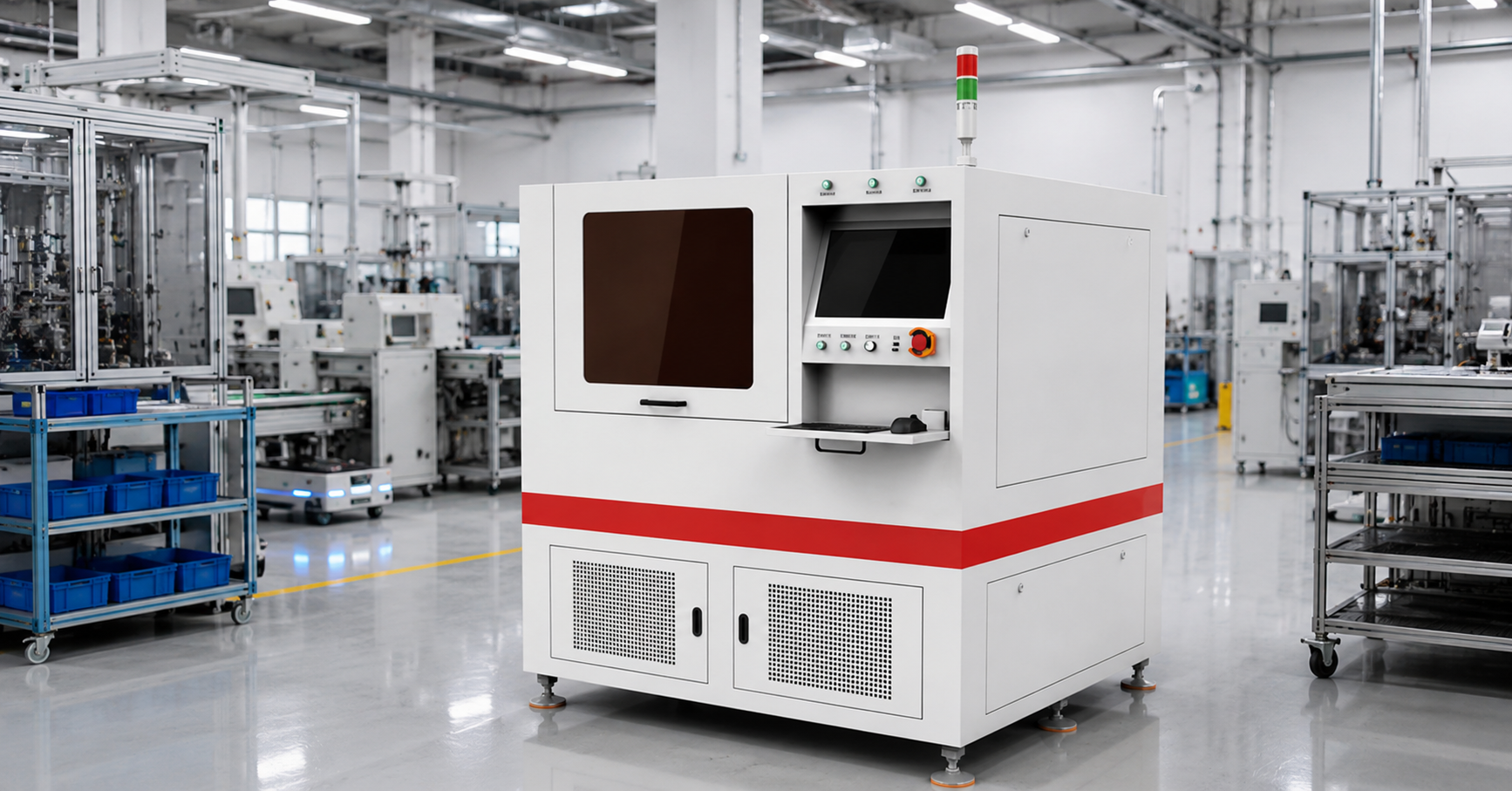
The Chikin product page describes its FPC UV Laser Cutting Routing Machine as equipment built for manufacturers that need clean, controlled cutting on flexible circuit materials without the mechanical stress of conventional tooling. The page also explains that this type of equipment uses a laser-based process inside an enclosed industrial cabinet so operators can monitor production while the work chamber remains controlled and protected.
For B2B buyers searching for an FPC UV laser cutting machine manufacturer, FPC laser cutting equipment supplier, PCB laser cutting machine manufacturer, or laser routing machine for flexible PCB, supplier choice matters as much as machine choice. A weak supplier may sell a machine. A reliable supplier should help buyers define process requirements, test materials, confirm configuration, train operators, and support stable production after delivery.
Start with the Supplier’s Process Knowledge
The first thing to evaluate is whether the supplier understands FPC production. Flexible PCB processing is not the same as cutting ordinary flat plastic or metal sheet. Materials can be thin, layered, adhesive-backed, copper-clad, reinforced, or sensitive to heat and handling.
A serious flexible PCB laser cutting machine supplier should ask questions before recommending a machine:
What is the material stack-up?
What is the substrate thickness?
Is the board single-layer, double-layer, multilayer, or rigid-flex?
Does the part require contour cutting, window opening, slotting, or depaneling?
What edge condition is acceptable?
What is the panel size?
Is CCD alignment required?
Is the production prototype, small batch, or continuous manufacturing?
What inspection method is used after cutting?
If the supplier only quotes a machine without asking these questions, the buyer should be cautious.
Confirm Whether the Machine Matches Your Real FPC Workflow
The Chikin page states that not every FPC production line needs the same configuration. It recommends that buyers define substrate thickness range, panel size, cut path complexity, and desired throughput first, then review whether automated loading, vision alignment, special workholding, dust extraction, or a specific software format workflow is required.
This advice is important because supplier comparison often starts too late. Buyers may compare prices before they have defined what the process actually requires. In FPC production, the same machine name can represent different practical capabilities depending on optics, fixture, software, alignment system, extraction setup, and automation level.
A buyer should map the process first:
How does the material arrive at the machine?
Is the FPC panel carried on a fixture or carrier?
How is the part aligned?
How is the cutting path prepared?
How does the operator verify the job?
How are finished parts removed?
How is scrap collected?
How are cut results inspected?
How often does the job change?
Once these steps are clear, it becomes easier to choose the right supplier.
Supplier Evaluation Table
| Key Point | What Buyers Should Ask | Why It Matters |
|---|---|---|
| FPC Experience | Has the supplier handled flexible PCB, thin substrates, or delicate sheet materials? | Process knowledge reduces trial-and-error |
| Sample Testing | Can the supplier cut the buyer’s actual material and design? | Confirms real edge quality and repeatability |
| Alignment Support | Does the system support manual, fixture-based, or vision alignment? | Prevents outline shift and poor registration |
| Workholding | Can the supplier recommend vacuum table, carrier, or custom fixture? | Thin FPC materials need stable support |
| Software Workflow | Which file formats and path compensation methods are supported? | Smooth programming is important for frequent design changes |
| Safety Design | What enclosure, interlock, window, emergency stop, and laser safety guidance are provided? | Supports safer production operation |
| Extraction / Filtration | How are smoke, dust, or process residues managed? | Affects cleanliness, maintenance, and operator environment |
| After-Sales Service | Are training, spare parts, remote support, and process guidance available? | Protects uptime after installation |
| Upgrade Ability | Can the supplier support loading, marking, CCD, or special configurations later? | Helps future production expansion |
| Documentation | Are manuals, drawings, maintenance guides, and operating videos available? | Reduces operator training difficulty |
Why Sample Testing Is Essential
For FPC laser cutting, sample testing is not optional. It is one of the most important supplier evaluation steps.
Flexible circuit materials can vary greatly. A machine that performs well on one stack-up may need different parameters for another. Adhesives, copper thickness, coverlay, reinforcement, surface finish, and panel flatness all affect cutting behavior.
A proper sample test should include:
The buyer’s real material.
The actual panel thickness.
The smallest features in the design.
Sharp corners and tight curves.
Typical openings or windows.
Any critical assembly edges.
Repeated samples to check consistency.
Inspection under the buyer’s real quality criteria.
Chikin’s page notes that actual results depend on material stack-up, motion control, parameter tuning, and fixture quality. This is exactly why sample cutting is necessary. It turns the supplier conversation from a sales promise into a measurable process discussion.
Evaluate Alignment and Workholding Carefully
Thin flexible circuits can move during handling. If the material is not held flat and aligned correctly, the laser path may be accurate but the part may still be wrong. This is a common mistake in equipment purchasing: buyers focus on laser power or motion speed, but ignore fixture repeatability.
A reliable FPC processing equipment manufacturer should discuss workholding with the buyer. Depending on the material and process, the machine may need a vacuum table, carrier film, custom fixture, registration pins, camera alignment, or other support method.
Alignment is equally important. Some jobs may only require simple fixture positioning. Others may need CCD vision alignment because printed fiducials or outline references must match the cutting program.
When reviewing a supplier, ask:
How is the material kept flat?
How does the operator load the panel?
How does the machine recognize position?
Can the system compensate for small material shifts?
What fixture is recommended for thin or soft materials?
How long does job changeover take?
Can the fixture be customized?
A flexible PCB routing equipment supplier that cannot answer these questions may not understand the full production problem.
Check Enclosure, Safety, and Operator Access
Laser cutting equipment needs proper safety design. IEC 60825-1:2014 applies to laser products emitting radiation in the wavelength range from 180 nm to 1 mm. OSHA explains that laser hazards may include beam and non-beam hazards, including exposure risks that must be managed through appropriate workplace controls.
The Chikin page describes the machine as using an enclosed industrial cabinet that helps keep the work chamber controlled and protected. It also notes visible features such as a viewing window, control buttons, emergency stop button, tower light, service access panels, and lower vented service doors.
For buyers, this is only the starting point. They should still confirm:
Laser class.
Viewing window rating.
Door interlock design.
Emergency stop behavior.
Exhaust or filtration setup.
Maintenance access procedure.
Operator PPE requirements.
Safety labels and manuals.
Local compliance requirements.
A professional FPC UV laser cutting machine manufacturer should be prepared to provide these details before shipment.
Compare Direct Manufacturer and General Supplier
Some buyers purchase directly from a manufacturer. Others buy from a trading company, distributor, or general equipment supplier. Each type can be useful, but precision FPC equipment usually benefits from direct technical communication.
| Supplier Type | Strength | Possible Risk | Suitable Buyer |
|---|---|---|---|
| Direct FPC Laser Cutting Machine Manufacturer | Better engineering communication, factory control, customization, sample testing | Buyer must still verify service quality and real experience | FPC factories needing long-term support |
| General Equipment Supplier | May offer fast sourcing and broader product options | May rely on another factory for technical answers | Buyers with simple standard requirements |
| Local Distributor | Easier local communication and possible nearby service | Model options may be limited, price may be higher | Buyers prioritizing local support |
| Low-Cost Unknown Seller | Lower quotation | Higher risk in process support, safety, spare parts, and training | Only suitable for low-risk non-critical work |
| Specialized PCB Laser Cutting Supplier | Better understanding of FPC, PCB, routing, and cutting process | Must verify sample results and references | Production buyers and OEM manufacturers |
For B2B buyers, the supplier’s ability to solve production problems is more important than a small price difference.
Look Beyond the Machine Photo
The Chikin page points out that the visible machine structure suggests an enclosed floor-standing platform with practical features for factory use, but also emphasizes that buyers should focus on process control rather than marketing claims. This is a useful reminder.
A clean cabinet, touchscreen, and tower light can make a machine look professional. But the real value is inside the process:
How stable is the beam delivery?
How accurate is the motion system?
How well does the software handle contour data?
How repeatable is the fixture?
How does the system reduce burning, charring, delamination, or edge fray?
How quickly can operators change jobs?
How easy is it to maintain optics and extraction?
A supplier that can answer these questions clearly is more valuable than a supplier with only attractive photos.
Consider Total Production Cost
A buyer may ask for the lowest machine price, but the real cost of FPC laser cutting includes more than purchase cost.
Total cost includes:
Machine purchase price.
Installation and training.
Sample testing time.
Fixture development.
Scrap during parameter setup.
Operator learning curve.
Maintenance and spare parts.
Downtime from technical issues.
Filter or extraction maintenance.
Production delays caused by poor support.
For flexible PCB manufacturing, scrap can become expensive. A small outline error can affect many downstream parts. A poor edge may require rework or rejection. A weak fixture can create inconsistency across batches.
A good laser routing machine for flexible PCB should help reduce these hidden costs through stable processing, good workholding, reliable software workflow, and supplier support.
How to Prepare an Inquiry for Faster Supplier Response
A clear inquiry helps the supplier respond accurately. Instead of only asking “How much is the machine?”, provide:
Material name and stack-up.
Thickness range.
Panel size.
Part outline drawing.
Required tolerance.
Edge quality requirement.
Cutting speed expectation.
Daily or monthly output.
Need for vision alignment.
Need for dust extraction or filtration.
Current cutting method and pain points.
Factory voltage and installation environment.
Training language requirement.
The supplier can then suggest whether the buyer needs a standard UV laser cutting machine for FPC factory, a special fixture, a CCD alignment system, dust extraction, automation, or another configuration.
FAQ
What should I check first when choosing a flexible PCB laser cutting machine supplier?
Check whether the supplier understands FPC materials, edge quality requirements, alignment, workholding, sample testing, safety design, software workflow, and after-sales support.
Why is sample testing important?
Sample testing confirms whether the machine can process your real material stack-up, outline geometry, and quality standard. Chikin’s page notes that actual results depend on material stack-up, motion control, parameter tuning, and fixture quality.
What applications does this type of machine support?
The product page lists flexible PCB panelization and depaneling, prototype cutting, small-batch production, precision routing, sample marking, and industrial R&D validation lines as suitable scenarios.
Is an enclosed cabinet important?
Yes. An enclosed cabinet helps separate the work zone from the shop floor and supports controlled operation. Buyers should still confirm interlocks, viewing window protection, exhaust, and safety documentation.
Should I choose a direct manufacturer or trading supplier?
For precision FPC processing, a direct manufacturer is often safer because technical communication, sample testing, customization, and after-sales support are usually more direct. A trading supplier may still work if it can clearly coordinate service and provide technical proof.
Conclusion
Choosing a flexible PCB laser cutting machine supplier is not only about comparing machine appearance or price. For FPC manufacturers, the supplier should help solve real process problems: thin material handling, edge quality, alignment, workholding, safety, software workflow, maintenance, and repeatability.
The Chikin FPC UV Laser Cutting Routing Machine is positioned for clean and controlled cutting on flexible circuit materials without the mechanical stress of conventional tooling. The page highlights its enclosed industrial cabinet, operator monitoring features, controlled work chamber, and suitability for flexible PCB panelization, depaneling, prototype cutting, precision routing, and R&D validation.
For buyers comparing an FPC UV laser cutting machine manufacturer, FPC laser cutting equipment supplier, or PCB laser cutting machine manufacturer, the safer path is practical: define the material stack-up, request sample testing, confirm alignment and fixture design, check safety configuration, review software workflow, and verify after-sales support. The right supplier should not only deliver a machine. It should help the factory build a stable FPC cutting process.