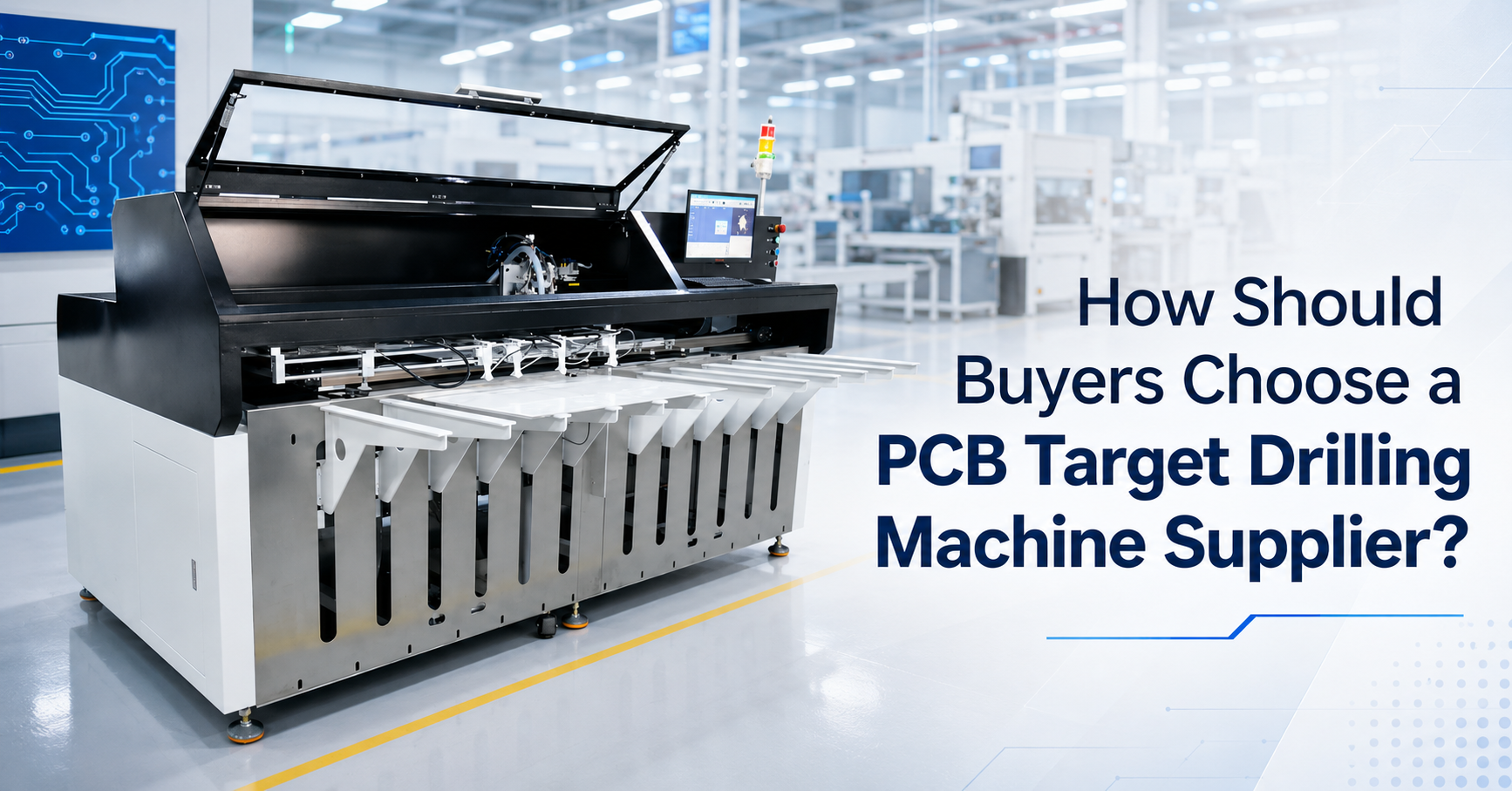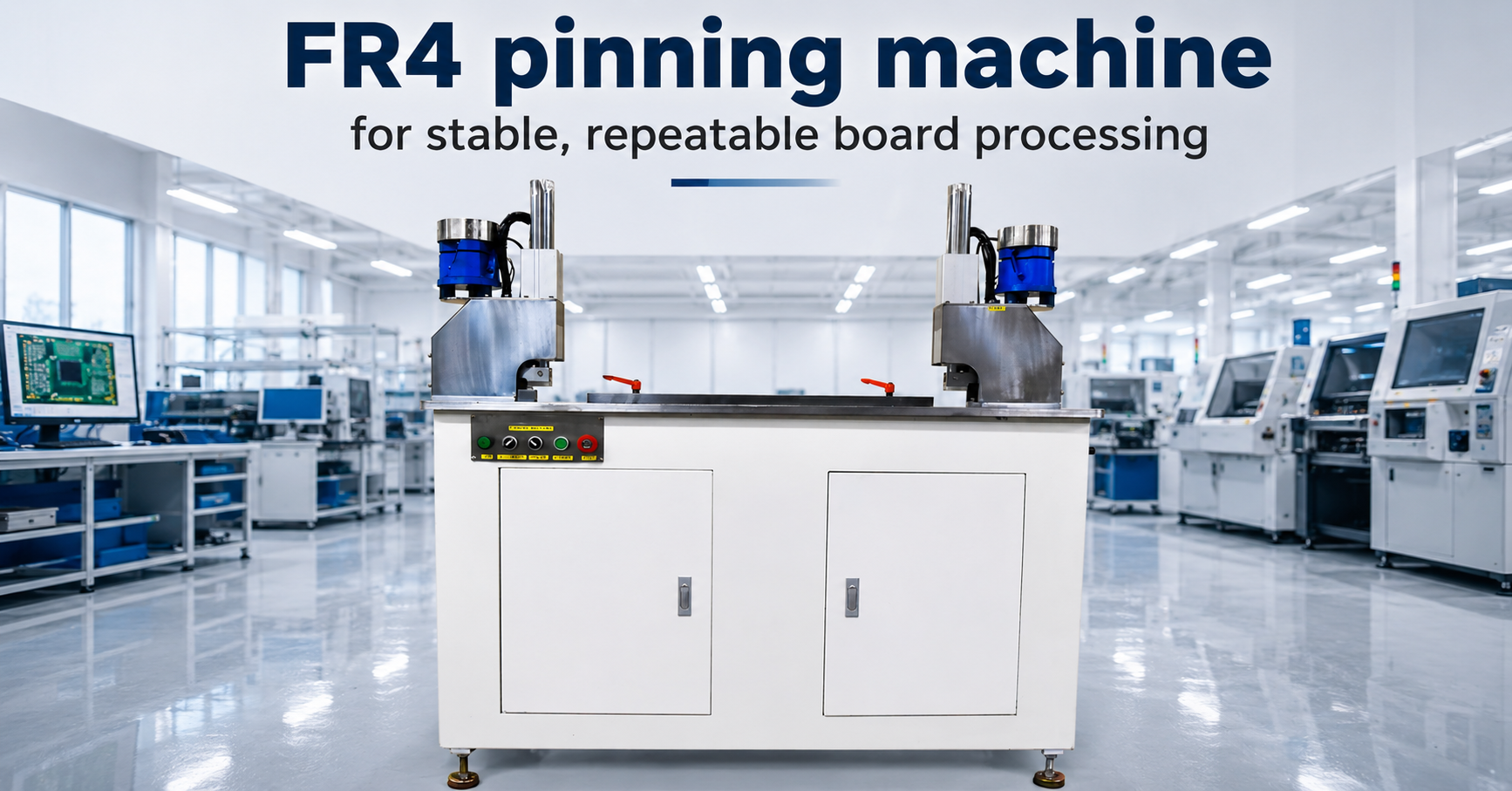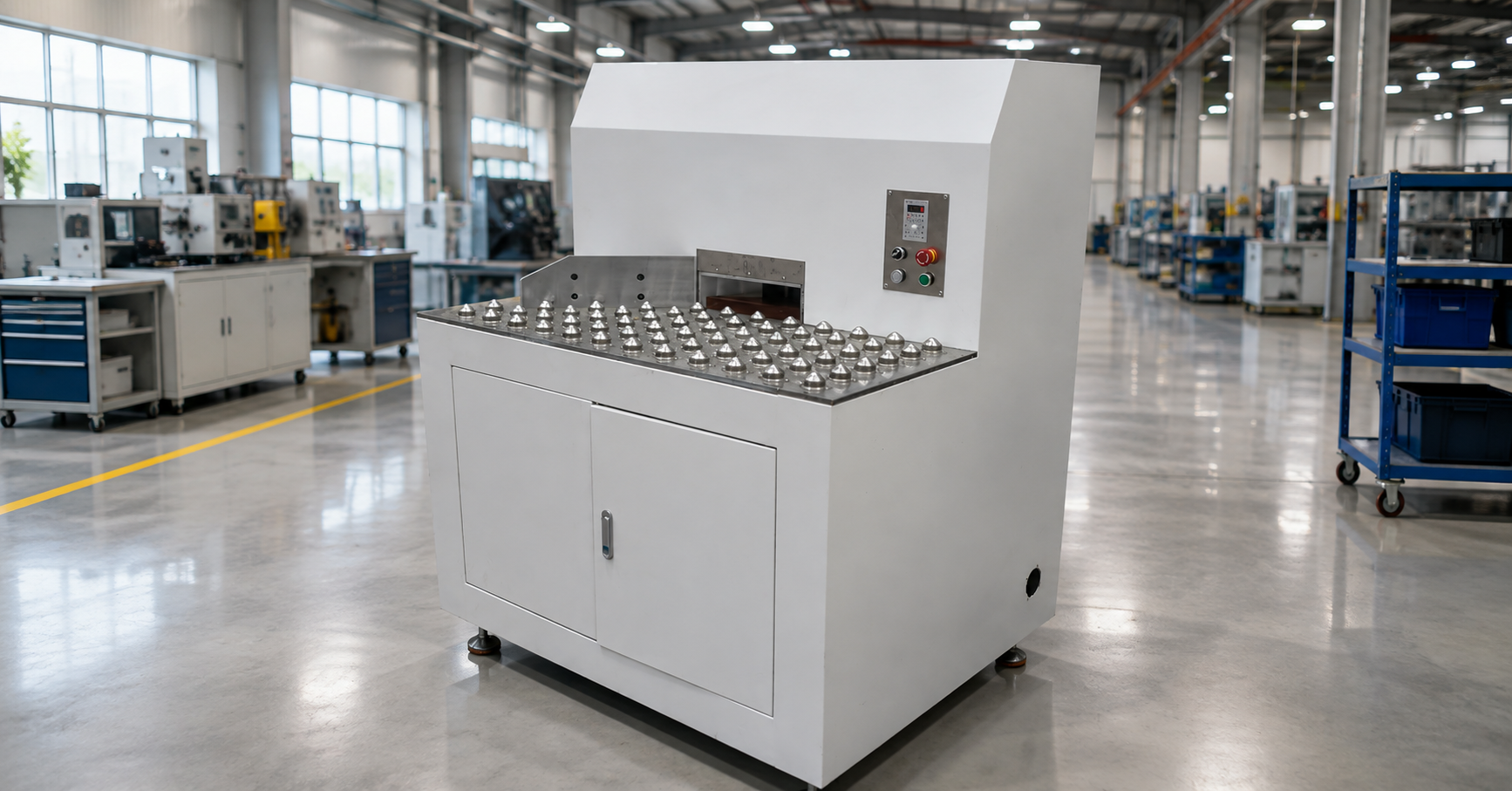




Machine de perçage et de routage de circuits imprimés à 2 broches : un guide pratique pour les fabricants de circuits imprimés de volume moyen
Pour de nombreux fabricants de PCB, le véritable problème de production n'est pas seulement de savoir si une machine peut percer des trous. La question la plus difficile est de savoir si l'équipement peut maintenir la stabilité du perçage et du fraisage malgré des commandes répétées, des conceptions de cartes mixtes, des tailles d'outils changeantes et une pression de livraison pratique. Une usine peut recevoir des panneaux FR4 le matin, des panneaux à base d'aluminium après le déjeuner et un petit lot de panneaux multicouches avant la fin du quart de travail. Dans ce type d'environnement de production, la flexibilité compte tout autant que la rapidité.
C'est là qu'une machine de perçage et de routage de PCB à 2 broches devient utile. Il se situe entre les équipements monobroches de base et les systèmes multibroches à plus haut rendement. Par rapport à une machine monobroche, elle peut améliorer le débit. Comparé à un système de perçage à quatre broches plus grand, il peut offrir un choix plus équilibré aux fabricants qui ont besoin à la fois de perçage et de fraisage sans investir dans une configuration de capacité la plus élevée.
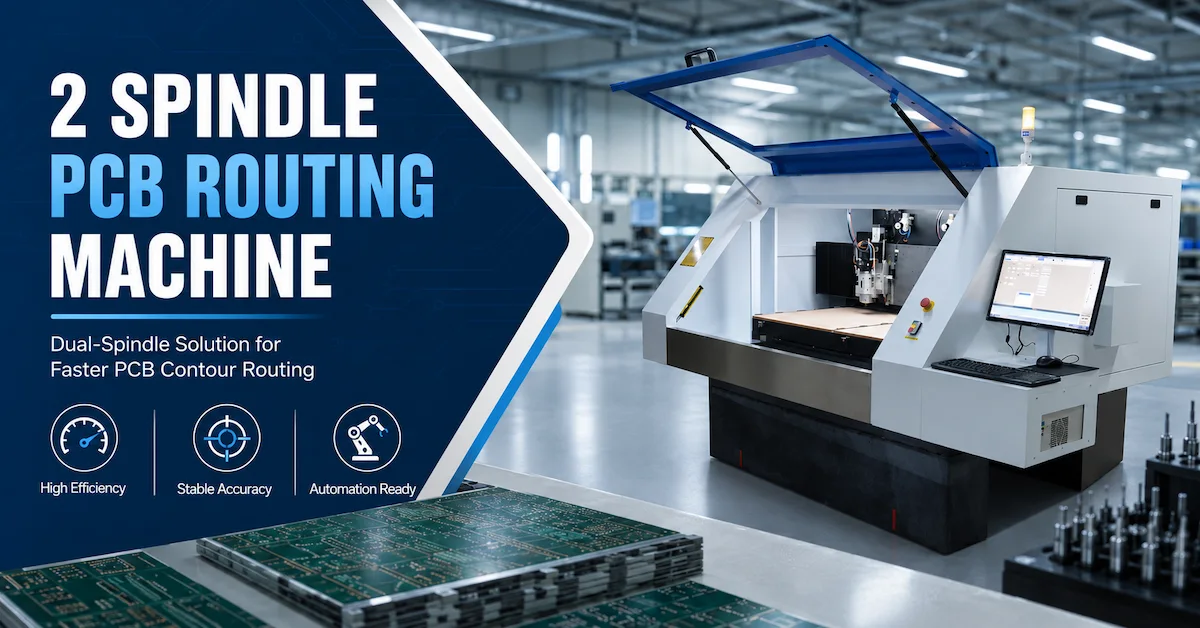
La machine de perçage et de routage de PCB à 2 broches Chikin CK-02R est conçue pour la production de PCB de volume moyen. Selon la page produit, il utilise des broches doubles avec contrôle indépendant de l'axe Z, une vitesse de broche de 60 000 tr/min, une puissance de broche de 1,8 kW, un refroidissement par eau, une construction en granit, des guides linéaires et des vis à billes de haute précision, un changement d'outil automatique, une détection de la longueur de l'outil, une détection du diamètre de l'outil, une détection d'outil cassé et un support de commutateur au pied de pression. La machine est décrite comme adaptée au perçage et au fraisage précis des panneaux FR4, multicouches et en aluminium.
Pour les acheteurs B2B recherchant un fabricant de machines de perçage et de détourage pour PCB ou un fournisseur de machines CNC pour PCB, cet article va au-delà du nom du produit. Il explique ce que fait la machine, pourquoi la structure est importante, comment elle s'adapte à la production réelle de PCB et ce que les équipes d'approvisionnement doivent vérifier avant d'envoyer une demande.
 Stratégie de mots clés B2B pour cela Blogue
| Type de mot clé | Mot clé | Intention de recherche | Utilisation recommandée dans l'article |
|---|---|---|---|
| Mot clé principal | Machine de perçage et de routage de PCB à 2 broches | Recherche de produits/comparaison de fournisseurs | Titre SEO, H1, introduction, conclusion |
| Mot clé du fournisseur | Fabricant de machines de perçage et de détourage de PCB | Trouver un fabricant | Sections d'approvisionnement et CTA |
| Mot clé du fournisseur | Fournisseur de machines de perçage et de routage de PCB | Comparer les fournisseurs | Liste de contrôle et FAQ de l'acheteur |
| Mot clé du produit | Perceuse PCB à double broche | Comparer la configuration de la broche | Explication technique |
| Mot clé produit | Machine de perçage et de routage CNC pour PCB | Comprendre le type de machine | Présentation du produit |
| Mot clé d'automatisation | machine automatique de perçage et de routage de PCB | Solution de recherche automatisée | Section de changement d'outil et de détection |
| Mot clé d'usine | Machine de routage de PCB pour les usines | Équipement d'usine B2B | Section Application |
| Mot clé de production | Équipement de production de PCB en volume moyen | Planification des capacités | Section ROI |
| Mot clé d'application | Équipement de perçage de PCB pour les fabricants de PCB | Intention d'achat générale | Introduction et conclusion |
| Mot clé commercial | Fournisseur de machines CNC pour PCB | Demande de fournisseur | CTA et guide d'approvisionnement |
Pourquoi les usines de PCB de volume moyen ont besoin d'une solution équilibrée de perçage et de routage
La production de PCB n'augmente pas toujours en ligne droite. Certaines usines passent du prototypage aux petits lots, puis aux commandes répétées. D'autres servent déjà l'électronique industrielle, les cartes LED, les systèmes de contrôle, les équipements de communication ou les fournisseurs automobiles, mais leur gamme de produits change fréquemment. Dans ces cas-là, le goulot d’étranglement n’est pas toujours la commande la plus importante. Il s'agit souvent de configurations répétées, de changements d'outils, d'ajustements de trajectoire de routage et d'interventions de l'opérateur entre différentes tâches.
Une machine monobroche peut suffire pour une production en faible volume, des planches d'échantillons ou de simples travaux de perçage. Mais lorsque le volume des commandes augmente, la machine peut vite devenir lente. Chaque coordonnée de perçage, chaque chemin de routage et chaque changement d'outil ajoute du temps. Si les opérateurs doivent vérifier manuellement l'état des outils ou arrêter fréquemment la machine, le rythme de production devient instable.
Une machine à quatre broches haut de gamme peut résoudre la pression de débit, mais toutes les usines n'ont pas besoin de cette capacité. Certains acheteurs ont besoin de quelque chose de plus équilibré : une efficacité supérieure à celle d'un équipement monobroche, mais suffisamment flexible pour gérer à la fois le perçage et le fraisage. C'est la position pratique d'une machine de perçage et de fraisage de PCB à 2 broches.
Le CK-02R est décrit par Chikin comme offrant 1,8 à 2,5 fois le débit des modèles monobroches tout en conservant la qualité des bords, en réduisant l'usure des outils et en s'intégrant aux équipements de ligne de circuits imprimés associés tels que les découpeuses laser, les systèmes V-CUT et AOI. Pour les fabricants de PCB de taille moyenne, cet équilibre est souvent plus précieux que de rechercher la plus grande machine sur papier.
Qu'est-ce qu'une machine de perçage et de routage de PCB à 2 broches ?
Une machine de perçage et de routage de PCB à 2 broches est une machine CNC équipée de deux broches pour le perçage de trous de PCB et le routage de contours. Contrairement à une machine de perçage uniquement, elle peut traiter à la fois des trous et des profils de fraisage. Contrairement à une unité CNC monobroche de base, elle utilise deux broches pour améliorer l'efficacité de la production.
Le CK-02R utilise deux broches avec contrôle indépendant de l'axe Z. Cette configuration est importante car le perçage et le fraisage ne nécessitent pas toujours le même comportement de coupe. Différents matériaux de cartes, diamètres de trous, diamètres de fraisage et profondeurs d'outils peuvent nécessiter un contrôle minutieux. Le mouvement indépendant sur l'axe Z donne au système plus de flexibilité pendant le traitement.
Dans la fabrication pratique de PCB, une machine comme celle-ci peut être utilisée pour :
| Processus | Ce qu'il fait | Pourquoi c'est important |
|---|---|---|
| Perçage de PCB | Crée des trous pour les vias, les trous traversants, les points de montage et les trous de processus | Affecte le placage, l'assemblage, l'enregistrement et la fiabilité électrique |
| Routage PCB | Découpe les contours, les fentes, les rainures et les contours des cartes | Affecte la forme de la carte, la qualité des bords et l'assemblage en aval |
| Forage et routage mixtes | Gère à la fois la réalisation de trous et l'usinage de profils sur une seule plate-forme d'équipement | Réduit les changements de machine et améliore la flexibilité de la production |
| Traitement par lots répété | Exécute des conceptions de cartes récurrentes avec une précision stable | Aide les usines à protéger les calendriers de livraison |
| Production en volume moyen | Prend en charge plus de rendement qu'un simple équipement monobroche | Convient aux usines avec des commandes régulières mais non extrêmes |
Le principal avantage n'est pas seulement "deux broches". La vraie valeur réside dans la combinaison d'un traitement à double broche, d'une structure mécanique stable, d'un contrôle CNC, d'une manipulation automatique des outils et de systèmes de détection dans une seule machine de production.
Présentation du produit CK-02R
Le tableau ci-dessous résume les principales informations sur le CK-02R de la page produit de Chikin.
| Objet | Spécification/fonctionnalité CK-02R | Valeur pratique pour les fabricants de PCB |
|---|---|---|
| Type de machine | Machine de perçage et de routage de PCB à 2 broches | Convient aux usines nécessitant à la fois du perçage et du routage |
| Quantité de broche | 2 broches | Améliore le débit par rapport aux machines monobroches |
| Conception sur l'axe Z | Contrôle indépendant de l'axe Z | Prend en charge des opérations de forage et de routage plus flexibles |
| Vitesse de broche | 60 000 tr/min | Convient aux tâches de perçage et de routage de PCB |
| Puissance de la broche | 1,8 KW | Fournit une puissance de coupe pour un traitement stable |
| Méthode de refroidissement | Refroidissement par eau | Prend en charge une durée de vie de broche plus longue et un fonctionnement continu |
| Diamètre de l'outil de perçage | 0,5 à 6,35 mm | Couvre les exigences courantes en matière de perçage des PCB |
| Diamètre de l'outil de fraisage | 0,5 à 3,175 mm | Prend en charge le traitement des contours, des emplacements et des bords de la carte |
| Précision | Répétabilité/précision de positionnement de ±0,005 mm | Aide à maintenir une précision constante des trous et du routage |
| Magazine d'outils | Changeur d'outils automatique à 9 positions | Réduit les changements d'outils manuels et les temps d'arrêt |
| Systèmes de détection | Longueur d'outil, diamètre d'outil, détection d'outil cassé | Améliore la sécurité et la cohérence des processus |
| Base de machine | Base en granit | Améliore l'amortissement des vibrations et la stabilité thermique |
| Système d'entraînement | Système de disque Panasonic/Delta | Prend en charge le mouvement stable de la machine |
| Contrôle CNC | CNC CHIKIN ou SIEB & MEYER CNC82 | Prend en charge le fonctionnement des CNC industrielles |
| Interface | Interface en anglais | Utile pour les opérateurs étrangers et les acheteurs internationaux |
| Commentaires facultatifs | Encodeur linéaire, résolution ±0,001 mm | Prend en charge un contrôle de plus grande précision en cas de besoin |
| Poids de la machine | Environ 2 300 KG | Indique la structure de la machine robuste |
| Taille de la machine | 2 170 × 1 700 × 1 600 mm | Aide les acheteurs à planifier l'aménagement de l'atelier |
| Alimentation | 220 V/380 V triphasé, 5 KVA | Important pour la planification de l'installation |
| Assistance | Garantie de précision de 3 ans et assistance mondiale 24h/24 | Utile pour les acheteurs B2B internationaux |
Les problèmes du produit que la machine est conçue pour résoudre
Une machine de perçage et de routage de PCB devrait résoudre les vrais problèmes d'usine. Pour les équipes d’approvisionnement, la machine ne doit pas être évaluée uniquement en fonction de la vitesse de broche ou du prix. La question la plus utile est la suivante : quels problèmes la machine réduit-elle lors de la production quotidienne ?
| Point douloureux de l'usine | Impact commun sur la production | Fonctionnalité associée au CK-02R |
|---|---|---|
| Cycle lent de forage et de routage | Pression de livraison, heures supplémentaires, goulot d'étranglement de production | La conception à double broche améliore le débit |
| Position du trou instable | Rebut, retouche, mauvaise qualité de placage | Répétabilité et précision de positionnement de ±0,005 mm |
| Mauvaise qualité des bords après le routage | Problèmes d'assemblage et travaux de finition supplémentaires | Routage CNC avec broche et base de machine stables |
| Casse d'outil non détectée rapidement | Panneaux endommagés et perte de temps de production | Système de détection d'outil cassé |
| Changement d'outil manuel fréquent | Temps d'arrêt et dépendance de l'opérateur | Changeur d'outils automatique à 9 positions |
| Vibration pendant le traitement à grande vitesse | Usure de l'outil, dérive de précision, qualité des bords bruts | Base en granit pour l'amortissement des vibrations |
| Exigences de production mixtes | Besoin de machines distinctes pour le perçage et le fraisage | Capacité combinée de forage et de routage |
| Difficultés d'opération à l'étranger | Coût de la formation et problèmes de communication | Interface en anglais et support mondial |
Dans de nombreuses usines, ces problèmes apparaissent ensemble. Une machine peut percer avec précision mais nécessiter trop de manipulation manuelle des outils. Un autre peut être rapide mais instable lors du routage. Une machine automatique de perçage et de fraisage de PCB devrait réduire plusieurs risques en même temps.
Pourquoi le perçage et le routage sont souvent liés dans la production de PCB
Le perçage et le fraisage sont des processus distincts, mais ils sont étroitement liés dans la planification de la production de PCB. Le perçage crée des trous. Le routage définit la forme de la carte, les fentes et les découpes. Si les deux processus sont retardés ou incohérents, l'ensemble du lot peut être affecté.
Par exemple, une carte peut nécessiter des trous traversants plaqués, des trous de montage et un routage des bords. Si le perçage est terminé sur une machine et que le routage est déplacé vers une autre machine, l'usine doit gérer l'alignement, la manutention, la planification et les contrôles de qualité entre les stations. Ce n'est pas toujours un problème dans les grandes lignes de production, mais pour les usines à volume moyen et les ateliers de commandes mixtes, le mouvement des processus peut créer des retards.
Une machine de perçage et de routage CNC pour PCB aide en combinant les deux capacités. Il ne remplace pas toutes les machines spécialisées d’une grande usine de production, mais il donne à l’usine plus de flexibilité. Ceci est particulièrement utile lorsque la même équipe de production gère plusieurs types de cartes, des lots de petite à moyenne taille, des modifications techniques et des demandes de livraison urgentes.
La gamme d'outils de perçage du CK-02R de 0,5 à 6,35 mm et la plage de routage de 0,5 à 3,175 mm le rendent adapté aux tâches courantes d'usinage de PCB sur différents types de cartes.
Le rôle des doubles broches dans l'efficacité de la production
La différence entre une broche et deux broches peut paraître simple, mais son effet sur la production peut être significatif. Une machine monobroche gère une trajectoire d'usinage à la fois. Une configuration à double broche peut améliorer le rendement lorsque la structure du travail et la configuration de la machine sont adaptées.
Chikin déclare que le CK-02R peut atteindre un débit 1,8 à 2,5 fois supérieur à celui des modèles monobroches. En termes d'usine, cela peut signifier des files d'attente de forage plus courtes, une réalisation plus rapide des lots, une meilleure utilisation de la machine et une moindre dépendance aux heures supplémentaires.
Cependant, la valeur de la double broche n'est pas seulement une question de vitesse. Cela améliore également la planification de la production. Si une usine traite régulièrement des panneaux répétés, deux broches peuvent rendre le temps de cycle plus prévisible. Un temps de cycle prévisible aide les responsables de production à planifier les processus en aval, tels que le placage, l'inspection, la préparation de l'assemblage ou la livraison.
| Facteur de production | Machine monobroche | Machine de perçage et de routage de PCB à 2 broches |
|---|---|---|
| Traitement de la sortie | Inférieur | Plus élevé pour les tâches répétées appropriées |
| Flexibilité de production | Bon pour les échantillons et le travail simple | Meilleur pour la production mixte de volumes moyens |
| Investissement en machines | Coût initial inférieur | Plus haut mais plus productif |
| Dépendance de l'opérateur | Plus élevé lorsque les changements d'outils sont fréquents | Abaisser avec gestion automatique des outils |
| Capacité de routage | Dépend de la conception de la machine | Forage et routage intégrés |
| Meilleur ajustement | Prototype, low-volume, simple boards | Mid-volume PCB factories and repeated orders |
For a factory that already has regular PCB orders but is not ready for a larger four-spindle drilling machine, a two-spindle drilling and routing machine can be a reasonable next step.
Why Independent Z-Axis Control Matters
The CK-02R uses dual spindles with independent Z-axis control. This is an important detail for real machining, because the Z-axis controls vertical movement, cutting depth, tool engagement, and process safety.
In PCB drilling, the Z-axis affects entry, drilling depth, and tool withdrawal. In routing, it affects cutting depth, edge finish, and tool load. If the machine handles different tools or different machining operations, independent Z-axis control gives the system more control over how each spindle works.
This can help in several ways:
| Z-Axis Requirement | Why It Matters in PCB Processing |
|---|---|
| Accurate vertical positioning | Helps prevent over-cutting or insufficient cutting |
| Controlled drilling depth | Important for process consistency |
| Tool protection | Reduces risk of overload and breakage |
| Routing quality | Helps maintain clean board edges and stable profiles |
| Process flexibility | Supports different operations within one machine platform |
For B2B buyers, independent Z-axis control is one of the details that separates a production-oriented machine from a basic mechanical platform.
Granite Base and Machine Stability
A machine base may not look as exciting as spindle speed, but it has a direct effect on machining quality. The CK-02R uses a granite base for vibration damping, thermal stability, and long-term precision.
In PCB drilling and routing, vibration can create several problems. It can increase tool wear, reduce hole accuracy, affect routing edge quality, and create inconsistent results across a batch. The issue becomes more visible when processing smaller features, denser boards, or materials that require clean cutting.
Granite is commonly valued in precision equipment because it provides dimensional stability and vibration damping. In the context of the CK-02R, the granite base supports consistent high-speed operation in demanding PCB environments.
| Machine Structure Factor | Impact on PCB Production |
|---|---|
| Vibration damping | Helps improve hole quality and routing edge consistency |
| Thermal stability | Reduces accuracy drift during longer operation |
| Heavy machine body | Supports stable high-speed motion |
| Precision mechanical foundation | Helps maintain repeatability over time |
A lower-cost machine with weak structure may perform acceptably during a short demonstration, but long production shifts expose vibration and thermal issues. That is why serious buyers should ask about the machine base, not only spindle quantity.
Linear Guides, Ballscrews, and Motion Accuracy
The CK-02R is equipped with high-accuracy linear guides and ballscrews. Chikin lists Taiwan components as standard, with Germany Rexroth or Japanese components available as upgraded options. The product page also states that the machine can reach rapid traverse speeds up to 30m/min in XY and maintain ±0.005mm repeatability and positioning accuracy.
Motion accuracy matters because PCB machining is coordinate-based. Every hole and routing path depends on the machine’s ability to move predictably. If there is backlash, vibration, or positioning drift, the result may be hole offset, routing deviation, rough board edges, or scrap.
| Motion System Element | Production Meaning |
|---|---|
| Linear guide | Supports smooth and stable axis movement |
| Ballscrew | Converts motor motion into precise linear movement |
| Rapid traverse speed | Reduces non-cutting movement time |
| Repeatability | Helps the machine return to the same point consistently |
| Positioning accuracy | Helps match programmed coordinates with actual machining |
| Optional linear encoder | Adds higher-resolution position feedback when required |
For a PCB drilling and routing machine supplier, motion accuracy should be a core selling point. For buyers, it should be a core inspection point.
Spindle Performance: 60,000 RPM, 1.8KW, and Water Cooling
The CK-02R uses 60,000 RPM spindles with 1.8KW power and water cooling. This combination is relevant for both drilling and routing.
High spindle speed helps process PCB materials cleanly, especially when using smaller tools. Spindle power helps maintain cutting stability during routing and heavier machining conditions. Water cooling helps control spindle temperature and supports longer service life during extended operation.
| Spindle Feature | Why It Matters |
|---|---|
| 60,000 RPM speed | Supports PCB drilling and routing with smaller tools |
| 1.8KW power | Provides cutting strength for routing and stable machining |
| Water cooling | Helps protect spindle performance during longer operation |
| Dual-spindle setup | Improves throughput compared with single-spindle equipment |
Spindle performance should always be evaluated together with machine structure and motion accuracy. A fast spindle cannot compensate for a weak mechanical base. A strong machine frame cannot reach full value if the spindle lacks stability. The CK-02R positions these elements as a complete system.
Automatic Tool Change and Detection Systems
Manual tool handling is one of the most underestimated sources of downtime in PCB machining. Every time the operator changes tools manually, production stops. Every tool setup error can create quality risk. Every broken tool that goes undetected can damage boards before anyone notices.
The CK-02R includes a fully automatic tool changer with a 9-position magazine. It also includes tool length detection, tool diameter detection, broken tool detection, and pressure foot switch support.
| Tool Management Feature | Practical Benefit |
|---|---|
| 9-position automatic tool changer | Reduces manual tool changes |
| Tool length detection | Helps maintain correct machining depth |
| Tool diameter detection | Helps confirm tool suitability |
| Broken tool detection | Reduces scrap risk from undetected tool breakage |
| Pressure foot switch | Supports safer and more controlled processing |
For a mid-volume PCB factory, these features are not just “automation options.” They help reduce human error, stabilize process timing, and improve production confidence.
CNC Control and Drive System
The CK-02R uses a Panasonic / Delta drive system and supports CHIKIN CNC or SIEB & MEYER CNC82 control, with an English interface. This matters because a CNC machine is only as useful as its control stability and operator usability.
SIEB & MEYER describes its CNC controls and motion controller products as optimized for PCB drilling and mechanical PCB routing, with emphasis on process reliability and efficiency. This aligns with what PCB manufacturers need from drilling and routing equipment: stable motion, reliable spindle coordination, efficient program execution, and manageable operation.
For overseas buyers, the English interface is also important. It reduces training difficulty and allows local operators to work with less translation dependency. In B2B equipment purchases, operation clarity can directly affect how quickly a factory can adopt the new machine.
| Control / Drive Element | Buyer Concern |
|---|---|
| CNC controller | Program execution, machine coordination, operation logic |
| Drive system | Axis response, stability, motion reliability |
| English interface | Operator training and overseas usability |
| Optional encoder | Higher positioning feedback for precision requirements |
| Supplier support | Troubleshooting, parameter adjustment, long-term maintenance |
A PCB CNC machine supplier should be able to explain not only which controller is used, but also how the control system supports real drilling and routing work.
Suitable PCB Materials and Applications
The CK-02R is positioned for precise drilling and routing on FR4, multilayer, and aluminum boards. These are common board categories in industrial electronics, LED lighting, power electronics, control systems, communication equipment, and many other manufacturing sectors.
| PCB Type | Typical Requirement | Why CK-02R Fits |
|---|---|---|
| FR4 PCB | General drilling, routing, mounting holes, edge profiles | Balanced drilling and routing capability |
| Multilayer PCB | Stable hole position and repeatable machining | ±0.005mm accuracy supports consistency |
| Aluminum PCB | Routing and processing for metal-backed boards | 1.8KW spindle power supports tougher cutting conditions |
| Industrial control board | Repeatable production and stable quality | CNC control and detection systems reduce process variation |
| LED PCB | Aluminum substrate processing and repeated panel machining | Suitable for board routing and drilling tasks |
| Small to mid-volume production | Flexible batch processing | Dual-spindle system improves efficiency without oversized investment |
This makes the machine especially relevant for factories that produce more than one PCB type. If a factory only produces one extremely high-volume product, a more specialized line may be preferred. But if the factory manages repeated mixed orders, a dual-spindle drilling and routing platform can be practical.
How This Machine Supports Mid-Volume PCB Production
Mid-volume production is often harder to manage than it appears. The factory must maintain efficiency, but it may not have the luxury of running one product for weeks without changeover. Orders may be repeated, but batch sizes may vary. Product designs may be stable, but customer requirements can change.
A 2 spindle PCB drilling and routing machine supports this environment because it offers:
| Production Need | How CK-02R Supports It |
|---|---|
| Higher output than single-spindle machines | Dual spindles improve production efficiency |
| Flexibility for drilling and routing | One machine platform handles both processes |
| Stable accuracy | Granite base and precision motion components |
| Lower downtime | Automatic tool change and detection systems |
| Mixed board compatibility | FR4, multilayer, and aluminum board applications |
| International operation | English interface and global support |
For many buyers, this combination is the reason to choose a dual-spindle machine instead of a single-spindle unit or a drilling-only system.
2 Spindle Machine vs 4 Spindle Machine
A common procurement question is whether to buy a two-spindle or four-spindle machine. The answer depends on production volume, board type, budget, and the factory’s bottleneck.
| Comparison Point | 2 Spindle PCB Drilling and Routing Machine | 4 Spindle PCB Drilling Machine |
|---|---|---|
| Main Function | Drilling + routing | Mainly high-speed drilling |
| Spindle Quantity | 2 | 4 |
| Best Use | Mid-volume mixed production | Higher-volume drilling production |
| Process Flexibility | Higher because it combines drilling and routing | More focused on drilling throughput |
| Investment Level | Usually more moderate | Usually higher |
| Typical Buyer | Factory needing balanced drilling/routing capacity | Factory with drilling bottleneck and larger volume |
| Selection Logic | Choose when flexibility and mid-volume output matter | Choose when maximum drilling output matters |
A 4-spindle drilling machine may be better for factories with heavy drilling loads and high batch volume. A 2-spindle drilling and routing machine may be better when the factory wants a more flexible system that handles both hole processing and profile machining.
2 Spindle PCB Drilling and Routing Machine vs Single-Spindle Machine
| Factor | Single-Spindle Machine | 2 Spindle PCB Drilling and Routing Machine |
|---|---|---|
| Throughput | Lower | Higher, especially for repeated jobs |
| Initial Cost | Lower | Higher than single-spindle equipment |
| Automation Level | Depends on model | Automatic tool change and detection features |
| Suitable Production | Prototype and low volume | Small-to-mid and mid-volume production |
| Drilling and Routing | May support both, but slower | Better balanced for repeated drilling/routing |
| Operator Intervention | Often higher | Lower due to tool automation |
| Long-Term Value | Good for simple jobs | Better for factories with steady orders |
The decision should not be made only by purchase price. If a single-spindle machine causes delays, overtime, tool-change downtime, or missed delivery dates, its lower price may not mean lower total cost.
2 Spindle Drilling and Routing Machine vs Separate Drilling and Routing Machines
Some factories prefer separate machines for drilling and routing. This can work well when production volume is high enough and the workflow is stable. However, separate equipment also means more handling, more floor space, and more scheduling coordination.
| Evaluation Point | Combined 2 Spindle Drilling & Routing Machine | Separate Drilling and Routing Machines |
|---|---|---|
| Floor Space | More compact | Requires more space |
| Process Flexibility | Good for mixed production | Strong if each process has stable volume |
| Handling Time | Lower between drilling and routing | Higher due to transfer between machines |
| Scheduling | Easier for small/mid batches | More complex but scalable |
| Investment | One integrated machine | Two separate equipment investments |
| Best Fit | Mid-volume factories and mixed orders | Larger production lines with dedicated process stations |
A combined machine is not always better. But for many mid-volume PCB manufacturers, it reduces workflow complexity and gives production managers more flexibility.
Quality Control: Why Drilling and Routing Accuracy Affect Final PCB Reliability
PCB drilling and routing quality affects more than appearance. Hole accuracy affects registration, plating, assembly, and electrical reliability. Routing quality affects board shape, edge smoothness, assembly fit, and handling safety.
IPC-6012 covers qualification and performance requirements for rigid printed boards, including single-sided, double-sided, plated-through-hole, multilayer, blind/buried via, and metal core boards. This is relevant because drilling and routing equipment contributes directly to whether a factory can maintain consistent board quality.
| Quality Issue | Possible Cause | Machine Feature That Helps |
|---|---|---|
| Hole position deviation | Motion error, vibration, poor positioning | ±0.005mm accuracy and granite base |
| Rough routing edge | Tool wear, vibration, weak spindle control | 1.8KW spindle and stable machine structure |
| Tool breakage | Incorrect tool condition, overload, long use | Broken tool detection |
| Inconsistent cutting depth | Z-axis control or tool length error | Independent Z-axis and tool length detection |
| Production scrap | Delayed detection of process problems | Tool diameter and broken tool detection |
A professional PCB drilling and routing machine manufacturer should understand that equipment is part of the quality system. It is not only a mechanical tool.
ROI Factors for B2B Buyers
A buyer should calculate machine value based on production results, not only purchase cost. The CK-02R is positioned as a machine that improves throughput, reduces downtime, and supports stable mid-volume production.
| ROI Factor | How It Affects Production | What Buyers Should Measure |
|---|---|---|
| Throughput improvement | Shortens drilling/routing cycle time | Compare current cycle time with expected dual-spindle output |
| Tool change reduction | Reduces machine idle time | Record daily manual tool-change time |
| Scrap reduction | Saves board material and labor | Review drilling/routing-related scrap records |
| Labor efficiency | Reduces operator intervention | Compare operator workload before and after upgrade |
| Delivery stability | Helps protect lead time | Track delayed orders caused by machining bottlenecks |
| Process flexibility | Handles different PCB types | Review monthly board variety |
| Floor space efficiency | Combines drilling and routing | Compare one integrated machine vs separate equipment |
| Maintenance and support | Reduces long-term downtime risk | Review warranty, spare parts, and supplier response |
A machine with a higher purchase price can still be economical if it reduces downtime, improves delivery, and allows the factory to accept more stable orders.
Practical Buyer Checklist
Before choosing a PCB drilling and routing machine supplier, buyers should prepare a clear checklist. This prevents procurement from becoming a simple price comparison.
| Evaluation Area | Questions to Ask Supplier | Why It Matters |
|---|---|---|
| Spindle System | What is the spindle speed, power, cooling method, and service life? | Determines cutting performance and durability |
| Spindle Quantity | Is two-spindle capacity enough for our order volume? | Prevents underbuying or overbuying |
| Z-Axis Design | Are the spindles independently controlled? | Affects process flexibility |
| Work Area | Does the machine fit our standard PCB panel sizes? | Prevents production mismatch |
| Tool Range | What drilling and routing tool diameters are supported? | Ensures compatibility with product designs |
| Tool Changer | How many tool positions are available? | Affects downtime and job complexity |
| Detection Systems | Does the machine detect broken tools and tool dimensions? | Reduces scrap risk |
| Accuracy | What repeatability and positioning accuracy can the machine maintain? | Affects hole and routing quality |
| CNC System | Which controller is used and what languages are supported? | Affects operation and training |
| Service | What warranty and global support are available? | Important for overseas buyers |
| Sample Test | Can the supplier process buyer samples before order? | Verifies real performance |
| ROI | Can the supplier help compare current and expected production output? | Supports business decision-making |
How to Decide Whether CK-02R Fits Your Factory
The CK-02R is not the only possible machine choice. It is suitable when the factory’s needs match its design.
It may fit your factory if:
| Factory Situation | CK-02R Fit |
|---|---|
| You process FR4, multilayer, or aluminum PCB boards | Strong fit |
| You need both drilling and routing | Strong fit |
| You want higher output than single-spindle machines | Strong fit |
| You handle mid-volume or mixed-batch orders | Strong fit |
| You need automatic tool change and detection | Strong fit |
| You only need very low-volume prototyping | May be more than necessary |
| You need the highest possible drilling throughput | Consider a 4-spindle drilling machine |
| You already have separate high-capacity routing and drilling lines | Compare workflow carefully |
A good machine decision starts with production data. Before sending an inquiry, the buyer should review monthly board volume, average hole count, routing complexity, tool change frequency, scrap causes, and current bottleneck location.
Process Flow: How the Machine Fits into PCB Manufacturing
A PCB CNC drilling and routing machine usually belongs in the mechanical processing stage of PCB manufacturing. Its exact position depends on the factory process, but it often supports hole formation and board profiling.
| Production Step | Role of Drilling / Routing Machine |
|---|---|
| Design preparation | Receives machining coordinates and process requirements |
| Panel setup | PCB panels are positioned and fixed |
| Tool preparation | Required drilling and routing tools are loaded |
| Drilling | Holes are created according to CNC program |
| Routing | Board outline, slots, or contours are machined |
| Detection | Tool condition and machining stability are monitored |
| Inspection | Board holes and edges are checked |
| Downstream process | Boards continue to plating, finishing, inspection, or assembly-related workflow |
The CK-02R’s automatic tool change and detection systems are useful because they reduce interruptions during the drilling and routing stages.
Production Scenarios for the CK-02R
| Scenario | Buyer Need | Why CK-02R Is Relevant |
|---|---|---|
| Mid-volume PCB factory | Increase output without buying oversized equipment | Dual-spindle throughput improvement |
| Prototype-to-batch transition | Move from samples to repeat orders | Balanced flexibility and efficiency |
| Aluminum PCB processing | Handle LED and power boards | Routing capability and spindle power |
| Mixed FR4 and multilayer orders | Process different board types | CNC flexibility and stable accuracy |
| Export-oriented factory | Improve reliability and delivery confidence | English interface and global support |
| Equipment upgrade project | Replace older single-spindle machines | Better automation and detection |
Common Mistakes When Buying PCB Drilling and Routing Equipment
Many equipment problems begin before the machine arrives. Procurement teams sometimes focus on visible specifications while ignoring workflow fit.
| Mistake | Why It Creates Risk | Better Approach |
|---|---|---|
| Buying only by lowest price | May lead to poor stability or weak support | Compare total cost and production impact |
| Ignoring tool change time | Manual changes reduce real output | Evaluate automatic tool changer capacity |
| Focusing only on spindle speed | Speed without stability may reduce quality | Check base, guide rails, ballscrews, and accuracy |
| Not testing real samples | Catalog specs may not reflect actual jobs | Request sample processing |
| Overbuying capacity | Higher investment may not improve ROI | Match machine to order volume |
| Underbuying capacity | Bottleneck remains after purchase | Calculate future order growth |
| Ignoring service support | Downtime becomes expensive | Confirm warranty, response time, and spare parts |
A reliable PCB drilling and routing machine supplier should help the buyer avoid these mistakes during selection.
Internal Linking Suggestions for Website Publishing
| Anchor Text | Suggested Link Target |
|---|---|
| 2 spindle PCB drilling and routing machine | CK-02R product page |
| PCB drilling and routing solutions | Product category page |
| 4 spindle PCB drilling machine | Related product page |
| PCB routing machine for factories | Routing product page |
| PCB laser cutting equipment | Laser cutting machine page |
| PCB AOI inspection machine | AOI product page |
| request a customized quote | Contact / inquiry page |
| sample processing or live demo | Service page |
Internal links should be placed naturally. The article should guide buyers from education to product comparison, then to inquiry.
FAQ
What is a 2 spindle PCB drilling and routing machine?
A 2 spindle PCB drilling and routing machine is a CNC machine designed to process PCB holes and board profiles with two spindles. It improves efficiency compared with a single-spindle machine and offers more flexibility than a drilling-only system.
What is the main advantage of the CK-02R?
The main advantage is balanced production capability. The CK-02R combines dual spindles, drilling and routing functions, granite structure, automatic tool change, tool detection, and ±0.005mm repeatability / positioning accuracy for mid-volume PCB production.
What materials can the CK-02R process?
The product page describes the CK-02R as suitable for precise drilling and routing on FR4, multilayer, and aluminum boards.
What is the spindle speed of the CK-02R?
The CK-02R uses 60,000 RPM spindles with 1.8KW power and water cooling.
What tool sizes does the machine support?
The CK-02R supports drilling tools from 0.5–6.35mm and routing tools from 0.5–3.175mm.
Does the machine include automatic tool change?
Yes. The CK-02R includes a fully automatic tool changer with a 9-position magazine, along with tool length detection, tool diameter detection, broken tool detection, and pressure foot switch support.
Is a 2 spindle machine better than a 4 spindle machine?
Not always. A two-spindle drilling and routing machine is better for mid-volume production and mixed drilling/routing needs. A four-spindle drilling machine is better when the main goal is higher drilling throughput.
Is this machine suitable for overseas buyers?
The CK-02R includes an English interface and is backed by global 24-hour support, according to Chikin’s product page.
How should a factory calculate ROI?
A factory should compare current cycle time, manual tool-change time, scrap caused by drilling/routing issues, operator workload, delivery delays, and expected order growth. The value of the machine comes from higher output, lower downtime, and more stable quality.
Conclusion
A 2 spindle PCB drilling and routing machine is a practical choice for PCB manufacturers that need more than basic drilling capacity but do not necessarily require the largest multi-spindle system. It is especially suitable for mid-volume factories, mixed PCB orders, FR4 boards, multilayer boards, aluminum boards, and production environments where both drilling and routing must remain stable.
The Chikin CK-02R combines dual spindles, independent Z-axis control, 60,000 RPM spindle speed, 1.8KW water-cooled spindle power, granite base construction, high-accuracy linear guides and ballscrews, automatic tool change, tool length detection, tool diameter detection, broken tool detection, and ±0.005mm repeatability / positioning accuracy. These features make it relevant for buyers searching for a PCB drilling and routing machine manufacturer, PCB drilling and routing machine supplier, or PCB CNC machine supplier for mid-volume PCB production.
For B2B procurement teams, the best decision is not simply choosing the lowest price or the highest spindle count. A better approach is to match the machine to real factory conditions: board materials, hole sizes, routing requirements, order volume, tool-change frequency, accuracy expectations, operator skill level, and after-sales support needs.
If the main production challenge is flexible drilling and routing with better throughput than a single-spindle machine, the CK-02R is worth evaluating as a balanced PCB CNC solution for modern PCB manufacturing.