




Fiber Laser Marking Machine for Traceability, Part ID, and Controlled Benchmark Processing
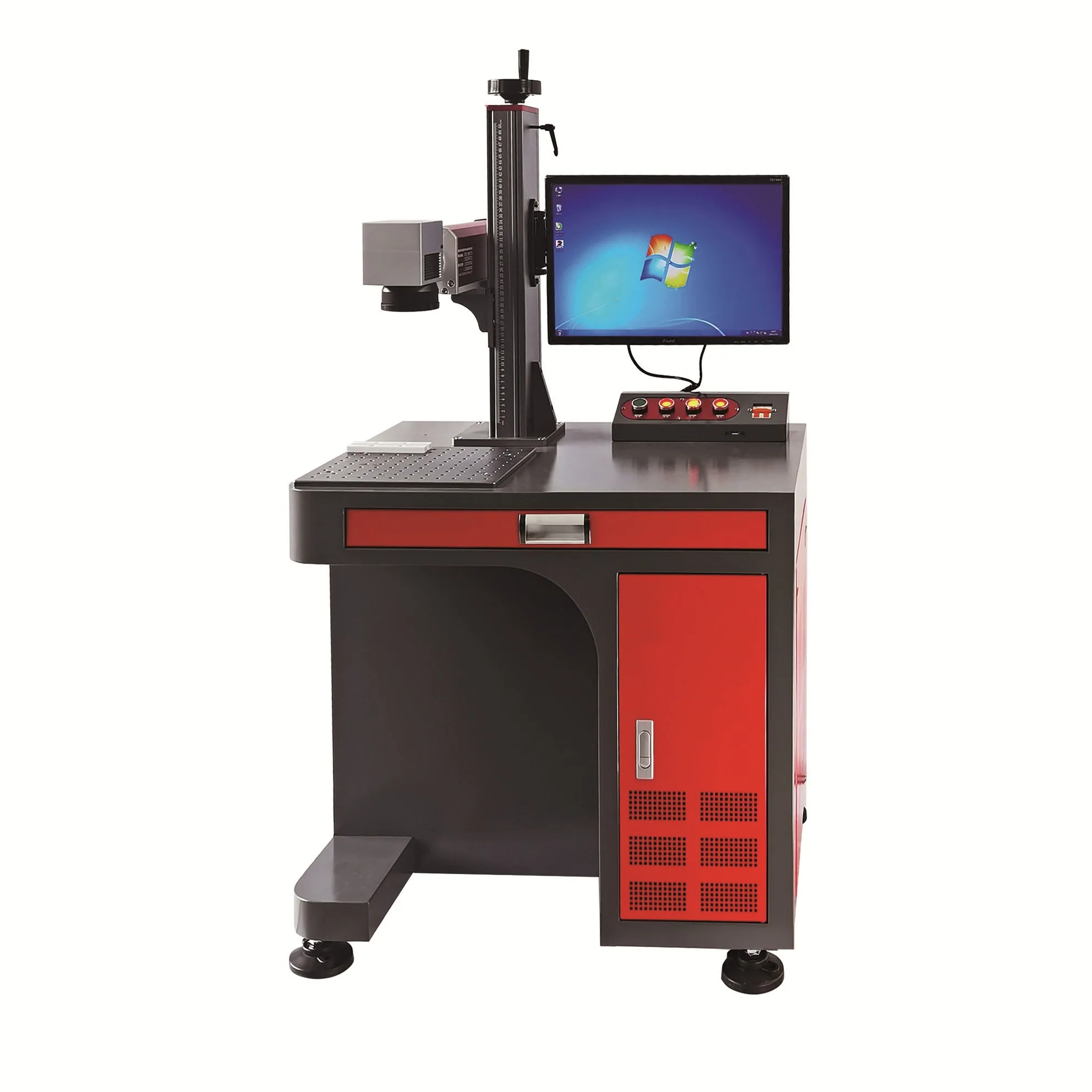
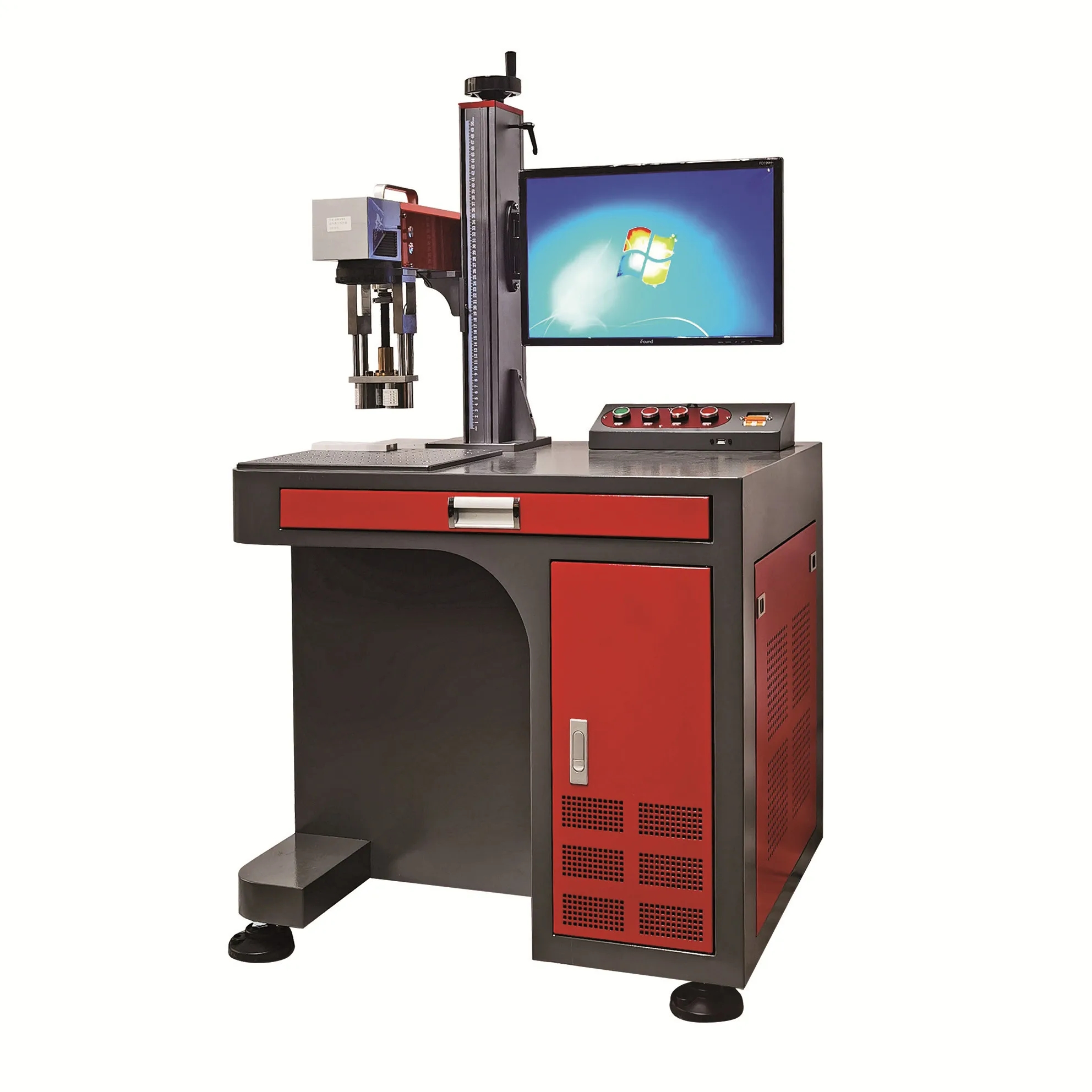
A fiber laser marking machine is used when a manufacturer needs durable part identification without relying on labels, ink, or manual stamping. This kind of workstation helps solve a common production problem: how to place serial numbers, barcodes, batch codes, and inspection references on small components in a repeatable way while keeping the operator interface organized. Based on the visible structure, this unit appears to be a floor-standing industrial marking or inspection station with a cabinet base, vertical column, work surface, and external monitor for operator control.
Product Overview
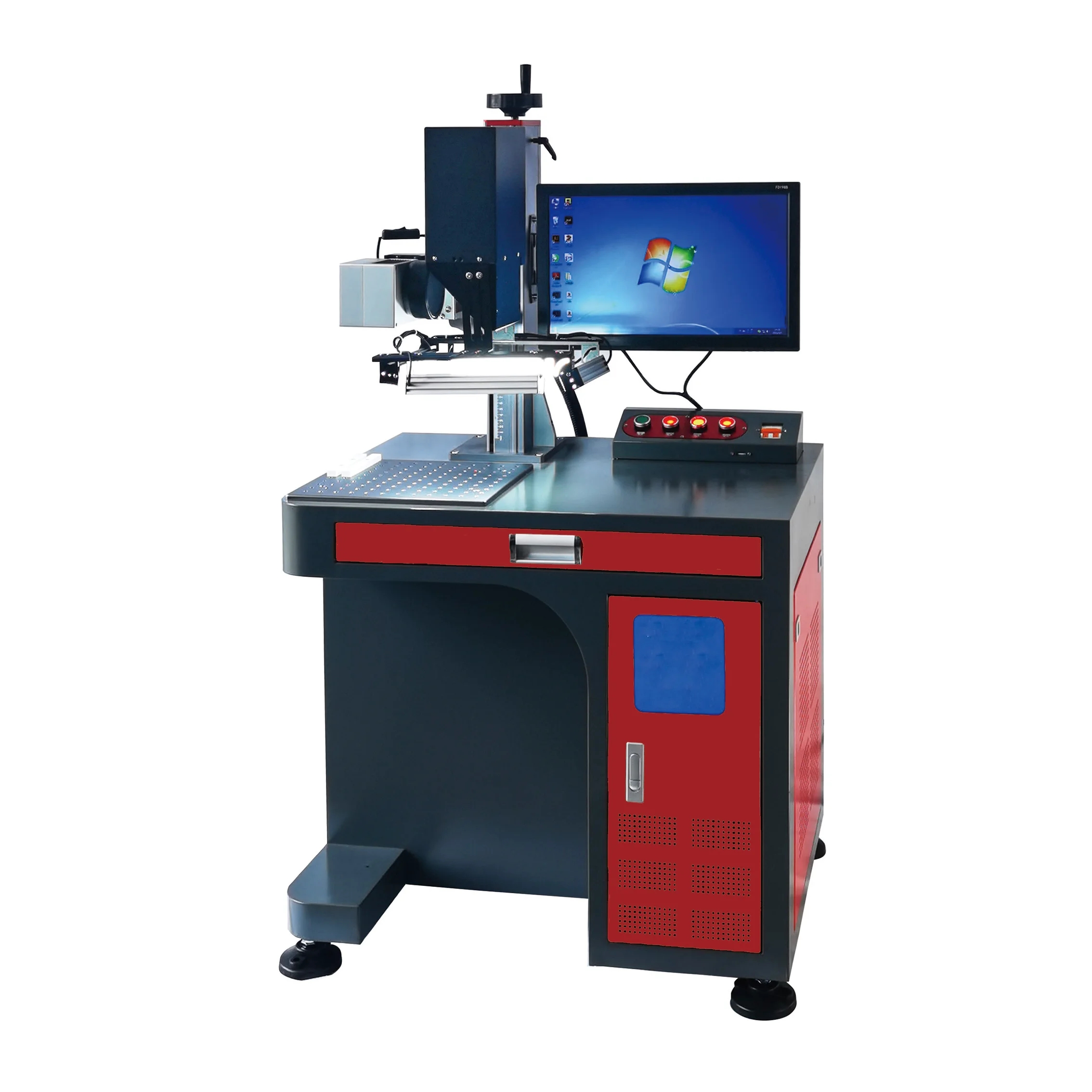
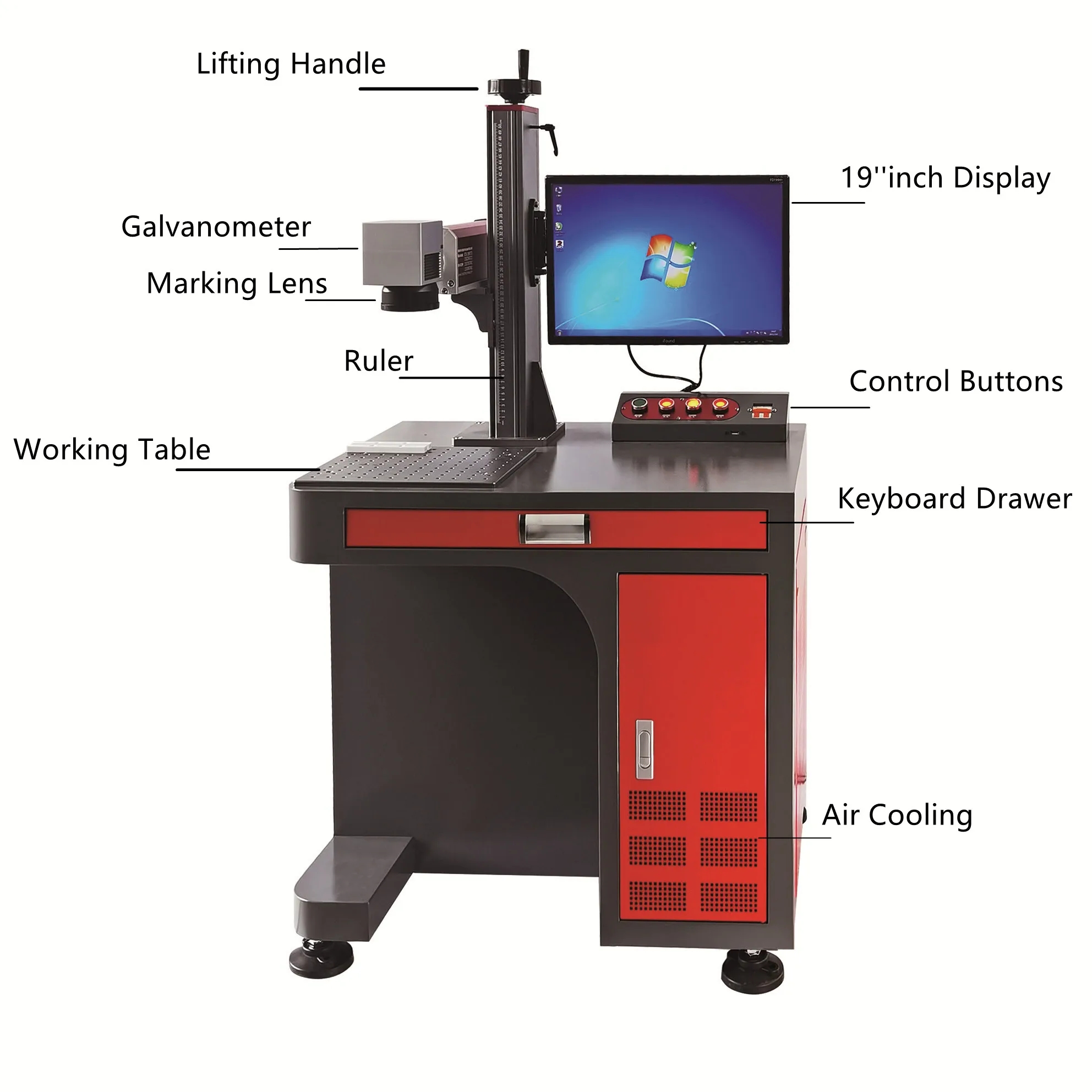
This system is best understood as a dedicated industrial workstation rather than a handheld device. The cabinet-style base supports a flat top work area with a perforated or fixture plate for part positioning. A vertical frame carries a mounted head/module on one side and a monitor on the other, creating a compact bench for controlled processing. The presence of an emergency-stop style control panel and indicator switches suggests an operator-driven machine intended for production environments where repeatability and traceability matter.
Because the exact process head is not confirmed from the image, it should be described carefully. The visible configuration is consistent with a desktop laser marking machine or a related automation station used for marking, engraving, or machine-vision inspection. The external Windows-based interface also points to a practical shop-floor setup where operators select jobs, review settings, and confirm part placement before processing.
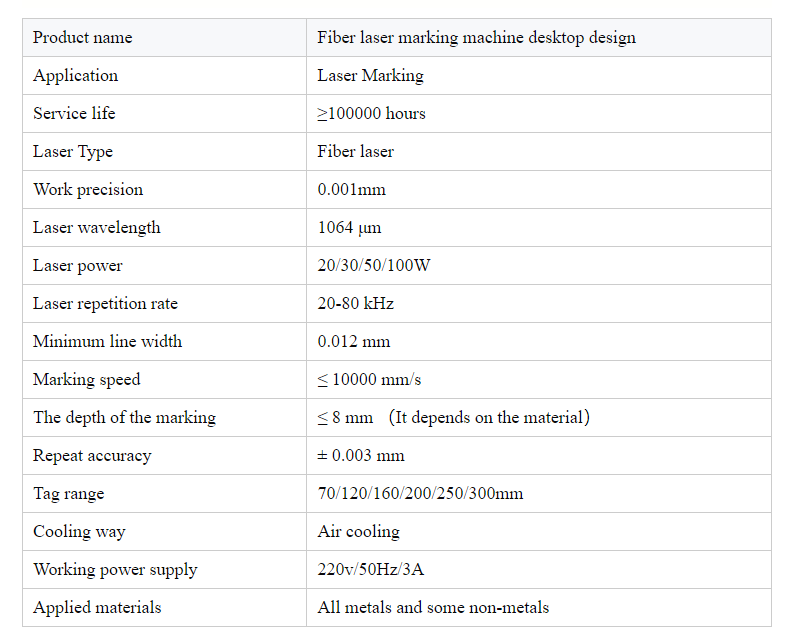
Key Specifications and Visible Capabilities
Workstation structure
The machine uses a fabricated metal cabinet with a black and red painted finish. Leveling feet are visible at the bottom, which is useful for stable installation on a production floor or inspection bench. The top work surface appears flat and easy to fixture, making it suitable for small parts, plates, housings, and other components that need controlled positioning.
Operator interface
An integrated control box with push buttons and switches provides direct machine control, while the separate monitor supports job setup and process monitoring. This layout is common in a high precision laser marker station where the operator needs clear access to software, vision feedback, or work instructions.
Positioning and alignment
The vertical column includes a visible linear scale or guide, suggesting adjustable head height or process positioning. That is useful when a production line handles parts with different thicknesses or when the focal distance must be set consistently across a job family.
Materials and Finish Options
From the visible construction, the machine uses a welded or fabricated metal enclosure and frame with painted industrial finish. Black and red coatings are typical for protective shop-floor equipment because they resist everyday wear and present a clean appearance. For custom builds, buyers often consider powder-coated steel, stainless steel panels, aluminum tooling plates, and anti-corrosion surface treatments depending on the production environment.
The fixture plate on top may support interchangeable inserts, locating pins, clamps, or custom jigs. For a desktop fiber laser engraver workflow, these tooling options are often as important as the marking head itself because they determine part consistency and throughput.
Manufacturing and Integration Considerations
Workstations like this are typically built through sheet metal fabrication, frame welding, machining of the fixture area, electrical integration, and software commissioning. The machine may be delivered as part of a traceability cell that includes a laser source or process head, a motion or vision subsystem, safety devices, and a PC-based control interface. If the mounted module is a laser head, the final performance depends on the chosen source, optics, and software setup. Those details are not visible here and should be confirmed before purchase.
Application Scenarios
This type of industrial station is well suited for serial number marking, data code placement, barcode or QR identification, small-part engraving, and operator-guided quality inspection. It can also be used in manufacturing lines where parts are verified before or after marking. Typical users include electronics assemblers, hardware manufacturers, precision component shops, tool makers, and traceability-focused production cells.
When a buyer searches for a fiber laser engraver, the real requirement is often not just marking speed. It is part handling, stable fixturing, clean readability, and a workflow that reduces operator error. A structured workstation can do more for productivity than a simple open-frame machine when parts must be loaded one by one and inspected immediately afterward.
Quality Control and Process Confidence
Quality control in a marking station usually focuses on alignment, repeatability, readability, and correct job selection. The external monitor makes it easier to confirm the software interface, while the work table and guide structure support consistent placement. If the system includes machine vision or inspection functions, that should be verified directly with the supplier, since the image alone does not confirm camera capability.
Buyers should ask whether the machine supports part location verification, code legibility checks, and operator prompts. Those features matter in regulated or high-mix manufacturing, where one wrong mark can create rework or traceability problems.
Customization Guidance
Customization is often the deciding factor for this kind of equipment. Buyers may need a different work envelope, special fixtures, rotary attachments, barcode scanning, a dust extraction interface, or a software connection to an MES or ERP system. If the application involves a desktop laser marking machine format, the height of the column, the layout of the monitor arm, and the shape of the worktable can also be adjusted to match the operator’s workflow.
Before specifying a system, define the part size range, marking location, expected cycle time, material family, and whether the machine will be used only for marking or also for inspection. Those inputs help determine the right workstation design and accessory package.
Buyer Decision Factors
When comparing options, focus on fixture flexibility, cabinet stability, ease of operator use, software compatibility, safety design, and service access. If you need a high precision laser marker, do not judge it by appearance alone. Confirm the available process head, the supported materials, the actual working area, and the level of process integration you require. For industrial users, these details affect uptime more than cosmetic features.
Request a Custom Quote
If you are planning a traceability station, part-marking cell, or inspection-oriented workstation, share your part samples, marking content, fixture needs, and production layout. A properly configured fiber laser marking machine can streamline identification and reduce manual handling. Contact us to discuss a custom setup that fits your workpieces, operator flow, and factory environment.