



Why Controlled Roll Coating Is Becoming a Better Choice for PCB Surface Processing
In PCB manufacturing, surface coating is not just a material application step. It affects process stability, surface cleanliness, coating thickness, ink use, operator workload, baking demand, and downstream quality. When coating is uneven, contaminated, or poorly controlled, the issue may later appear as imaging defects, surface inconsistency, rework, material waste, or production delay.
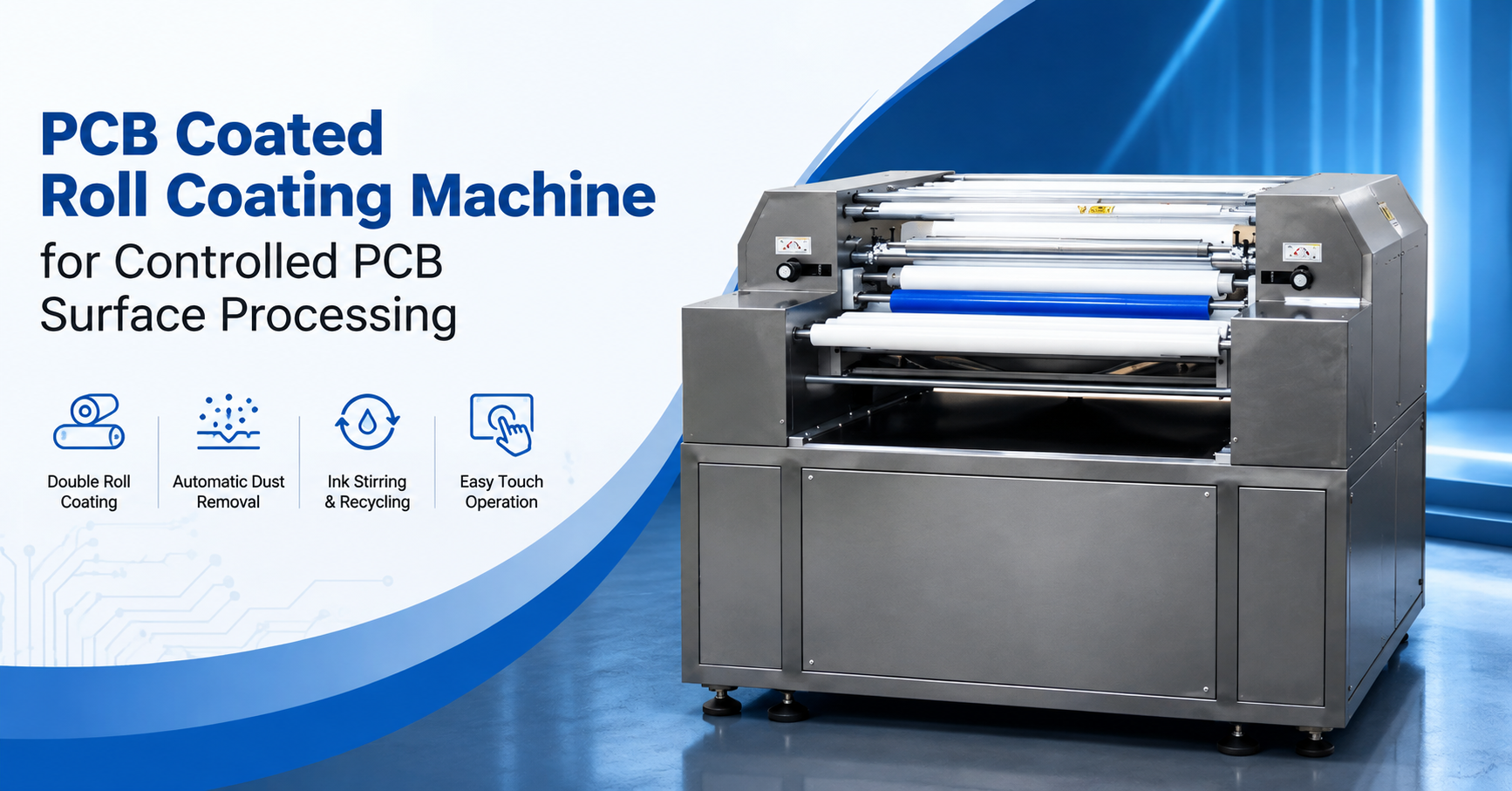
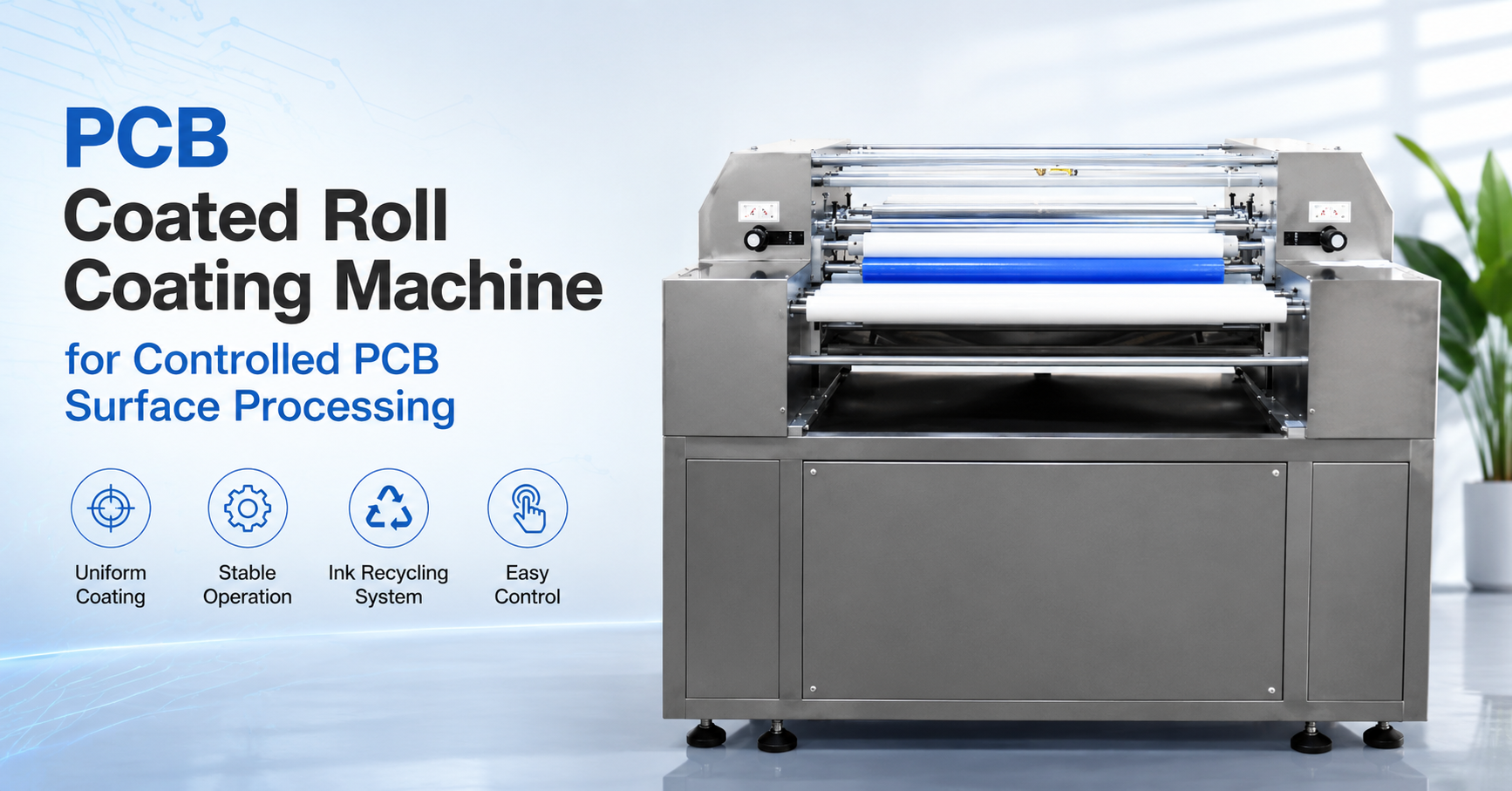
That is why many PCB factories compare traditional manual screen printing with a more controlled PCB coated roll coating machine. Chikin CNC describes this machine as a new type of equipment that uses double coating rollers to simultaneously roll a layer of photosensitive ink, glue, paint, or special functional coating onto a substrate surface. The product page also states that the equipment has a compact structure, stable performance, safe and convenient operation, and customizable coating width according to customer requirements. citeturn310940view0
For B2B buyers searching for a PCB roll coating machine, PCB roller coater, PCB coating equipment, or PCB photosensitive ink coating machine, the key question should not be only “Can the machine apply coating?” A more useful question is: can it keep board handling clean, coating contact stable, ink circulation controlled, and production cost reasonable over repeated batches?
A roll coating machine is not only a coating device. In a PCB factory, it becomes part of the surface-preparation and coating-control workflow.
Why PCB Roll Coating Matters in Factory Production
A PCB surface coating process must apply material evenly enough to support later processing. If the coating is too thick, too thin, contaminated, or uneven, the factory may face downstream instability. Manual methods can work in certain low-volume settings, but they often depend heavily on operator skill, screen condition, ink handling, and repeated manual adjustment.
Chikin’s product page positions the roller coating machine as an alternative that is gradually replacing traditional single-sided screen printing and other traditional equipment in some applications. It also states that the machine has been applied in PCB circuit boards, metal etching, electroforming standards, and related industries. citeturn310940view0
For factory buyers, this matters because coating quality affects more than appearance. It can influence:
-
surface uniformity before imaging or functional processing
-
foreign-object control on the board surface
-
ink use and material waste
-
operator repeatability
-
coating thickness stability
-
downstream baking and production cost
-
line efficiency when board volumes increase
A PCB circuit board coating machine should therefore be evaluated as a controlled production system, not as a simple roller assembly.
What Does Chikin’s PCB Coated Roll Coating Machine Do?
According to the product page, this roller coating machine uses a double coating roller to simultaneously roll a layer of photosensitive ink, glue, paint, or special functional coating onto the substrate surface. The substrate is transported by a white silicone roller or stainless-steel roller, then passes through an automatic dust-sticking roller and dust sticky paper roll device before coating. This design is intended to help avoid quality problems such as foreign objects on the board surface. citeturn310940view0
The page also states that the coating roller uses raw materials imported from Germany, and that the rollers coat both sides at one time while ink does not enter the holes. In PCB production, that last point is important because unwanted ink inside holes can create later process issues depending on the application. citeturn310940view0
In simple terms, the machine is designed to control four important things:
Board feeding.
Surface cleanliness.
Roller contact.
Ink circulation and reuse.
That combination makes it different from more manual or less structured coating methods.
Main Product Information from the Chikin Page
| Product Point | Information from Product Page | Why It Matters for Buyers |
|---|---|---|
| Coating method | Double coating rollers apply photosensitive ink, glue, paint, or functional coating | Supports controlled surface coating instead of manual application |
| Substrate transport | White silicone roller or stainless-steel roller transports the substrate | Helps guide boards through the coating path |
| Dust control | Automatic dust-sticking roller and dust sticky paper roll device before coating | Helps reduce foreign objects on the board surface |
| Roller material | Coating roller uses raw materials imported from Germany | Buyers can ask for roller material and surface details before purchase |
| Both-side coating | Rollers coat both sides at one time | Useful when the process requires simultaneous double-side coating |
| Hole protection | Product page states ink does not enter the hole | Important for PCB buyers concerned about hole contamination |
| Ink handling | Equipped with ink stirring and filtering device | Helps mix ink and filter impurities to improve production quality |
| Ink recycling | Ink collection device has a recycling system | Helps reduce waste and control material cost |
| Operation | Man-machine interface touch operation | Supports easier operator interaction |
| Customization | Coating width can be customized according to customer requirements | Helps match the machine to different board formats |
Technical Specifications Listed on the Product Page
| Specification Item | Listed Value |
| Power supply | AC220V / 50HZ |
| Total power | 900W |
| Output speed | 0–10 m/min |
| Coating wheel size | Ø120 × 700 mm |
| Ink thickness | 0.018–0.025 mm |
| Coating thickness | 0.3–4.0 mm |
| Feeding motor | 2 sets of 400W gear speed motors |
| Mixing motor | 2 sets of 25W gear fixed speed motors |
| Ink pump | 2 pneumatic diaphragm pumps, 6Kg air pressure |
| Feeding method | Stainless steel roller conveyor |
| Transfer method | Gear and sprocket transmission |
| Conveying surface height | 850–1100 mm, according to customer requirements |
| Maximum coating size | 600 mm |
| Minimum coating size | 100 mm |
| Ink collection device | Recycling system |
| Equipment weight | About 500 kg |
| Dimensions | L1260 × W1370 × H1275 mm |
| Operation method | Man-machine interface touch operation |
These specifications give buyers a useful starting point, especially for electrical planning, line speed discussion, coating size review, space planning, and production layout. They should still be confirmed with the supplier before ordering, especially if the buyer’s process involves special ink, non-standard board thickness, unusual coating width, or integration with upstream and downstream equipment. citeturn310940view0
Why Double-Roller Coating Can Improve Process Control
The double coating roller is the main process feature of this machine. Compared with a process where operators manually apply material or use single-side coating equipment, a double-roller design can help make the coating path more structured. The product page states that the machine can coat both sides at one time, which may improve process efficiency when the production requirement matches this method. citeturn310940view0
For PCB factories, the advantage is not only speed. It is also repeatability. Roller contact can be more consistent than manual coating when the machine is properly adjusted and maintained. The board passes through a defined path. The rollers apply material under controlled contact. Ink is stirred, filtered, and recycled. Dust is removed before coating. These process details work together.
A buyer should ask the supplier:
How is roller pressure adjusted?
How is coating thickness controlled?
Can both-side coating be disabled if only one side is needed?
How is roller surface condition inspected?
How are rollers cleaned after production?
What inks or coating materials are suitable?
Can the roller width match the buyer’s board size?
The correct roller setup can reduce defects. The wrong setup can create streaks, uneven coating, surface marks, or wasted ink.
Why Dust Removal Before Coating Is Important
Surface cleanliness is critical in coating. If dust or foreign objects remain on the substrate surface, the coating may trap them, creating surface defects. Chikin’s product page states that the substrate passes through an automatic dust-sticking roller and dust sticky paper roll device before coating, effectively avoiding quality problems such as foreign objects on the board surface. citeturn310940view0
This is a practical advantage. In real production, many coating defects are not caused only by the coating material. They start with the board surface. A small particle can create a visible point defect or interfere with later processing. A pre-coating dust removal section helps reduce that risk.
Buyers should still confirm:
What type of dust-sticking roller is used?
How often must sticky paper be replaced?
Can the system handle the buyer’s board surface condition?
Does the dust-removal section need special maintenance?
Can cleaning effectiveness be checked during production?
Is the machine suitable for the buyer’s workshop cleanliness level?
A dust-removal system is only useful if it is maintained properly. Procurement teams should include sticky roller and consumable paper requirements in cost planning.
Why Ink Stirring and Filtering Matter
Ink behavior can change during production. Sedimentation, impurities, viscosity variation, and contamination may affect coating quality. Chikin’s product page states that the machine is equipped with an ink stirring and filtering device, which can fully mix ink and filter impurities to improve production quality. citeturn310940view0
This is an important B2B selling point. A coating machine should not only deliver ink to the roller. It should help maintain ink condition during operation. Stirring supports mixing. Filtering reduces impurity risk. Ink circulation supports more stable production. The page also states that the machine has ink recycling and no waste of ink recycling compared with traditional manual screen printing. citeturn310940view0
Buyers should ask:
What filter type is used?
How often should filters be replaced?
How is ink viscosity managed?
Is the stirring speed fixed or adjustable?
Can the system handle the buyer’s ink formulation?
How is recycled ink collected and returned?
How is contamination avoided during recycling?
Ink control is often where long-term production cost appears. A machine that reduces ink waste may have a higher upfront cost but lower material waste over time.
How Does This Machine Compare with Traditional Manual Screen Printing?
The product page states that compared with traditional manual screen printing machines, this roll coating machine has advantages such as high efficiency, low cost, low energy consumption, no waste of ink recycling, one-time baking electricity saving, and simple operation. citeturn310940view0
That comparison should be understood objectively. Manual screen printing may still fit some factories, especially for low-volume jobs, special coating patterns, or applications where operators already have strong control. But when production needs repeated coating over boards or substrates, a roll coating machine may be more practical.
Manual screen printing often depends on operator skill, screen condition, ink handling, and repeated manual pressure. A roller coater creates a more continuous and structured path. The substrate is transported through rollers, dust is removed, coating is applied, ink is stirred and filtered, and material can be recycled.
The difference is not only “manual vs machine.” It is operator-dependent coating vs process-controlled coating.
How Should Buyers Choose a PCB Roll Coating Machine?
A good purchasing process should begin with the coating requirement, not the machine price. Buyers should define what coating material will be used, what board size must be processed, what coating thickness is needed, and whether single-side or double-side coating is required.
Chikin’s machine lists a maximum coating size of 600 mm and minimum coating size of 100 mm, with coating width customizable according to customer requirements. It also lists output speed from 0 to 10 m/min, coating wheel size of Ø120 × 700 mm, ink thickness of 0.018–0.025 mm, and coating thickness of 0.3–4.0 mm. citeturn310940view0
Before ordering, buyers should confirm:
Board size range.
Board thickness range.
Required coating width.
Ink or coating material type.
Whether both-side coating is needed.
Target coating thickness.
Line speed requirement.
Surface cleanliness requirement.
Dust-removal consumables.
Ink filtration and recycling method.
Power supply compatibility.
Floor space and machine access.
Operator training needs.
Maintenance and spare parts.
A machine that fits these details can become a stable production tool. A machine chosen only by price may create mismatch after installation.
What Should Buyers Check About Feeding and Transfer?
The product page lists stainless-steel roller conveyor feeding and gear-and-sprocket transmission. It also lists two 400W gear speed motors for feeding and two 25W gear fixed speed motors for mixing. citeturn310940view0
These details matter because feeding stability affects coating uniformity. If the board does not move smoothly, coating may become uneven. If transfer is unstable, roller contact may vary. If the conveyor height does not match the buyer’s line, loading and unloading may become inconvenient. The product page states the conveying surface height can be 850–1100 mm according to customer requirements. citeturn310940view0
Buyers should ask:
Can conveyor height match our line?
Can speed be adjusted smoothly?
How stable is the gear-and-sprocket transmission?
How are rollers aligned?
Can the machine handle our board thickness?
Is manual loading or line integration planned?
How much space is needed for maintenance access?
Feeding is not a minor detail. It decides whether the coating process remains steady during daily operation.
How Should Buyers Evaluate Supplier Capability?
Choosing a PCB manufacturing equipment supplier is as important as choosing the machine itself. A supplier should not only provide a quote. It should help buyers confirm whether the machine matches their board size, coating material, process goal, factory layout, and production volume.
Chikin’s product page states that ChiKin Automation Equipment Co., Ltd. is based in Guangdong, China, started from 2012, and sells to domestic and overseas markets including Southeast Asia, Northern Europe, Mid East, South Asia, and South America. The page also states the company provides CNC PCB routing machines, CNC PCB drilling machines, V cutting machines, guide hole drilling machines, and SMT CNC routing machines. citeturn310940view0
The page also notes that Chikin is an R&D, production, and sales professional firm, drawing on domestic and foreign technology and management during R&D, design, and installation processes. It lists quality assurance steps such as pre-production sample before mass production and final inspection before shipment. citeturn310940view0
For buyers, these points are useful, but they should still ask practical supplier questions:
Can the supplier review the buyer’s coating material?
Can it confirm coating thickness compatibility?
Can it customize coating width?
Can it provide roller material details?
Can it test sample boards?
Can it explain cleaning and maintenance procedures?
Can it provide spare rollers, filters, and sticky paper consumables?
Can it support installation and operator training?
Can it provide confirmed delivery terms and payment terms?
A supplier that understands the process will ask for technical details before quoting. That is usually a good sign.
Practical Application Case: Replacing Manual Coating in a PCB Factory
Consider a PCB factory using manual screen printing for certain board-coating operations. The process is familiar, but production becomes less stable as order volume grows. Operators notice several recurring issues: some boards show coating thickness variation, some require rework due to surface particles, and ink waste is difficult to control.
The engineering team starts comparing roll coating equipment. Their goal is not simply to buy a faster machine. They want a coating method that can reduce foreign objects, support more uniform material application, lower ink waste, and reduce dependence on manual coating skill.
Chikin’s PCB coated roll coating machine would be relevant to this case because the product page states that it uses double coating rollers, includes automatic dust-sticking roller and sticky paper roll device, uses ink stirring and filtering, supports ink recycling, coats both sides at one time, and offers simple touch operation. citeturn310940view0
Before purchase, the factory should send Chikin:
Board size.
Board thickness.
Ink type.
Target coating thickness.
Required coating width.
Current defect photos.
Expected output speed.
Factory power conditions.
Line height requirement.
Need for customized coating width.
If the sample test confirms coating uniformity and fewer particle defects, the machine may help the factory reduce rework and improve daily coating stability.
Common Buying Mistakes
The first mistake is choosing by price only. A low-cost coating machine may become expensive if coating is uneven, rollers wear quickly, or ink waste remains high.
The second mistake is not confirming ink compatibility. Photosensitive ink, glue, paint, or functional coating may behave differently. The supplier should verify suitability.
The third mistake is ignoring dust-removal consumables. Sticky paper and dust-sticking rollers require maintenance and replacement planning.
The fourth mistake is not checking roller material. Chikin states that the coating roller uses raw materials imported from Germany, but buyers should still request actual roller specifications, coating material, hardness, and replacement guidance. citeturn310940view0
The fifth mistake is assuming all board sizes fit. The page lists maximum coating size as 600 mm and minimum coating size as 100 mm, while coating width can be customized. Buyers should confirm their exact board format before ordering. citeturn310940view0
The sixth mistake is not confirming installation space. The listed dimensions are L1260 × W1370 × H1275 mm and equipment weight is about 500 kg, so buyers should plan floor space, moving access, and maintenance clearance. citeturn310940view0
Buyer FAQ
1. What is the main function of this PCB coated roll coating machine?
It uses double coating rollers to simultaneously roll photosensitive ink, glue, paint, or special functional coating onto the substrate surface. The machine is designed for compact structure, stable performance, safe and convenient operation, and customizable coating width. citeturn310940view0
2. Can the machine reduce foreign objects on the board surface?
The product page states that the substrate passes through an automatic dust-sticking roller and dust sticky paper roll device before coating, which helps avoid quality problems such as foreign objects on the board surface. citeturn310940view0
3. Does the machine support ink recycling?
Yes. The product page lists an ink collection device with a recycling system and also mentions no waste of ink recycling as one of the advantages compared with traditional manual screen printing. citeturn310940view0
4. What board size range should buyers confirm?
The page lists a maximum coating size of 600 mm and minimum coating size of 100 mm. It also states that coating width can be customized according to customer requirements, so buyers should confirm their exact board size and coating width before ordering. citeturn310940view0
5. What specifications should procurement teams check before purchase?
Buyers should confirm power supply, output speed, coating wheel size, ink thickness, coating thickness, feeding method, transfer method, conveyor height, machine dimensions, weight, ink pump air pressure, roller material, and whether the machine can match the buyer’s coating material and production line. The product page lists AC220V/50HZ, 900W total power, 0–10 m/min output speed, Ø120 × 700 mm coating wheel, 0.018–0.025 mm ink thickness, 0.3–4.0 mm coating thickness, stainless-steel roller conveyor feeding, gear-and-sprocket transmission, and HMI touch operation. citeturn310940view0
Conclusion
A PCB coated roll coating machine can help factories move from operator-dependent surface coating toward a more controlled, repeatable, and material-efficient process. Its value is not only applying ink or coating material. It supports surface cleanliness, roller-based coating contact, ink mixing, impurity filtration, both-side coating, ink recycling, and touch-screen operation.
Chikin CNC’s product page presents this machine as a double-roller coating system for photosensitive ink, glue, paint, or special functional coating. It includes dust-sticking roller and sticky paper roll cleaning before coating, imported roller raw materials, both-side coating in one pass, ink stirring and filtering, pneumatic diaphragm ink pumps, stainless-steel roller conveyor feeding, gear-and-sprocket transmission, ink recycling, and HMI touch operation. citeturn310940view0
For B2B buyers, the best purchasing process is objective: define board size, coating material, coating thickness, line speed, surface cleanliness requirement, ink recycling expectation, conveyor height, power supply, and customization needs first. Then ask the supplier to confirm roller details, dust-removal consumables, ink filtration method, sample testing, maintenance support, and spare parts.