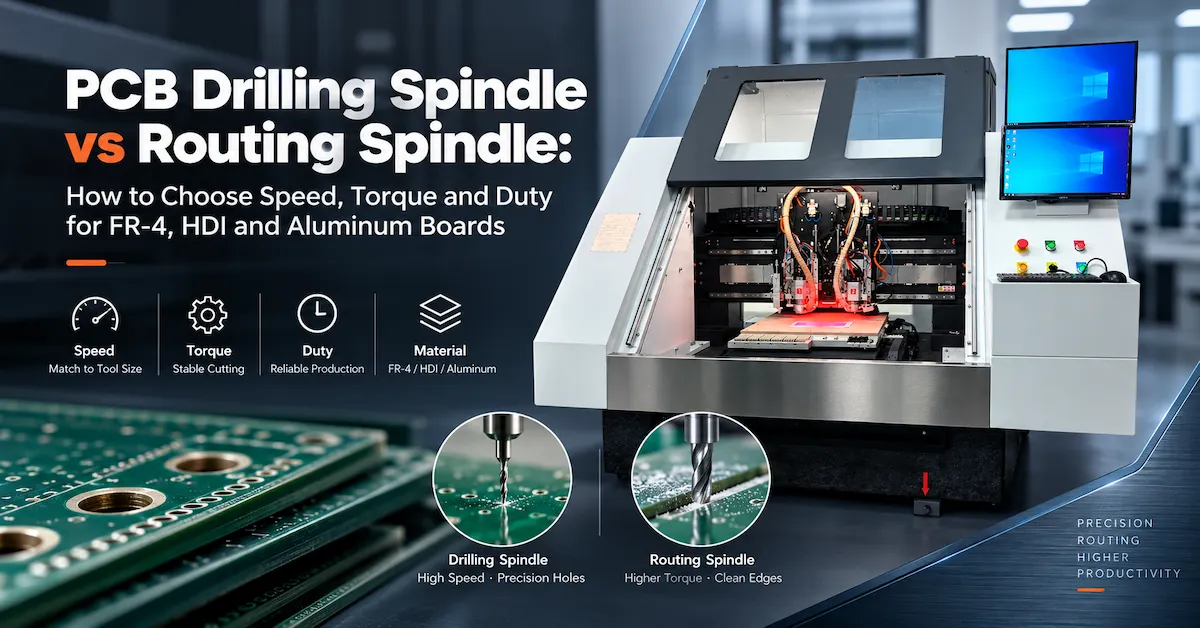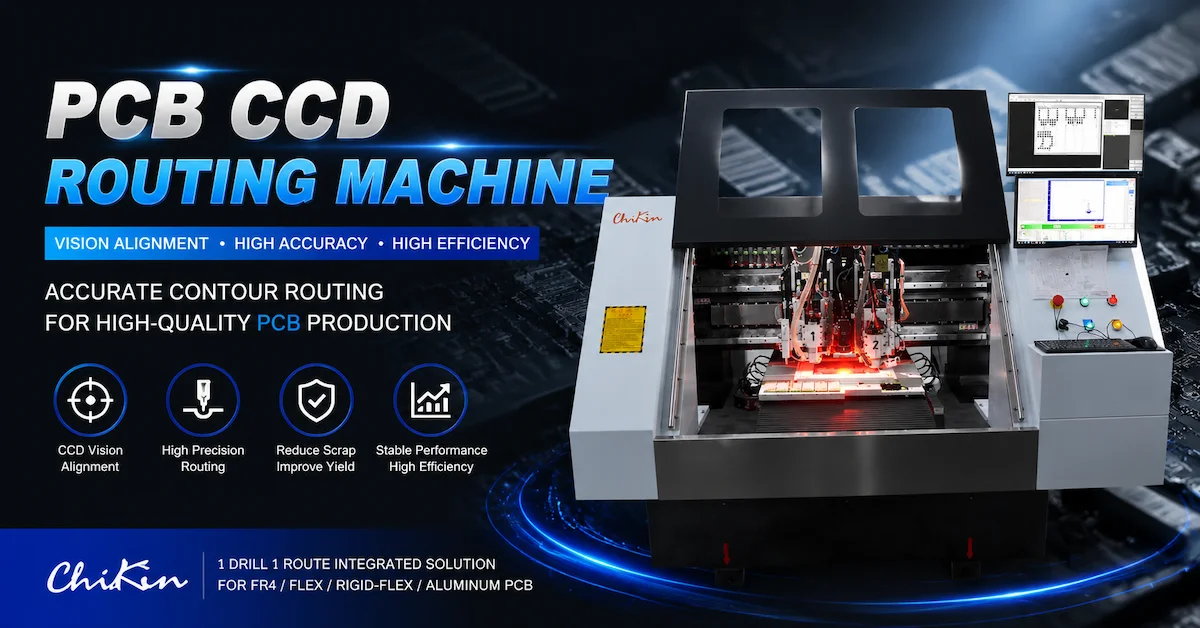




A PCB CNC drilling machine is an important piece of equipment for factories that need accurate holes, stable board outlines, and repeatable processing results. In PCB production, even a small position error can affect vias, through-holes, mounting holes, routing paths, and final assembly quality.
For many buyers, the main challenge is not only drilling one correct board. The real challenge is drilling and processing many boards with the same quality every day.
Manual drilling or unstable equipment may create:
- Hole position deviation
- Rough board edges
- Burrs around holes
- Inconsistent routing paths
- Broken drill bits
- Slow prototype turnaround
- Higher scrap and rework cost
A CNC-controlled system helps solve these problems by using programmed motion, stable fixturing, enclosed operation, and repeatable tool movement. For PCB manufacturers, prototype labs, electronics workshops, and equipment distributors, choosing the right PCB CNC drilling machine can improve both production quality and buyer confidence.
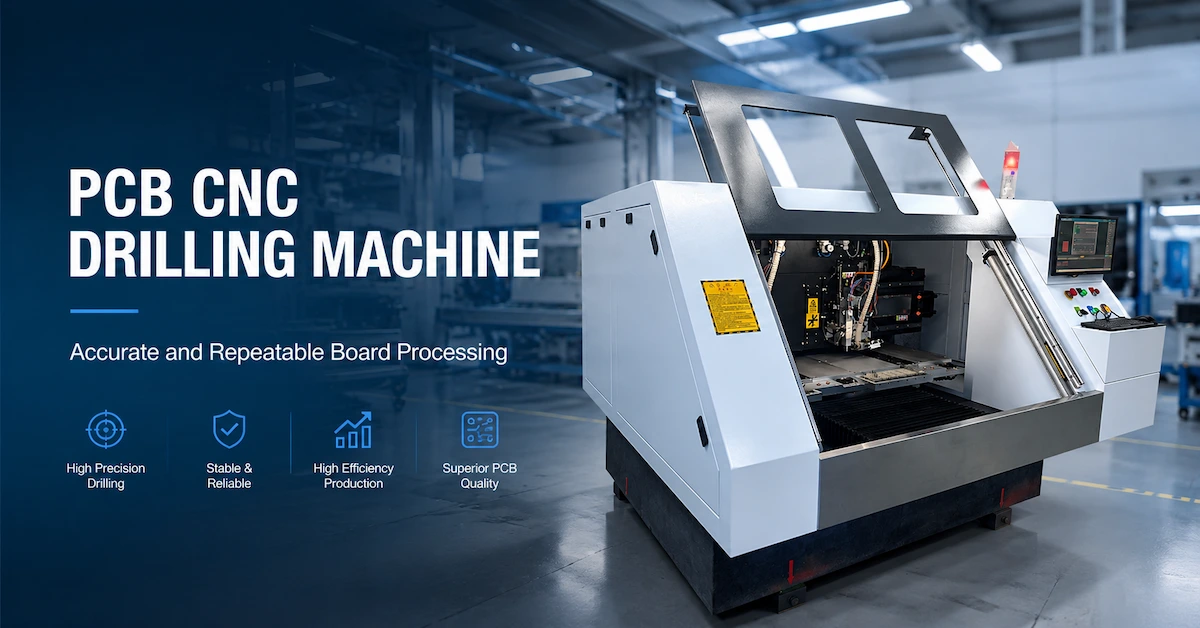
What Is a PCB CNC Drilling Machine?
A PCB CNC drilling machine is computer-controlled equipment used to drill holes in printed circuit boards. Depending on configuration, it may also support routing, milling, contour cutting, slotting, edge trimming, or other repeatable board-processing tasks.
It is commonly used for:
- PCB hole drilling
- Via and through-hole preparation
- Mounting hole drilling
- Tooling hole processing
- PCB outline routing
- Slot cutting
- Prototype board fabrication
- Small-batch PCB production
- Flat board-like material processing
Compared with manual drilling, CNC drilling gives operators better control over tool paths, hole locations, and repeat jobs. This is especially useful for factories that process different board designs or repeat the same PCB layout across multiple batches.
Who Needs a PCB CNC Drilling Machine?
A PCB CNC drilling machine is suitable for buyers who need controlled board processing, stable quality, and repeatable production.
| Buyer Type | Main Need | Why CNC Drilling Helps |
|---|---|---|
| PCB manufacturers | Accurate holes and board outlines | Improves repeatability and reduces manual errors |
| Prototype PCB labs | Fast design changes | Supports flexible small-batch processing |
| Electronics workshops | In-house board preparation | Reduces outsourcing delay |
| R&D teams | Sample boards and testing | Helps process trial designs consistently |
| Small-batch manufacturers | Mixed board designs | Makes repeat jobs easier to manage |
| Equipment distributors | Practical PCB machine solution | Fits buyers looking for entry-level or mid-level automation |
If your factory mainly needs PCB samples, prototypes, short runs, or controlled board preparation, a PCB CNC drilling and routing system can be more practical than a large multi-spindle production line.
Main Applications of PCB CNC Drilling Machines
PCB CNC drilling machines are used across different stages of board fabrication. Their value is strongest when the buyer needs a balance of accuracy, flexibility, and manageable equipment cost.
Typical applications include:
- FR4 PCB drilling
- Prototype PCB drilling
- Small-batch circuit board fabrication
- PCB edge trimming
- Board contour routing
- Slot and opening processing
- Fixture plate drilling
- Light milling or engraving
- Copper-clad panel preparation
- PCB sample room production
For buyers who need both hole drilling and board outline routing, a PCB CNC drilling and routing machine can reduce manual transfer between machines and improve process consistency.
Key Benefits of a PCB CNC Drilling Machine
1. Better Hole Position Accuracy
PCB holes must align with copper pads, vias, components, mounting points, and downstream assembly requirements. CNC-controlled drilling helps reduce manual positioning errors and keeps hole locations more consistent.
2. Repeatable Board Processing
Repeatability is one of the biggest reasons to choose CNC equipment. Once the correct program is set, the same operation can be repeated across multiple boards with less operator variation.
3. Flexible for Prototype and Small-Batch Work
A PCB CNC drilling machine is useful when board designs change frequently. Instead of building complex tooling for every new design, operators can adjust the program and fixture setup.
4. Cleaner Workflow in an Enclosed Machine
Enclosed CNC equipment helps separate the operator from the machining zone. It can also help keep the workshop more organized during drilling, routing, or light milling tasks.
5. Better Control Than Manual Processing
Manual drilling or trimming can damage traces, create burrs, or make board dimensions inconsistent. CNC motion improves process control and helps reduce avoidable defects.
PCB CNC Drilling Machine vs Manual PCB Drilling
| Comparison Point | Manual PCB Drilling | PCB CNC Drilling Machine |
| Hole Position | Depends heavily on operator skill | Program-controlled and more repeatable |
| Batch Consistency | Difficult to maintain | Better for repeated board processing |
| Speed for Repeated Jobs | Slower | More efficient after setup |
| Board Damage Risk | Higher | Lower with proper fixturing |
| Best For | Simple repair or very low volume | Prototype, small-batch, controlled production |
| Operator Safety | More exposed | Enclosed systems improve separation |
| Long-Term Value | Low initial cost | Better consistency and production control |
For buyers focused only on occasional manual repair, a CNC machine may not be necessary. But for regular PCB fabrication, prototyping, or small-batch production, CNC drilling can provide stronger long-term value.
PCB CNC Drilling Machine vs PCB CNC Drilling and Routing Machine
Some buyers only need hole drilling. Others need drilling plus routing, edge cutting, or contour processing. Choosing between the two depends on your production workflow.
| Machine Type | Best For | Buyer Advantage |
| PCB CNC Drilling Machine | Hole drilling, vias, mounting holes | Focused drilling process |
| PCB CNC Drilling and Routing Machine | Holes, slots, outlines, contours | More flexible board fabrication |
| Small CNC PCB Drilling Machine | Prototypes and compact labs | Lower footprint and easier setup |
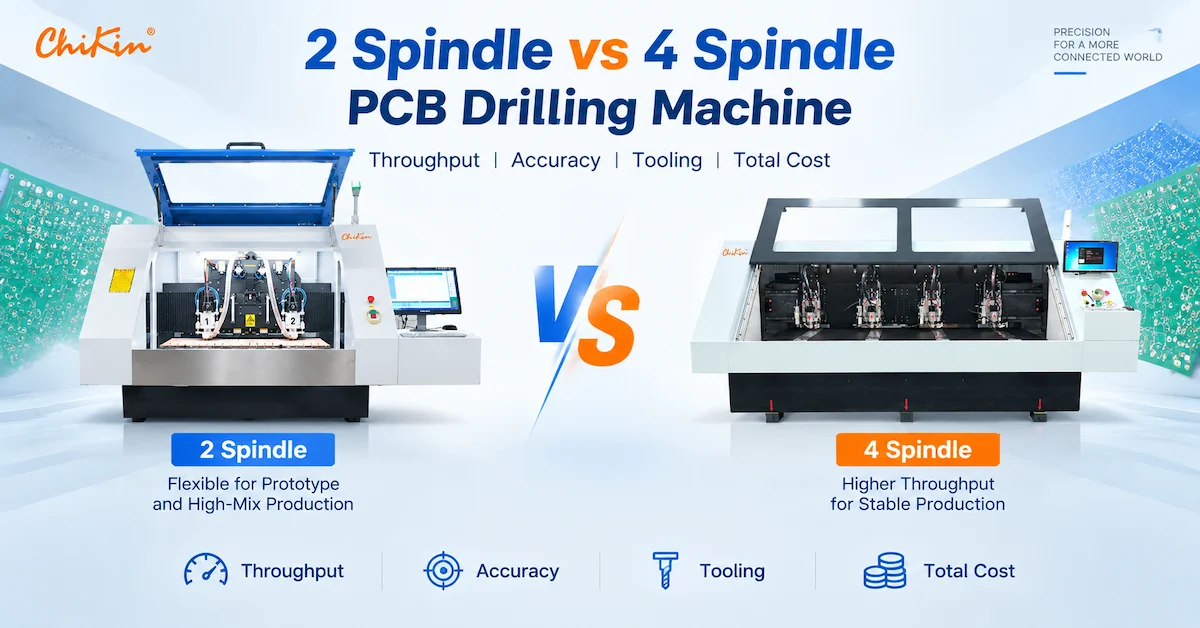
| Multi-Spindle PCB Drilling Machine | High-volume repeated drilling | Higher output for mass production |
If your factory needs both drilling and board shaping, a PCB CNC drilling and routing machine may be the better investment.
Key Technical Factors Buyers Should Check
1. Motion Accuracy and Repeatability
Accuracy is not only about the spindle. It depends on the full motion system, including guide rails, drive components, worktable stability, and software control.
Ask the supplier:
- What is the positioning accuracy?
- What is the repeatability?
- Can the machine process sample boards?
- How is accuracy checked before delivery?
- Can the fixture hold the board flat?
For PCB production, repeatability matters because buyers need consistent results across multiple boards.
2. Spindle and Tool Compatibility
The spindle determines whether the machine can drill clean holes and support routing or light milling tasks. Buyers should confirm tool compatibility before purchase.
Check:
- Drill bit diameter range
- Routing bit compatibility
- Spindle speed
- Tool holding method
- Tool change workflow
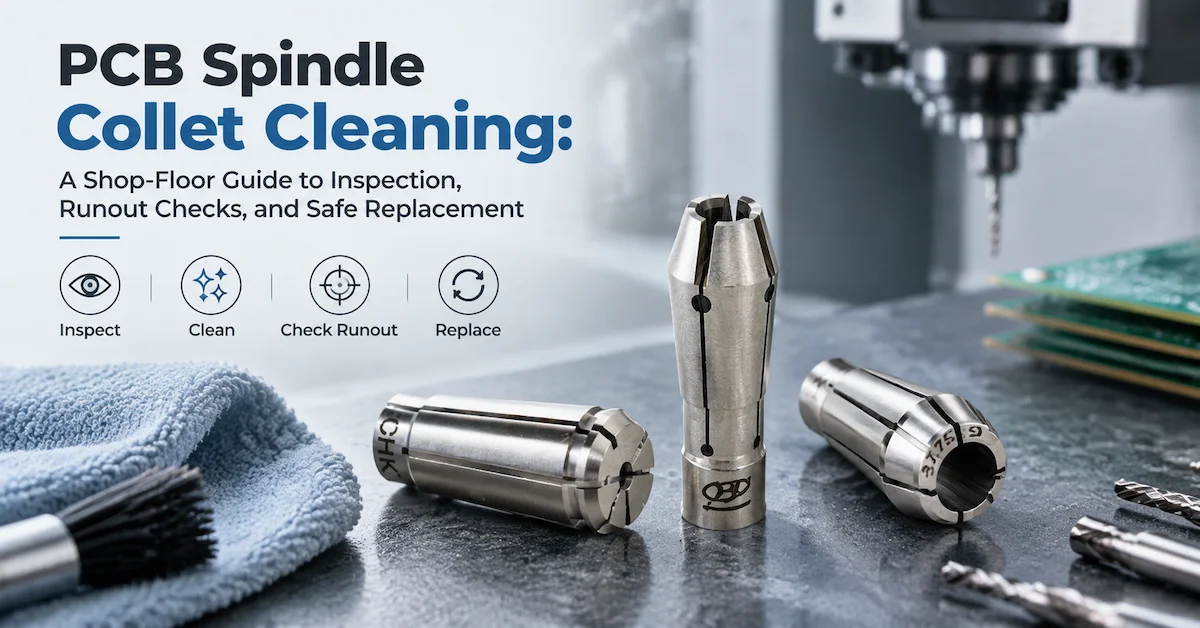
- Tool runout control
- Maintenance requirements
If the machine will process different materials, tool compatibility becomes even more important.
3. Enclosure and Safety Design
A protected machining area helps improve operator safety and keeps the work zone more controlled. For PCB workshops, this can also make daily operation cleaner and more professional.
Important details include:
- Front access opening
- Top lid or service access
- Emergency stop position
- Visibility into the work area
- Cleaning and maintenance access
- Cable and motion protection
A good enclosure should not make maintenance difficult. Buyers should check how easily operators can clean, inspect, and service the machine.
4. Fixture and Worktable Design
PCB panels must stay flat and stable during drilling or routing. Poor fixture design can cause movement, vibration, or inconsistent results.
Ask:
- How is the board fixed?
- Can custom fixtures be used?
- Does the worktable support repeated positioning?
- Can it handle different board sizes?
- Is the table easy to clean?
For high-mix production, fixture flexibility can be more important than maximum speed.
5. Software and Control Interface
A PCB CNC drilling machine should be easy to operate. Software affects setup time, operator training, and repeat production.
Buyers should confirm:
- Supported file formats
- Program storage
- Parameter management
- Operator interface language
- Remote support availability
- Training materials
For overseas buyers, English interface and clear training support are important decision factors.
6. Dust, Chips, and Maintenance
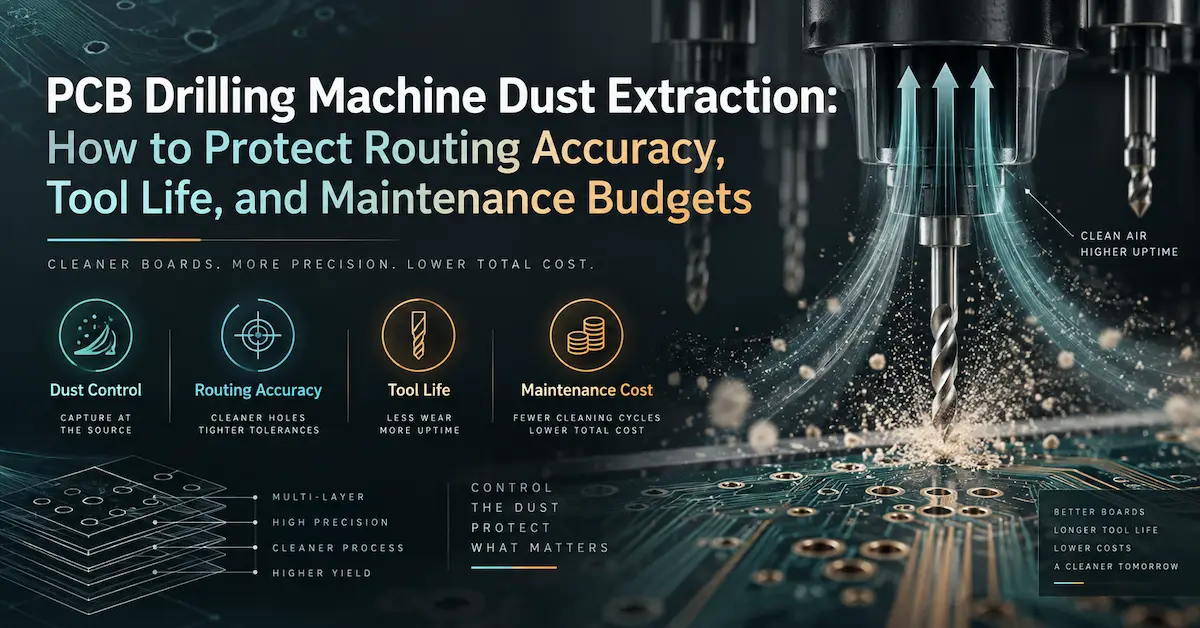
PCB drilling and routing can create debris. The machine should be easy to clean and maintain, especially if used daily.
Check:
- Dust extraction compatibility
- Chip collection method
- Enclosure cleaning access
- Tool inspection workflow
- Lubrication or guide maintenance
- Spare parts availability
Maintenance access is often overlooked during purchase, but it directly affects downtime later.
Product Match: CHIKIN CNC PCB CNC Drilling and Routing Machine
For this topic, the most relevant CHIKIN CNC product is:
PCB CNC Drilling and Routing Machine for Repeatable Board Fabrication
This product is suitable for buyers who need computer-controlled PCB drilling, routing, edge trimming, and repeatable board processing. It is especially relevant for prototype labs, small-batch production lines, electronics workshops, and buyers who need a controlled enclosed CNC processing platform.
Recommended product page:
Recommended anchor text:
PCB CNC Drilling and Routing Machine
You can also link to:
https://www.chikincnc.com/products
https://www.chikincnc.com/about-us
https://www.chikincnc.com/service/faq
Specification Checklist for PCB CNC Drilling Machine Buyers
| Item | What to Confirm | Why It Matters |
| Working Area | Maximum board or panel size | Ensures board compatibility |
| Motion System | Linear rails, drive system, gantry structure | Affects accuracy and repeatability |
| Spindle | Speed, runout, tool compatibility | Controls drilling and routing quality |
| Fixture Method | Clamp, vacuum, or custom fixture | Keeps PCB stable |
| Software | File support and program storage | Improves repeat production |
| Enclosure | Access, safety, cleaning | Supports safe daily operation |
| Tool System | Drill and routing bit compatibility | Matches production tasks |
| Dust Control | Extraction or chip management | Keeps machine cleaner |
| Service Support | Training, spare parts, remote help | Reduces downtime |
| Application Fit | Prototype, small batch, board routing | Prevents wrong machine selection |
Common Buying Mistakes to Avoid
Mistake 1: Buying a Drilling-Only Machine When Routing Is Needed
Many buyers first search for a PCB CNC drilling machine but later realize they also need slots, edges, or contour routing. Confirm your full process before choosing.
Mistake 2: Ignoring Fixture Requirements
Even a precise machine cannot deliver good results if the board is not fixed properly. Share your board size, thickness, and positioning method with the supplier.
Mistake 3: Comparing Only Machine Price
A lower-cost machine may lack stable motion, proper enclosure design, service access, or software support. For production use, total value is more important than initial price.
Mistake 4: Not Asking About Tool Compatibility
PCB drilling, routing, engraving, and milling may require different tools. Confirm tool range before placing an order.
Mistake 5: Skipping Sample Testing
If your boards have strict accuracy requirements, sample processing is the safest way to verify real performance.
Buyer Checklist Before Requesting a Quote
Before requesting a PCB CNC drilling machine quotation, prepare:
| Information | Example |
| Board material | FR4, copper-clad panel, aluminum PCB |
| Board size | Length × width × thickness |
| Process need | Drilling, routing, milling, slotting |
| Minimum hole diameter | 0.2mm, 0.3mm, 0.5mm |
| Routing requirement | Edge trimming, contour cutting, slots |
| Production volume | Prototype, small batch, repeated orders |
| Accuracy target | Hole or routing tolerance |
| Fixture need | Clamp, vacuum, custom fixture |
| Software requirement | File type, interface language |
| Purchase goal | New line, upgrade, lab use, distributor supply |
This information helps CHIKIN CNC recommend a more suitable configuration instead of giving a generic quote.
FAQ: PCB CNC Drilling Machine
1. What is a PCB CNC drilling machine?
A PCB CNC drilling machine is computer-controlled equipment used to drill accurate holes in printed circuit boards. Depending on configuration, it may also support routing, milling, or contour cutting.
2. What is the difference between PCB drilling and PCB routing?
PCB drilling makes holes in the board, while PCB routing cuts outlines, slots, edges, or custom board shapes.
3. Can one machine do both PCB drilling and routing?
Yes. A PCB CNC drilling and routing machine can support both processes if configured with the right spindle, tools, fixture, and software.
4. Is this machine suitable for prototype PCB production?
Yes. PCB CNC drilling machines are useful for prototype labs because they support repeated drilling and machining with flexible program changes.
5. What affects drilling accuracy?
Accuracy depends on motion system quality, spindle stability, fixture design, board flatness, software control, and tool condition.
6. Should I choose a compact CNC machine or a production machine?
Choose a compact CNC machine for prototypes and small labs. Choose a larger production machine if daily output and cycle time are more important.
7. What should I check before buying?
Check working area, spindle capability, tool compatibility, enclosure design, software, fixture method, dust control, and after-sales support.
8. What information should I send for a quote?
Send board material, size, thickness, hole diameter, routing requirement, production volume, accuracy target, and software needs.
Conclusion: Choose a PCB CNC Drilling Machine Based on Workflow, Not Only Price
A PCB CNC drilling machine is a practical investment for factories that need accurate holes, repeatable board processing, and more controlled PCB fabrication. For many buyers, the best solution is not only a drilling machine, but a PCB CNC drilling and routing machine that can support holes, slots, outlines, and board shaping in one platform.
CHIKIN CNC provides PCB CNC drilling and routing equipment for prototype labs, electronics workshops, and small-batch production lines that need stable, repeatable, and enclosed board processing.
If you are comparing PCB CNC drilling machine options, send your board material, size, thickness, hole diameter, routing needs, production volume, and accuracy target. CHIKIN CNC can help recommend a suitable configuration for your PCB production workflow.
Contact CHIKIN CNC to request a PCB CNC drilling and routing machine solution and quotation: