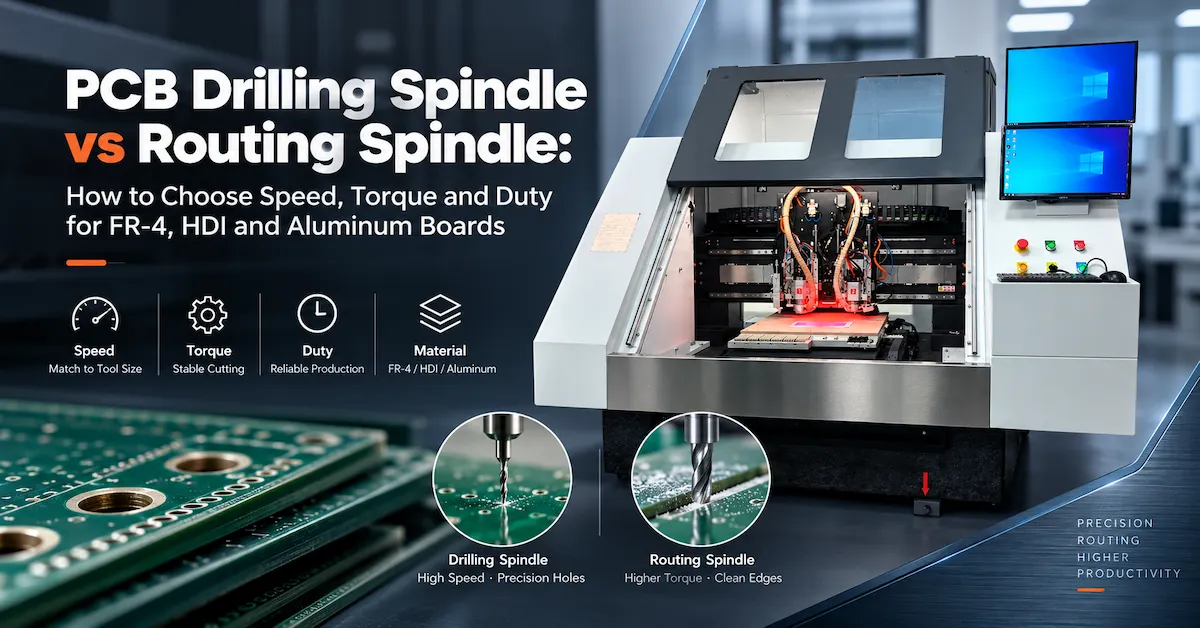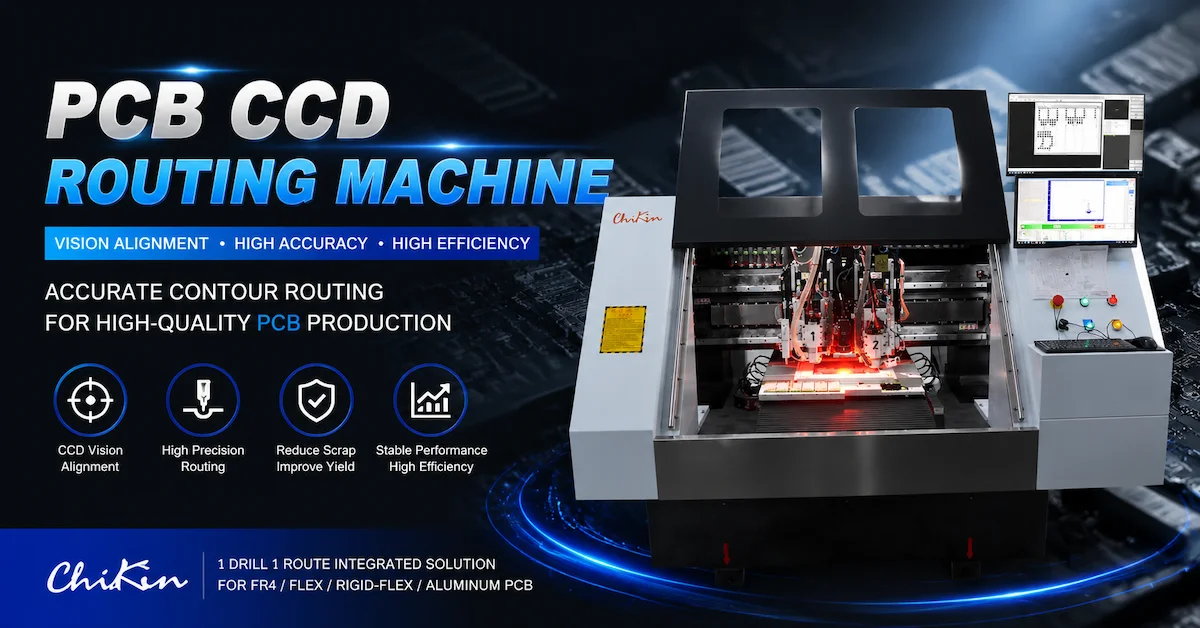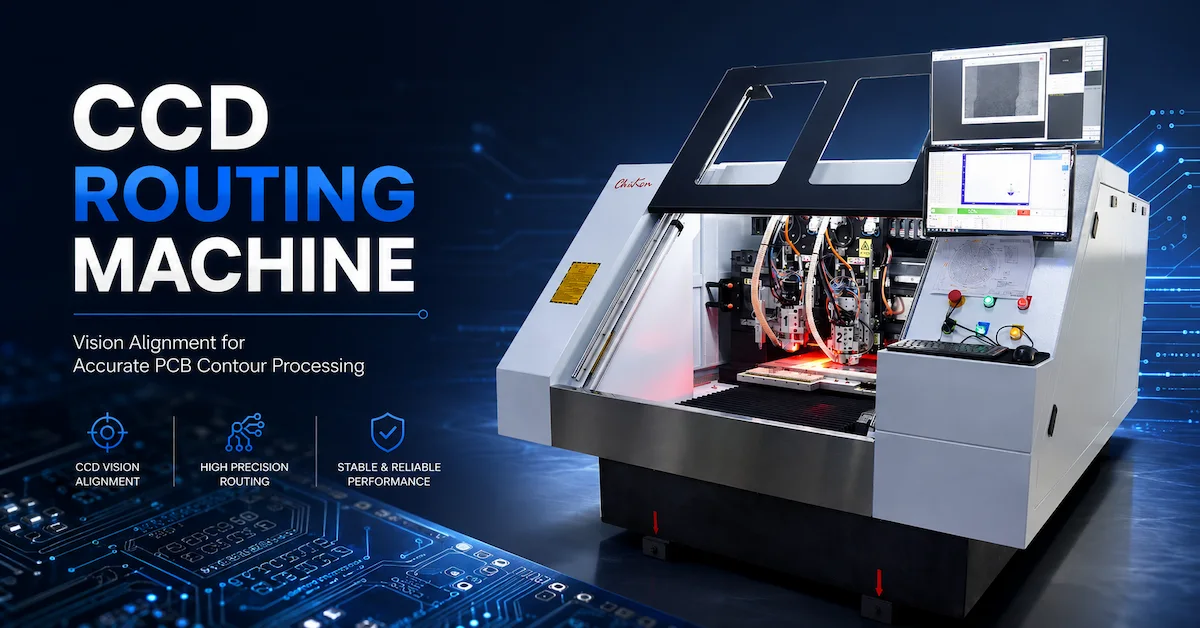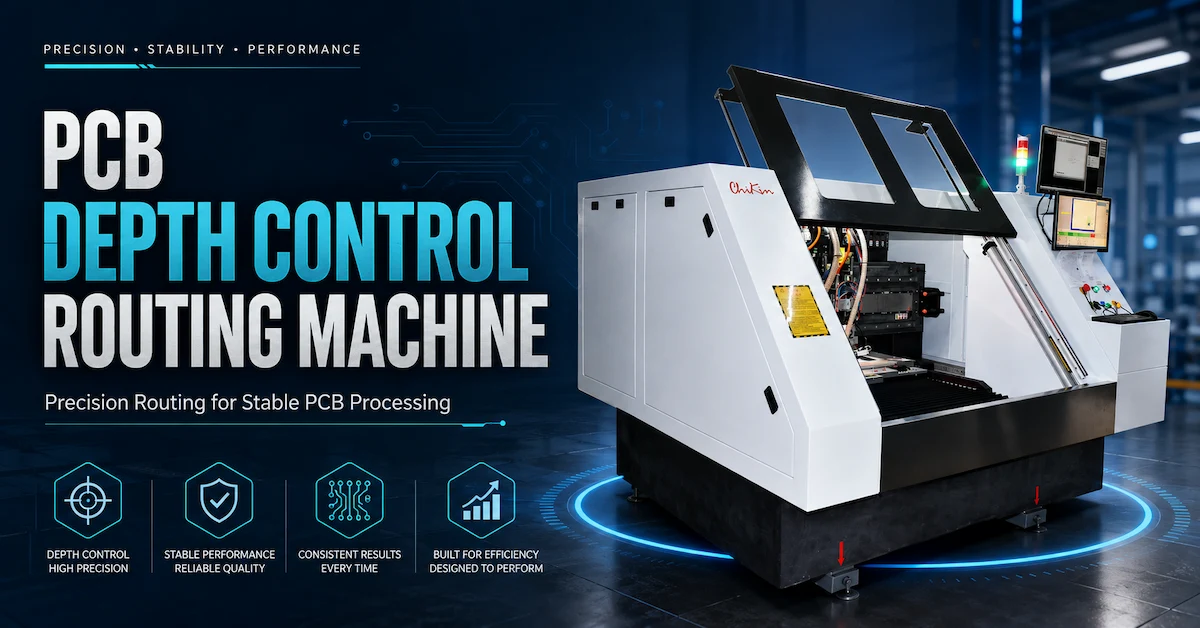




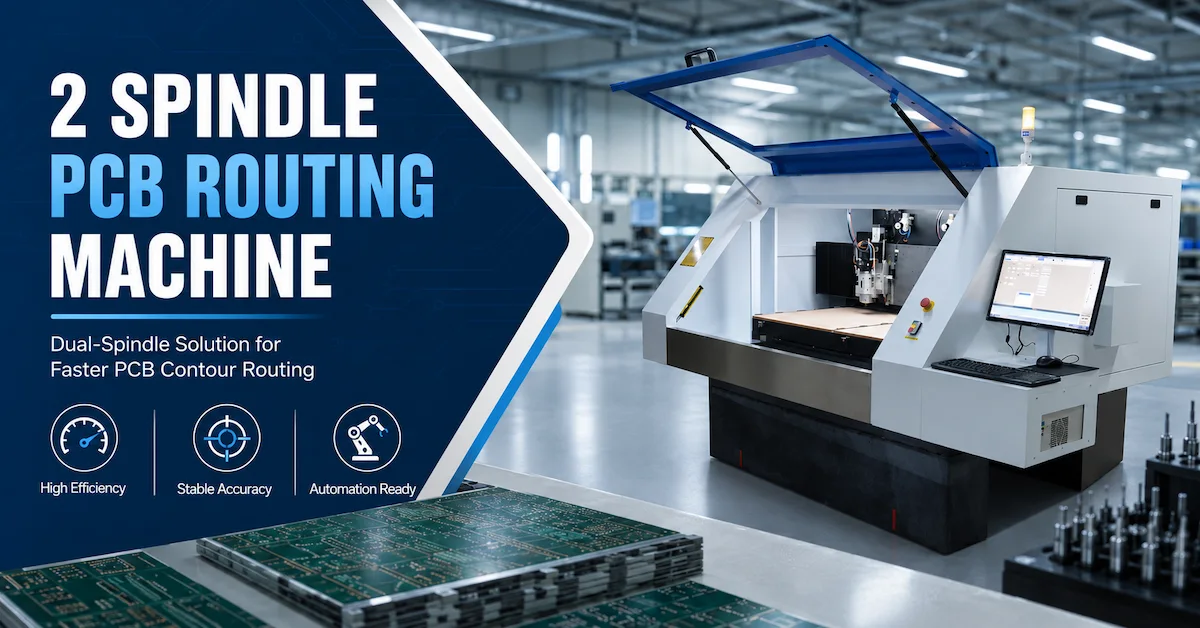
A 2 spindle PCB Routing Machine is designed for PCB manufacturers that need faster contour routing, cleaner board edges, and more stable processing than a single-spindle setup can provide. In PCB production, routing is not only a cutting step. It affects final board dimensions, edge quality, panel separation, assembly fit, and production consistency.
Many PCB factories start with basic drilling or single-spindle routing equipment. That may be enough for samples or low-volume work. But when order volume increases, routing can quickly become a bottleneck. Operators may face longer cycle times, frequent tool changes, inconsistent edge quality, and delayed delivery.
A dual-spindle routing solution helps solve this problem by increasing processing efficiency while maintaining CNC-controlled precision. When the machine also supports drilling, it can complete hole making and contour routing in one equipment platform, reducing transfer time and improving workflow stability.
For PCB manufacturers, electronics factories, prototype-to-batch production lines, and overseas equipment buyers, a 2 spindle PCB Routing Machine can be a practical upgrade for mid-volume production.
What Is a 2 Spindle PCB Routing Machine?
A 2 spindle PCB Routing Machine is CNC equipment equipped with two spindles for PCB board processing. Depending on configuration, it may support contour routing, slot cutting, drilling, milling, or combined drilling and routing operations.
In CHIKIN CNC’s product line, the most relevant model is the 2 Spindle PCB Drilling and Routing Machine CK-02R. It is designed for factories that need both drilling and routing performance in one machine, with dual high-speed spindles, automatic tool change, tool detection, and stable mechanical structure.
This type of equipment may also be called:
- Dual spindle PCB routing machine
- 2 spindle PCB drilling and routing machine
- PCB CNC routing machine
- PCB contour routing machine
- PCB drilling and routing equipment
- Mid-volume PCB routing machine
The core value is balanced productivity: faster than single-spindle equipment, but easier to manage than larger multi-spindle systems.
Why Routing Quality Matters in PCB Manufacturing
PCB routing determines the final board outline, slot accuracy, and edge finish. Poor routing can create mechanical and assembly problems even when the circuit itself is correct.
Common routing defects include:
- Rough board edges
- Chipped FR4 material
- Incorrect outline dimensions
- Slot width deviation
- Board vibration during cutting
- Excessive tool wear
- Dust and debris buildup
- Inconsistent results between batches
A professional PCB routing machine should reduce these risks through stable spindle performance, rigid machine structure, reliable fixture design, proper tool management, and CNC program control.
For manufacturers supplying electronics assemblies, clean routing quality helps improve final product fit and reduces rework.
Who Should Choose a 2 Spindle PCB Routing Machine?
A 2 spindle PCB Routing Machine is suitable for buyers who need higher routing efficiency than one spindle can offer, but do not require a large four-spindle or six-spindle system.
| Buyer Type | Main Need | Why 2 Spindles Fit |
|---|---|---|
| Mid-volume PCB manufacturers | Faster routing output | Reduces contour cutting bottlenecks |
| PCB drilling and routing users | Integrated workflow | Supports holes and outlines in one platform |
| FR4 PCB factories | Clean board edge quality | Stable spindle helps reduce burrs and chipping |
| Aluminum PCB processors | Stronger routing stability | Helps manage tougher board materials |
| Prototype-to-batch workshops | Flexible production upgrade | Better output than single-spindle machines |
| PCB equipment distributors | Commercially attractive solution | Easy to position for growing factories |
If your factory mainly handles low-volume samples, a single-spindle machine may still be enough. If your factory needs faster contour routing, repeated board processing, and better production flow, a 2 spindle machine is a stronger choice.
Main Applications of a 2 Spindle PCB Routing Machine
A dual-spindle PCB routing solution can support many board-processing tasks.
Typical applications include:
- PCB outline routing
- FR4 PCB contour cutting
- PCB slot processing
- Panel depaneling
- Board edge trimming
- Aluminum PCB routing
- Multilayer PCB routing
- PCB drilling and routing integration
- Mid-volume PCB production
- Production line capacity upgrade
For buyers who need both holes and profiles, a dual-spindle drilling and routing system can reduce manual handling and save workshop space.
2 Spindle PCB Routing Machine vs Single-Spindle Routing Machine
| Comparison Point | Single-Spindle PCB Routing Machine | 2 Spindle PCB Routing Machine |
| Output Efficiency | Suitable for samples and small batches | Better for mid-volume production |
| Investment Level | Lower | Higher but more productive |
| Operation Complexity | Easier | Moderate |
| Best For | Prototype routing, flexible work | Repeated routing and drilling-routing workflows |
| Tool Change Pressure | Higher if one spindle handles all tasks | Lower with better tool management |
| Workflow Fit | Basic routing | Drilling + routing or faster contour processing |
| Long-Term Value | Good entry-level solution | Better for growing PCB factories |
The best choice depends on order volume. A single-spindle machine can be practical for small batches, while a 2 spindle PCB Routing Machine is more suitable when the routing process starts limiting delivery speed.
Key Benefits of a 2 Spindle PCB Routing Machine
1. Faster PCB Contour Routing
The biggest advantage of a 2 spindle PCB Routing Machine is improved efficiency. With dual-spindle capability, factories can reduce processing time and better support repeated board production.
This is especially useful for boards with long routing paths, multiple slots, or frequent profile cutting.
2. Better Balance Between Cost and Output
A dual-spindle machine offers a practical upgrade for factories that have outgrown single-spindle equipment but are not ready for a larger multi-spindle system.
It gives buyers stronger productivity without immediately moving into a more complex production platform.
3. Drilling and Routing in One Workflow
Many PCB factories need both drilling and contour routing. A 2 spindle PCB drilling and routing machine can handle both operations in one platform, reducing transfer time between separate machines.
This improves workflow efficiency and reduces the risk of board handling errors.
4. More Stable Edge Quality
Routing quality depends on spindle stability, tool sharpness, fixture holding, and machine rigidity. A professional dual-spindle machine with a stable granite base and precision motion system helps maintain cleaner board edges and more repeatable dimensions.
5. Reduced Tool-Related Downtime
Automatic tool change, tool length detection, tool diameter detection, and broken tool detection help reduce manual intervention. This is important for mid-volume PCB factories where downtime affects delivery schedules.
Key Technical Factors Buyers Should Check
1. Spindle Speed and Routing Capability
The spindle is one of the most important parts of a PCB routing machine. Buyers should check speed, power, cooling, tool compatibility, and runout.
Ask the supplier:
- What is the spindle speed?
- What routing tool diameter is supported?
- Is the spindle water-cooled?
- Can the machine support drilling and routing tools?
- What tool maintenance is required?
For PCB contour routing, spindle stability directly affects edge quality and tool life.
2. Machine Base and Vibration Stability
Routing creates lateral cutting force. If the machine base is weak, the PCB edge may become rough or inaccurate. A rigid base helps reduce vibration and improves routing consistency.
Important structure points include:
- Granite base
- Stable gantry
- Precision linear guides
- Quality ballscrews
- Worktable rigidity
- Enclosed processing area
For mid-volume PCB production, machine stability is not optional. It is a core factor in board quality.
3. Accuracy and Repeatability
A 2 spindle PCB Routing Machine should maintain routing accuracy across repeated batches. Buyers should confirm the machine’s positioning accuracy, repeatability, and sample testing options.
Important questions include:
- What repeatability can the machine achieve?
- Can the supplier provide routing samples?
- How is accuracy tested before shipment?
- What board size and thickness are supported?
- Can it maintain stable edge quality during long runs?
Fast routing is only valuable when dimensions remain stable.
4. Automatic Tool Change and Detection
Routing tools wear over time. Tool wear can cause rough edges, dimensional drift, and broken-tool problems.
Useful functions include:
- Automatic tool change
- Tool length detection
- Tool diameter detection
- Broken tool detection
- Pressure foot switch
- Tool magazine support
These functions help reduce downtime and protect board quality during repeated production.
5. Board Fixture and Holding Method
The PCB panel must stay flat and stable during routing. If the board moves, the routing path may shift.
Ask:
- How is the PCB fixed?
- Does the machine support vacuum or fixture clamping?
- Can it handle different board sizes?
- Can custom fixtures be used?
- How is panel flatness controlled?
Good fixture design improves both routing accuracy and edge quality.
6. Software and Operator Interface
Software affects setup time, operator training, and production repeatability. Buyers should confirm whether the machine interface is suitable for daily production.
Check:
- English interface
- Program storage
- Routing parameter settings
- Drilling and routing workflow control
- Remote support availability
- Operator training
A strong machine should be easy for operators to use, not only impressive on paper.
Product Match: CHIKIN CNC 2 Spindle PCB Drilling and Routing Machine CK-02R
For this article, the most relevant CHIKIN CNC product is:
2 Spindle PCB Drilling and Routing Machine CK-02R
This machine is suitable for buyers who need dual-spindle PCB routing capability, drilling and routing integration, stable mid-volume output, automatic tool management, and high-precision CNC control.
It is especially suitable for:
- PCB contour routing
- PCB drilling and routing workflow
- FR4 board processing
- Multilayer PCB routing
- Aluminum PCB routing
- Mid-volume PCB production
- Production line capacity upgrades
Recommended product page:
https://www.chikincnc.com/product/2-spindle-pcb-drilling-and-routing-machine
Recommended anchor text:
2 Spindle PCB Drilling and Routing Machine
You can also link to:
https://www.chikincnc.com/products
https://www.chikincnc.com/about-us
https://www.chikincnc.com/service/faq
Specification Checklist for 2 Spindle PCB Routing Machine Buyers
| Item | What to Confirm | Why It Matters |
| Spindle Quantity | 2 spindles | Determines output and process flexibility |
| Routing Tool Range | Supported router bit diameter | Matches contour cutting needs |
| Spindle Speed | High-speed routing support | Affects edge quality and cycle time |
| Machine Base | Granite or high-rigidity structure | Reduces vibration |
| Motion System | Linear guides and ballscrews | Supports routing accuracy |
| Tool Change | Automatic tool changer | Reduces downtime |
| Tool Detection | Length, diameter, broken tool detection | Protects board quality |
| Working Area | Maximum PCB panel size | Ensures board compatibility |
| Control System | English interface and program storage | Improves operation efficiency |
| Service Support | Training, spare parts, remote help | Reduces after-sales risk |
Common Buying Mistakes to Avoid
Mistake 1: Searching for Routing but Ignoring Drilling Needs
Many buyers search for a routing machine, but their production also requires hole drilling. If both processes are needed, choose a drilling and routing machine instead of routing-only equipment.
Mistake 2: Buying Too Small for Mid-Volume Orders
A single-spindle routing machine may be cheaper, but it may become a bottleneck when orders increase. If your factory already has repeated PCB orders, a 2 spindle system may offer better long-term value.
Mistake 3: Ignoring Tool Detection
Broken or worn routing tools can damage board edges and create scrap. Tool detection helps reduce hidden defects and downtime.
Mistake 4: Not Sending Routing Drawings
Suppliers need your board outline, slot design, tolerance, and material information to recommend the right machine and tooling.
Mistake 5: Comparing Only Initial Price
Low machine price may come with weaker structure, slower tool change, poor software, or limited service. For production equipment, uptime and board quality matter more than the lowest price.
Buyer Checklist Before Requesting a Quote
Before requesting a quotation, prepare:
| Information | Example |
| Board material | FR4, multilayer PCB, aluminum PCB |
| Board thickness | 0.8mm, 1.6mm, 2.0mm |
| Board size | Length × width |
| Routing task | Outline cutting, slots, depaneling |
| Drilling requirement | Yes or no |
| Minimum hole diameter | If drilling is needed |
| Routing tolerance | Required contour accuracy |
| Production volume | Boards per shift or per day |
| Current bottleneck | Slow routing, tool wear, rough edges |
| Automation need | Tool change, tool detection, program storage |
Complete information helps CHIKIN CNC recommend the correct routing or drilling-routing configuration.
FAQ: 2 Spindle PCB Routing Machine
1. What is a 2 spindle PCB Routing Machine?
A 2 spindle PCB Routing Machine is CNC equipment with two spindles used for PCB contour routing, drilling-routing workflows, or higher-efficiency board processing.
2. Is a 2 spindle routing machine better than a single-spindle model?
For mid-volume production, yes. A dual-spindle machine can improve output and reduce process bottlenecks compared with single-spindle equipment.
3. Can this machine support both drilling and routing?
Yes. CHIKIN CNC’s CK-02R is a 2 Spindle PCB Drilling and Routing Machine designed for both drilling and routing operations.
4. What materials can it process?
Depending on tooling and configuration, it can support FR4, multilayer PCB, and aluminum PCB processing.
5. What affects routing edge quality?
Edge quality depends on spindle stability, tool sharpness, feed speed, board fixture, dust control, and machine rigidity.
6. Why is automatic tool change useful?
Automatic tool change reduces manual intervention, saves time, and helps maintain stable production when multiple tool sizes are required.
7. What should I check before buying?
Check spindle speed, routing tool range, machine base, accuracy, tool detection, working area, software interface, and service support.
8. What should I send before requesting a quote?
Send board material, thickness, size, routing drawing, drilling requirement, production volume, tolerance, and current process problems.
Conclusion: A 2 Spindle PCB Routing Machine Helps Improve Output and Board Quality
A 2 spindle PCB Routing Machine is a practical upgrade for PCB factories that need faster contour routing, cleaner board outlines, and more stable mid-volume production. It offers better efficiency than a single-spindle system while remaining easier to manage than larger multi-spindle machines.
For buyers who also need drilling, a 2 spindle PCB drilling and routing machine can improve workflow by combining hole processing and contour routing in one platform.
CHIKIN CNC’s 2 Spindle PCB Drilling and Routing Machine CK-02R is suitable for manufacturers that need stable routing accuracy, automatic tool management, and efficient PCB board processing.
If you are comparing 2 spindle PCB Routing Machine options, send your board material, thickness, routing drawing, drilling requirement, production volume, and accuracy target. CHIKIN CNC can help recommend the right solution for your PCB production line.
Contact CHIKIN CNC to request a 2 spindle PCB routing machine solution and quotation: