



PCB V-CUT saw blade for clean, controlled panel separation
The PCB V-CUT saw blade is designed for one of the most common pain points in board processing: separating panels without chipping edges, stressing copper traces, or creating uneven break lines. In production lines where panels must be cut consistently and neatly, the right cutting disc helps stabilize the process and reduce rework. Based on the visible product form, this is a circular toothed metal blade with a central arbor hole and auxiliary holes, built for machine-mounted cutting tasks where steady rotation and repeatable contact matter.
Product overview
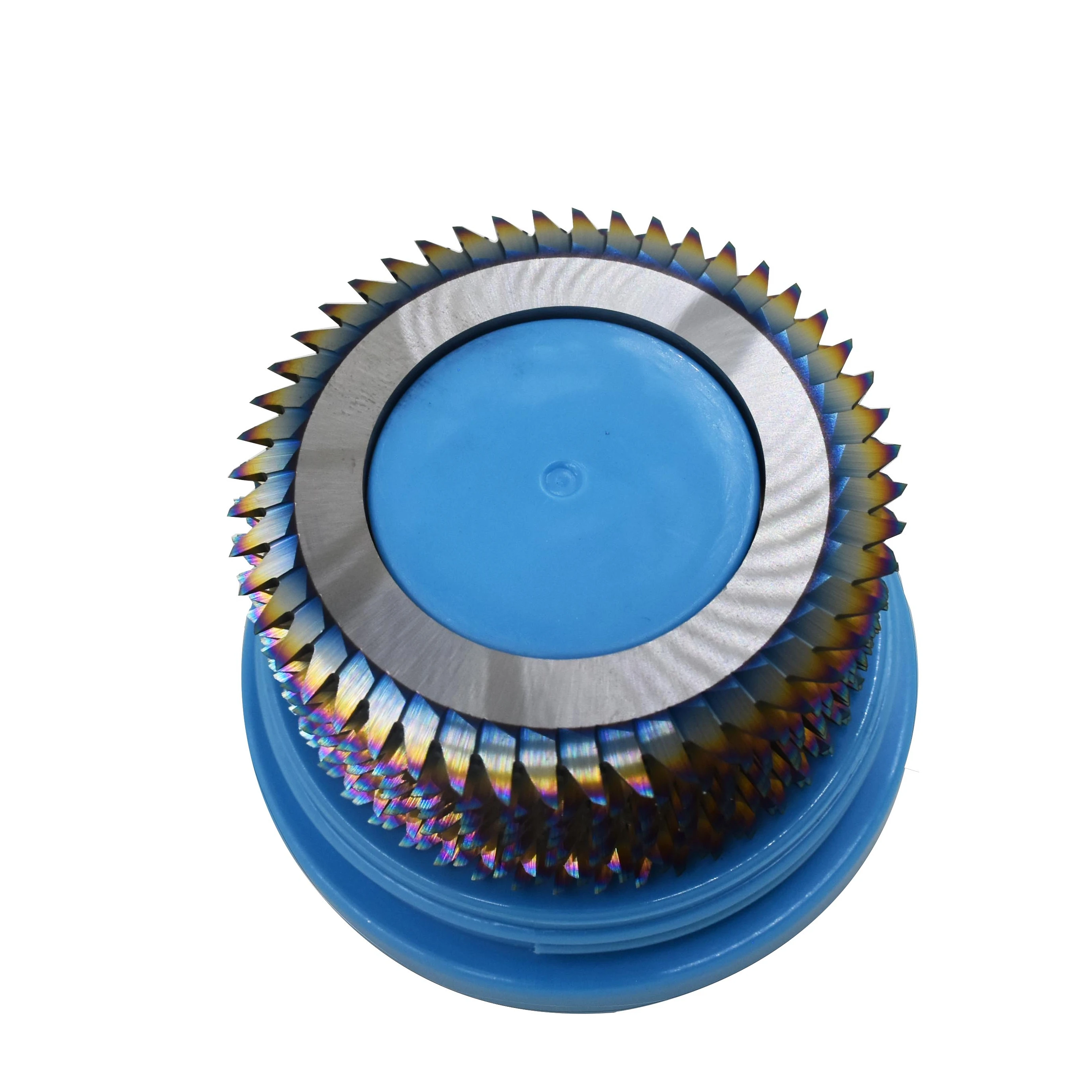
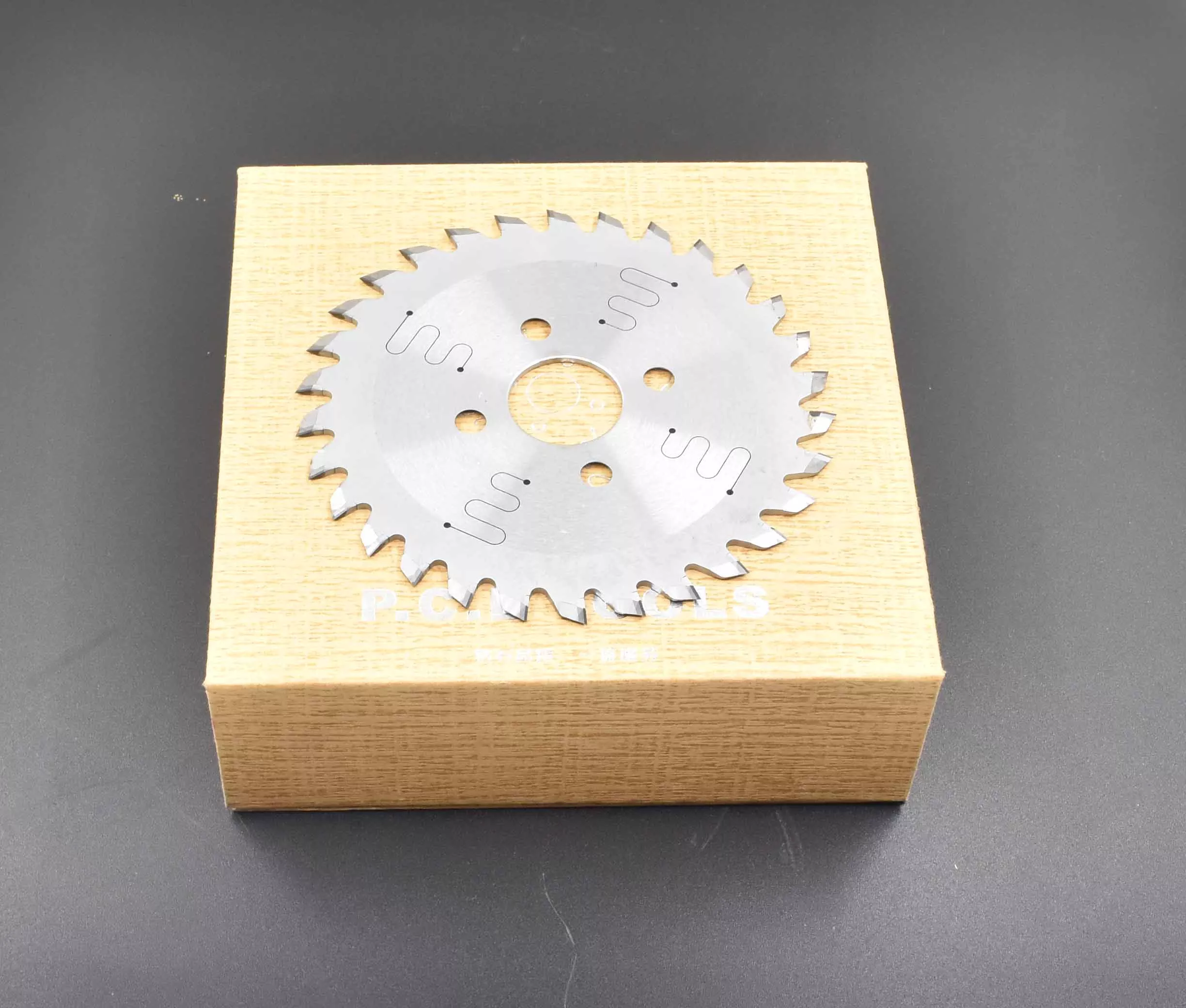
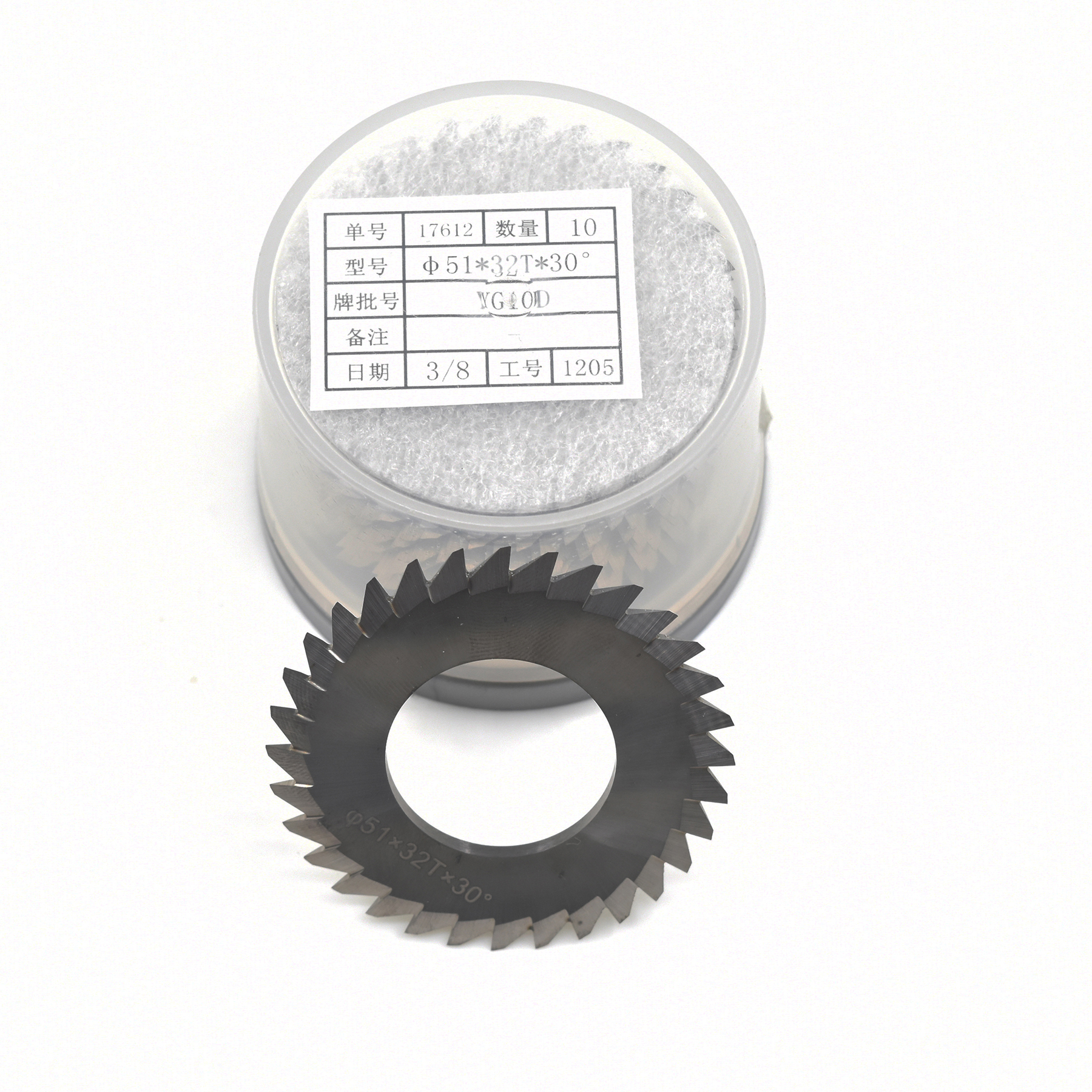
Although the exact blade geometry and material class cannot be confirmed from the image alone, the product clearly shows a round, precision-made disc structure with evenly spaced teeth around the perimeter. That makes it structurally similar to a PCB cutting saw blade used in panel depaneling or a PCB separator blade mounted on dedicated equipment. The silver metallic finish, relief slots, and mounting holes suggest a blade designed for balanced rotation and practical workshop use.
For buyers comparing a PCB depaneling blade against other cutting tools, the main advantage is control. A well-made blade does not merely remove material; it guides the cut, keeps the edge cleaner, and supports consistent throughput across batches. That matters in electronics manufacturing, where dimensional consistency can be as important as speed.
Detailed Specification
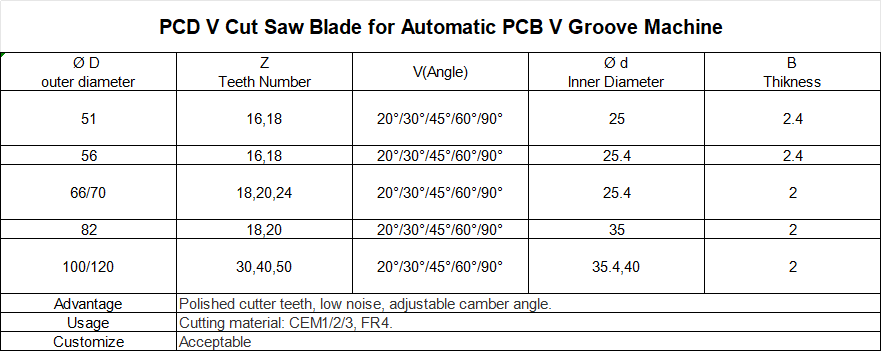
Visible specifications and capabilities
Structure seen in the product
The visible form includes a circular disc body, a large center bore for spindle mounting, and several smaller auxiliary holes near the hub area. Around the outer edge, tooth-like cutting features are distributed evenly. These visible elements indicate a tool made for rotary machine operation rather than hand use.
What this type of blade is typically expected to do
A PCB scoring saw blade or PCB cutting saw blade is usually selected when the goal is to cut along a defined line with minimal wandering. In panelized electronics work, that means supporting straight, repeatable cuts and helping reduce edge damage. If used as a V groove cutting blade, it may also support scoring-style separation where a controlled groove is part of the workflow. Exact suitability depends on the final tooth design, blade thickness, and the material being processed.
Materials and finish options
The product appears to be made from steel or alloy steel, with a bright machined surface finish. The face also shows etched or wavy slot-like patterns that may function as expansion relief, vibration control, or balancing features. That said, the specific function of those slots cannot be verified from the image alone.
In industrial supply, blades of this type may be offered with different finishes or edge treatments depending on application. Common variations can include ground faces, polished surfaces, heat-treated bodies, or carbide-tipped cutting edges. Since those details are not visible here, buyers should confirm the exact build before matching it to a specific line.
Manufacturing process and tool formation
The blade likely goes through a combination of laser cutting or stamping, followed by grinding and sharpening. The small holes near the center can support balancing, cooling, or weight reduction, while the tooth pattern is formed to match the intended cutting action. This kind of manufacturing approach is typical for a circular saw blade for PCB or other machine-mounted cutting tools that need tight geometric consistency.
Even when the exact process is not stated, a uniform disc shape and cleanly formed openings point to controlled production rather than rough fabrication. For buyers, that usually translates to better runout control and more stable installation on the spindle.
Application scenarios
Depending on the final specification, this type of blade may be used in PCB depaneling lines, electronics workshops, light industrial cutting stations, or OEM equipment supply. A PCB separator blade is especially relevant where pre-scored or panelized boards need to be divided efficiently. Similar blades can also be used in general machine cutting tasks where a thin, circular metal blade is appropriate.
Because the exact material compatibility is not confirmed, buyers should avoid assuming it is suitable for all substrates. The right choice depends on whether the target material is FR4, composite laminate, plastic, or another board type. Matching the blade to the substrate is what protects cut quality and tool life.
Quality control and buyer checks
When evaluating a PCB V-CUT blade, several practical factors matter more than marketing language: bore size, outer diameter, tooth profile, thickness, flatness, and balance. For production use, these details affect cut accuracy and machine stability. Visible auxiliary holes and a precise disc form are helpful signs, but they do not replace dimensional verification.
Buyers should also confirm the spindle interface, allowable RPM, and intended cutting direction. If the blade will be used in a PCB v groove cutter setup, consistency between the blade geometry and the groove width is essential. If the line requires low burr formation or reduced edge chipping, those requirements should be communicated before ordering.
Customization guidance
For OEM or replacement sourcing, customization may include diameter, center bore, auxiliary hole pattern, tooth count, tooth angle, and body thickness. If the tool is intended for PCB depaneling blade use, the cutting edge format should be matched to the panel material and the machine’s feed speed. A supplier can usually help align the blade design with the line layout, but the buyer needs to provide the actual equipment parameters.
How to choose the right blade
Start with the material to be cut, then check the machine speed, arbor size, and required cut finish. If the line needs fine, clean separation, a PCB cutting saw blade with a suitable tooth pattern is often preferred over a coarse general-purpose disc. If scoring is involved, a PCB v-cut blade or PCB scoring saw blade must match the groove depth and board construction. When the application is not yet finalized, ask for clear drawings or sample confirmation before mass production.
Request a quotation or technical match
If you need a PCB V-CUT saw blade for a specific machine or panel format, send the drawing, bore size, target material, and cutting requirement. With those details, the blade can be matched more accurately to your process, whether you need a circular saw blade for PCB production, a PCB v groove cutter solution, or a custom PCB depaneling blade for OEM supply.