




PCB Target Driller for Traceable, Repeatable Board Positioning
A PCB target driller helps solve a very practical production problem: how to position printed circuit boards accurately so marking, inspection, or hole-related operations can be done with less scrap and less manual adjustment. In electronics production, small errors in board location quickly turn into misreads, off-center codes, misplaced holes, or rejected parts. A PCB target driller built for industrial use gives operators a controlled workstation for target alignment drilling, part identification, and other precision handling steps that sit between manual labor and full automation.
Product Overview
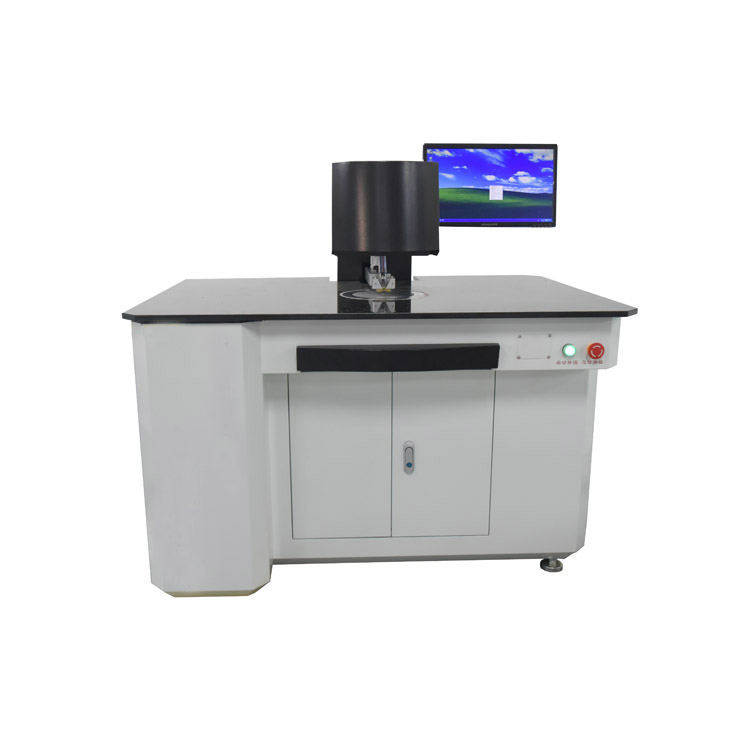
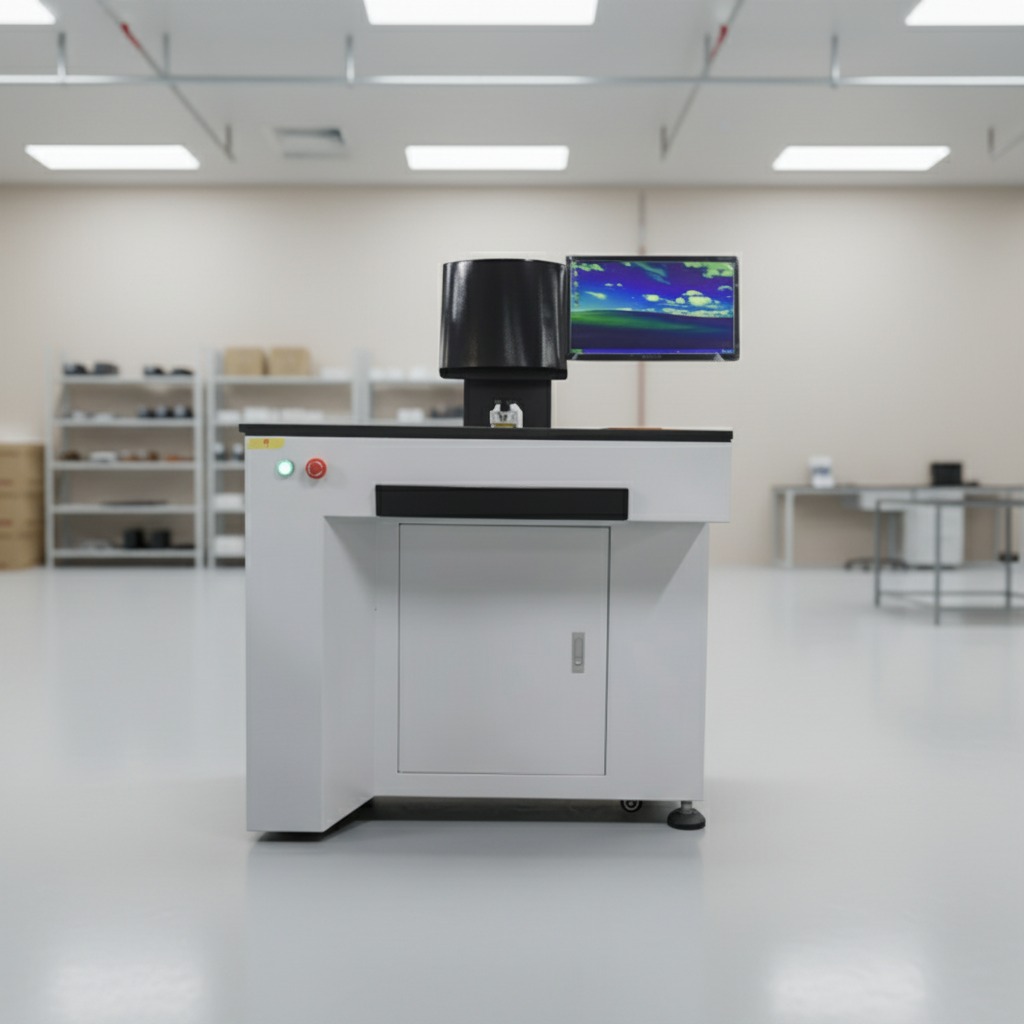
The equipment shown is an enclosed industrial workstation with a cabinet-style base, integrated display, control buttons, and a protected processing head. Based on the visible structure, it appears suitable for electronics manufacturing equipment tasks where boards or components must be fixed in position beneath a camera, laser, or tooling head. The layout suggests a machine designed to support visibility, operator safety, and stable part placement rather than a simple bench fixture.
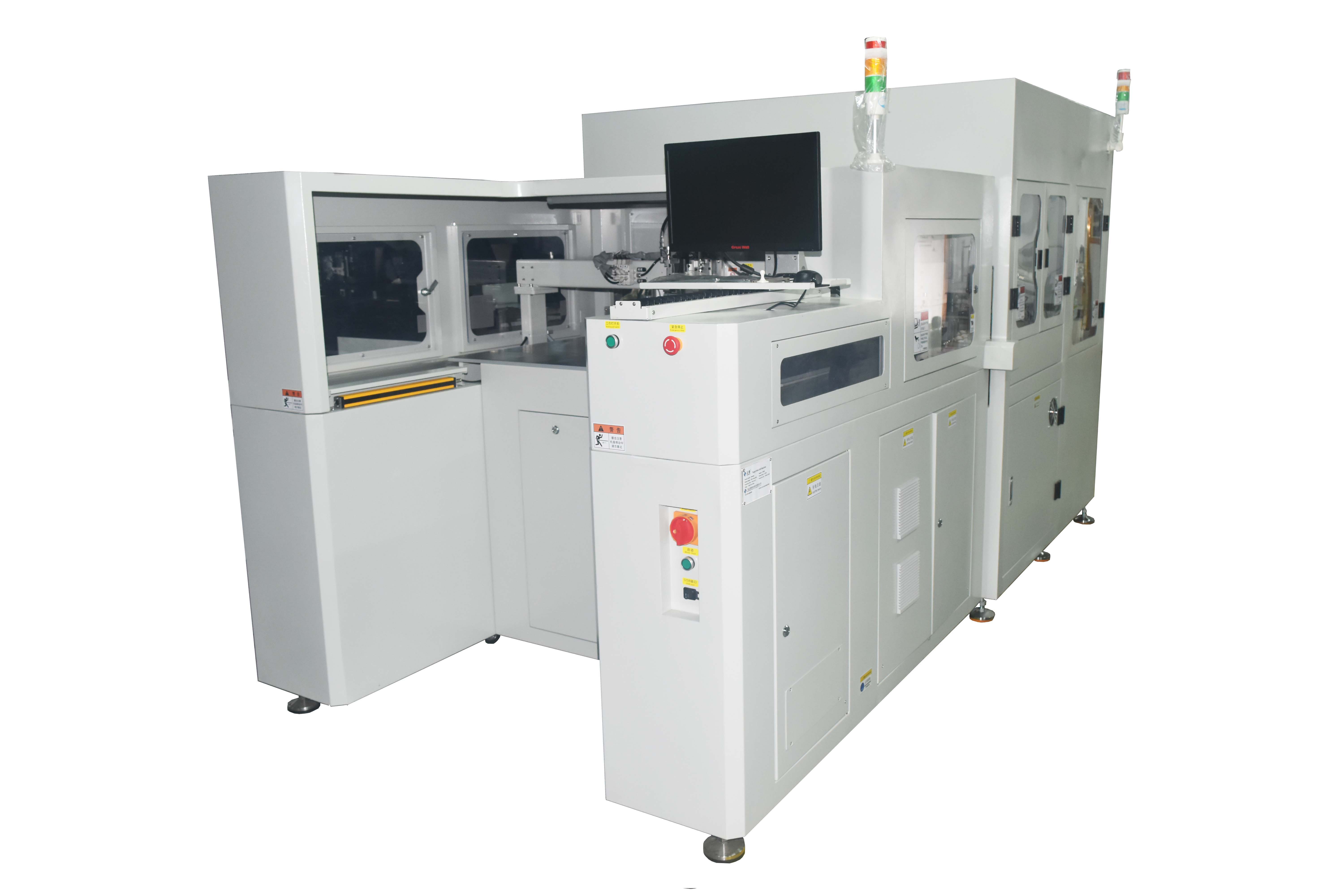
For buyers comparing a target hole drilling machine with broader production-line equipment, this type of station offers a compact footprint and a more organized workflow. It can sit near a bench, within a small cell, or as part of a larger process line where target alignment drilling or inspection is repeated throughout the shift.
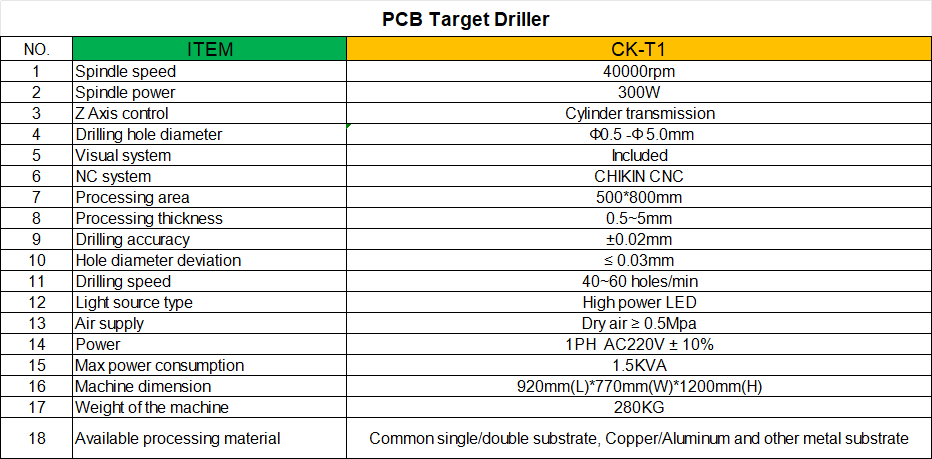
Machine Specification
Visible Structure and Functional Layout
Enclosed cabinet design
The machine uses a light gray metal cabinet with a black top surface and front trim. The enclosed base helps protect internal electronics and supports a cleaner operating area around the work zone. A front access door or panel also suggests maintenance access to internal components.
Integrated control and viewing
A mounted flat-panel monitor on the upper right gives the operator a direct preview or control interface. That is useful when the process depends on seeing marks, fiducials, or hole targets before action is taken. The front controls include an indicator light and a red emergency-style button, which are standard features buyers expect on industrial equipment where access and shutdown must be immediate.
Stable positioning features
The visible caster and leveling foot indicate a machine that can be moved into place and then stabilized for operation. This is a useful detail for factories that reconfigure lines or share equipment between stations.
Key Capabilities Buyers Usually Need
While the exact process cannot be confirmed from the image alone, the visible layout aligns well with several production tasks:
1. Target alignment drilling for PCB and electronics workflows.
2. Marking or coding for serial numbers, QR codes, or traceability labels.
3. Visual inspection before or after drilling, marking, or assembly.
4. Small-part positioning inside a controlled workstation.
For any hole positioning machine used in electronics assembly, the core value is consistency. The machine should help reduce operator variation, support accurate placement, and keep the part centered under the working head.
Materials and Finish
The visible machine body appears to use painted sheet metal or powder-coated steel, with black plastic or coated metal trim and housing elements. The finish is smooth and industrial, which is appropriate for repeated factory use and routine cleaning. The upper cylindrical housing is likely part of the process head, optics module, or camera/laser enclosure, though its exact role is not confirmed.
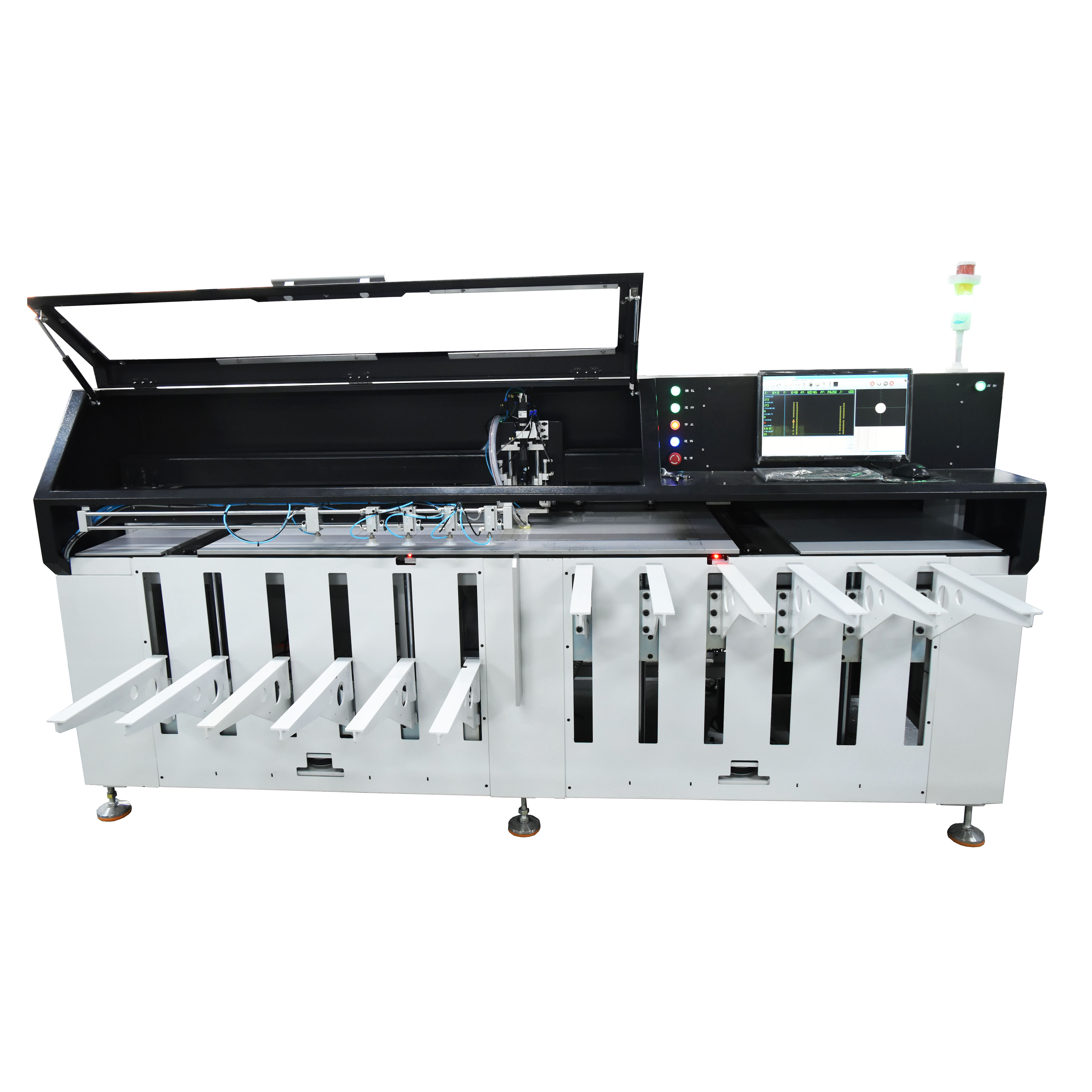
Inside related machine subassemblies shown in the provided data, there are machined aluminum or stainless steel plates, linear guide elements, cable bundles, corrugated protective conduits, and pneumatic-style tubing. Those visible parts point to a modular mechanical build that can support motion, clamping, or positioning functions inside an automation system.
Manufacturing and Assembly Considerations
A workstation like this is usually assembled from a combination of fabricated sheet-metal enclosures, precision-machined brackets, guide hardware, wiring, and protected routing for air lines or cables. In practice, that means the system is built not only for function but also for maintainability. Clean routing reduces abrasion, and modular mounting makes future servicing easier.
If the machine is used as a PCB target driller or target hole drilling machine, precision in the mechanical frame matters as much as the processing head itself. A rigid base, organized cable management, and accurate part support help protect alignment during repeated cycles.
Application Scenarios
This type of industrial workstation can fit several production environments:
- PCB and electronics traceability lines
- Component marking or inspection stations
- OEM machine builder integration projects
- Factory automation cells for small parts
- Maintenance or rework stations where accuracy matters
For buyers evaluating electronics manufacturing equipment, the most important question is whether the machine will fit the production flow. If the process depends on visible alignment marks, operator confirmation, or protected tool movement, a cabinet-style station is often a better fit than an open-frame setup.
Customization Guidance
Because the exact machine function is not fully confirmed, customization should begin with process definition. Buyers should clarify whether they need drilling, marking, inspection, dispensing, or another motion-controlled task. After that, the enclosure size, monitor layout, access door placement, cable routing, and workholding method can be matched to the board size and line layout.
When requesting a custom hole positioning machine, it helps to provide the board dimensions, target location requirements, operator workflow, and whether the unit must be benchtop, floor-standing, or line-integrated. If the process involves vision guidance, ask for the camera view, lighting arrangement, and screen position to be matched to real operator use.
Quality Control and Buyer Decision Factors
For this type of equipment, buyers should focus on build quality, internal layout, maintenance access, and how securely the part is held during operation. Other decision factors include the clarity of the display interface, the responsiveness of the controls, and the safety features built into the cabinet. A well-organized system is easier to train on and easier to keep consistent from shift to shift.
If your line needs a PCB target driller for repeatable placement or a stable target alignment drilling station, prioritize the features that reduce handling error: enclosure rigidity, protected cable management, operator visibility, and simple service access.
Request a Suitable Configuration
If you are sourcing a PCB target driller or a related automation workstation, share your board type, required operation, and preferred machine layout. A supplier can then match the cabinet, control panel, motion module, and interface to your production task. For buyers building a reliable electronics workflow, choosing the right station early can save time on rework, alignment errors, and line stoppages.