




Product Overview
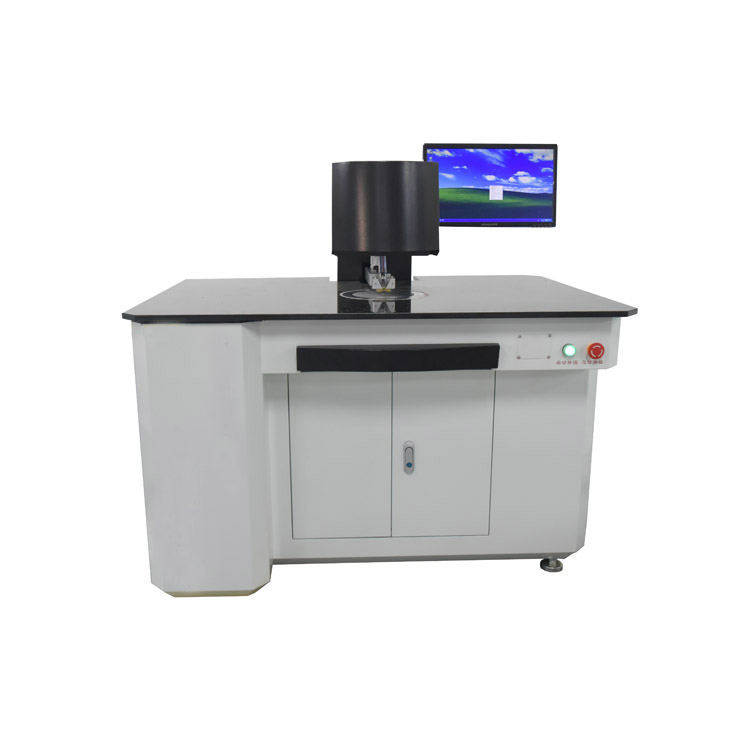
Visible product information suggests an industrial bench-style workstation or equipment cabinet with a flat top surface, enclosed storage, a central drawer, adjustable feet, and a small monitor or HMI mounted at the rear center. That layout is useful in production environments where operators need a stable working surface, clear access to controls, and space for inspection, assembly, testing, or monitoring.
While the image does not confirm the internal mechanism of a punching system, the workstation concept aligns well with factory equipment handling and process control. In a production line, a cabinet-style base with an operator interface can support tasks connected to PCB punching equipment, quality checks, fixture alignment, or machine-side operation. If the platform is used as a PCB hole punching machine station or inspection bench, the integrated display and control buttons can help keep the workflow compact and organized.
Key Visible Features
Work Surface and Layout
The unit has a wide, rectangular tabletop with an open knee space in the center. That arrangement supports seated or standing work and gives the operator room to position tools, trays, small parts, or inspection jigs. The bench-style geometry is practical for repetitive tasks and line-side operation.
Storage and Access
Two lower cabinet doors, a central drawer, and an upper right drawer provide separated storage zones for tools, consumables, fixtures, or documents. For manufacturing teams, this reduces clutter and keeps frequently used items close to the work area.
Operator Interface
The front controls include a red emergency-stop button and a green push button, along with a small monitor or HMI on a bracket. That combination suggests a simple control-and-monitoring setup, which is common in industrial equipment stations. The exact display model, software, and wiring are not visible, so those details should be confirmed before purchase.
Leveling and Installation
Adjustable feet are visible at the base. This is a useful detail for floor leveling in workshops where surfaces may not be perfectly even. Stable support matters for inspection accuracy, operator comfort, and safe equipment placement.
Materials and Finish Options
The visible finish appears to be white or light gray painted or powder-coated sheet metal. That type of finish is widely used in industrial furniture and equipment cabinets because it presents a clean surface and works well in controlled factory environments. If a buyer needs a different appearance or operating environment, common options in custom fabrication can include alternate sheet metal finishes, color matching, anti-corrosion coatings, and different hardware selections. Any exact material grade or thickness would need confirmation from the manufacturer.
Manufacturing and Integration Considerations
Products like this are typically built through sheet-metal fabrication, cabinet assembly, hardware mounting, and electrical integration. For a punching workflow, important manufacturing factors include frame rigidity, access for maintenance, cable routing, and how the HMI, buttons, and any sensing devices are arranged. If the equipment is paired with a CNC punching machine, the operator station should be designed so tool changes, part positioning, and visual inspection can be performed without awkward reach or interference.
Application Scenarios
This type of bench can be used as a production-line inspection station, an electronic assembly station, a lab test bench, a machine operator desk, or a quality-control workstation. In facilities working with sheet components or electronic panels, a punching-related station may support part verification before or after forming. For PCB-related workflows, the same bench concept can support PCB punching equipment setup, part handling, or visual inspection where a clean flat surface is important.
Quality Control and Buyer Decision Factors
When choosing a punching machine or a related operator station, buyers should look closely at structure stiffness, control layout, storage usefulness, maintenance access, and compatibility with the production flow. If the machine will be used for precision hole placement or repeated operations, alignment stability becomes critical. If the system is intended for electronics or board work, the user may also need attention to antistatic practices, fixture compatibility, and clear visibility at the work area.
Because the image only shows visible hardware, it is wise to confirm all key specifications directly: dimensions, load capacity, sheet thickness range, tooling compatibility, electrical requirements, and safety features. For any high precision punching machine, those details determine whether the equipment fits the actual application.
Customization Guidance
If the workstation is part of a custom equipment package, buyers can usually request changes such as different drawer layouts, added cable cutouts, alternative monitor mounting, lockable storage, special finishes, or modified control placements. For a factory cell, the best customization is often the one that reduces operator motion and shortens cycle time.
Request a Quote
If you need a punching machine, an operator station, or a custom industrial bench for inspection and control, share your part drawings, workflow, space limits, and interface needs. A clear requirements list helps the supplier match the cabinet, control layout, and workstation structure to your process.