



1.2mm tungsten carbide PCB router bits for precision board cutting
1.2mm tungsten carbide PCB router bits are made for one of the most common pain points in electronics production: cutting and routing printed circuit boards cleanly without excessive burrs, edge damage, or layout loss. In PCB prototyping and small-batch manufacturing, the cutting tool matters as much as the machine. A micro-sized router bit helps operators separate boards, trim outlines, and create slots or detail features with better control on thin rigid substrates.
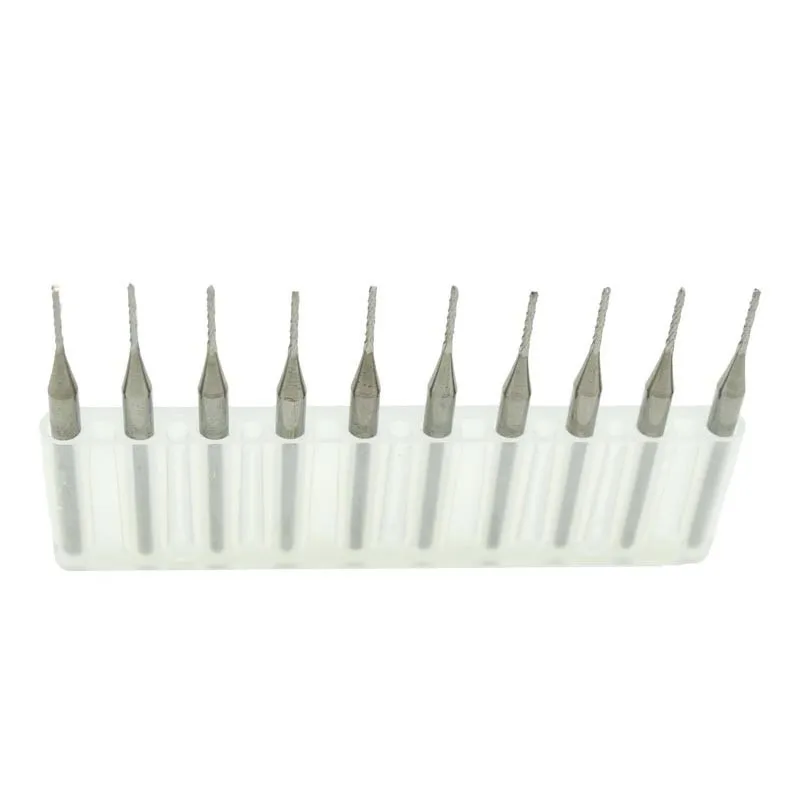
This product type is typically used in CNC routing setups and can also suit handheld routing or engraving workflows where fine cutting geometry is required. The visible product format shows multiple identical bits in a clear storage holder, which is practical for workshop handling and organized tool access.
Product overview
This set belongs to the category of small PCB router bits and milling cutter bits designed for printed circuit board machining. The visible labeling indicates a 1.2 mm PCB router bit size. Because only the product image details are available, the exact meaning of the 1.2 mm label should be treated carefully: it may refer to bit diameter or tip size rather than a full dimensional specification. What is clear is that the tool is intended for precise material removal at a small scale.
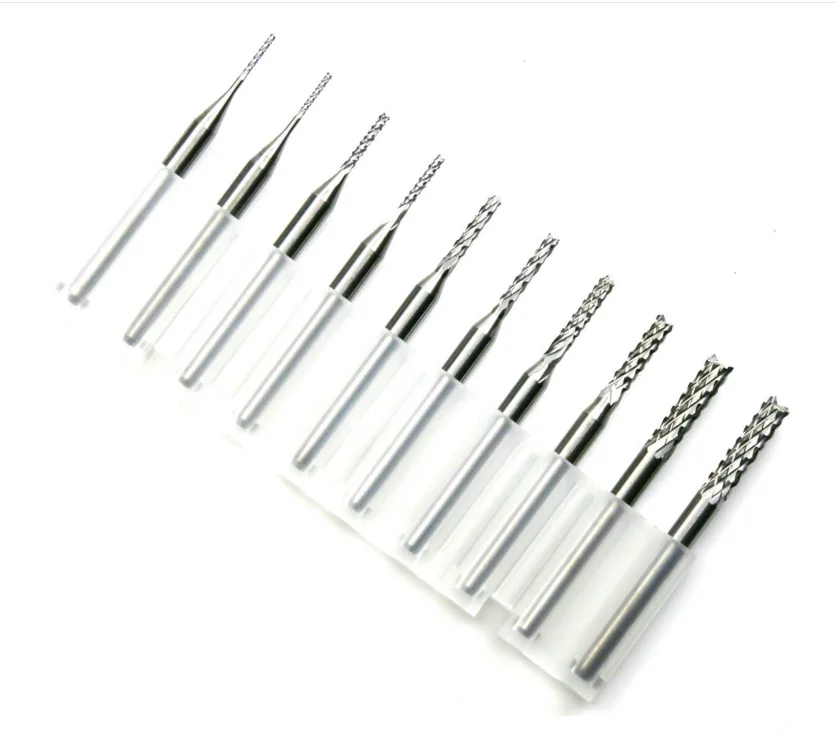
The bits appear to have a slim cylindrical shank, a tapered body, and a fine cutting tip. Their compact geometry makes them suitable for routing narrow paths, edge trimming, and detailed contour work on PCBs and other thin rigid materials.
Key capabilities and buying value
Fine routing for delicate board work
PCB fabrication often requires controlled cutting across copper-clad material and laminate surfaces. A precision PCB router bit helps reduce overcutting and supports cleaner board outlines.
Consistent tool organization
The set is arranged in a transparent plastic holder, which supports inspection, storage, and quick tool selection. For a production bench, that organization can reduce mix-ups between similar micro-tools.
Useful across multiple fine-detail tasks
Beyond circuit board trimming, this style of cutter may also be used for model making, slotting, and other detail routing tasks on thin substrates, depending on machine setup and material behavior.
Materials and finish options
The image suggests a silver-gray cutting head, and the product name points to tungsten carbide router bits for PCB use. The exact alloy, coating, and heat treatment are not visible, so those details should not be assumed. In general, carbide-style cutting tools are selected for their hardness and edge retention in precision machining. The holder appears to be molded clear or translucent plastic, which is a practical choice for storage and visibility.
Manufacturing and tool structure
These high quality PCB machine router bits are likely manufactured through precision grinding and tool finishing processes used for micro-cutting tools. The visible tapered profile and fine point indicate a tool designed to concentrate cutting action in a narrow area. That geometry is important when routing fragile board edges or working near fine traces.
Because flute count, coating, and exact shank dimensions are not visible, buyers should confirm those specifications before matching the tool to a spindle collet or machine holder.
Typical application scenarios
This product is relevant for PCB prototyping, small-batch electronics assembly, circuit board outline cutting, slot creation, and edge cleanup. It may also support engraving-style work where a narrow cutting path is preferred. For shops that handle recurring micro-routing operations, having a dedicated carbide PCB engraving bit set can simplify replacement and reduce downtime.
Quality control and selection guidance
When choosing tungsten carbide router bits for PCB work, buyers should focus on the visible size label, tool geometry, shank compatibility, and the type of board or substrate being processed. For CNC use, the router bit must match spindle runout limits and fixture stability. For handheld applications, operator control becomes even more important because small cutters can be sensitive to side load.
At the purchase stage, it is wise to verify whether the 1.2 mm PCB milling cutter is intended for outline routing, engraving, or both. If the board material is particularly abrasive or brittle, users should also confirm whether the set is suited to that workload. Since exact lifespan and coating are not provided, those factors should be evaluated through sample testing in the customer’s own process.
Customization and buyer decision factors
For procurement teams and engineers, the main decision factors are dimensional fit, intended cutting task, and storage convenience. If a machine uses a specific collet size, the shank dimension must be confirmed separately. If production involves repeated board separation, buyers may prefer multiple identical bits for tool replacement planning. When comparing a precision PCB router bit against other micro cutters, consider whether the priority is outline cutting, engraving detail, or general thin-material routing.
Request the right PCB cutting tool for your process
If you are sourcing PCB router bits for prototyping, repair work, or small-batch production, start with the actual board material, machine type, and required cut geometry. Share those details with your supplier so they can recommend the most suitable bit configuration. For projects that need compact, repeatable cutting tools, this 1.2mm tungsten carbide PCB router bits set is a practical reference point for evaluation and sample testing.