



PCB CNC router bits for precision cutting and fine detail work
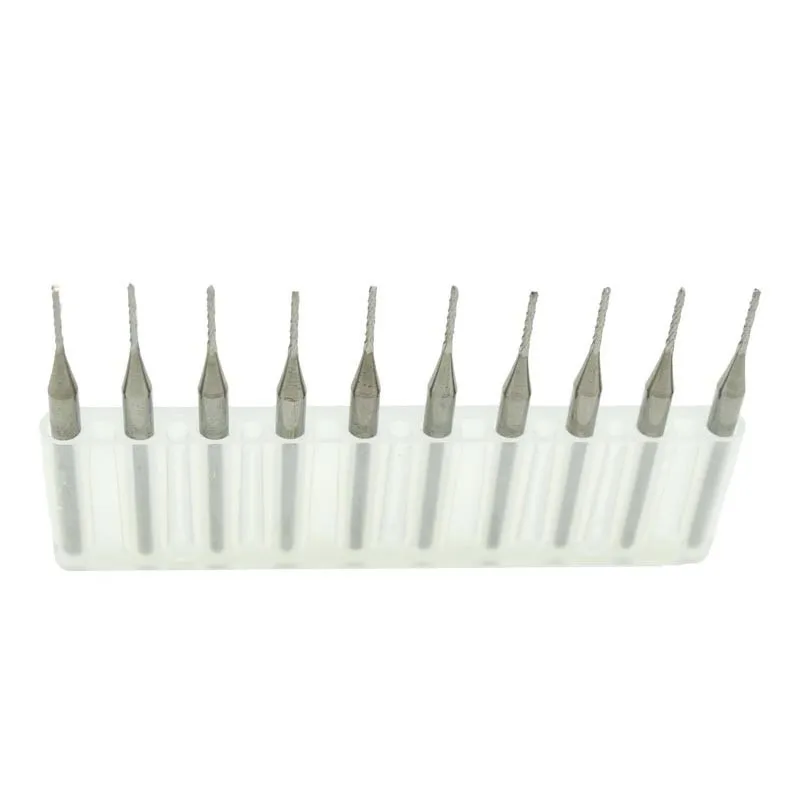
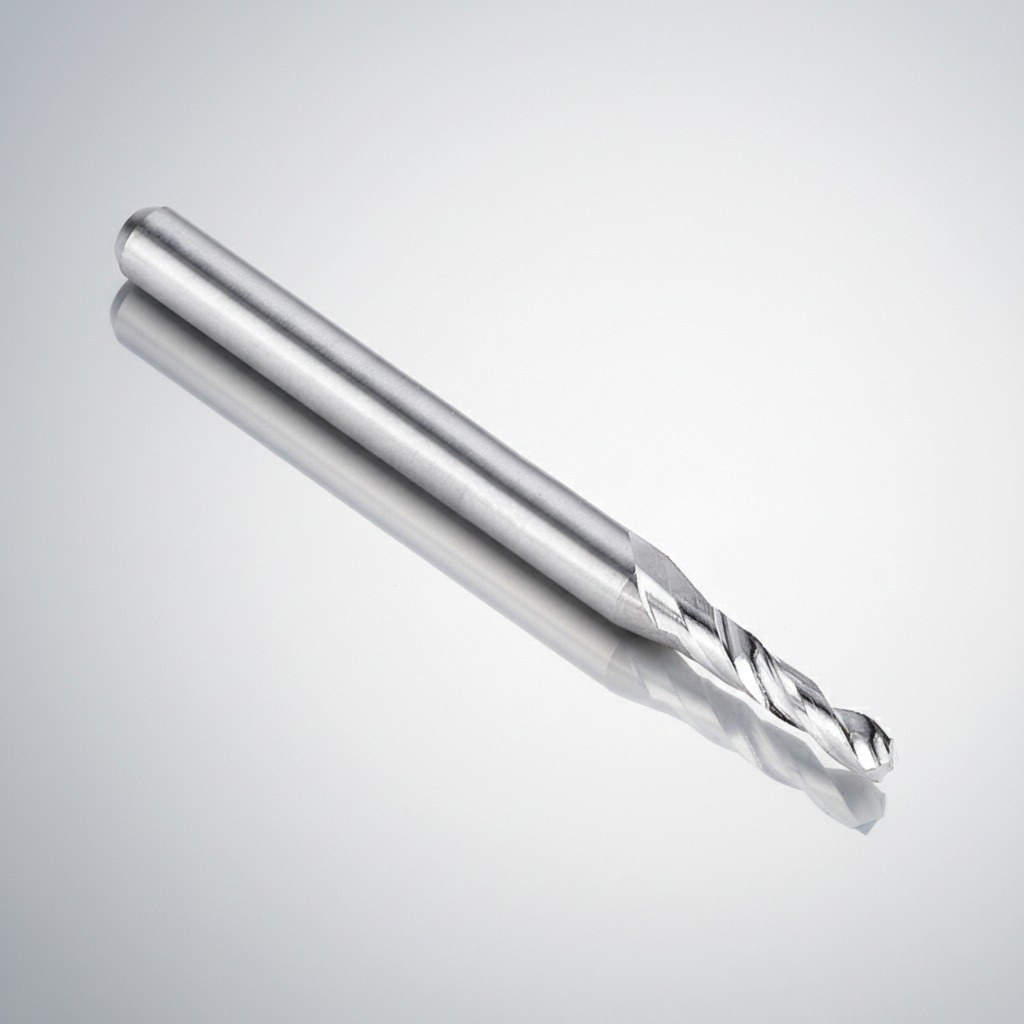
PCB CNC router bits are used when a machining job needs controlled material removal, clean edges, and repeatable detail without overloading a small spindle. For buyers working on printed circuit boards, small-format fixtures, or precision contouring, the main challenge is finding a cutting tool that can handle fine geometry while staying stable in a CNC machine. The tool shown here appears to be a solid carbide-looking spiral cutter with a polished metal finish and a rounded cutting end, so it may suit detail milling, profiling, slotting, or finishing where delicate tool engagement matters.
Product overview
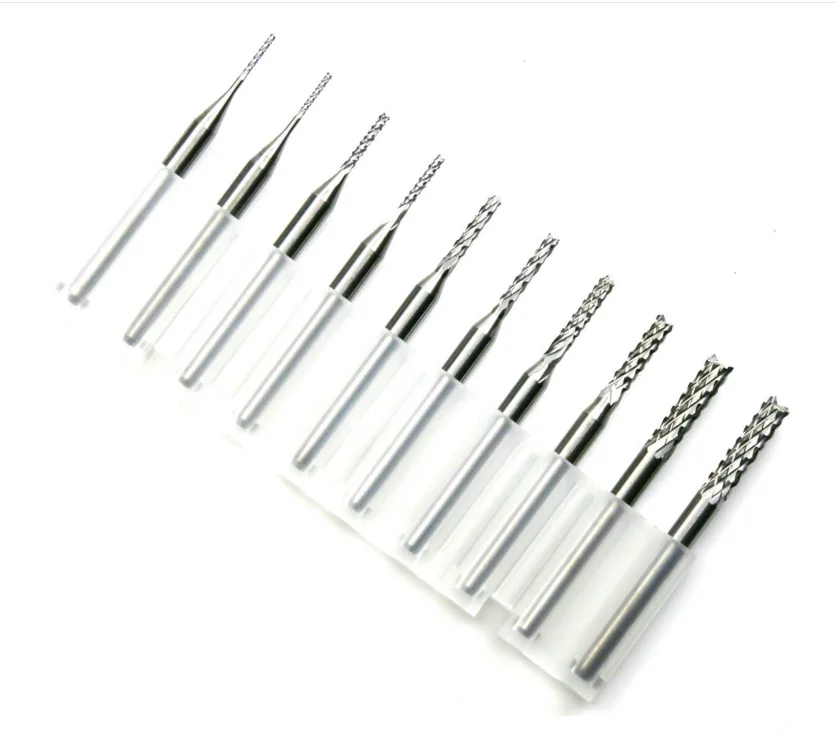
This type of CNC cutting tool is designed around a long cylindrical shank and a reduced-diameter cutting section with helical flutes. The visible structure suggests a precision rotary tool rather than a general-purpose hand cutter. Based on the image alone, the exact cutter geometry cannot be confirmed with certainty, but the overall form is consistent with a compact end-milling tool used for controlled machining on CNC equipment or a similar spindle holder.
In PCB-related workflows, buyers often look for small-diameter tools that can trace narrow paths, machine fine features, or clean up edges after routing. In broader metalworking, the same style of tool may be used for contouring, surface finishing, or light profiling on aluminum, steel, stainless steel, cast iron, and similar materials, depending on the actual substrate and geometry.
Key specifications and visible characteristics
Observed structure
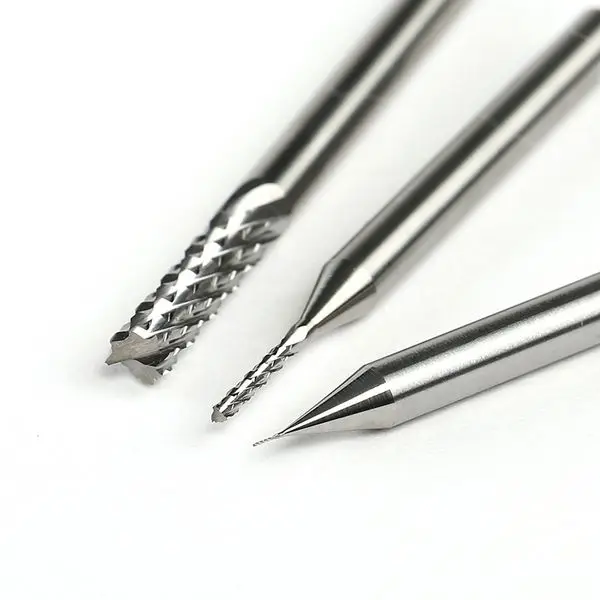
The visible features include a smooth cylindrical shank, a fluted cutting end, and a rounded tip profile. Those details indicate a tool built for rotary cutting with stable clamping in a holder or collet. The polished or ground finish suggests a precision-manufactured surface, which is typical of CNC tool bits made for consistent chip flow and accurate cutting action.
Capabilities buyers typically evaluate
When comparing PCB drill bits, carbide micro drill bits, or CNC tool bits for delicate work, the key factors are cutting edge sharpness, flute geometry, rigidity, and the ability to maintain surface quality. For printed circuit board drill bits, clean entry and minimal breakout are important. For contouring and 3D profiling, the tool path and tip geometry matter more. Since the exact dimensions are not visible, buyers should confirm diameter, flute length, and tip profile before production use.
Materials and finish options
The image shows a silver metallic tool body with a ground or polished appearance. No coating can be identified visually, so it would be unsafe to claim carbide grade or surface treatment. In general, similar CNC engraving bits and precision micro cutters may be supplied in solid carbide, tool steel, or other hard-cutting substrates, with optional coatings chosen for wear resistance or heat control. If your process involves abrasive laminates, copper layers, or hard alloys, the material and coating choice should match the workpiece and spindle conditions.
Manufacturing process
Tools in this category are commonly produced by precision grinding, especially when the cutting edges, helix, and tip profile need tight consistency. CNC grinding is often used to shape the flutes, create the end geometry, and finish the shank to fit standard tool holders. That manufacturing route helps support repeatable performance, whether the tool is used for PCB isolation routing, fine detailing, or general CNC machining.
Application scenarios
PCB CNC router bits are often chosen for isolation milling, trimming board edges, and cleaning narrow channels. In other applications, the same style of cutter may be used for mold and die detailing, surface contouring, small pockets, and finishing passes on metal parts. The rounded end visible in the image may also make the tool relevant for 3D profiling and blended surface work, though the exact tip profile should be confirmed if finish quality is critical.
Quality control and buying considerations
For buyers, the most important decision factors are tool diameter, flute count, cutting length, shank fit, material compatibility, and whether the geometry matches the intended cut. If the job requires micro-feature drilling or board-hole creation, a dedicated PCB drill bit or carbide micro drill bit may be more appropriate than a router-style cutter. If the job focuses on contouring or engraving, a rounded-end or spiral tool can be the better fit. Always verify runout control, machine rigidity, and spindle speed range before use.
Customization guidance
When sourcing this type of precision tool, request the exact dimensions, flute geometry, and substrate details before placing volume orders. If you need a special profile for printed circuit board drill bits, CNC engraving bits, or other CNC tool bits, matching the cutting edge to the work material will usually matter more than a generic description. Custom labels, pack sizes, and geometry adjustments can also be discussed when the application is specific.
Request the right tool for your process
If you are comparing PCB CNC router bits for board work or looking for a compact precision cutter for metal finishing, share your material, machine type, and target feature size. A clear specification helps match the tool to the task and reduces trial-and-error on the production floor.