




Fully Automatic PCB BBT Tester Overview
The Fully Automatic PCB BBT Tester is designed for production teams that need to move printed circuit boards through inspection and sorting without adding manual handling at every step. It helps solve a common factory problem: keeping test results consistent while separating acceptable boards from rejects in a controlled flow. Based on the visible machine structure, this type of system supports automated loading, central inspection or test handling, and separate PASS/FAIL discharge paths for efficient line-side operation.
In PCB manufacturing, stability and traceability matter as much as speed. A machine like this is used to reduce operator contact, organize board flow, and make pass/fail decisions easier to manage on the shop floor. The enclosed cabinet layout, HMI display, and labeled output areas suggest a PLC-controlled automated process with visual status feedback.
Product Structure and Working Flow
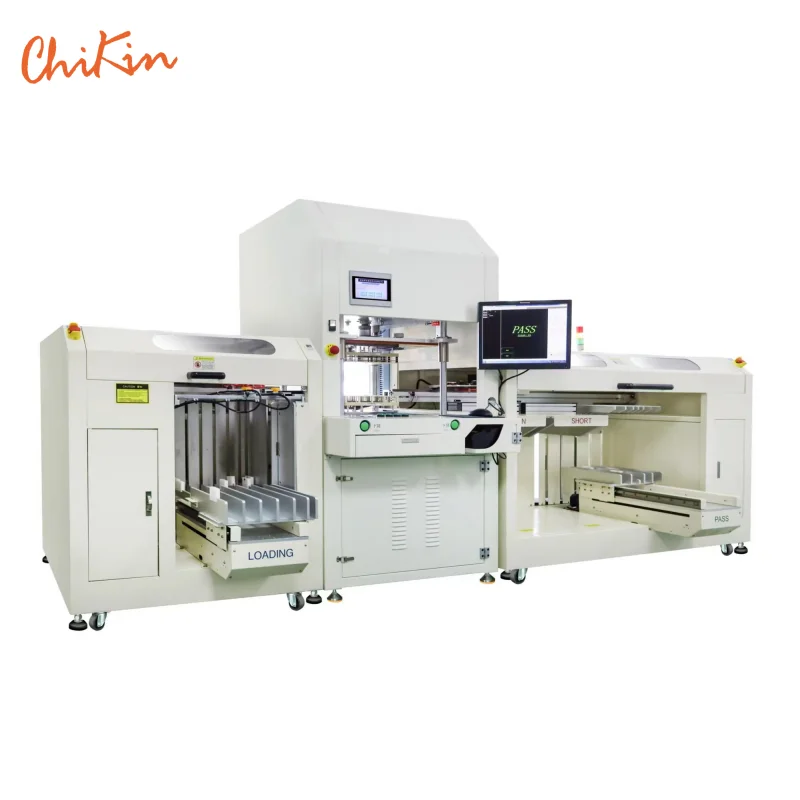
This PCB BBT Tester appears to use a three-section layout. The left side is a loading zone, the center chamber is the test or inspection section, and the right side is the sorting area with separate PASS and FAIL outlets. That arrangement is useful when boards must be processed one by one or in a controlled sequence before being routed to the next step.
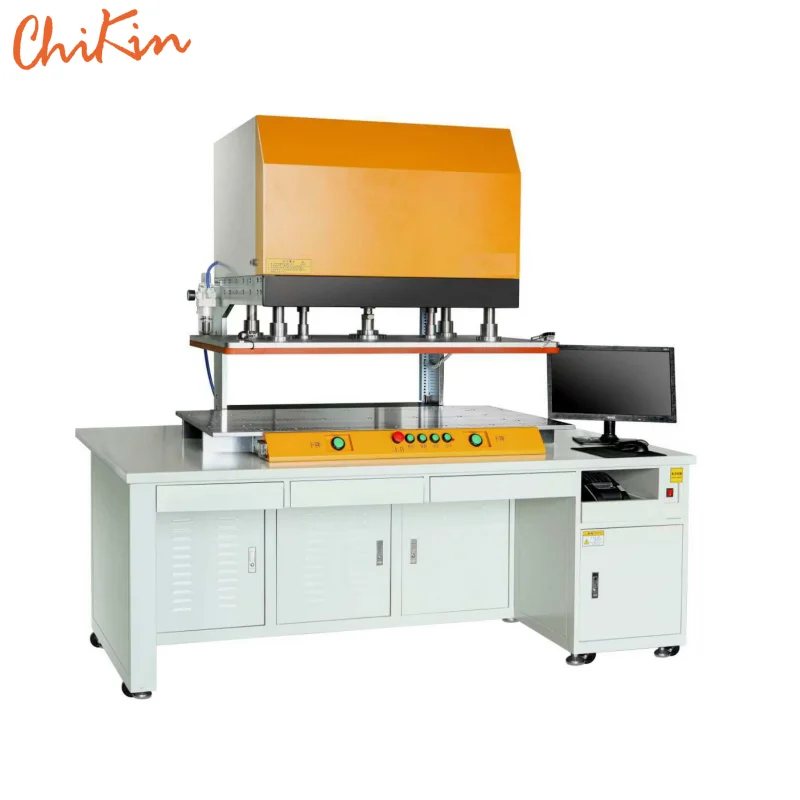
From the visible design, the machine includes internal rails or transfer mechanisms, metal guides, access panels, and a monitor for operational status. The wheeled base also suggests easier repositioning within a production area, which is helpful for facilities that reconfigure equipment or maintain flexible production cells.
Key Capabilities
Automated Loading and Transfer
An Automatic PCB Testing Machine like this can reduce manual board handling and keep board orientation and positioning more consistent during processing. That matters when the test sequence depends on stable placement.
PASS/FAIL Sorting
The clearly marked output zones indicate automatic segregation after inspection. This is valuable in lines that need to separate conforming product from nonconforming product quickly and visibly.
Enclosed Industrial Design
The sheet-metal enclosure helps protect internal mechanisms and creates a cleaner working environment around the test area. It also supports safer operation by limiting direct access to moving parts during cycling.
Specifications and Build Considerations
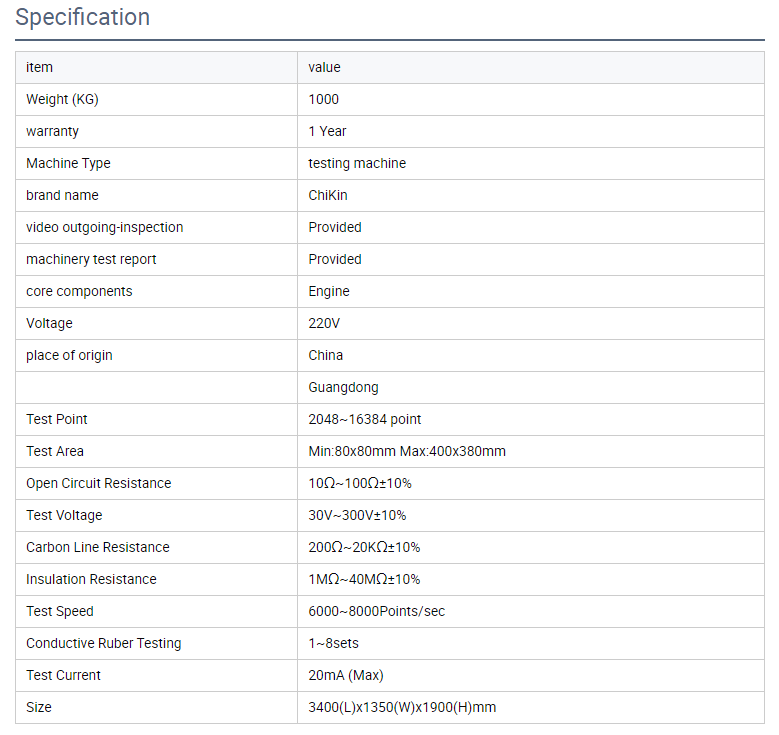
As a reference for buyers, the available visible facts point to a floor-standing, multi-station industrial system with a painted metal housing, internal handling hardware, status display, and local mobility. Exact throughput, accuracy, board size range, power demand, and test method are not provided and should be confirmed during project evaluation.
When comparing a Printed Circuit Board Tester for production use, important factors usually include board dimensions, cycle time target, interface with upstream/downstream tools, reject-handling method, and whether the machine must support traceability data export.
Materials and Finish Options
The visible machine uses a light beige or white painted sheet-metal enclosure with exposed metal rails and brackets. For factory automation equipment, this kind of finish is commonly chosen for durability, corrosion resistance, and easier cleaning. Depending on project needs, buyers may request different enclosure colors, access-door layouts, viewing panels, or service openings.
For electronics-related production, finish details can also be adjusted to match plant standards, improve maintenance access, or support ESD-related work practices where required by the application.
Manufacturing and Integration
A PCB Electrical Test Equipment system of this type is typically built around a mechanical frame, transfer modules, control cabinet, operator interface, and test or inspection station. Integration usually focuses on board conveyance, sensor alignment, reject routing, and safe enclosure design. If the application changes, the handling fixtures and station layout can often be adapted to suit the customer’s process.
Because the exact test principle is not visible, it is best to treat this machine as a custom automation platform rather than assuming a specific electrical or optical method. The core value is controlled board movement and reliable result sorting.
Typical Applications
This kind of system is often used in electronics production environments where high-volume inspection and sorting are needed. Common use scenarios may include PCB production lines, module handling stations, or any process that requires repeated pass/fail separation with minimal operator intervention.
In broader factory settings, an High Precision PCB Tester may also be adapted for other flat components or trays when consistent positioning and automated discharge are important. The visible form suggests it could support precision component handling beyond standard board testing, depending on the tooling installed.
Quality Control and Buyer Decision Factors
When selecting a PCB BBT Tester, buyers should review several practical points: the type of test being performed, board compatibility, fixture repeatability, maintenance access, reject confirmation method, and the level of operator visibility through the HMI. If traceability is required, ask how result data is stored or transferred. If uptime is critical, check how quickly tooling can be changed and how the machine signals faults.
It is also useful to confirm how the equipment handles misfeeds, jam detection, and discharge verification. These details often matter more than appearance when the machine is installed in a real production line.
Customization Guidance
For a custom-built solution, buyers can usually define the loading direction, outlet arrangement, fixture design, cabinet size, control interface, and communication with line equipment. If your line uses a specific PCB format or tray style, the handling path should be matched to that geometry from the beginning.
If you need an Automatic PCB Testing Machine tailored to your process, share the board size, target output rate, test requirement, and the upstream/downstream equipment configuration. That information helps determine the right automation layout.
Request a Project Review
If you are evaluating a Fully Automatic PCB BBT Tester for a new line or upgrade project, contact us with your board samples, process flow, and handling requirements. We can help you assess whether the machine layout fits your application and what customization may be needed before production integration.