




CNC Machine Tool Detector Overview
The CNC machine tool detector is used to solve a practical shop-floor problem: keeping machining setups accurate when tool status cannot be trusted by sight alone. In CNC work, a worn cutter, a shifted tool position, or a broken edge can turn a stable program into scrap in seconds. A detection accessory like this helps operators confirm tool presence, support setup checks, and add a physical interface that can be wired into a control or monitoring circuit. The compact cylindrical form and pre-attached leads make it easier to integrate into panels, fixtures, or machine-adjacent electrical systems where quick connection matters.
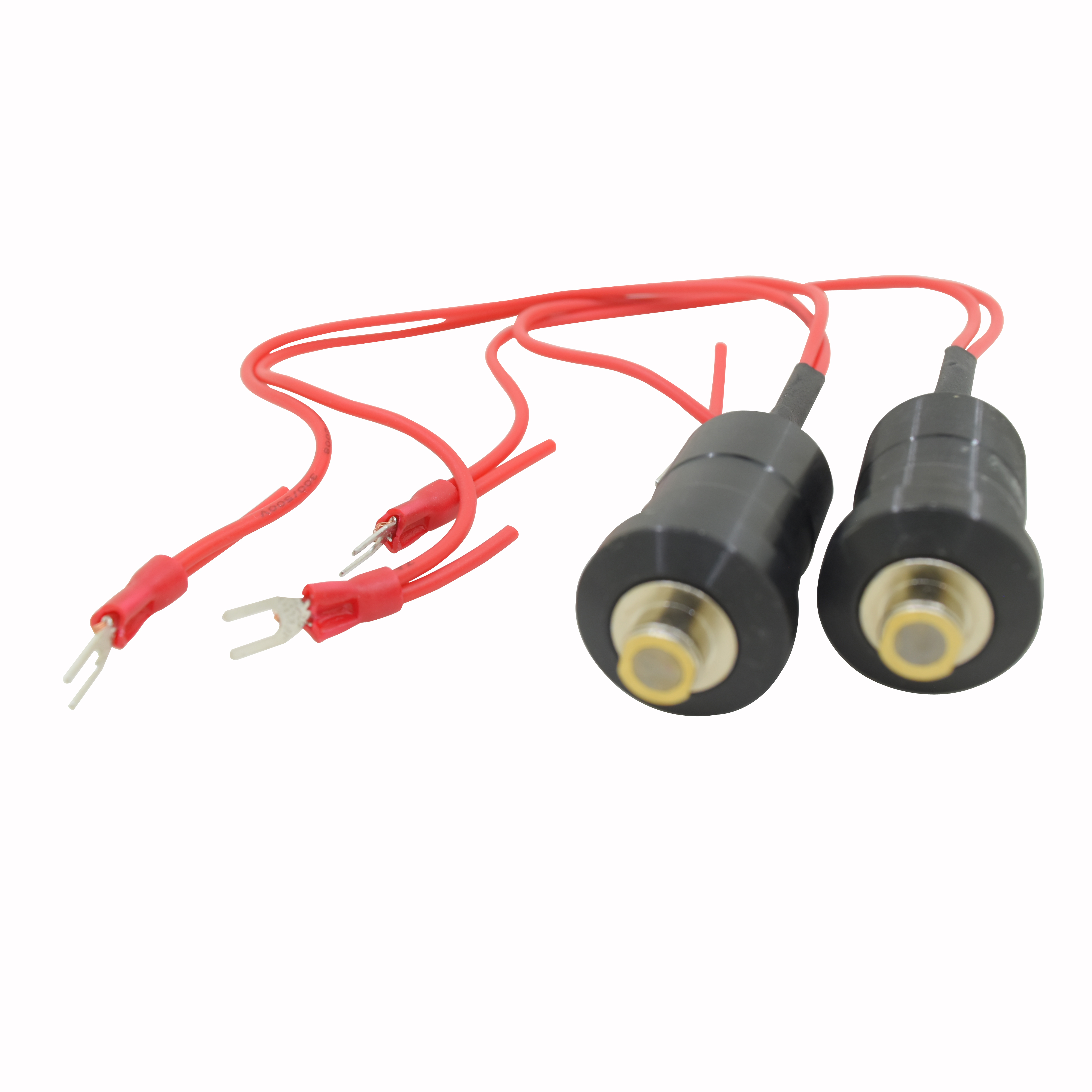
Based on the visible construction, this product appears as a pair of wired electrical assemblies with black cylindrical housings, red insulated leads, and fork/spade-style terminal ends. The exact internal working principle is not identifiable from the image alone, so it should be treated as a compact electrical component set suited to CNC tool detection, control wiring, or related machine interface use rather than assumed to be a specific sensor model.
Product Reference and Visible Features
Compact matched pair
Two identical units are shown, which is useful for buyers who need a consistent replacement pair or a mirrored installation on the machine side and control side. The matched appearance helps with layout in control cabinets, test fixtures, and machine wiring channels.
Prewired for installation convenience
Each assembly includes red insulated leads already terminated with metal fork/spade connectors. That reduces field termination work and can save time during prototype builds, maintenance, or machine retrofits. The cylindrical bodies also appear compact enough for installations where space is limited around guards, panels, or fixture plates.
Visible build elements
From the image, the assemblies show black cylindrical housings, brass- or gold-colored front rings, and exposed metal contact points or end fittings. These details suggest a durable electrical assembly with an insulated outer body and direct terminal connection points. Because the image does not reveal internal structure, exact operating behavior should not be assumed.
Key Specifications and Capabilities
For buyers comparing a CNC spindle tool detector or a related control component, the most useful visible characteristics are the physical ones. The assemblies are small, wired, and ready to connect. They are intended for electrical routing rather than mechanical load-bearing.
- Product form: pair of cylindrical wired electrical assemblies
- Connection style: pre-attached leads with fork/spade terminals
- Housing style: compact black cylindrical body
- Installation advantage: quick terminal connection and tidy wire routing
- Likely use: CNC tool detection, control interfaces, signal or power wiring, and test fixtures
If you are evaluating CNC tool detection hardware, the decision often comes down to how easily the device can be integrated into existing wiring. A prewired assembly like this supports faster setup than a bare component that requires full termination in the field.
Materials and Finish Options
The visible wire insulation is red, while the cylindrical bodies appear black with a matte to semi-gloss finish. The terminals are metallic and shaped for fork or spade attachment. The body material could be plastic or coated metal, but the image does not confirm the exact composition. In practical terms, buyers usually compare housing rigidity, insulation quality, terminal plating, and how well the finish resists wear during repeated handling.
For CNC machine environments, finish and enclosure style matter because cables may pass through crowded areas near metal panels, coolant mist, or vibration. Even when the component is small, a stable housing and reliable crimped termination can make a noticeable difference in daily maintenance.
Manufacturing and Assembly Notes
This type of product fits the electrical assembly and wire harness category. The visible fork terminals indicate crimped termination, and the lead routing suggests a pigtail-style assembly. Depending on the exact design, the black housing may be molded, sleeved, or overmolded. The image does not confirm the internal electronics, so a cautious description is best: a compact wire assembly with insulated cylindrical modules and factory-installed terminals.
For OEM buyers, that matters because pre-assembled leads can reduce labor, minimize wiring errors, and improve consistency from one machine build to the next. In a production setting, fewer hand-terminated steps often mean cleaner cabinet layouts and faster inspection.
Application Scenarios
This product can fit several use cases where a CNC machine tool detector or related electrical interface is needed:
- CNC machine tool detection and setup verification
- Tool breakage detection CNC support circuits, where a detector is part of the monitoring path
- Tool length measurement CNC related wiring or accessory connections
- Control panels and low-voltage equipment wiring
- Test fixtures and prototype electronics
- Automotive or industrial electrical service where pre-terminated leads simplify installation
In many shops, a small component like this is chosen not for glamour but for reliability in the background. It sits where wiring decisions are made—at the point where machine hardware meets the control system.
Quality Control and Buyer Considerations
Since the exact electrical ratings are not visible, buyers should confirm a few essentials before ordering: connector compatibility, wire length, conductor count, operating voltage, current needs, and whether the housing fits the intended mount point. For CNC tool detection work, also verify how the component will be read by the machine controller, what terminal style is required, and whether the assembly needs shielding or additional strain relief.
Visible quality indicators include the clean crimp ends, consistent wire insulation, and the matched pair construction. When sourced for machine builds, these details matter because uneven termination or loose fitment can become a maintenance problem later.
Customization Guidance
If this assembly is being used in a CNC spindle tool detector project or a related machine interface, customization can focus on the practical points rather than the appearance. Buyers commonly request changes to lead length, terminal style, wire color, housing geometry, or the number of conductors. If the application involves panel mounting or repeated vibration, it is worth discussing strain relief, insulation thickness, and routing path early in the design stage.
For custom harness orders, share a drawing, photo, or wiring diagram. That helps align the assembly with the control box, sensor spacing, and the machine’s cable path without guesswork.
Choose the Right Setup for Your Machine
When selecting a CNC machine tool detector or a similar wired component, the best choice is the one that matches the machine’s electrical layout, installation space, and service routine. Buyers should weigh terminal type, compactness, ease of replacement, and how the part will be secured after installation. A prewired pair like this is especially practical when speed and consistency matter more than one-off field fabrication.
For pricing, ratings, connector details, or a custom wiring request, send the required dimensions and application notes. A clear specification saves time and helps ensure the assembly matches the machine from the first installation.