



PCB Router Bit for Fine, Controlled Cutting
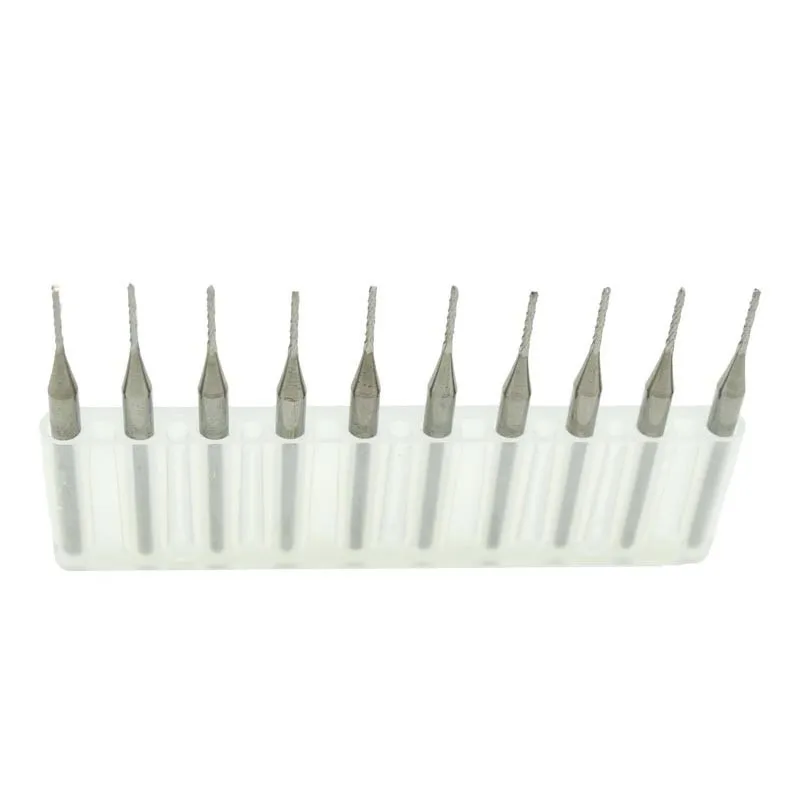
A PCB Router Bit is used to remove material with control when a project needs narrow slots, clean edges, or detailed features that standard cutting tools cannot handle well. In PCB work, the buyer’s main challenge is often accuracy at small scale: keeping traces isolated, trimming board outlines, and machining delicate features without unnecessary chipping or burrs. The cutting tools shown here are designed for that kind of precision work, with slim shanks and fine cutting ends suited to compact CNC operations.
Product Overview
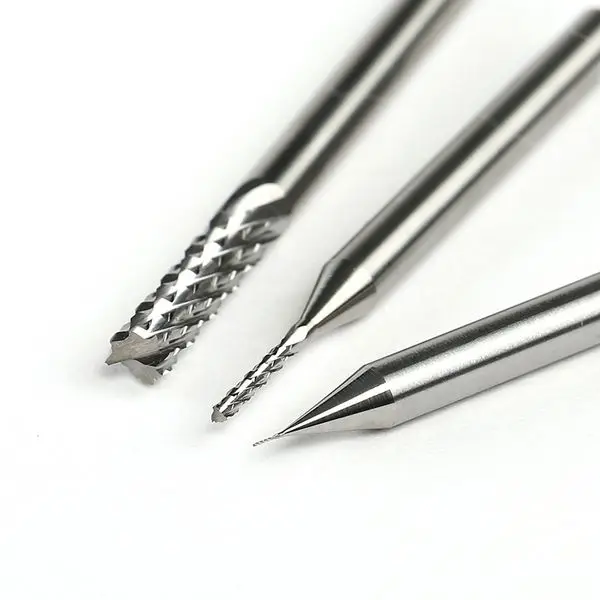
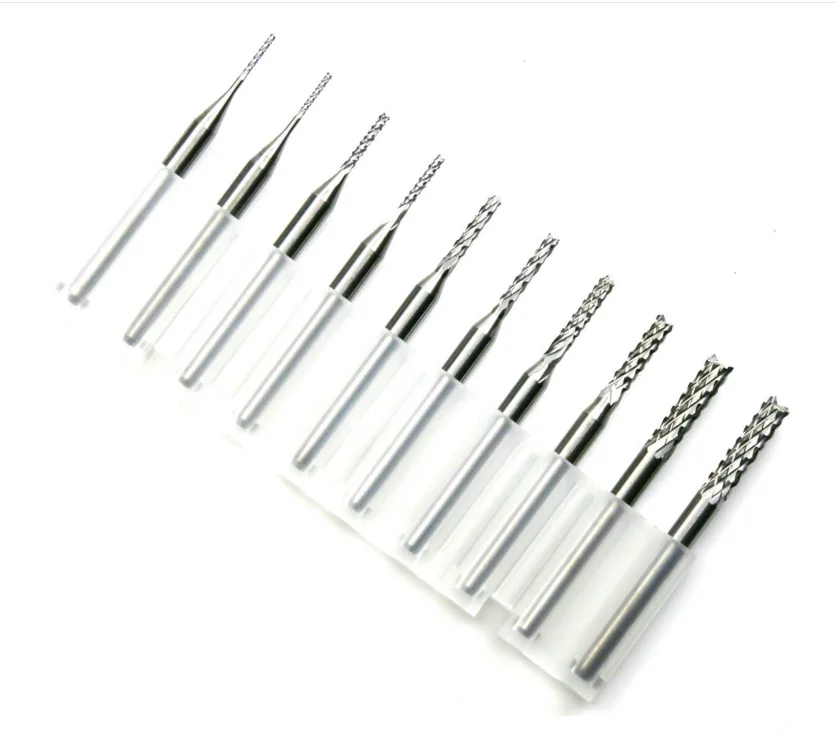
This tool family appears to include precision rotary cutters with different tip geometries. One tool shows a flat cutting end with multiple flutes, another appears to have a small spiral or ball-style profile, and another has a pointed conical tip. That range of shapes is useful because PCB and micro-machining jobs rarely involve one single cut style. A flat-bottom cutter helps with material removal and slotting. A pointed tool supports engraving or spotting. A small radius or spiral profile can help with contouring and detailed surface work.
For buyers comparing a PCB CNC Router Bit against other micro cutting tools, the key value is consistency. Small tool paths leave little margin for error, so edge quality, geometry, and runout control matter more than aggressive stock removal.
Key Specifications and Capabilities
Visible construction features
Based on the provided image, the tools have metallic silver surfaces with polished or ground finishes. They appear to be precision rotary tools, likely in the carbide or coated-carbide category, although exact material grade cannot be verified from the image alone. The shank shape looks long and cylindrical, which is typical for CNC spindle use and compact routing setups.
Typical capabilities
A PCB Milling Cutter is commonly selected for:
1. Board edge trimming and contour routing
2. Fine slotting and pocketing
3. Engraving reference marks or small text
4. Deburring light edges after machining
5. Micro-detail work on plastics, wood, metal, or composite materials, depending on tool grade and machine setup
The exact cutting performance depends on tool diameter, flute design, spindle speed, feed rate, and the material being machined. Those values are not supplied here, so buyers should confirm them before production use.
Materials and Finish Options
The visible finish is smooth and metallic, suggesting a ground tool surface intended to reduce friction and support cleaner cutting. In this category, buyers often look for carbide or coated carbide because those materials usually offer better wear resistance for small-diameter machining. However, since the source data does not confirm the exact substrate or coating, that should be treated as a likely but unverified characteristic.
Finish and material selection should match the workpiece. A High Precision PCB Bit used on FR-4, plastics, or light metals may need different edge geometry than a general-purpose engraving cutter. If your process involves abrasive materials, ask for the correct grade and coating recommendation.
Manufacturing Process
Tools like these are usually made through precision grinding and tool-shaping operations. The visible edge quality and slender geometry point to a process focused on dimensional repeatability and sharp cutting profiles. In small tooling, even slight inconsistencies can affect cut width, surface finish, and tool life, so grinding accuracy is a major factor in real-world performance.
Application Scenarios
A CNC Routing Bit of this type is suitable for a wide range of small-format machining tasks. In electronics production, it can support PCB isolation routing, edge trimming, and fixture detail work. In prototyping shops, it may be used for engraving labels, machining small pockets, or shaping thin parts. In model-making and light industrial work, it can handle contouring, fine trimming, and decorative cuts where the tool path must stay tight and controlled.
Quality Control Considerations
When choosing a PCB Router Bit, look beyond appearance. Important buyer checks include edge sharpness, concentricity, shank straightness, flute uniformity, and tip integrity. For micro tools, runout can be as important as hardness because excessive vibration increases edge wear and can damage delicate boards or thin parts. If the application is critical, request sample inspection data, dimensional confirmation, or incoming inspection criteria from the supplier.
Customization Guidance
Because the visible image does not reveal exact diameter, flute count, cutting direction, or material grade, customization should be discussed before ordering in volume. Buyers typically specify tip style, cutting length, shank size, coating preference, and target work material. If you need a PCB CNC Router Bit for a specific machine platform, confirm spindle compatibility and the smallest feature size you expect to machine.
Buyer Decision Factors
Choose the tool profile based on the job: flat end for routing and slotting, pointed tip for engraving, and small-radius geometry for detail contouring. Also consider tool life, chip evacuation, and whether the workpiece is abrasive. The best PCB milling tool is not always the sharpest-looking one; it is the one matched to feed strategy, machine rigidity, and the board or substrate you are actually cutting.
Request the Right Tool for Your Process
If you are sourcing a PCB Router Bit for production, prototyping, or precision finishing, share your target material, machine type, and feature requirements with the supplier. That is the fastest way to confirm the correct geometry and avoid trial-and-error on the shop floor.