



Single Cutter PCB V Cut Machine for Controlled Depaneling
The single cutter PCB V cut machine is built for manufacturers who need a cleaner way to separate routed or scored panels without putting extra stress on fragile assemblies. In PCB production, board breakage, edge damage, and inconsistent separation can create scrap and slow the line. This type of equipment addresses that problem by giving operators a controlled depaneling method for handling V-groove boards and similar panel formats in a more repeatable workflow.
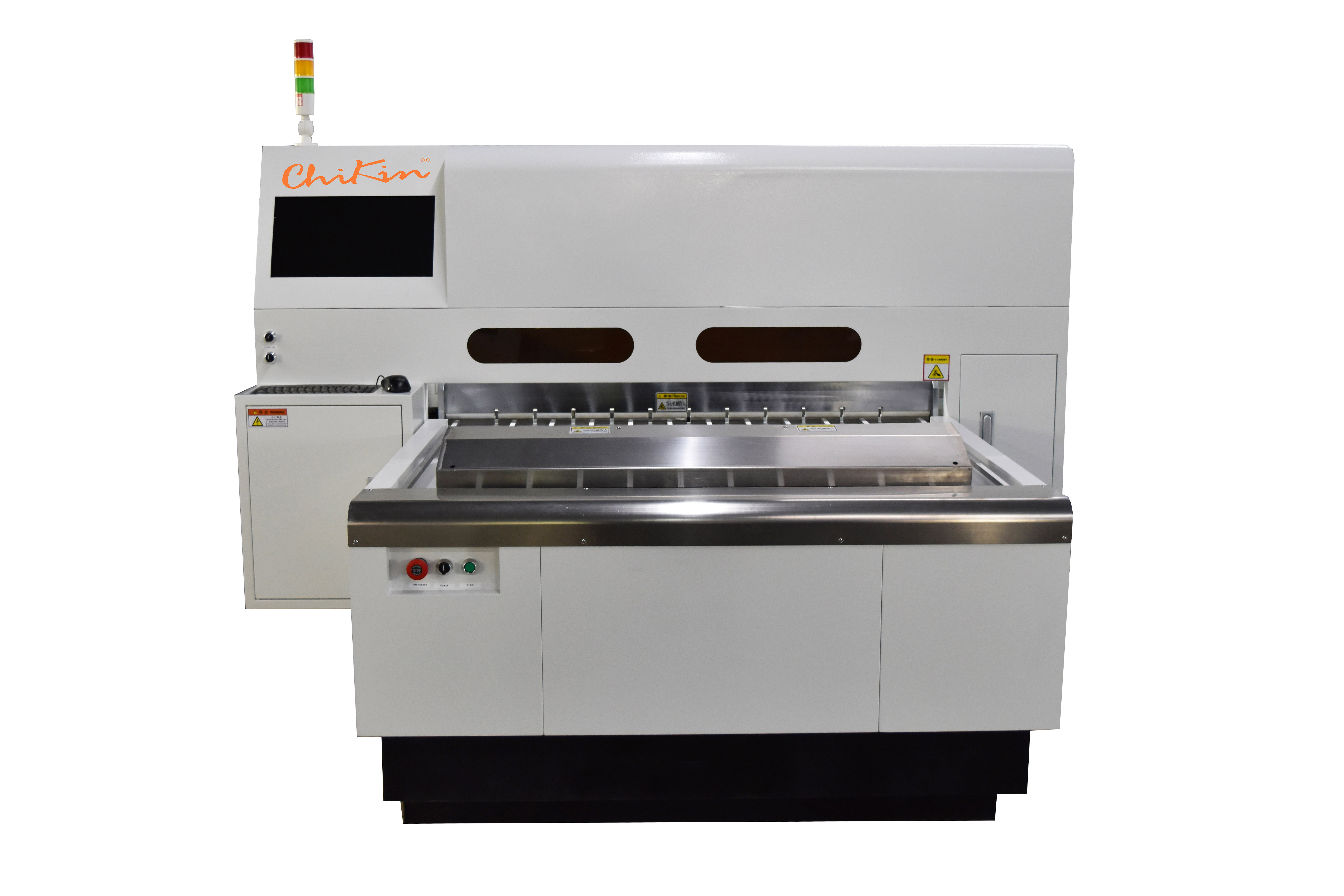
Based on the visible machine design, this unit is an enclosed industrial system with a touchscreen HMI, a status tower light, an emergency-stop control, and a guided work area with fixtures or rails. Those features point to a production-focused machine architecture designed for safe, stable operation in an electronics manufacturing environment. While the exact internal process cannot be confirmed from the image alone, the configuration matches the kind of equipment buyers often evaluate when comparing a PCB V cut machine, a PCB depaneling machine, or a PCB board separator for line use.
Product Overview
A PCB scoring machine or V groove PCB cutting machine is typically used when panels are pre-formed with V-cuts and need to be separated into individual boards. For factories that run mixed PCB lots, a single blade PCB separator can be a practical choice because it concentrates the cutting action into one controlled path. This helps operators work with compact panels, maintain alignment, and reduce the chance of board flex during separation.
The machine shown here appears to use an enclosed workstation layout rather than an open bench design. That matters in real production settings because enclosure, warning labels, and clear operator controls can improve process discipline and reduce accidental contact with moving parts or the processing zone.
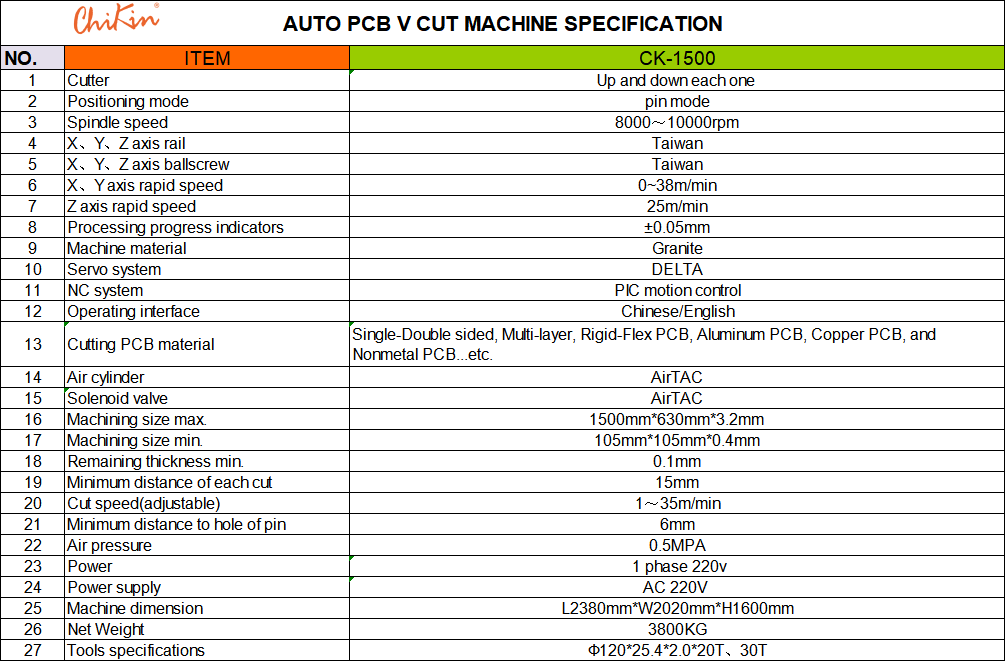
Machine Specification
Key Visible Features
Enclosed cabinet structure
The white metal housing and black base form a rigid cabinet-style body. This layout is common in industrial automation because it supports safety guarding and helps keep the work zone isolated from the surrounding production floor.
Touchscreen control and status lighting
An integrated touchscreen display is visible on the upper front-left area, along with a three-color stack light on top. For operators, these elements make it easier to monitor machine state, confirm readiness, and recognize alarms or cycle status at a glance.
Fixture table and guided loading area
The front work zone includes a tray-like table, rails, and clamp-style elements. In a PCB depaneling machine, this kind of guided interface can help position boards consistently before cutting or transfer.
Materials and Build Considerations
From the visible construction, the machine uses painted steel panels with metal front components and a dark base frame. In electronics production, that kind of industrial enclosure is often chosen for rigidity and long service life. Buyers looking at an automatic PCB V cut machine usually care less about decoration and more about cabinet stiffness, access panel layout, maintainability, and whether the machine can fit into a production cell without complicating service access.
Manufacturing Process and Workflow
For a PCB board separator used in production, the workflow usually starts with panel loading, alignment, and securing the board in a fixture or conveyor-style support. The machine then performs a controlled separation step along the V-groove line. In some factories, the process is integrated with upstream assembly or downstream inspection, which is why enclosed systems with status indicators are often preferred. They help keep the sequence organized and reduce handling errors.
Application Scenarios
This type of equipment is relevant to electronics assembly lines, SMT support operations, contract manufacturing, prototype shops, and board-level production cells where V-cut panels need consistent separation. It may also suit factories that want to standardize depaneling across multiple operators, especially when board handling must stay controlled and repeatable.
Quality Control and Buyer Decision Factors
When selecting a PCB V cut machine, buyers should focus on practical points: board format compatibility, fixture stability, operator safety, service access, and how easily the machine fits the line layout. Since the exact cutting mechanism is not identifiable from the image, it is wise to confirm the tool path, supported board thickness range, and whether the system is intended for manual loading, semi-automatic use, or inline automation. Ask for sample run checks, maintenance guidance, and the control interface details before placing an order.
Customization Guidance
If you are comparing a single cutter PCB V cut machine with a broader PCB depaneling machine, define your panel dimensions, edge quality expectations, and output volume first. Then request matching options such as fixture changes, guide rail adjustments, or control layout revisions. For production managers, the best machine is not the one with the most features; it is the one that matches the board format and operator flow without adding unnecessary complexity.
Talk to Us About Your PCB Cutting Requirement
If your line needs a reliable PCB scoring machine or a single blade PCB separator, send your panel drawings, board sizes, and process requirements. A well-matched V groove PCB cutting machine can improve consistency, protect boards during depaneling, and make daily production easier to manage.