



PCB Depinning Machine Overview
A PCB depinning machine solves a practical production problem: removing pins, terminals, or press-fit contacts from printed circuit boards without turning the board into scrap. In repair benches, prototype labs, and electronics rework lines, manual extraction can bend pads, damage plated holes, and slow down turnaround. A PCB depinning machine provides controlled vertical motion and a stable working position so operators can separate components with more consistency and less hand strain.
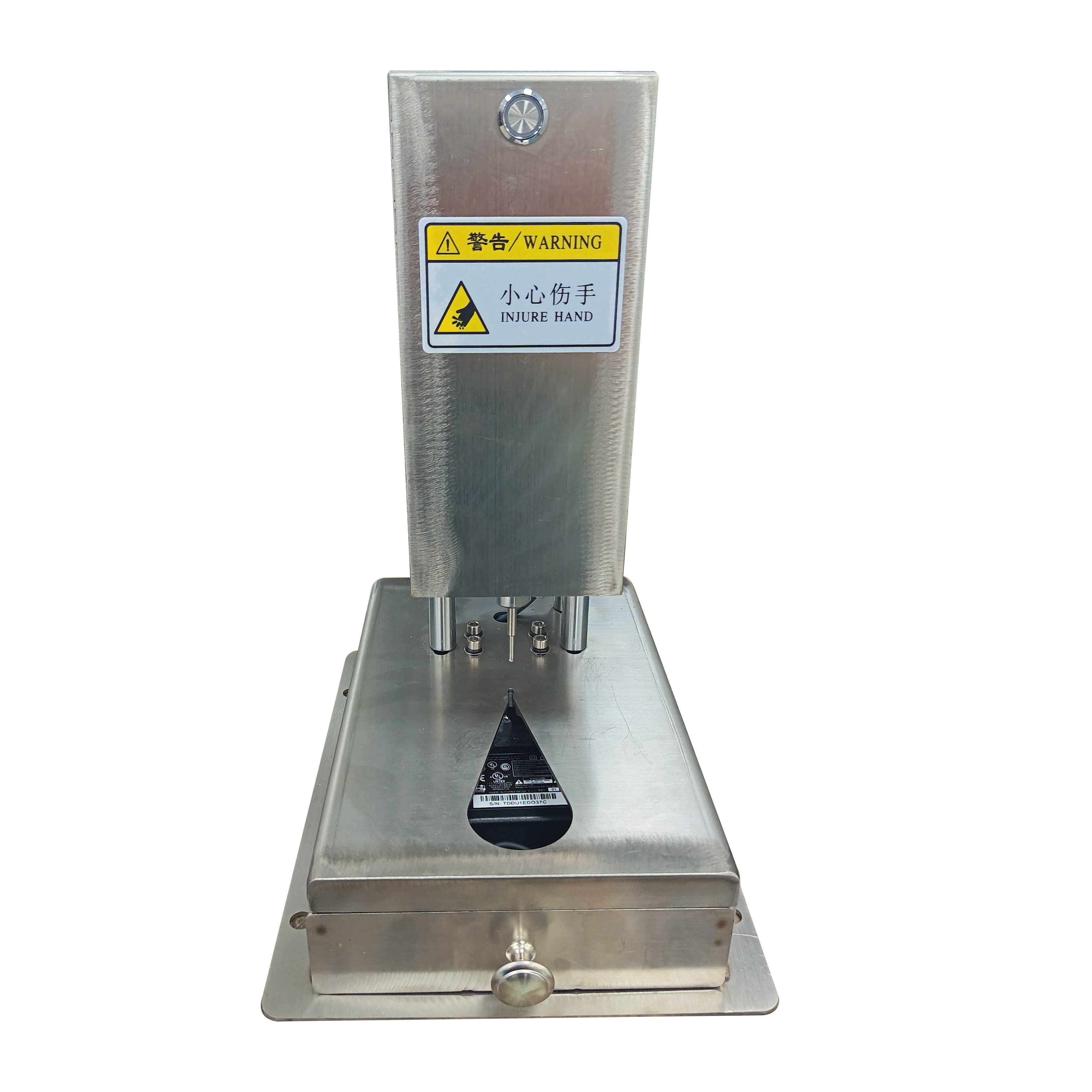
Based on the provided product information, this machine appears to be a compact bench-top industrial unit with a stainless-steel enclosure, an enclosed upper actuator housing, and a recessed working opening on the base. The visible construction suggests a machine designed for repeated hand-safe operation in a shop-floor environment, where precision and operator protection both matter.
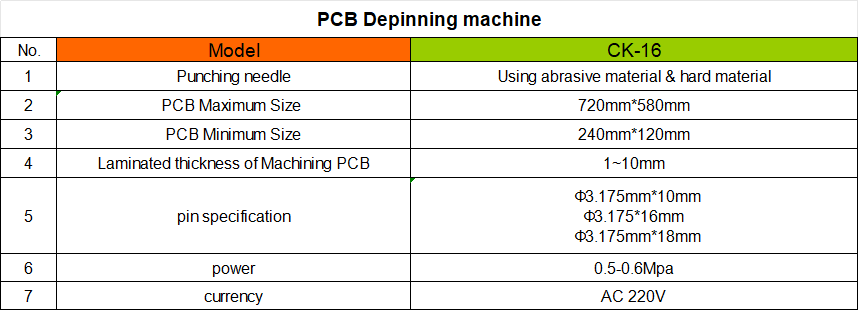
Machine Specification
Product Structure and Visible Features
The visible design shows a rectangular lower base, a tall upper head, and four vertical support posts or guide rods connecting the two sections. That structure is common in compact press-style equipment because it helps keep the motion aligned over the work area. The base includes a recessed access opening or cavity, which is the point where the tooling would interact with the workpiece.
Several details support a manufacturing-use case: exposed fasteners, machined edges, a mounting flange with holes for securing the unit to a workbench, and a front warning label that reads “WARNING / INJURE HAND.” The label is a useful signal for buyers because it indicates a pinch or crush hazard near the moving section and confirms that the machine should be treated as controlled industrial equipment rather than a simple hand tool.
Key Visible Capabilities
Only features that can be verified from the image should be considered here. The machine is compact, bench-mountable, all-metal, and enclosed. Its stainless-steel or brushed metal finish suggests a surface built for shop use, easier cleaning, and resistance to routine wear. The top housing and guide-post layout also indicate a guided vertical action, which is important for consistent force application in depinning, pressing, trimming, or similar processes.
Because the internal tooling is not visible, the exact depinning method cannot be confirmed. Buyers should treat it as PCB pin removal equipment only if the installed tooling and opening geometry match their board and terminal format.
Materials and Finish Options
The visible construction appears to use stainless steel or brushed metal panels with a matte finish. That is a practical choice for electronics production areas, where machines may be exposed to flux residue, dust, fingerprints, or frequent handling. Stainless-style construction also fits a machine that needs a rigid frame and a clean, professional look on the line.
If you are specifying PCB pin removal equipment for a facility, finish options usually matter for corrosion resistance, cleanability, and long-term appearance. A brushed finish can hide minor scuffs better than polished metal, while sealed seams and solid fasteners support easier maintenance.
Manufacturing and Working Principle
From the visible layout, this PCB board pin removing machine appears to rely on a guided actuator head and a lower work cavity. In practical terms, that means the operator places the board or component into position, aligns it under the tooling, and then uses the machine’s vertical motion to apply controlled force. This is a common approach in small-scale industrial fixtures because it improves repeatability and helps reduce uneven hand pressure.
The exact power source, stroke, force, and automation level are not provided, so those should not be assumed. However, the enclosed head and guide rods suggest a machine that prioritizes alignment and hand safety during the depinning process.
Application Scenarios
A printed circuit board pin extractor like this is relevant anywhere boards need to be reworked, repaired, or separated from press-fit contacts. Typical settings may include electronics maintenance rooms, small-batch assembly operations, laboratory prototypes, and production support stations. It may also be useful in workflows that involve small-part punching, trimming, forming, or clamping where a vertical press action is needed.
For PCB work specifically, the value is in reducing damage. A controlled extraction station can help protect solder pads, plated-through holes, and surrounding components when compared with improvised manual methods.
Quality Control and Buyer Decision Factors
When evaluating a PCB pin remover, buyers should look at several practical points: work surface stability, alignment of the guide posts, accessibility of the tooling area, operator safety features, and the rigidity of the frame. A compact machine can be attractive for space-limited benches, but only if the opening size, tooling reach, and board support match the real application.
Quality control in this category usually focuses on frame accuracy, assembly consistency, surface finish, and safe motion behavior. Since the image shows a warning label and enclosed housing, it is sensible to ask about guarding, maintenance access, and whether the machine can be adapted to different PCB formats or terminal types.
Customization Guidance
If you are sourcing a PCB depinning machine for a specific line, customization may be needed around the tooling head, base opening, mounting pattern, and operator controls. For boards with different connector sizes, the most important question is whether the working cavity and contact point can be adapted without compromising alignment. Buyers should also confirm whether the machine is intended for manual, semi-automatic, or fully automatic operation, since that affects throughput and training.
For OEM or special-purpose use, ask for dimensional drawings, mounting details, and a clear description of the mechanism inside the head. Those details determine whether the machine can handle your board family safely and consistently.
Why This Machine Is Worth a Closer Look
In a production environment, the best machine is not always the most complex one. Sometimes the right choice is a compact, sturdy, bench-top system that keeps the operator focused and the workpiece supported. This PCB depinning machine, as presented in the available information, offers the core signs buyers want to see: metal construction, controlled vertical structure, a stable base, and safety awareness. If your operation needs dependable PCB pin removal equipment or a similar press-style station, it is worth requesting the exact tooling specification before making a decision.
Request the Right Configuration
Send your board sample, pin type, and workpiece dimensions, and ask for the matching setup. With the correct tooling and support geometry, a PCB board pin removing machine can improve rework consistency, lower damage rates, and make operator workflow much cleaner. Contact the supplier to confirm the machine structure, available options, and whether this printed circuit board pin extractor fits your production needs.