




Pick and Place Machine Overview
A Pick and Place Machine is used to automate precise component handling and placement, helping manufacturers reduce manual labor, improve consistency, and speed up repetitive assembly work. In electronics production, the main buyer problem is usually the same: small parts must be positioned accurately and repeatably without slowing the line down. This type of machine addresses that challenge by combining controlled motion, operator supervision, and stable industrial construction.
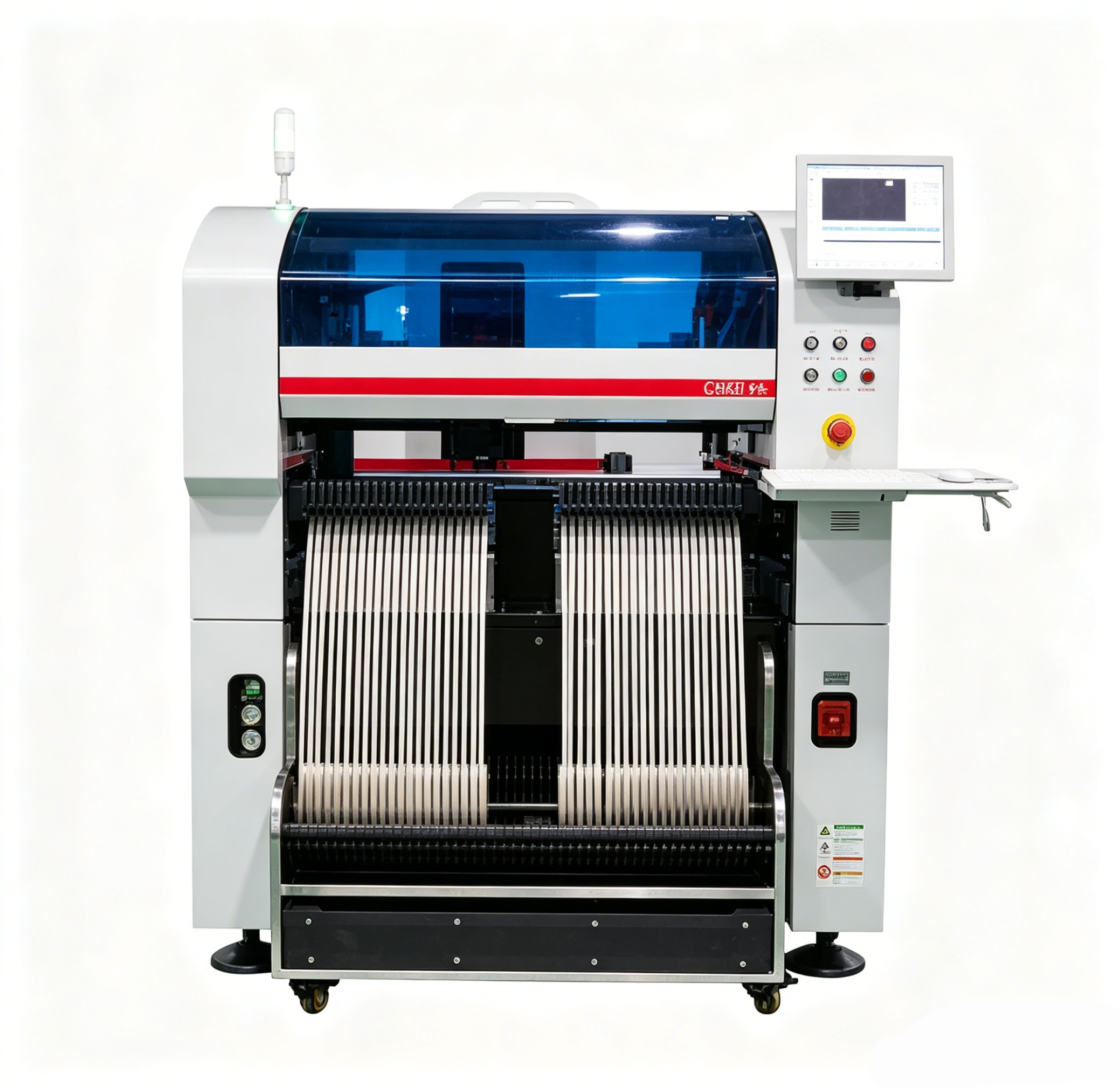
Based on the provided product details, the machine appears to be a floor-standing automated industrial unit with an enclosed white housing, a blue transparent upper cover, a front section with many evenly spaced vertical elements, and a right-side control station with a display, buttons, and an emergency stop. The exact machine type is not fully identifiable from the image information alone, so this page focuses on the visible structure and general industrial use case without assuming hidden specifications.
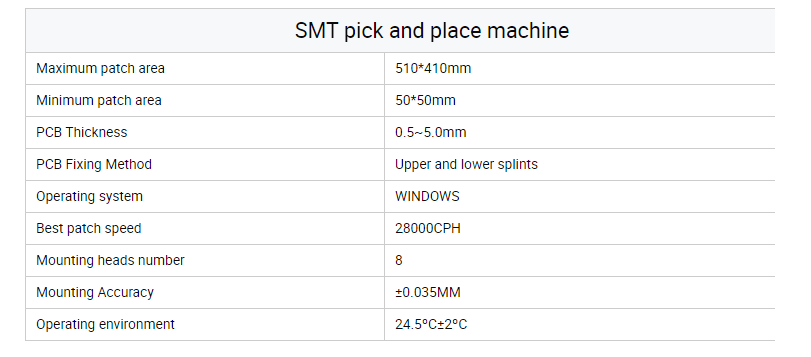
Product Reference and Visible Structure
The machine is built as a large enclosed system designed for shop-floor operation. The housing appears to protect the working area while still allowing visual inspection through the transparent upper cover. That layout is useful when a buyer wants to monitor process movement without exposing the operator to unnecessary risk.
The front section includes many evenly spaced vertical pins, bars, or needle-like elements. Because the exact internal mechanism is not confirmed, this should be treated as an observable feature rather than a claimed function. What is clear is that the machine is engineered for organized, repeatable handling across a defined working area.
The right-side control panel adds practical operator access. A small display screen, push buttons or switches, and a prominent emergency stop button suggest that the equipment is intended for controlled automated use with quick intervention when needed.
Key Capabilities Buyers Usually Look For
Controlled repetitive operation
For manufacturers evaluating a PCB Pick and Place Machine or similar assembly equipment, the main expectation is stable repeatability. In a general industrial setting, that means the system should support structured motion, predictable positioning, and straightforward operator oversight.
Enclosed working zone
The blue cover and full metal housing indicate a guarded machine layout. Enclosure is often important in automated production because it helps separate the working zone from routine operator contact and keeps the process visually accessible.
Floor-standing industrial frame
The base appears designed for stable placement on a factory floor. That matters when equipment must run in a production environment where vibration control, leveling, and accessibility all affect daily use.
Materials and Finish Options
Only the visible exterior can be described with confidence here. The body appears to use painted or coated metal panels in white, with a blue transparent guard section. Such a combination is common in industrial machinery because metal panels provide structure, while transparent guarding improves visibility.
If you are specifying a SMT Pick and Place Machine or other automated production equipment, material choices usually center on frame rigidity, corrosion resistance, ease of cleaning, and service access. Final material and finish options should be confirmed with the equipment supplier based on your plant conditions and maintenance requirements.
Manufacturing Process and Operation Context
Although the exact process cannot be verified from the supplied image description, the machine clearly belongs to an automated production category. For buyers comparing a Surface Mount Placement Machine or any PCB Assembly Machine, the essential questions are how the machine is loaded, how parts are positioned, how the control interface works, and how the system is safeguarded during operation.
The presence of a screen and emergency stop button suggests a workflow built around setup, monitoring, and controlled execution. That is a common requirement in industrial automation, where the operator needs both visibility and immediate shutdown access.
Application Scenarios
The visible industrial design suggests use in factory settings where repeatable processing is important. Possible application scenarios include production lines, sample runs, prototype builds, and manufacturing workflows that require precise machine-assisted handling. The provided information also mentions textile, garment, knitting, or weaving-related possibilities, but the exact process type is not confirmed and should not be assumed.
For buyers comparing SMT Assembly Equipment, the same general decision logic still applies: inspect the machine layout, verify the control interface, understand the guarding, and match the configuration to your production flow.
Quality Control and Buyer Decision Factors
When evaluating this kind of machine, buyers typically focus on structural stability, accessibility of controls, visibility into the working area, safety features, and serviceability. A good procurement decision also depends on whether the machine integrates well with existing operators, line layout, and maintenance practices.
Because exact performance data is not provided, it is wise to request confirmation of working width, cycle behavior, supported materials or components, power requirements, control functions, and any process-specific compatibility. If you are sourcing a Pick and Place Machine for a production line, these details will matter more than appearance alone.
Customization Guidance
Customization should be discussed around the actual process you need to run. Buyers may need changes to the control interface, enclosure layout, working zone, mounting arrangement, or operator access points. If the machine is intended for electronics production, ask whether it can be configured as a PCB Pick and Place Machine or adapted into a dedicated placement line. If it is for another industrial process, the supplier should explain how the system fits that workflow without overpromising unverified capabilities.
Request the Right Configuration
If you are comparing automated equipment for assembly or industrial processing, this machine is best reviewed as an enclosed, operator-controlled production system with visible safety and control features. Share your process requirements, target workflow, and factory constraints so the supplier can confirm whether the configuration matches your application.
Contact us with your production details to discuss the most suitable Pick and Place Machine configuration for your line.