



Engineered Web Handling with the PCB Coated Roll Coating Machine
In modern electronics manufacturing, substrate surface integrity dictates yield rates, and managing delicate film laminates or protective overlays without introducing air entrapment, creases, or surface contamination is an ongoing battle. The PCB Coated Roll Coating Machine directly addresses this engineering bottleneck by providing stable, repeatable roll-to-roll web transport designed for thin-film transfer, liner separation, and precision coating passes. By stabilizing unwind tension and nip contact through a dedicated mechanical chassis, this equipment prevents layer distortion and helps facilities eliminate substrate scrap during critical processing stages.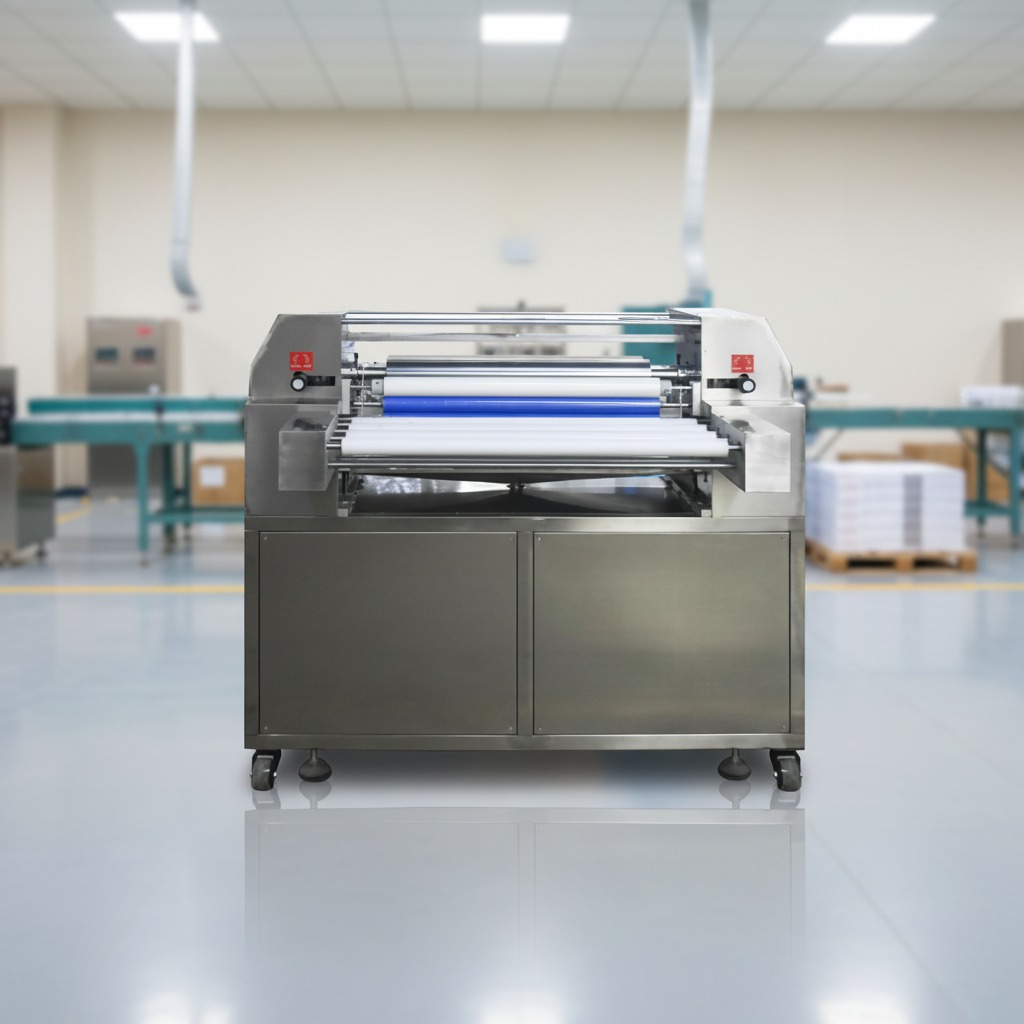
Product Overview: Structural Layout and Mechanical Architecture
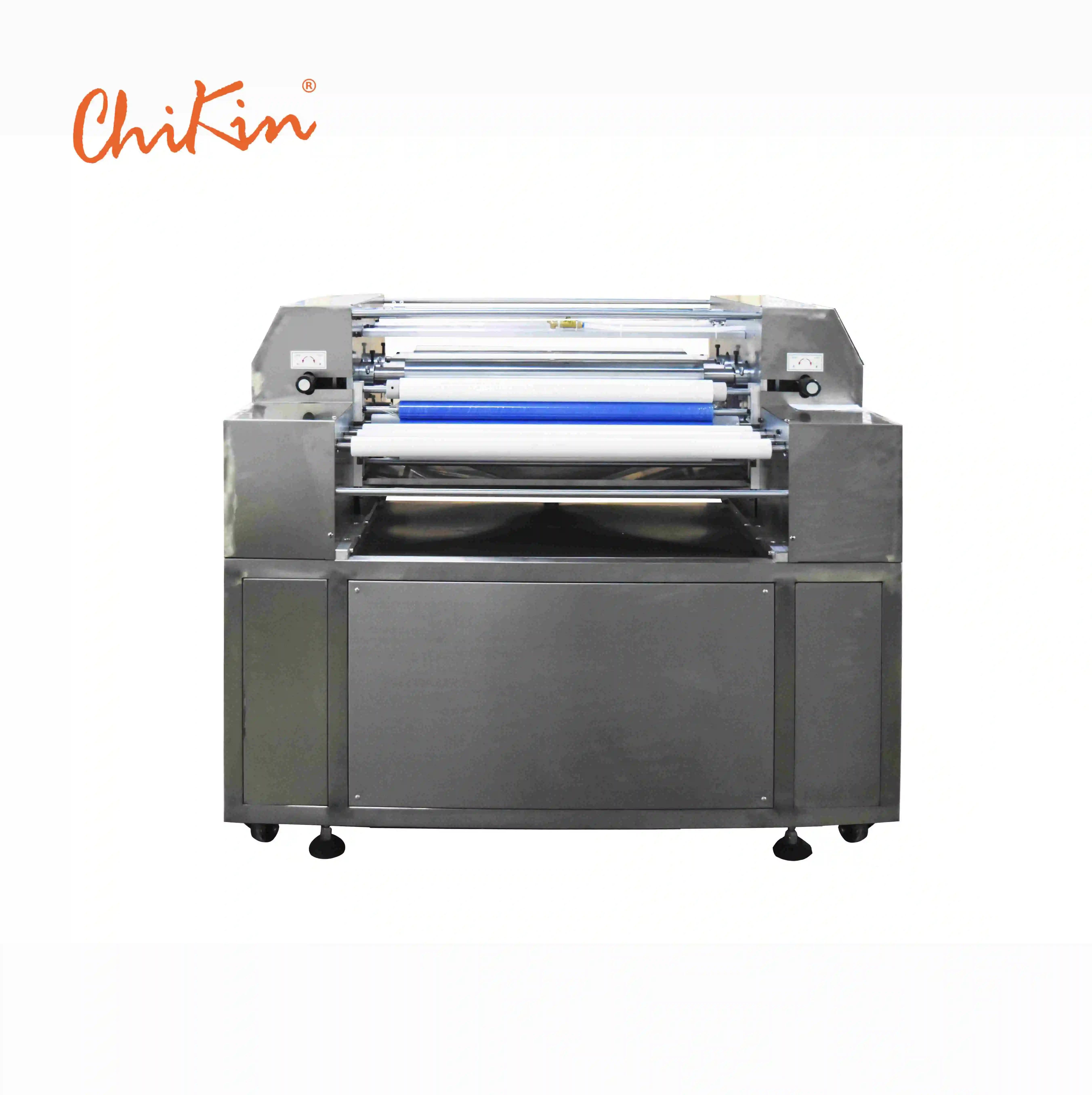
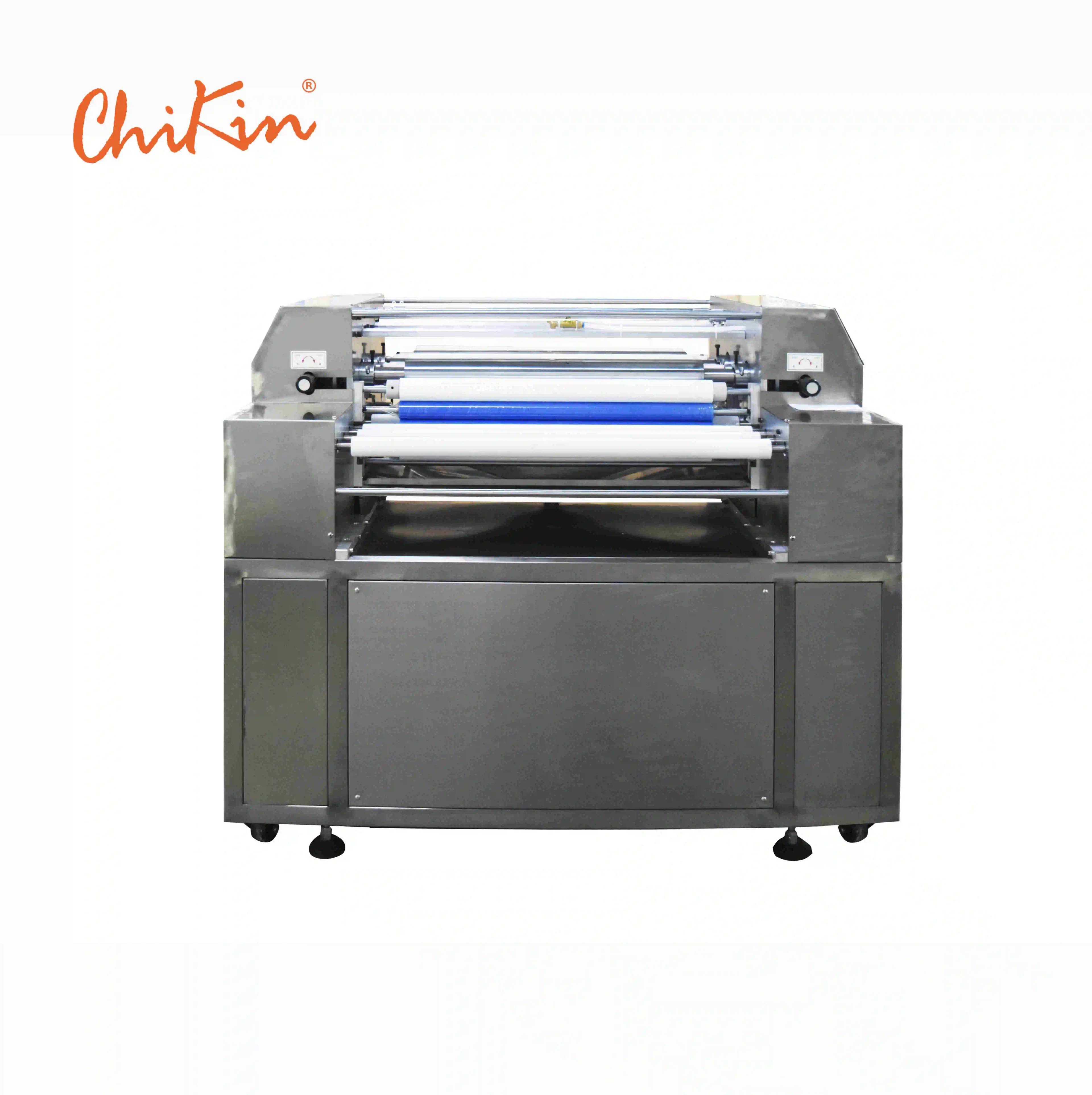
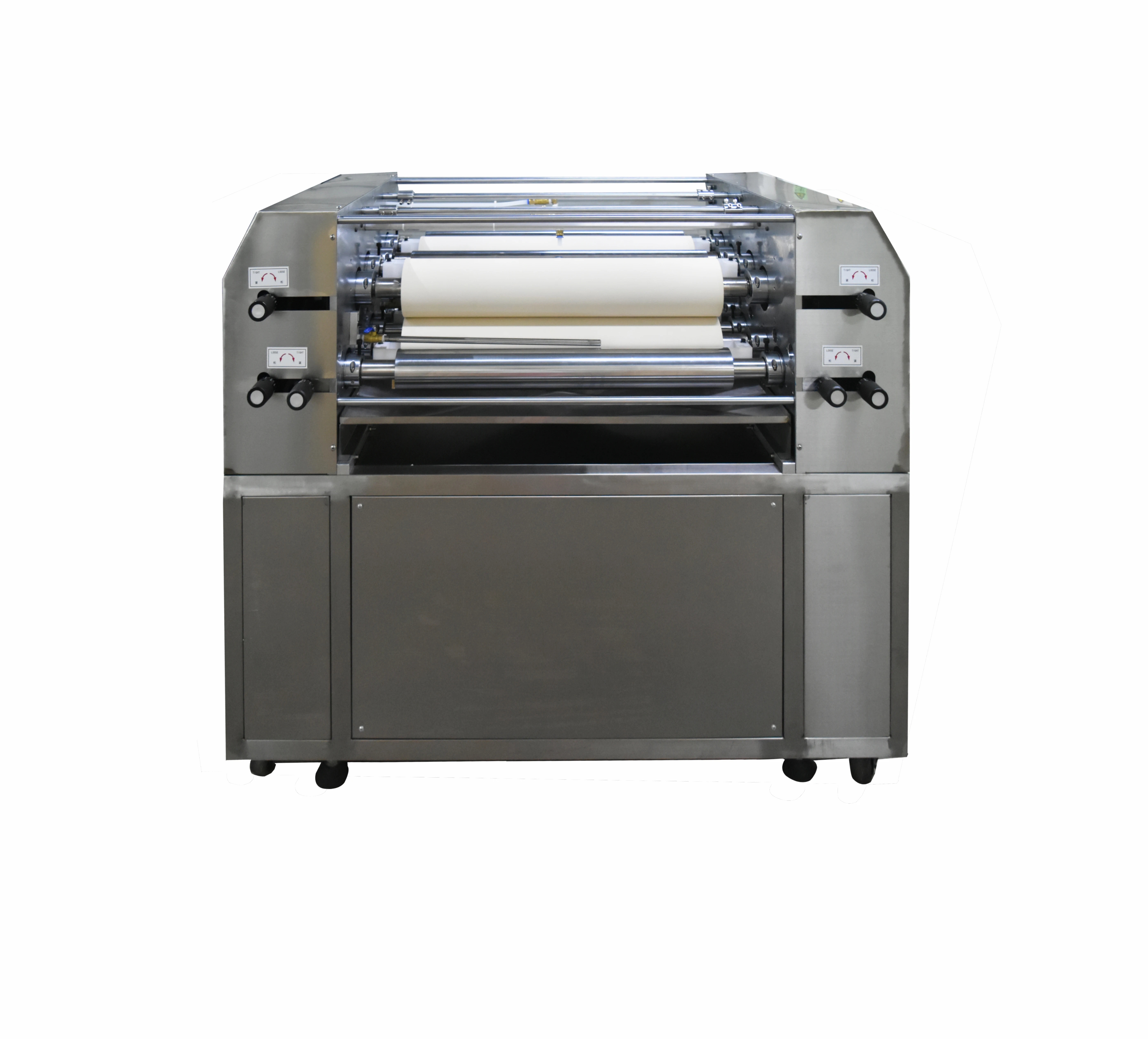
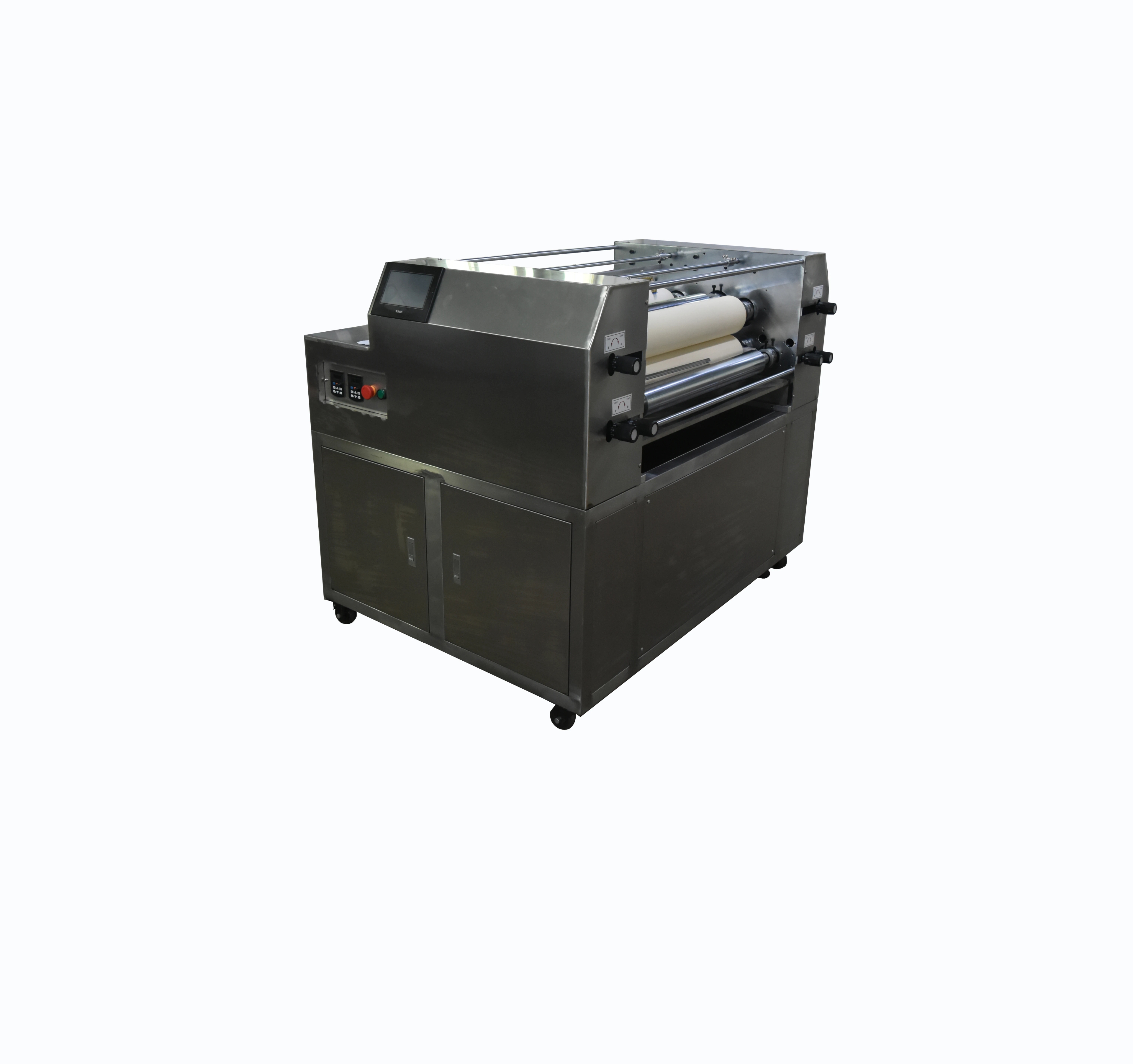
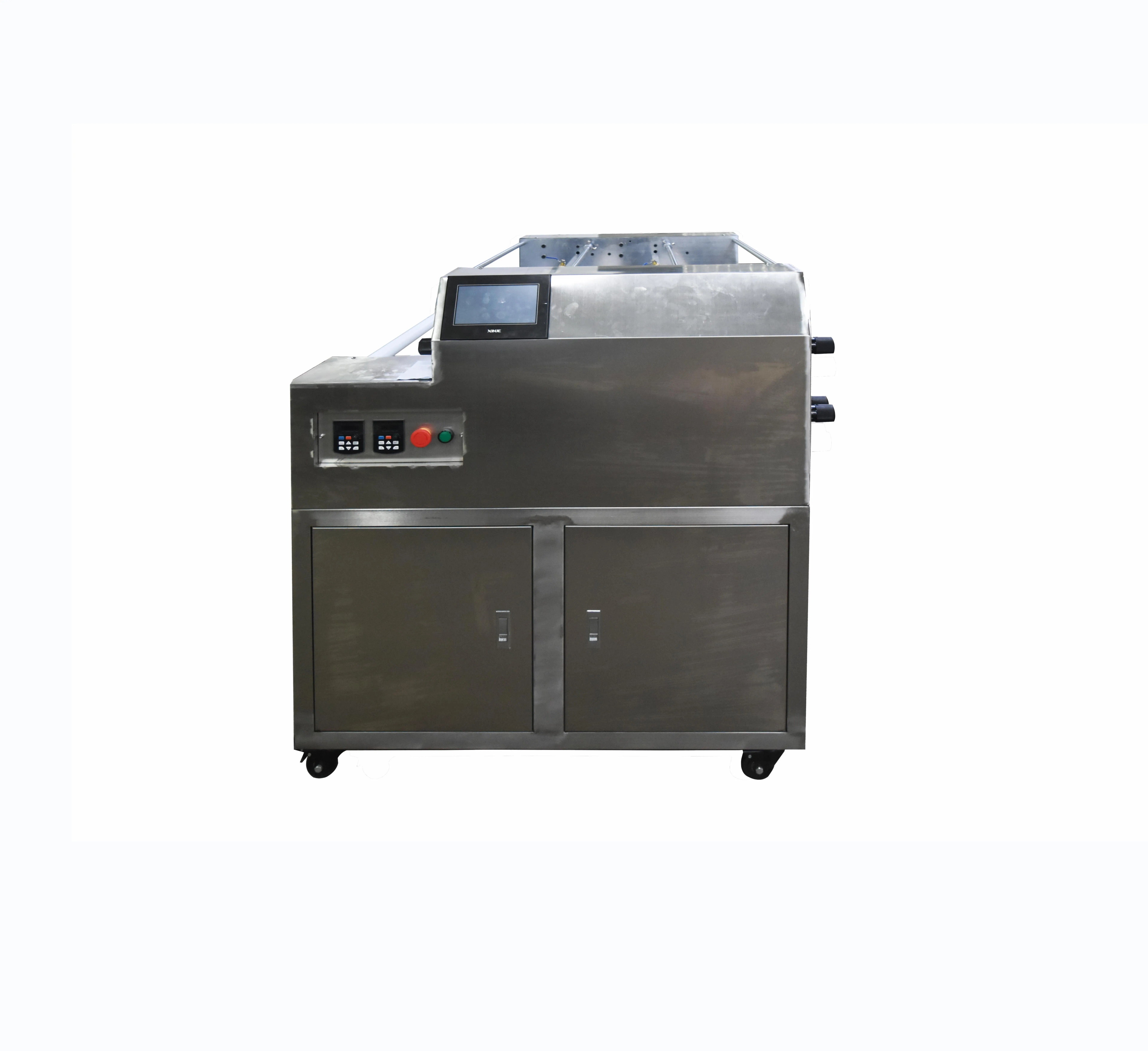
Built as a stand-alone horizontal web-handling platform, the unit accommodates roll-fed materials spanning protective release liners, thin barrier films, and coated substrates. The open-bay upper assembly exposes the core web path for rapid inspection and loading, featuring an upper unwind/mandrel position, a precision horizontal nip zone, and forward guide or rewind rolls.
Dual rotation-direction decals placed on the drive housings ensure proper web threading and drive synchronization, reducing operator setup errors on busy shop floors. The functional foundation rests on a heavy-gauge brushed stainless steel lower enclosure. Folded-panel construction yields high torsional rigidity, while two flush-mounted access doors conceal the internal motors, gearing, and electrical switchgear, shielding drive components from particulate exposure and manufacturing aerosols.
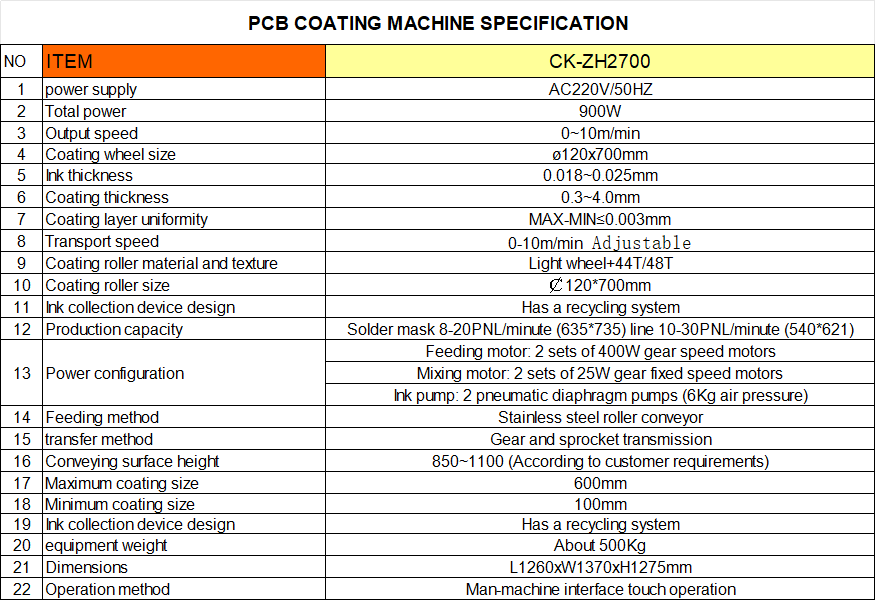
Machine Specification
Key Capabilities and Roller Mechanism
At the heart of this roller coating machine configuration is a dual-roller interface engineered for uniform linear contact across the moving web:
- Compliant Nip Roller Assembly: Features a dedicated blue polymer, silicone, or rubber-coated assist roller situated directly beneath the web path. This compliant outer layer cushions the substrate, equalizing contact pressure and avoiding pinpoint stress concentrations.
- Manual Adjustment Screws: Heavy-duty knurled adjustment knobs on the side housings permit micro-positioning of the roller gap and tension bias, allowing operators to compensate for slight variations in carrier film thickness.
- Directional Verification: Prominent drive indicators establish unambiguous clockwise rotation paths, safeguarding web tension and preventing accidental reverse feed during film changeovers.
- Horizontal Guide Integration: A high-mounted guide rail stabilizes the upper web entry, minimizing side-to-side drift before the material engages the nip rollers.
Materials, Construction, and Mobility
Industrial electronics environments require machinery that can withstand continuous operation without shedding contaminants. The machine exterior is fabricated entirely from brushed stainless steel sheet, delivering an easy-to-sanitize surface that resists common processing chemicals, fluxes, and cleaning solvents. The smooth, directional grain of the folded stainless panels prevents grime accumulation around seams and mounting joints.
Operational flexibility is built into the base assembly. The machine incorporates heavy-duty swivel casters paired with threaded leveling pads. Manufacturing teams can effortlessly maneuver the workstation between processing bays, align it alongside upstream or downstream feeders, and then drop the vibration-damping leveling feet to lock the frame solidly in plane. This dual mobility-stability system is ideal for production facilities running dynamic cell layouts or modular prototyping lines.
Application Scenarios Across Manufacturing Lines
While web handling serves diverse converting sectors, this system excels when integrated as a PCB finishing machine or upstream preparatory module:
- PCB Board Protection: Applying dry film resist, masking tapes, or clear surface liners over etched boards or base laminates prior to handling, routing, and transit.
- Inline Secondary Processing: Acting as a dependable PCB process machine for intermediate film unwind, peeling of protective release layers, or pressing conductive adhesive transfer tapes.
- Specialized Web Converting: Handling thin polymer sheets, label matrices, and technical textiles where uniform nip compression is mandatory.
- R&D and Sampling Workstations: Providing an independent, small-footprint platform to test roll coatings, experimental adhesives, or thin-substrate laminations without occupying primary high-volume production tracks.
Quality Control, Setup, and Maintenance
Achieving flawless film transfer requires strict alignment discipline. Mechanical quality control focuses on roller parallelism, ensuring that the blue elastomeric nip and its mating steel roller exert identical contact pressure across the entire working width. Periodic checks using contact pressure films allow technicians to calibrate the side adjustment knobs accurately.
Routine maintenance is straightforward thanks to the exterior design. Cleaning the stainless steel casing requires standard lint-free wipes and non-abrasive industrial cleaners. Because the lower compartment fully encloses the mechanical drive train, drive belts, bearings, and wiring stay shielded from adhesive residue, web dust, and ambient debris, reducing unplanned downtime and bearing wear.
Buyer Decision Factors and Integration Guidance
When evaluating a roller coating machine or film laminating station for printed circuit board fabrication, engineers must prioritize mechanical consistency and footprint adaptability. Because production demands fluctuate, having a compact unit capable of quick relocation without sacrificing mechanical alignment delivers high capital return.
Prospective buyers should analyze specific process requirements before finalizing integration:
- Web Width and Core Sizes: Verify that production web dimensions, roll diameters, and internal core sizes match the mandrel geometry and frame clearance.
- Substrate Sensitivity: Determine whether the standard compliant blue roller compound aligns with the chemical makeup of your proprietary films, adhesive carriers, or soldermask coatings.
- Line Automation: Evaluate whether the workstation will operate as an operator-tended stand-alone unit for batch processing or interface with continuous automation lines.
Upgrade Your Film Application Consistency
Do not let inconsistent film tension, poor nip contact, or makeshift web stands compromise your PCB board protection standards. Investing in a robust, cleanable PCB finishing machine stabilizes web-handling variables, lowers rejection rates, and elevates your overall process control. Contact our technical engineering team today to review your roll dimensions, discuss custom roller durometers, and configure the ideal setup for your production floor.