




SMT Milling Machine for Precision Board Cutting and Automated Separation
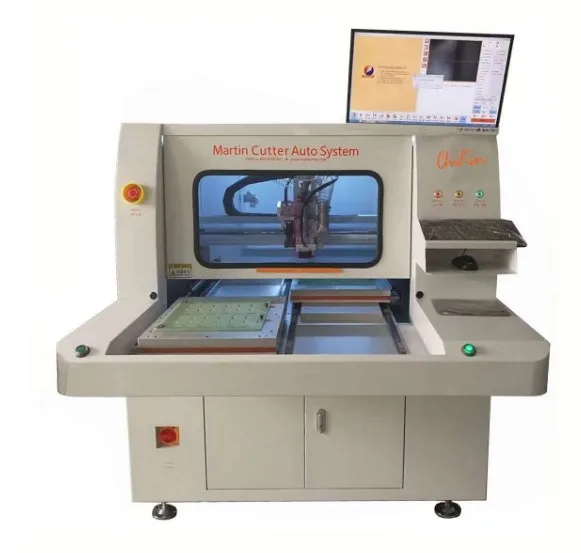
An SMT Milling Machine helps manufacturers solve a common production problem: how to separate boards and flat parts cleanly, repeatedly, and with less manual handling. In PCB-related workflows, that means reducing edge damage, improving consistency, and supporting higher throughput when panels or sheet materials need controlled cutting. Based on the visible machine structure, this enclosed system appears designed for automated cutting or engraving in a guarded work area, with a monitor, emergency stop controls, and a flat fixture table for stable positioning.
Product Overview
This machine is presented as an industrial CNC cutting platform with a fully enclosed cabinet and a moving tool carriage inside the working chamber. The layout suggests a floor-standing system built for precision motion over a planar work surface. For buyers searching for an Automatic PCB Cutter, PCB Board Cutting Machine, or Automatic PCB Separator, this type of equipment is typically evaluated for stability, operator safety, and repeatable positioning rather than only raw speed.
The visible branding appears to reference a “Martin Cutter Auto System,” though the exact cutting method cannot be confirmed from the image. It may be a CNC knife, engraving, or similar automated cutting process. Because that detail is uncertain, it is best to treat the machine as a general automated PCB Board Splitting Machine or flat-sheet cutting solution until technical specifications are verified.
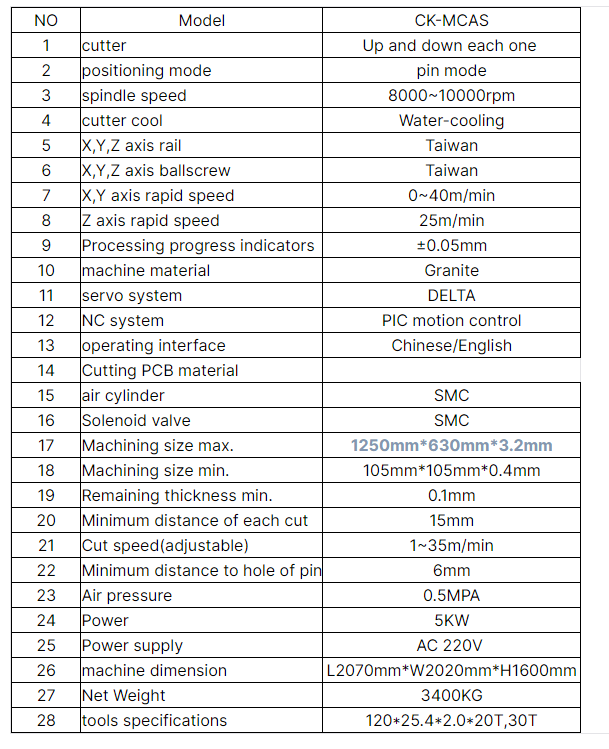
Specification
Visible Structure and Key Capabilities
Enclosed cutting chamber
The large front window and enclosed housing help contain the working area and give operators a direct view of the process. This design is useful where dust, chips, or moving tool hazards need to be controlled.
Integrated control interface
A top-mounted monitor suggests computer-based operation, likely for job setup, tool path control, and process monitoring. Side controls and emergency stop buttons provide immediate machine intervention when needed.
Flat fixture table
The internal work surface appears to use a grid-like plate or clamping platform. That kind of table is practical for holding panels, thin sheet goods, patterns, and other flat materials during repeat cutting cycles.
Materials and Machine Finish
The housing appears to be made from painted metal panels in a light gray or cream industrial finish with darker trim and a transparent viewing panel. This is typical of factory equipment designed for day-to-day use. In B2B manufacturing settings, the cabinet finish matters because it supports routine cleaning, resists wear from handling, and presents a clear separation between the operator area and the motion system.
Manufacturing Process and Working Principle
From the visible layout, the machine likely uses a digital motion system to move a tool head across the work area in controlled axes. That makes it suitable for repetitive paths, part outlining, and fine positional control. The exact cutting process is not confirmed, so buyers should verify whether the system uses a knife, milling spindle, router, or another tool technology before matching it to a production line.
For PCB-related use, the key value is controlled separation. An Automatic PCB Cutter or PCB Martin Auto Cutter System is often chosen when factories need more consistent board edge quality than manual routing or hand separation can provide.
Application Scenarios
This machine concept fits a range of flat-material operations:
PCB panel depaneling and board separation
Sample and prototype part cutting
Flexible material or gasket-like part production
Pattern cutting for industrial fabrication
Sheet-based component trimming
Where repeatability matters, an SMT Milling Machine can support production cells that need organized part flow and less operator variation.
Quality Control and Safety Features
The visible emergency stop buttons, enclosed chamber, and controlled loading area are important safety and process features. In any PCB Board Cutting Machine selection, buyers should also ask about spindle or tool balance, motion repeatability, dust extraction, fixture accuracy, and maintenance access. Those factors have a direct impact on yield and uptime even when the machine looks robust on the outside.
Customization and Buyer Decision Factors
Before purchasing, define the board size, panel format, material type, and desired cut path. Also confirm whether the system is intended for PCB separation, flexible sheet cutting, or general industrial trimming. Buyers comparing an Automatic PCB Separator with other cutting systems should review:
available working area
software and file compatibility
fixture method
operator safety design
service access and consumable support
actual cutting mechanism
If the application involves PCB panels, ask for sample process confirmation rather than relying only on the machine category name.
Request a Suitable Configuration
If you are evaluating an SMT Milling Machine for your production line, share your material type, panel dimensions, and target process. A suitable configuration can then be matched to your workflow, whether you need a PCB Board Splitting Machine, an Automatic PCB Cutter, or another automated cutting solution. Contact us with your application details to review the right setup.