



Air Bearing Spindle Shaft Overview
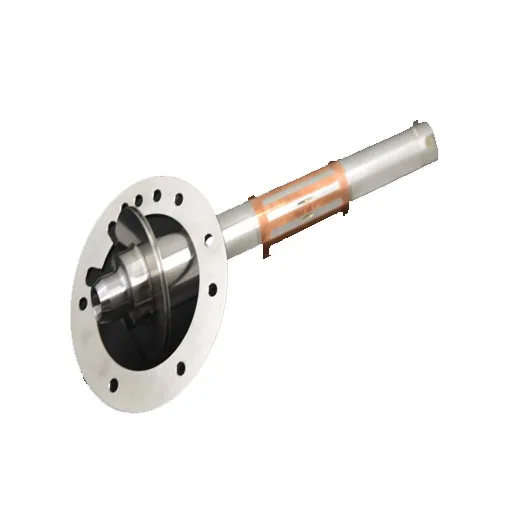
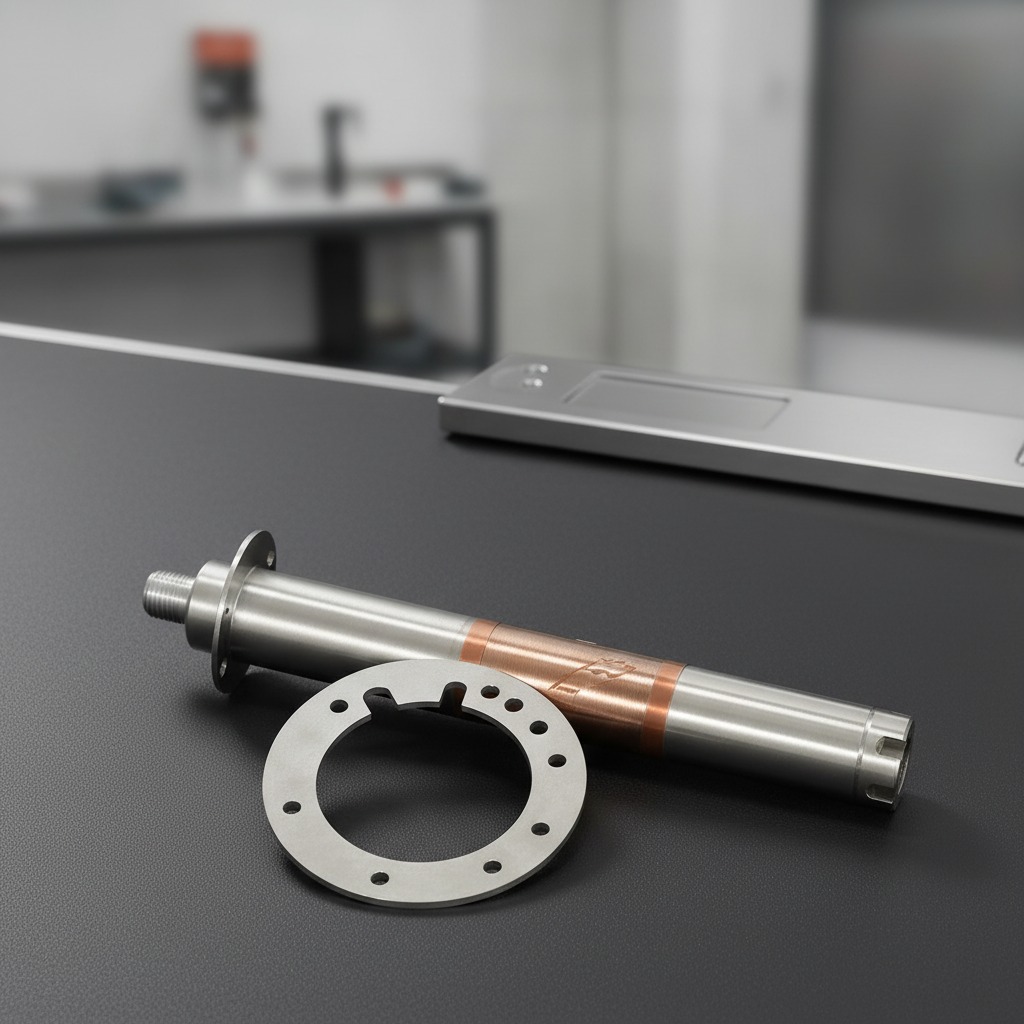
An Air Bearing Spindle Shaft is used where a machine needs smooth rotation, stable support, and accurate alignment without unnecessary mechanical noise or vibration. In industrial systems, the buyer’s problem is often the same: a rotating shaft must run concentrically, repeatably, and with a mounting interface that fits the machine structure. The machined shaft and flange-style adapter shown here reflect that kind of precision component use, whether the part serves as a spindle shaft, rotating shaft, or a custom coupling element in an assembly.
Based on the visible geometry, this part family appears suited for equipment that relies on controlled rotation and rigid mounting. The cylindrical body, stepped shoulders, and bolt-circle flange indicate a design intended to locate, fasten, or support a rotating element in a fixed housing or fixture.
Product Reference and Functional Overview
This component is best understood as a precision-machined metal rotating part, with features commonly found in spindle and rotor assemblies. The main shaft portion has a smooth turned surface, while the round flange provides a bolted interface for secure installation. In many machine designs, this combination helps transmit rotational motion while keeping the assembly centered and mechanically stable.
The visible construction suggests an industrial part rather than a decorative or general-purpose item. The concentric form, multiple fastening holes, and clean machined surfaces point to a piece meant for OEM equipment, repair work, or a custom mechanical build.
Key Visible Specifications and Capabilities
Geometry
The part shows a cylindrical shaft section, a stepped shoulder, and a circular flange with evenly spaced bolt holes. A separate ring or plate with a central opening appears alongside the main component, which may serve as a companion mounting or retaining element. The exact hole pattern, diameters, and depth are not visible, so those details should be confirmed from drawings or samples.
Rotation-oriented design
The symmetry and surface finish suggest a component made for rotational service. For buyers evaluating a Spindle Shaft, concentricity, balance, and interface accuracy are usually more important than cosmetic appearance. The visible layout supports that type of application.
Assembly compatibility
The flange-style end makes the part easier to bolt into a housing, frame, or fixture. That can simplify installation in systems where alignment and repeat mounting are required.
Materials and Finish Options
The visible part appears metallic, most likely steel or stainless steel based on the silver machined finish. A copper-colored section with contrasting inserts or slots is also visible on one version of the part, which may indicate a special sleeve, wrapped feature, or inserted element. The exact alloy cannot be confirmed from the image alone.
For parts like a Precision Spindle Shaft, buyers often choose materials based on rigidity, corrosion resistance, wear behavior, and compatibility with surrounding components. Common finish choices in this category include machined, ground, polished, or treated surfaces, depending on the application. If the shaft is used in a demanding environment, surface protection and material selection become important decision points.
Manufacturing Process
The visible surface quality strongly suggests CNC turning for the cylindrical features and CNC drilling or milling for the flange hole pattern. If the copper-toned section is part of the same assembly, secondary fitting or assembly work may also be involved. A High Speed Spindle Shaft typically depends on consistent geometry, so final machining and inspection are usually key steps in the process.
In practical manufacturing, the sequence often includes rough machining, finish turning, hole creation, edge finishing, and then assembly or balancing if required. Exact tolerances and finishing standards are not visible here, so those should be specified during procurement.
Application Scenarios
This type of part can fit a wide range of industrial uses. Typical scenarios include automation equipment, motors, pumps, compressors, rotating fixtures, custom machine tools, and OEM replacement assemblies. The flange suggests a bolt-on interface, which is useful when the component must be aligned to a housing or frame.
In test rigs or laboratory equipment, a machined shaft with a mounting flange can also serve as a controlled support or transfer element. For rebuild projects, the same format may be selected to replace worn rotating parts with a more stable machined version.
Quality Control Considerations
Because the visible product is a rotation-related machined part, buyers should pay attention to dimensional control, concentricity, runout, hole positioning, and surface condition. The image shows a clean machined finish, but no measurable data is visible. Before ordering, confirm all critical requirements through drawings or samples.
For an Air Bearing Spindle Shaft or related spindle component, inspection usually focuses on shaft straightness, shoulder integrity, flange flatness, and the accuracy of the mounting pattern. If the part will run at higher speed, dynamic balance may also be important, though no balance data is provided here.
Customization Guidance for Buyers
Custom machining is often the right approach when the shaft must match a specific housing, motor, bearing set, or fixture. Buyers should define the outside diameter, flange thickness, bolt-circle layout, center bore, end feature, and any special sleeve or insert requirements. If the part is intended as a Precision Spindle Shaft, provide the operating speed range and loading conditions so the design can be matched more effectively.
It is also useful to share the intended assembly order and any sealing, coupling, or alignment constraints. That reduces the risk of fit problems after production.
How to Evaluate the Right Part
When comparing options, look at fit, machining accuracy, material suitability, and maintenance needs. A good Spindle Shaft should match the machine interface closely and support repeatable rotation under the required conditions. If the application involves heat, moisture, or chemical exposure, material choice becomes even more important than the finish alone.
For buyers sourcing replacement or custom parts, the best starting point is a drawing, a sample, or a dimensioned photo with key measurements marked. That allows the supplier to confirm manufacturability before production begins.
Request a Custom Quote
If you need a machined rotating component, mounting flange, or custom spindle-style assembly, share your drawing, sample, or required dimensions for review. A clear specification helps match the geometry, material, and machining method to your machine requirements.
Contact us with your part details to discuss a custom Air Bearing Spindle Shaft or related precision-machined shaft assembly for your equipment.