



Tungsten Carbide PCB Drill Bits for Precision Board Manufacturing
Tungsten Carbide PCB Drill Bits are used when a circuit board maker needs clean, repeatable holes without excessive tool wear or burrs. In PCB fabrication, the main challenge is simple but demanding: drill very small apertures at high speed while keeping hole walls accurate enough for plating, assembly, and signal integrity. These PCB drill bits are built for that kind of work, where a stable cutting edge and consistent geometry matter more than brute force.
Product Overview
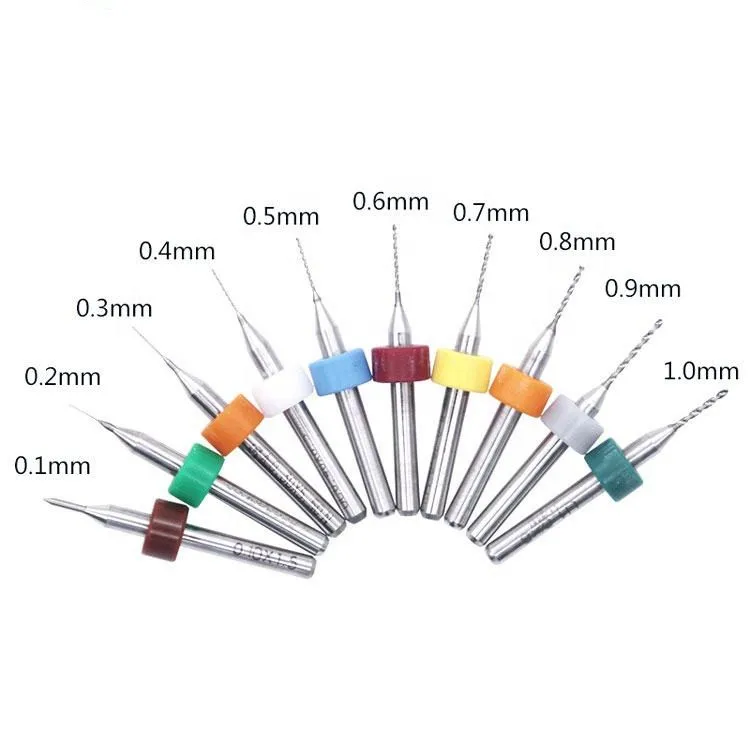
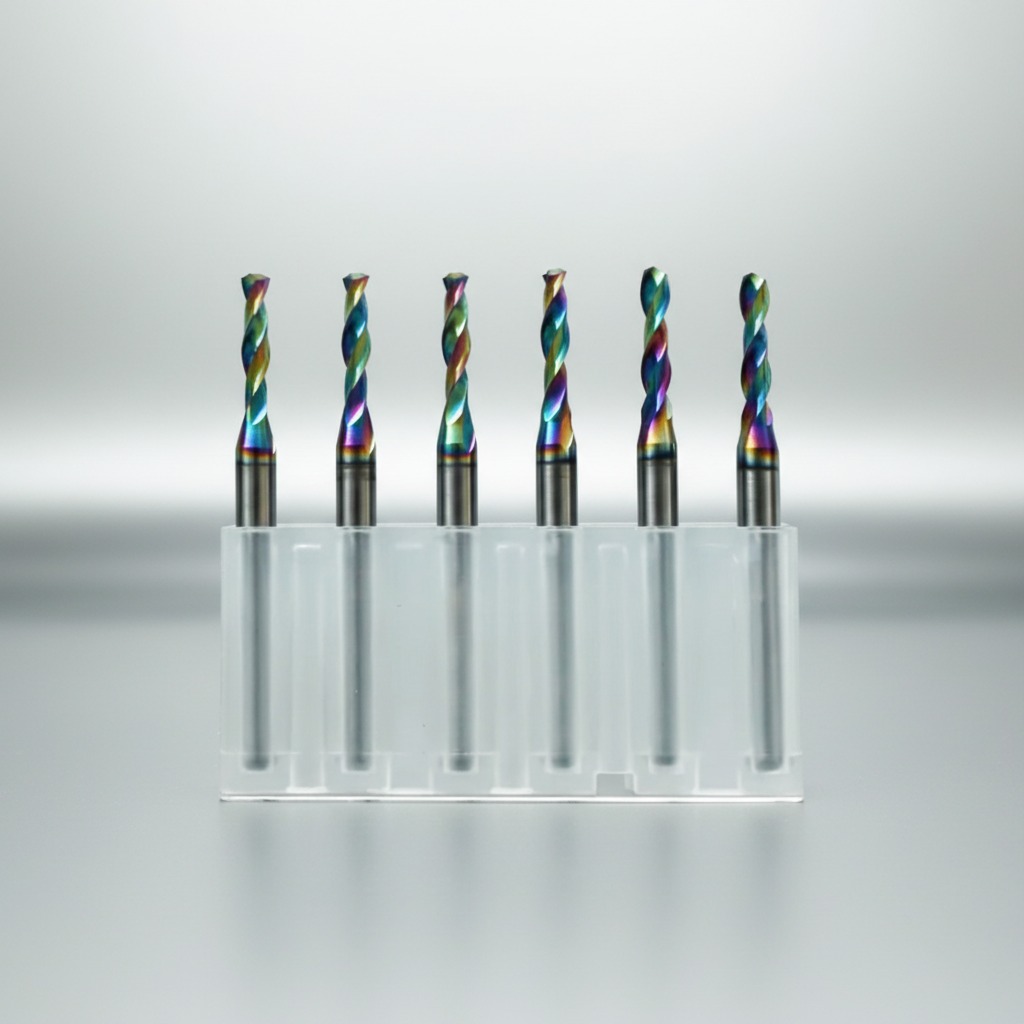
This product page refers to a set of small spiral-flute cutting tools presented in a clear organizer tray. The visible tools have narrow cylindrical shanks, helical flutes, and a multicolor coated working section. Based on the image, they appear to be precision rotary tools suitable for CNC use. The exact tool type cannot be confirmed from the image alone, so this page describes them as Tungsten Carbide PCB Drill Bits in the context of small-diameter precision drilling and related micro-machining tasks.
For buyers comparing PCB drill bits, the practical value is in tool consistency. A board shop, prototype lab, or electronics manufacturer needs drills that enter the laminate cleanly, maintain hole position, and support repeatable output across many holes. That is the buyer problem these tools address.
Key Capabilities and Typical Use
Precision drilling and micro-machining
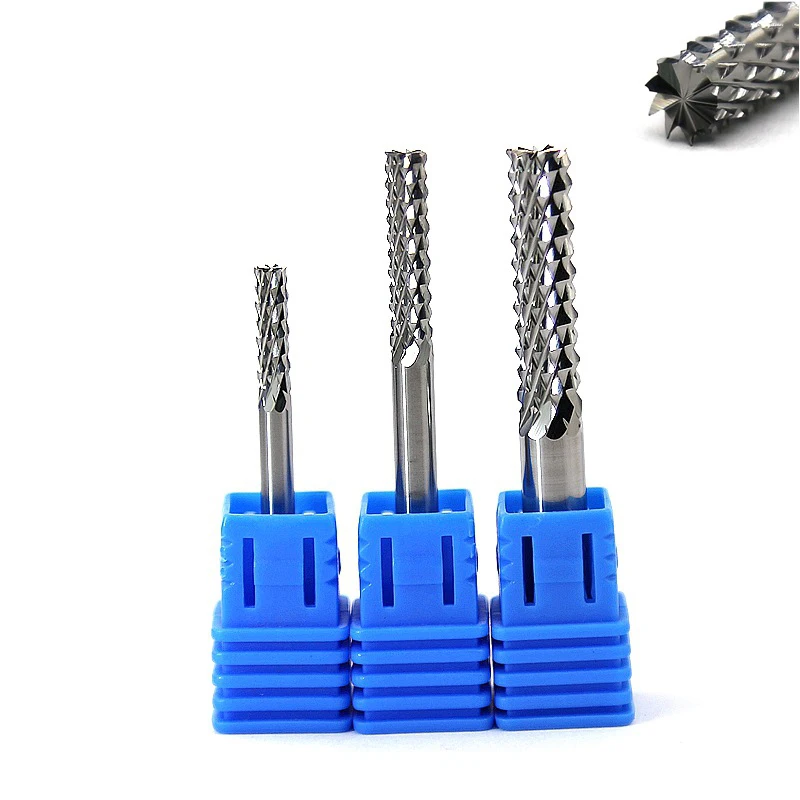
These carbide drill bits for PCB are intended for small, detailed cutting operations where tool rigidity and edge retention are important. In PCB production, that often includes component holes, vias, fixture holes, or fine prototype drilling. The visible shape also suggests they may be useful in light CNC cutting tasks beyond boards, such as engraving, small slotting, or general precision machining.
Working with CNC equipment
CNC PCB drill bits are commonly selected for machine spindle use because automated drilling demands stable runout control and a tool that can tolerate repeated cycles. When used properly, a small drill tool can support better positional accuracy and cleaner hole entry, especially on compact layouts and multi-hole panels.
Visible Construction and Design Notes
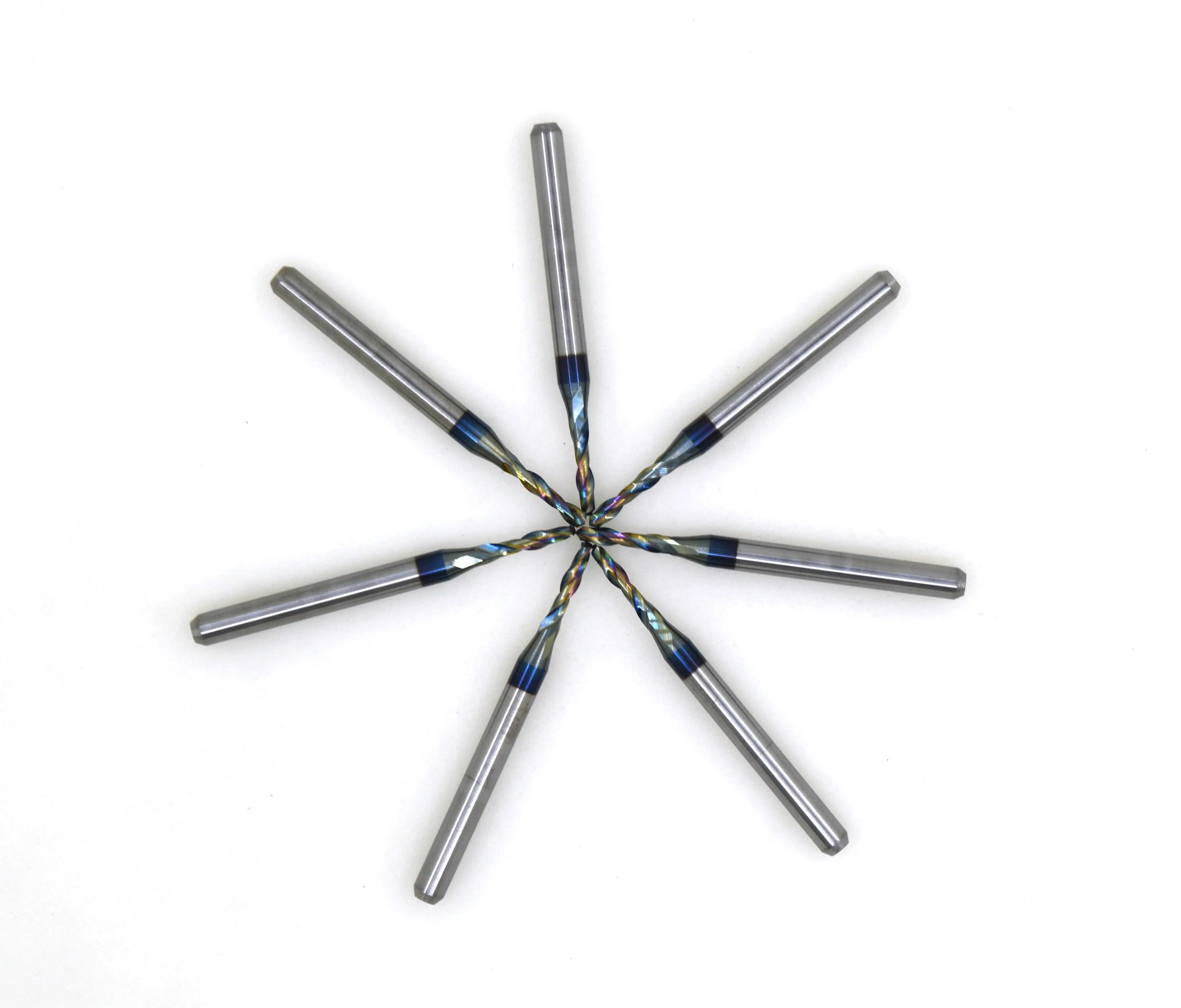
The set shown includes six tools stored upright in a plastic holder. The cutting section appears to have a rainbow or iridescent coating, while the shanks remain metallic silver-gray. That finish may indicate a wear-resistant surface treatment, though the exact coating chemistry is not visible and should not be assumed.
What can be seen clearly is the narrow diameter profile, the spiral flutes, and the pointed or tapered ends. Those features are consistent with precision rotary cutting tools used in machining environments. Because the image does not confirm dimensions, flute count, or tip angle, buyers should verify the exact specification before ordering for production use.
Materials and Finish Options
For PCB drilling, tungsten carbide is often preferred because it supports sharp cutting edges and better wear resistance than many general-purpose tool materials. In practice, buyers also evaluate coating options, shank finish, and whether the tool is intended for dry or coolant-assisted operation. A coated surface can help with wear behavior and chip flow in some applications, but the right choice depends on the board material, feed settings, and spindle conditions.
Possible finish characteristics visible here include a multicolor coated cutting zone and an uncoated shank. Since the product image does not confirm the exact substrate or coating system, those details should be verified with the supplier.
Manufacturing and Tooling Process
Tungsten carbide PCB Drill Bits are typically produced through precision grinding and sharpening processes to create the cutting edge and flute geometry. After forming, some tools receive a surface coating to improve wear resistance or reduce friction. The final performance depends on geometry control, concentricity, edge quality, and packaging protection during handling and storage.
For workshops, a holder or tray is not a minor detail. Small micro drill bits for PCB are easy to damage if they touch each other in transit, so organized storage helps protect cutting edges before the first use.
Common Applications
- Printed circuit board drilling and prototype board work
- Small-diameter drilling on CNC equipment
- Electronics manufacturing support and rework stations
- Mold making, engraving, and fine-detail machining
- Light metal fabrication and precision workshop tasks
Quality Control Considerations
When evaluating printed circuit board drill bits, buyers usually look at diameter consistency, shank fit, cutting edge condition, and packaging quality. For high-volume production, tool life, hole cleanliness, and stable drilling performance matter more than appearance. Since the exact test data is not provided here, it is best to request inspection details directly from the supplier if your process is sensitive to hole size or breakout.
Customization and Buyer Selection Guidance
If you are sourcing PCB drill bits for a specific line, confirm the required drill diameter, shank size, board stack-up, spindle speed range, and target material. Different laminates, copper thicknesses, and drill depths can change the ideal tool choice. Buyers should also ask whether the supplier can provide matched sizes, private labeling, special packaging, or other order-specific requirements.
For teams comparing carbide drill bits for PCB, the key decision factors are simple: tool geometry, coating choice, packaging, and whether the drill is optimized for board work or broader CNC use. If your application is mainly electronics drilling, focus on precision and repeatability. If the tools will also see light machining duties, confirm that the geometry suits that mix of work.
Request a Specification Check
If you need Tungsten Carbide PCB Drill Bits for production or prototyping, share your hole size range, board material, and machine type with your supplier before ordering. That is the fastest way to match the right micro drill bits for PCB to your process and avoid wasted tools. For exact dimensions and compatibility, request a formal specification sheet or sample confirmation first.