



4 Cutter Auto PCB V Cut Machine for Stable, High-Volume Depaneling
The 4 Cutter Auto PCB V Cut Machine is built for manufacturers who need cleaner board separation without slowing down the line. When PCB panels are scored and separated manually, buyers often run into uneven grooves, board stress, burrs, and inconsistent output across shifts. This automatic solution addresses those pain points by supporting controlled, repeatable V-cut processing for panelized circuit boards, helping teams improve throughput while protecting delicate assemblies.
Product Overview
As a PCB depaneling machine designed around multiple cutting points, this equipment is positioned for production environments that handle panelized boards in batches. The four-cutter layout is a practical choice for lines that want more efficient grooving or separation than a single-cutter setup can provide. In many factories, the goal is simple: keep PCB edges clean, reduce handling damage, and maintain a steady flow from assembly to final separation. A PCB Grooving Machine like this supports that workflow with an enclosed industrial structure and front loading area suited to repeatable operation.
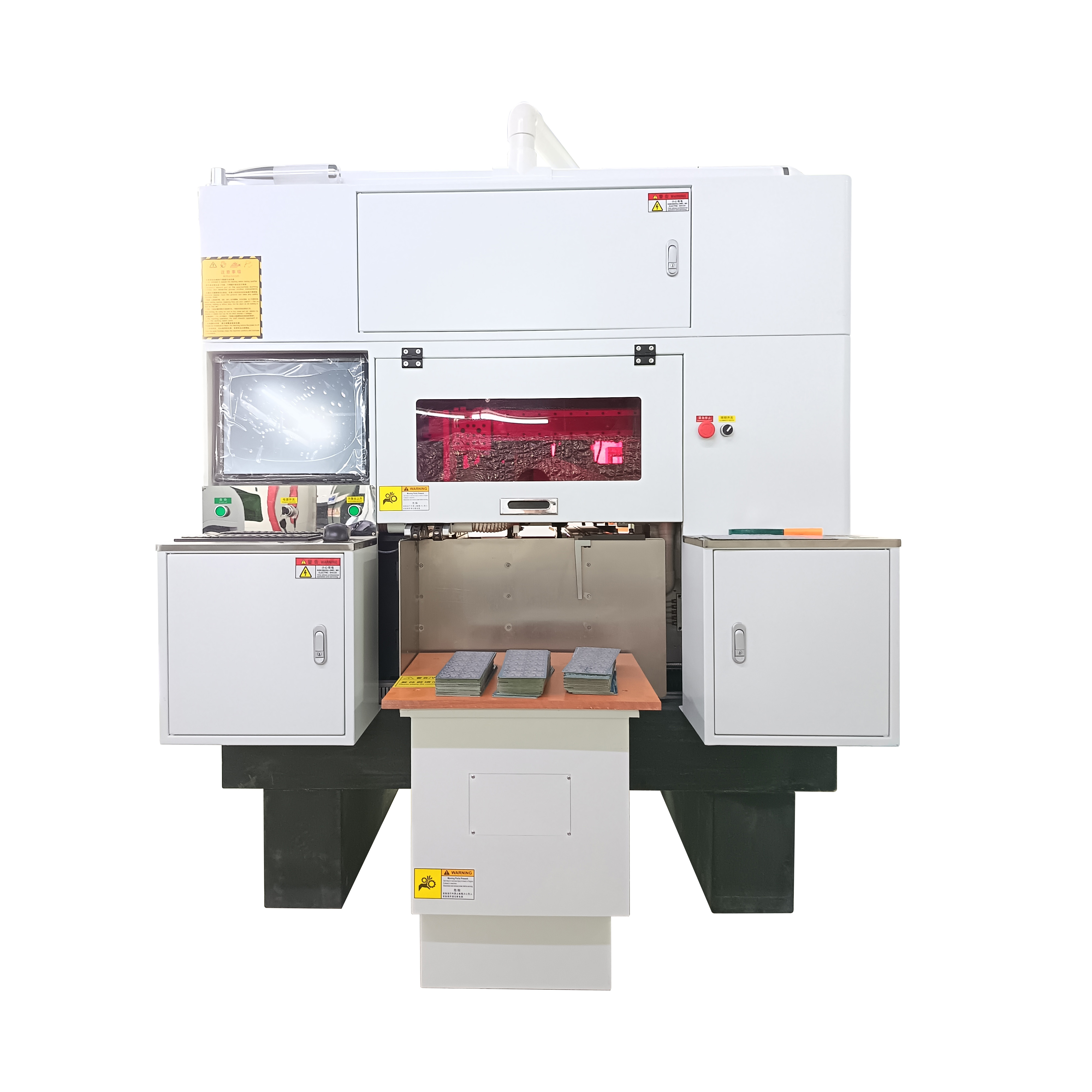
Based on the visible machine form, the unit appears to use a fully enclosed cabinet, a protected viewing area, side service panels, and a front work platform. Those features are important in production settings because they help isolate the process, support operator safety, and make routine access easier during setup or maintenance. While the exact internal process cannot be confirmed from the image alone, the machine category strongly suggests automated or semi-automated panel processing for PCB manufacturing lines.
Machine Specification

Why Buyers Choose a Multi-Cutter Setup
A Multiple Cutters PCB V Grooving Machine is usually selected when the workload demands more than basic manual scoring. Four cutting stations can help factories process panelized boards more efficiently, especially where the objective is to keep groove quality consistent from one batch to the next. For buyers, that often translates into less rework, more predictable separation, and lower risk of damaging components near the cut line.
If your operation is scaling up, the right machine is not only about speed. It is also about repeatability, floor-space efficiency, and how easily the equipment fits into the existing line. The compact cabinet format visible here suggests a machine that is intended to sit as a dedicated station rather than a loose, improvised tool. That is usually the better choice for production teams that need a stable process instead of operator-dependent results.
Visible Structure and Functional Features
Enclosed industrial cabinet
The machine has a large rectangular metal housing with light gray painted panels. This enclosed style is valuable in factory use because it provides a guarded working space and keeps the process organized in one defined area.
Front loading and unloading area
A protruding front platform or tray is visible, which likely serves as the material feed or exit zone. For a PCB Depaneling Machine, that kind of front access makes panel handling easier and supports a more efficient workflow.
Viewing windows and access doors
Clear observation windows and multiple service doors allow operators to monitor activity and reach maintenance points when needed. The image also shows warning labels and a red emergency stop-style control, both of which are standard indicators of a safety-conscious industrial design.
Top exhaust or duct connection
The top-mounted outlet suggests ventilation or extraction support. In electronics production, this matters because enclosed equipment often needs fume, dust, or air management depending on the process environment.
Typical Capabilities Buyers Evaluate
When comparing an Automatic PCB V Cut Machine with alternative depaneling methods, buyers usually focus on cut consistency, board stress control, ease of setup, and how well the machine fits their panel format. Even without exact performance numbers, the visible four-cutter configuration indicates a machine aimed at efficient multi-point processing.
Other decision factors often include operator ergonomics, maintenance access, and whether the machine can work cleanly with different panel sizes or board layouts. If your production mix changes often, the ability to adjust and service the machine without long downtime becomes just as important as output rate.
Materials, Finish, and Build Quality
The exterior appears to be industrial sheet-metal construction with a powder-coated or painted finish. That is a common and practical choice for factory machinery because it resists wear better than raw metal and presents a cleaner surface for daily operation. The use of doors, latches, and protective covers also points to a machine designed for regular access rather than a sealed, fixed-use system.
For PCB processing equipment, the build quality of the cabinet matters because it supports alignment, protects the internal mechanism, and helps maintain stable operation over time. Buyers should also check whether the work surface, guides, and cutter assemblies are accessible for cleaning and replacement, since those are the parts that most directly affect long-term usability.
Manufacturing Process and Integration Considerations
In a typical PCB production line, panelized boards are loaded, aligned, processed, and then moved onward for inspection or assembly. A PCB V Grooving Machine is often placed where separation needs to happen after assembly or after a specific stage in the workflow. The key advantage of an automated machine is that it helps standardize that step so the final release of each board is more consistent.
Before purchase, it is wise to confirm how the machine will integrate with your upstream and downstream operations. Consider loading direction, panel size compatibility, operator access, exhaust requirements, and whether the station should be linked to a conveyor or used as a stand-alone work cell. Those practical details can affect productivity as much as the cutting mechanism itself.
Customization Guidance
Because every board program is different, many buyers look for customization around cutter configuration, working table layout, controls, and safety covers. For a Multi Cutter PCB Separator, the most useful customization is usually the one that matches your real panel structure rather than forcing your production to adapt to the machine. Ask whether cutter spacing, fixture design, and loading height can be adjusted for your PCB formats.
If your factory handles mixed product types, it is also worth discussing tooling changeover, maintenance access, and control interface preferences. A machine that is easy for operators to learn will typically be easier to keep running consistently on a busy shift.
Quality Control and Buying Factors
Since the exact internal specifications are not provided, the smartest buying approach is to verify what can be tested directly. Request a process demonstration on your own panel type if possible. Check groove alignment, board edge quality, handling stability, and how the machine behaves over repeated cycles. Also confirm the safety features, ventilation needs, and maintenance intervals before placing it in production.
For procurement teams, the best decision usually comes from matching the machine to the board design, expected volume, and floor layout. If your current depaneling process causes stress cracks, uneven separation, or slow manual handling, this type of enclosed multi-cutter system is worth serious consideration.
Talk With Us About Your PCB Panel Requirements
If you are evaluating a 4 Cutter Auto PCB V Cut Machine for a new line or an equipment upgrade, share your panel size, board stack-up, and target output. The right setup depends on your product mix and handling method. Send your requirements so the machine configuration can be matched to your process instead of forcing a one-size-fits-all approach.