



Choosing a single cutter PCB V cut machine manufacturer should start with your PCB panel and production requirements, not only with machine appearance or quotation price.
For PCB assembly factories, SMT manufacturers, EMS companies, and electronics manufacturers, the main question is whether the supplier can match the machine to your PCB size, board thickness, V-score layout, component clearance, production volume, and workflow.
A reliable manufacturer should be able to review your application, recommend the right configuration, test samples when necessary, provide suitable customization, and support the equipment after delivery.
Buyers looking for this type of equipment can first review CHIKIN's PCB V cut machine range.
What Should a PCB V Cut Machine Manufacturer Provide?
A professional single cutter PCB V cut machine manufacturer should offer more than a standard machine. Beyond supplying equipment, the manufacturer should understand PCB applications, recommend suitable configurations, support customization, and provide technical assistance throughout the equipment lifecycle.
Application Evaluation
Before recommending equipment, the supplier should understand the actual PCB application.
Important information includes:
- PCB panel dimensions
- Board thickness
- PCB material
- V-score position
- Components near the separation line
- Required production output
- Product changeover frequency
- Current depaneling method
- Existing quality problems
These factors help determine whether a standard configuration is sufficient or whether the fixture, guide rails, loading method, or machine layout should be adjusted.
Buyers comparing other PCB processes can also review CHIKIN's broader PCB manufacturing equipment.
Fixture and Board Support
PCB support is an important part of controlled depaneling.
The manufacturer should evaluate how the PCB panel is loaded, positioned, supported, and separated. This is especially important when the board is thin or when components are located close to the V-score line.
A good supplier should be able to discuss:
- Guide rail adjustment
- Fixture stability
- Board positioning
- Panel support
- Product changeover
- Operator loading
For more information about the process itself, see CHIKIN's guide to controlled PCB depaneling.
Sample Testing
Whenever possible, actual PCB panels should be tested before final machine approval.
A sample test can help confirm:
- V-score alignment
- Edge condition
- Board deformation
- Fixture suitability
- Loading consistency
- Processing repeatability
This is more useful than relying only on general machine specifications.
What Can Buyers Evaluate from This Machine?
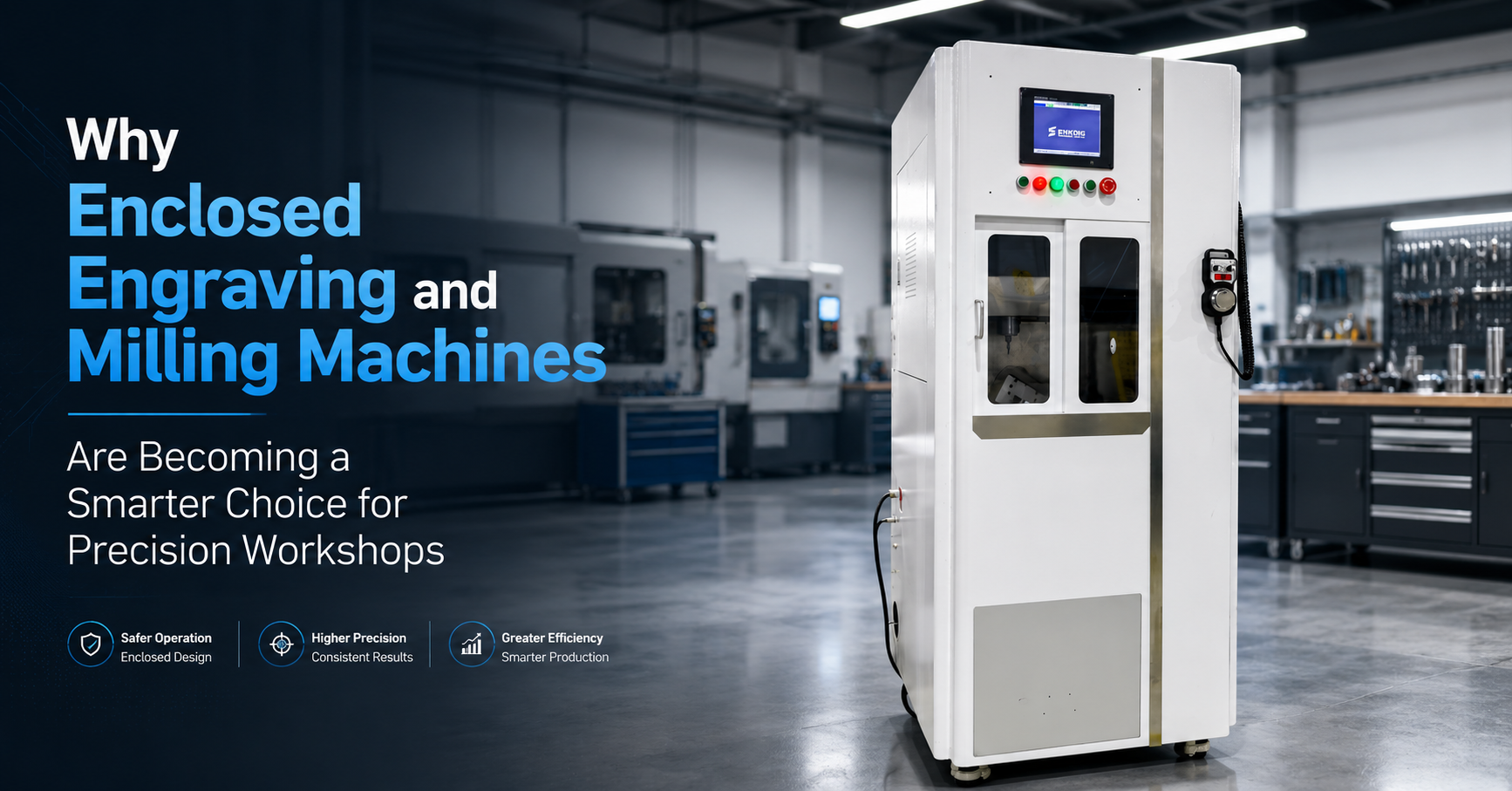
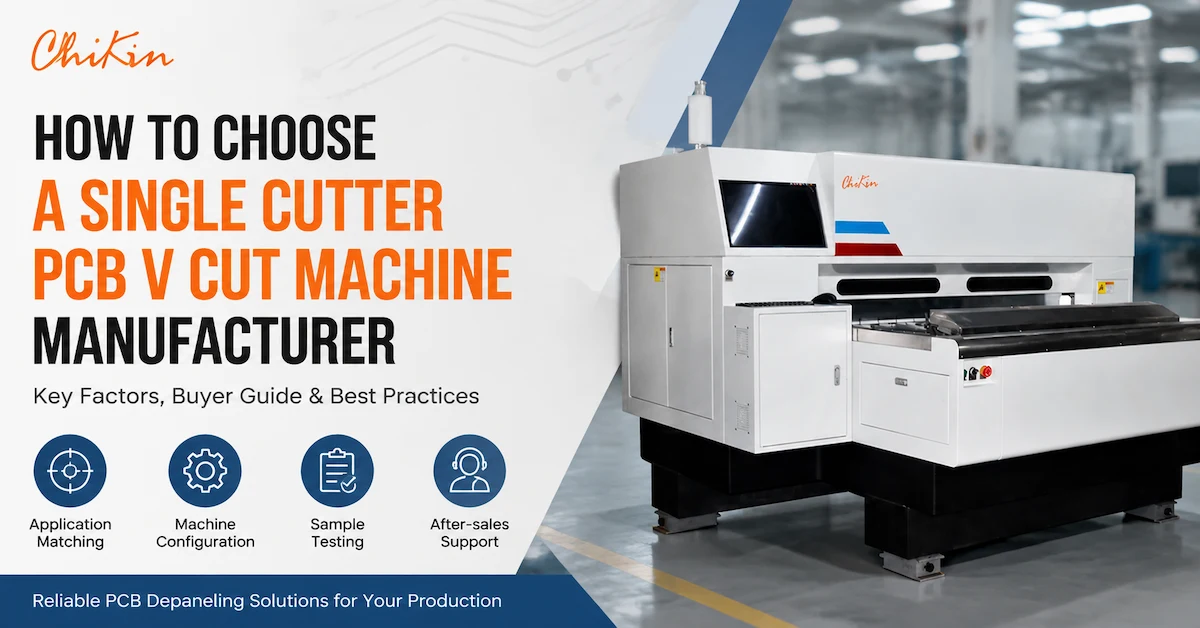
The single cutter PCB V cut machine shown uses a floor-standing enclosed industrial structure designed for factory production.
Visible features include:
- Enclosed cabinet
- Touchscreen HMI
- Status tower light
- Emergency-stop control
- Guided loading area
- Fixture or rail-style board support
These features indicate a production-oriented machine architecture.
However, important internal specifications cannot be confirmed from appearance alone.
Buyers should ask the manufacturer to provide verified data for:
| Specification | Why It Matters |
|---|---|
| Supported PCB size | Determines panel compatibility |
| PCB thickness range | Determines applicable products |
| V-score requirements | Determines process suitability |
| Cutting speed | Influences throughput |
| Fixture design | Affects board stability |
| Cutter maintenance | Influences operating cost |
| Machine dimensions | Affects factory layout |
| Electrical requirements | Required for installation |
| HMI language | Affects operator use |
| Spare parts | Important for long-term support |
Unpublished numerical values should be confirmed directly with the supplier rather than estimated from machine appearance.
Why Does Controlled PCB Depaneling Matter?
PCB depaneling is not simply a cutting operation.
A populated PCB may contain solder joints, BGAs, ceramic components, LEDs, connectors, and other parts that can be affected by mechanical deformation.
The IPC/JEDEC-9704A Printed Circuit Assembly Strain Gage Test Guideline identifies printed board depanelization among manufacturing processes where strain characterization may be relevant.
For equipment buyers, the practical conclusion is that a PCB V cut machine manufacturer should understand the relationship between:
PCB design → V-score condition → board support → separation process → final board quality
This is more important than simply asking whether the machine can cut a certain PCB.
Single Cutter vs Multi-Cutter PCB V Cut Machine
More cutters do not automatically mean a better solution.
The correct choice depends on production volume, PCB variety, and changeover requirements.
| Production Requirement | Single Cutter | Multi-Cutter |
|---|---|---|
| Medium production volume | Good fit | May be unnecessary |
| High product mix | Often suitable | Depends on setup |
| Frequent changeover | Usually flexible | More adjustment may be needed |
| High-volume repetitive production | Suitable | Often more efficient |
| Simple operation | Strong advantage | More complex |
| Maximum throughput | Moderate | Higher potential |
A single cutter PCB V cut machine can be a practical option for factories processing multiple PCB models or medium production volumes.
Multi-cutter equipment may be more appropriate when the same panel is processed continuously and higher throughput is the main priority.
The better purchasing question is therefore:
Which cutter configuration matches our production volume and product mix?
Who Uses a Single Cutter PCB V Cut Machine?
This equipment can be relevant to several customer groups.
PCB Assembly Factories
PCB assembly manufacturers need controlled separation of V-scored panels while maintaining consistent board handling.
Typical concerns include:
- Board deformation
- Edge quality
- Repeatability
- Operator consistency
- Production speed
SMT Production Facilities
For SMT production, depaneling often takes place after assembly.
Factories should therefore consider component clearance, board support, production flow, and inspection requirements.
EMS and Contract Manufacturers
EMS companies usually process multiple customer products.
They often value:
- Flexible setup
- Multiple PCB sizes
- Easy product changeover
- Repeatable operation
- Simple operator training
LED and Industrial Electronics Manufacturers
LED, industrial control, power supply, and other electronics manufacturers may also use V-scored PCB panels and require controlled board separation.
Medium-Volume and High-Mix Factories
A single cutter configuration can be especially attractive when flexibility is more important than maximum theoretical throughput.
When Should You Consider Another PCB Depaneling Method?
A professional manufacturer should also explain when V-cutting is not the best solution.
Another process may be more suitable when:
- The PCB has no compatible V-score
- Board contours are irregular
- Curved separation paths are required
- Complex internal profiles are needed
- A non-contact process is preferred
- Component layout creates special mechanical limitations
Depending on the application, buyers may consider PCB drilling and routing machines or PCB laser cutting machines.
The correct principle is:
Choose the process according to the PCB rather than forcing the PCB to match the machine.
How to Evaluate a PCB V Cut Machine Factory
When evaluating a single cutter PCB V cut machine manufacturer, buyers should focus on engineering capability, manufacturing experience, application support, and after-sales service rather than only factory size or quotation price.PCB Equipment Manufa
Engineering Capability
Check whether the supplier understands:
- PCB applications
- Fixture design
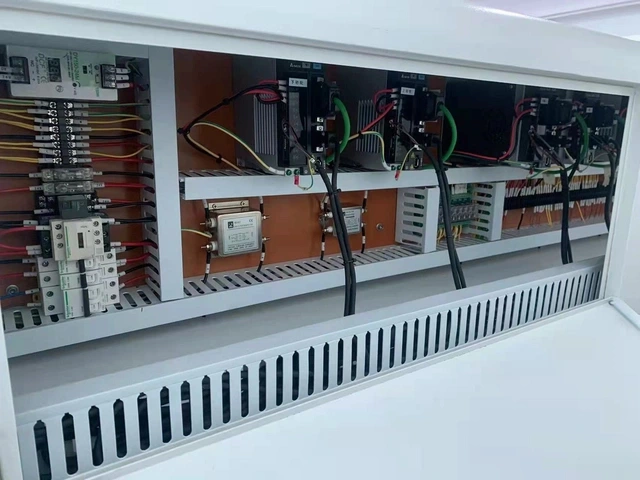
- Machine structure
- Control systems
- Product customization
- Production workflow
A manufacturer should be able to discuss your board and production problem, not only machine features.
Machine Quality Control
Ask how the factory checks:
- Mechanical assembly
- Cutter movement
- Guide alignment
- Fixtures
- HMI operation
- Sensors
- Emergency stop
- Alarms
- Repeated machine cycles
If actual PCB samples are available, application testing should also be discussed.
Safety
Machine safety should be evaluated together with productivity.
The ISO 12100 machinery safety standard provides general principles related to machinery risk assessment and risk reduction.
Buyers should review areas such as:
- Access to cutting components
- Guards and enclosure
- Emergency stop
- Maintenance access
- Electrical cabinet access
- Operator loading position
The useful question is not simply whether a machine “has safety protection,” but how safety has been considered during production, cleaning, setup, and maintenance.
After-Sales Support
For international equipment purchases, confirm:
- Installation guidance
- Operator training
- Maintenance support
- Spare-parts availability
- Remote troubleshooting
- Technical documentation
Long-term service can have a direct effect on machine uptime and total ownership cost.
Why Manufacturing Experience Matters
CHIKIN CNC operates through Shenzhen ChiKin Automation Equipment Co., Ltd. and focuses on automation and PCB-related processing equipment.
Its product portfolio includes V-cut equipment as well as PCB drilling, routing, laser processing, testing, and other manufacturing equipment.
For buyers, the important point is not simply the number of products offered.
The more relevant question is whether the manufacturer's engineering background supports:
- Application analysis
- Machine configuration
- Automation design
- Control development
- Customization
- Troubleshooting
- Long-term support
Buyers can also review CHIKIN's published design and R&D capabilities when evaluating supplier strength.
What Determines the Real Cost of a PCB V Cut Machine?
Machine purchase price is only one part of the total cost.
Buyers should also consider:
Initial Cost
- Machine
- Fixtures
- Customization
- Shipping
- Installation
Operating Cost
- Cutters
- Wear parts
- Electricity
- Operator labor
- Maintenance
Production Cost
- Board damage
- Rework
- Scrap
- Changeover time
- Downtime
Lifecycle Cost
- Spare parts
- Cutter replacement
- Technical support
- Maintenance
A cheaper machine can become more expensive if it creates excessive downtime or quality problems.
At the same time, the highest-priced machine is not automatically the best choice.
The goal should be to select equipment that can produce acceptable PCB boards consistently at a reasonable lifecycle cost.
What Information Should You Send Before Requesting a Quote?
For a more accurate machine recommendation, prepare:
- PCB panel drawing
- Panel dimensions
- PCB thickness
- PCB material
- V-score layout
- Component position near the score line
- Required hourly or daily output
- Number of PCB models
- Current depaneling method
- Current production problem
- Available machine space
- Required automation level
Providing this information helps the manufacturer make an application-based recommendation rather than giving only a general machine price.
Frequently Asked Questions
Is a Single Cutter PCB V Cut Machine Suitable for Every PCB?
No. It is mainly suitable for PCB panels designed with compatible V-score separation lines. Irregular contours may require routing, laser cutting, or another depaneling process.
Should I Choose a Single Cutter or Multi-Cutter Machine?
Choose according to production volume and product mix. A single cutter is often suitable for flexible or medium-volume production, while multi-cutter equipment can offer advantages in repetitive high-volume applications.
Why Should I Send PCB Samples?
Samples allow the manufacturer to check board support, alignment, edge condition, and process repeatability before shipment.
What Should I Compare Between Suppliers?
Compare application knowledge, configuration, sample testing, customization, machine QC, spare parts, training, and after-sales support before comparing final price.
Can the Machine Be Customized?
Depending on the application, customization may involve guide rails, fixtures, work area, HMI language, loading direction, or other production requirements.
Talk to CHIKIN About Your PCB V Cut Requirement
Choosing a single cutter PCB V cut machine manufacturer is ultimately an application-matching decision.
A reliable supplier should understand your PCB panel, V-score structure, component clearance, production volume, and quality requirements before recommending equipment.
For a machine recommendation, contact CHIKIN CNC and provide your PCB drawing, dimensions, thickness, V-score layout, current process, and production target.
CHIKIN can then evaluate the application and recommend a configuration based on the actual production requirement.