



How to Choose a PCB Equipment Supplier for Electronics Manufacturing
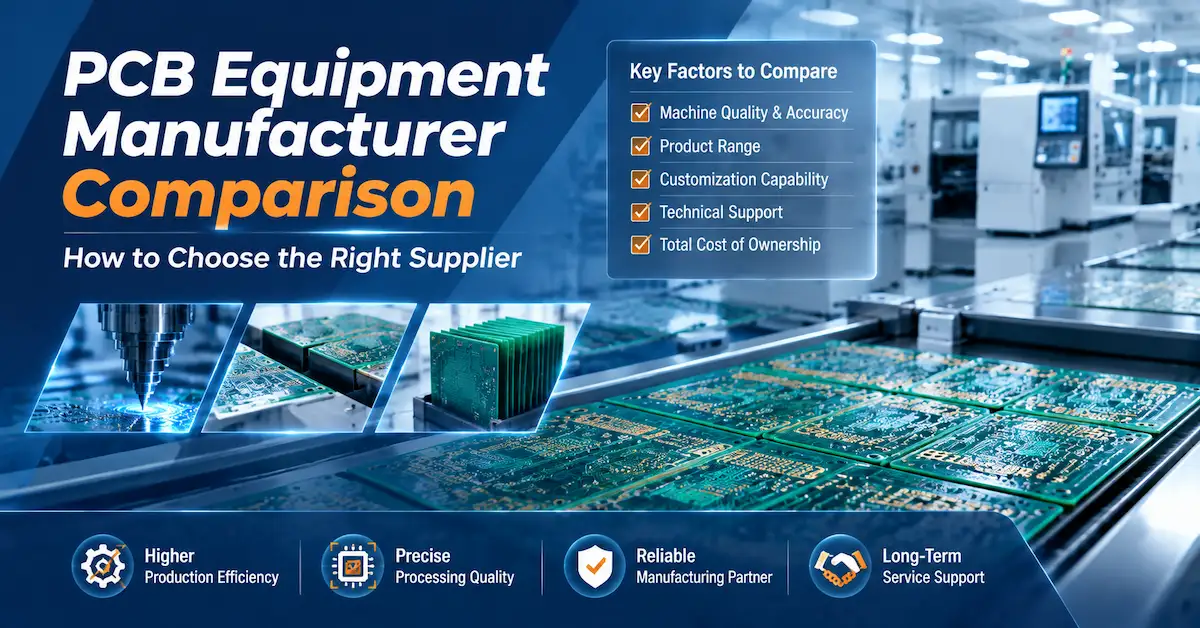
Choosing the right PCB equipment supplier is an important decision for PCB manufacturers, EMS companies, and electronics assembly factories.
PCB production equipment directly affects manufacturing efficiency, product quality, operating costs, and long-term production stability. However, many buyers face challenges when comparing suppliers because different companies may provide similar machine names while offering different levels of engineering support, customization capability, and after-sales service.
A reliable supplier should provide more than equipment. Buyers should evaluate whether the supplier understands PCB processing requirements, provides suitable machine configurations, supports production testing, and offers technical assistance after installation.
For companies looking for PCB processing solutions, CHIKIN provides various PCB manufacturing equipment designed for electronics production applications.

What Types of PCB Equipment Do Buyers Need?
Before choosing a supplier, buyers should first identify the required equipment type according to their production process.
Different PCB manufacturing stages require different solutions.
PCB Depaneling Equipment
PCB depaneling machines are commonly used to separate individual circuit boards from panels after PCB fabrication or assembly.
Typical applications include:
- SMT assembly production
- Electronics manufacturing
- LED PCB processing
- Small and medium PCB separation
When selecting a PCB depaneling supplier, buyers should evaluate:
- Cutting method
- PCB size compatibility
- Board support design
- Processing accuracy
- Production speed
- Operator safety
For V-score PCB separation applications, buyers can review CHIKIN's PCB V cut machine solutions.
PCB Drilling and Routing Equipment
PCB drilling and routing machines are used for precision mechanical processing, including:
- PCB drilling
- Milling
- Slot processing
- Profile cutting
- Prototype production
Buyers should confirm:
- Spindle performance
- Working area
- Accuracy requirements
- Material compatibility
- Automation options
CHIKIN also provides PCB drilling and routing machines for different PCB processing requirements.
PCB Laser Processing Equipment
Laser processing can be suitable for applications requiring high precision and reduced mechanical contact.
Possible applications include:
- Fine PCB cutting
- Precision processing
- Special material processing
- Advanced electronics manufacturing
Buyers should compare laser solutions according to:
- Laser source
- Processing accuracy
- Material compatibility
- Production requirements
What Should Buyers Evaluate in a PCB Equipment Supplier?
Selecting a supplier should not only focus on machine specifications.
The supplier's engineering capability, manufacturing experience, and technical support are equally important.
Manufacturing Capability and Factory Experience
A professional PCB equipment manufacturer should have the ability to support the complete equipment lifecycle.
Important factors include:
- Machine design capability
- Engineering team
- Assembly capability
- Quality inspection process
- Technical support
- Production experience
A factory with engineering capability can better understand customer requirements and provide suitable solutions instead of only selling standard machines.
Buyers can review CHIKIN's company information to understand its background in automation and PCB-related equipment development.
Technical Knowledge and Application Support
PCB equipment selection depends heavily on the customer's actual production environment.
A qualified supplier should understand:
- PCB material
- Board thickness
- Panel size
- Production volume
- Required accuracy
- Automation requirements
- Current manufacturing challenges
For example, a PCB assembly factory producing high-volume products may require different equipment compared with a prototype laboratory or high-mix EMS manufacturer.
The supplier should recommend equipment according to the application rather than simply offering the same machine configuration to every buyer.
Machine Quality and Testing Process
Before purchasing PCB equipment, buyers should understand how the supplier controls machine quality.
Important evaluation points include:
Mechanical Assembly
Check whether the factory verifies:
- Machine structure
- Moving components
- Precision alignment
- Fixture stability
- Mechanical performance
Electrical and Control Testing
The supplier should test:
- Control system
- HMI operation
- Sensors
- Motors
- Safety functions
- Alarm systems
Production Testing
For precision PCB equipment, sample testing is highly valuable.
Buyers should request demonstrations using:
- Real PCB samples
- Similar materials
- Similar production conditions
This provides stronger evidence than product brochures alone.
Why Choose a PCB Equipment Manufacturer Instead of a General Supplier?
During sourcing, buyers may encounter manufacturers, distributors, and trading companies.
Each option has different advantages.
| Supplier Type | Advantages | Potential Limitations |
|---|---|---|
| Trading Company | Easy communication | Limited engineering control |
| Distributor | Local service | Higher overall cost |
| Equipment Manufacturer | Direct engineering and production support | Requires supplier evaluation |
A direct manufacturer can usually provide:
- Faster technical communication
- Better customization capability
- Direct machine testing
- More controlled spare-part supply
- Better understanding of machine structure
However, buyers should still verify the manufacturer's actual engineering and production capability.
What Customization Should PCB Equipment Suppliers Provide?
Different factories have different production requirements.
A professional supplier should be able to discuss customization options such as:
- Machine size
- PCB fixture design
- Loading method
- Automation integration
- Software functions
- Production-line connection
- Safety requirements
Customization should solve a real manufacturing problem.
Unnecessary modifications can increase cost and maintenance complexity.
The best solution is usually the simplest configuration that meets the production target.
How to Verify a PCB Equipment Supplier Before Ordering?
Before placing an order, buyers should review several areas.
Check Factory Capability
Ask about:
- Production facilities
- Engineering team
- Previous projects
- Machine testing process
- Customer applications
Request Machine Demonstration
A machine demonstration can verify:
- Operation process
- Processing quality
- User interface
- Production stability
Confirm Documentation and Support
Important documents include:
- Operation manual
- Maintenance guide
- Electrical drawings
- Spare parts list
- Warranty information
A professional supplier should clearly define technical support before shipment.
PCB Equipment Quality Checklist for Buyers
| Evaluation Item | Buyer Question |
|---|---|
| Machine design | Is the equipment suitable for our PCB process? |
| Accuracy | How is performance verified? |
| Components | What brands and specifications are used? |
| Testing | Is sample testing available? |
| Customization | Can the machine match our workflow? |
| Training | Is operator training provided? |
| Support | How is after-sales service handled? |
This checklist helps buyers compare suppliers based on long-term production value instead of only initial price.
What Industries Use PCB Manufacturing Equipment?
PCB equipment is widely used across different electronics industries.
Consumer Electronics
Applications include:
- Smart devices
- Wearable electronics
- Consumer products
Automotive Electronics
Common applications include:
- Control modules
- Sensors
- Electronic systems
Industrial Electronics
Examples include:
- Automation equipment
- Control systems
- Industrial controllers
Medical Electronics
Precision PCB processing is important for:
- Medical instruments
- Monitoring equipment
- Electronic systems
Different industries may require different levels of accuracy, automation, and production reliability.
What Information Should Buyers Send Before Requesting a Quote?
To receive an accurate recommendation, buyers should prepare:
- PCB drawings
- Board dimensions
- Material information
- Thickness requirements
- Production volume
- Required accuracy
- Current production method
- Manufacturing challenges
- Automation requirements
The more application information provided, the easier it is for the supplier to recommend the right equipment.
Frequently Asked Questions
What Makes a Reliable PCB Equipment Supplier?
A reliable supplier should have engineering capability, manufacturing experience, quality control procedures, testing capability, and long-term technical support.
Should I Choose a PCB Equipment Manufacturer or Distributor?
For industrial equipment purchases, a direct manufacturer can provide stronger engineering communication and customization support. However, buyers should verify the supplier's actual capabilities before ordering.
How Can I Check PCB Equipment Quality Before Purchase?
Request machine demonstrations, sample testing, technical documents, and factory inspection information before final approval.
Can PCB Equipment Be Customized?
Yes. Many suppliers can customize fixtures, machine structure, software functions, automation connections, and production workflows according to customer requirements.
What Should I Prepare Before Contacting a PCB Equipment Supplier?
Prepare PCB drawings, production requirements, material information, required accuracy, and current manufacturing challenges.
Why Is After-Sales Support Important?
PCB equipment is a long-term production investment. Technical support, spare parts availability, and troubleshooting response directly influence machine uptime.
Conclusion
Choosing the right PCB equipment supplier requires more than comparing machine prices.
The best supplier should understand your PCB manufacturing process, provide suitable equipment recommendations, demonstrate machine capability, support customization, and provide reliable after-sales service.
For PCB manufacturers and electronics factories, selecting the right equipment partner can improve production stability, reduce operational risks, and support long-term manufacturing growth.
If you are evaluating PCB processing equipment, contact CHIKIN CNC and provide your PCB requirements, production goals, and current process challenges. The engineering team can help recommend a suitable equipment solution based on your application.