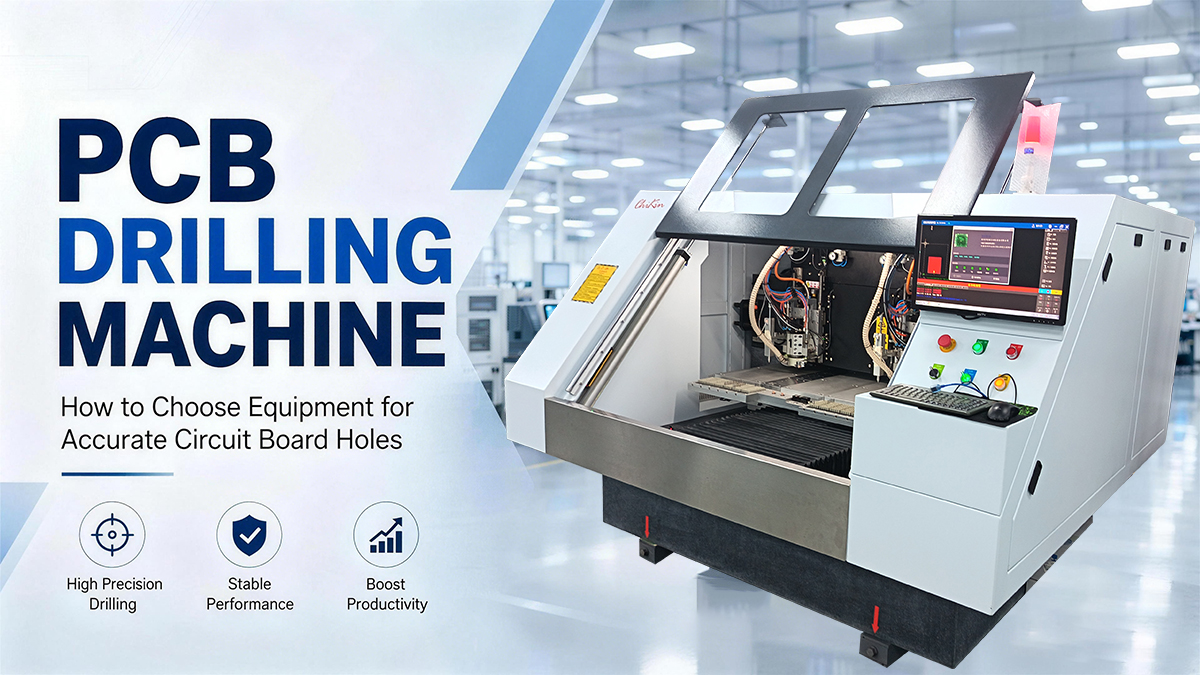




A PCB Machine is not just a piece of production equipment. For PCB manufacturers, electronics assembly factories, prototype labs, and high-mix production workshops, it directly affects hole accuracy, routing edge quality, production speed, scrap rate, and delivery stability.
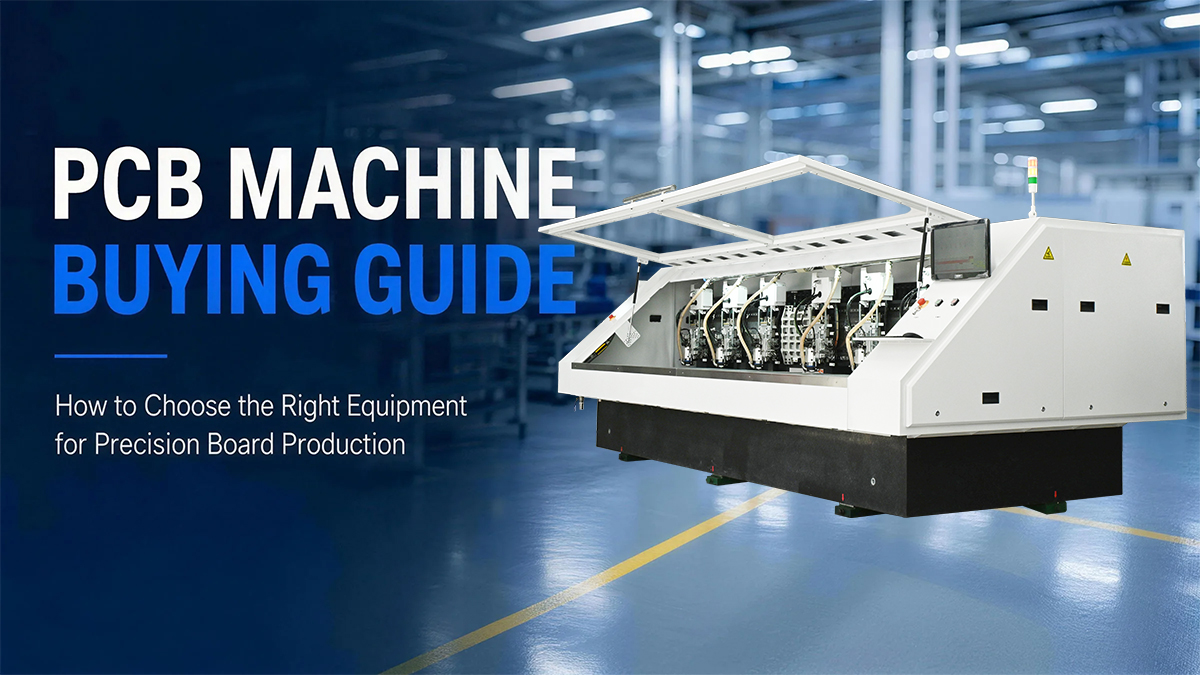
In real PCB production, buyers usually face the same problems:
- Drilled holes are not aligned accurately.
- Routing edges are rough or inconsistent.
- Manual handling slows down small-batch production.
- Different board types require different machine configurations.
- The supplier provides a low price but weak technical support.
- The machine cannot meet future production expansion needs.
That is why choosing a PCB machine should not start only from price. It should start from your board type, production volume, process requirement, accuracy target, automation level, and after-sales support expectations.
For buyers comparing PCB drilling, routing, laser cutting, AOI inspection, or integrated PCB CNC solutions, this guide explains what to check before purchasing.
Quick Answer: What Is a PCB Machine?
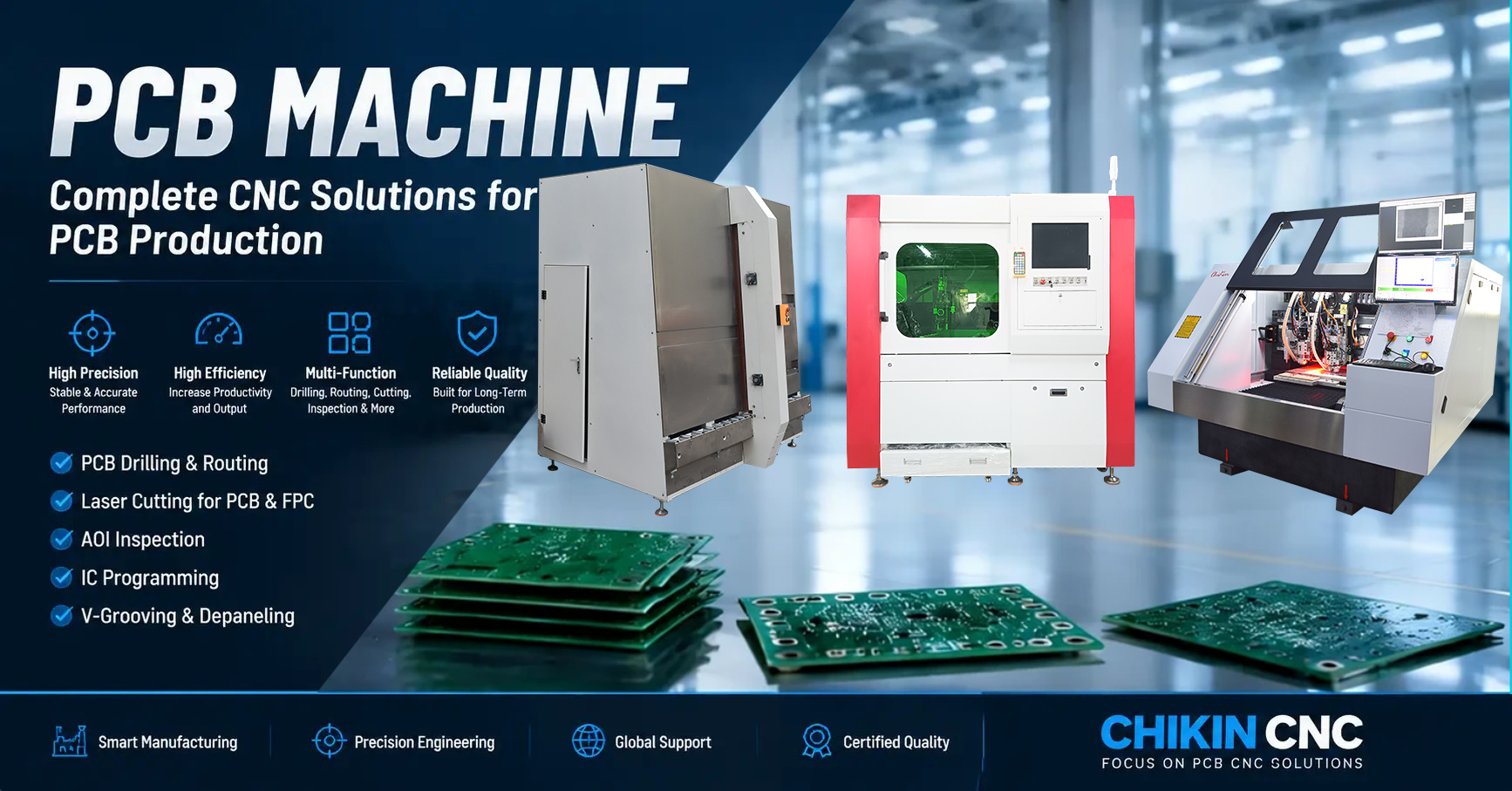
A PCB Machine is industrial equipment used to process printed circuit boards during manufacturing. Depending on the production step, it may perform drilling, routing, cutting, V-grooving, inspection, IC programming, or automated handling.
Common PCB machine types include:
- PCB drilling machine
- PCB routing machine
- PCB drilling and routing machine
- FPC/PCB laser cutting machine
- PCB AOI inspection machine
- PCB V-cut machine
- Automatic IC programming machine
- PCB auxiliary equipment and spare parts
For factories that need stable precision and repeatable output, a CNC-controlled PCB machine helps reduce manual errors, improve board consistency, and support safer, cleaner production workflows.
What Types of PCB Machines Do Buyers Usually Need?
Different PCB production stages require different equipment. Before asking for a quote, buyers should define which process they want to improve.
| PCB Machine Type | Main Function | Best For |
|---|---|---|
| PCB Drilling Machine | Makes precise holes in circuit boards | FR4, multilayer PCB, prototype boards |
| PCB Routing Machine | Cuts board outlines, slots, and profiles | Finished PCB shaping and depaneling |
| PCB Drilling and Routing Machine | Combines hole drilling and edge routing | Mid-volume PCB production |
| FPC/PCB Laser Cutting Machine | Non-contact cutting for delicate materials | FPC, flexible circuits, thin substrates |
| AOI Inspection Machine | Detects PCB assembly defects | SMT lines and PCB quality control |
| IC Programming Machine | Automates chip programming and testing | Electronics assembly workflows |
| V-Grooving Saw Blade / V-CUT Equipment | Creates controlled grooves for separation | Panelized PCB production |
If your factory mainly handles rigid FR4 boards, a PCB drilling and routing machine may be the most practical choice. If you process flexible circuits, a UV laser cutting solution may be more suitable. If your main pain point is quality control after SMT assembly, AOI inspection equipment should be considered.
Who Needs a PCB Machine?
A PCB machine is mainly suitable for buyers who need stable and repeatable circuit board processing.
PCB Manufacturers
These buyers need drilling, routing, cutting, and inspection equipment for regular production. Their key concerns are accuracy, uptime, speed, and machine stability.
Electronics Assembly Factories
These factories often need AOI inspection, IC programming, and supporting equipment to reduce manual mistakes and improve traceability.
Prototype PCB Labs
Prototype labs need flexible equipment for small-batch, fast-changing production. They usually care about setup time, ease of operation, and machine footprint.
FPC and Flexible Circuit Producers
Flexible circuits are thin and easy to deform. These buyers often need non-contact laser cutting or high-precision controlled processing.
PCB Equipment Distributors
Distributors need a stable PCB machine manufacturer with export experience, technical documents, service support, spare parts, and reliable communication.
Key Factors to Check Before Buying a PCB Machine
Accuracy and Repeatability
Accuracy is one of the most important points when choosing a PCB machine. In PCB drilling and routing, even small deviations can affect downstream assembly, component placement, plating, or board separation.
Buyers should ask:
- What is the machine positioning accuracy?
- What is the repeatability?
- Does the machine support CCD alignment?
- How does the machine control vibration?
- What motion system is used?
- Can the supplier provide sample testing?
For high-precision PCB production, accuracy should not only be shown in the brochure. It should be verified through sample processing, machine structure, guide rail quality, spindle stability, and inspection workflow.
Machine Structure and Stability
A stable machine structure helps reduce vibration and maintain long-term precision. For PCB drilling and routing equipment, the base, gantry, worktable, spindle system, and motion components all affect final performance.
Important structure points include:
- Granite or high-rigidity base
- Precision linear guide
- Ball screw or advanced motion system
- Enclosed processing chamber
- Stable worktable
- Dust or debris control design
- Easy maintenance access
A cheaper machine may look similar on the outside, but poor structural stability can lead to accuracy drift, tool wear, downtime, and higher long-term cost.
Spindle Configuration
For PCB drilling and routing, spindle configuration directly affects speed and production efficiency.
Common options include:
- Single spindle PCB drilling machine
- Dual-spindle PCB drilling machine
- PCB drilling and routing machine
- Multi-spindle PCB drilling and routing machine
A single spindle machine is suitable for prototype work, small batches, or lower production pressure. A dual-spindle or multi-spindle machine is better for factories that need higher throughput and better cycle efficiency.
When comparing spindle options, buyers should not only ask “How fast is it?” They should also check spindle speed, tool compatibility, cooling method, tool detection, automatic tool change, and maintenance convenience.
Board Type Compatibility
Not every PCB machine is suitable for every board type. Before choosing a model, confirm the materials and production requirements.
Typical board types include:
- FR4 PCB
- Multilayer PCB
- HDI board
- Aluminum PCB
- Copper substrate
- Rigid-flex PCB
- FPC flexible circuit
- Prototype PCB
For rigid FR4 and aluminum boards, CNC drilling and routing equipment can be highly effective. For flexible circuits, UV laser cutting may reduce mechanical stress and help protect delicate materials.
Automation Level
Automation is not always about buying the most expensive machine. It is about matching the machine to your production workflow.
Common automation features include:
- Automatic tool change
- Broken tool detection
- Tool length detection
- Tool diameter detection
- CCD vision alignment
- Enclosed operator protection
- HMI touchscreen operation
- Automatic loading and unloading options
- Software support for production files
If your factory handles high-mix orders, flexible setup may be more important than maximum speed. If your factory handles large batch production, multi-spindle output and automation integration may matter more.
Software and File Compatibility
A PCB machine should support efficient workflow from design file to production. Buyers should confirm whether the machine software supports the file formats and operation habits used in their factory.
Useful questions include:
- Can the machine import common PCB production files?
- Is the interface easy for operators to learn?
- Can parameters be saved for repeat jobs?
- Does the system support alignment correction?
- Is technical support available for software setup?
Software usability can strongly affect daily production efficiency. A machine with strong hardware but difficult software may still slow down operators.
Quality Control and Testing Before Shipment
Before purchasing a PCB machine, buyers should ask the supplier about inspection and testing procedures.
Recommended checks include:
- Machine movement test
- Spindle test
- Accuracy verification
- Sample board processing
- Tool change test
- CCD alignment test
- Safety function test
- Packaging inspection
- Remote or video acceptance support
A professional supplier should be able to explain how the machine is tested before delivery and what information the buyer needs to provide for machine configuration.
PCB Machine Comparison: Which Type Should You Choose?
| Buyer Need | Recommended Machine | Why It Fits |
| Prototype PCB drilling | Single spindle PCB drilling machine | Lower complexity, flexible setup, suitable for small batches |
| Mid-volume drilling and routing | 1 drill + 1 route PCB machine | Combines two processes in one equipment platform |
| Higher production efficiency | 2 spindle or multi-spindle PCB machine | Improves throughput and reduces cycle pressure |
| Flexible circuit cutting | FPC/PCB UV laser cutting machine | Non-contact processing helps reduce material deformation |
| SMT defect detection | AOI inspection machine | Helps detect missing components, misalignment, solder bridges, and other issues |
| Electronics programming workflow | Automatic IC programming machine | Reduces manual handling and improves repeatability |
| Panel separation | V-CUT / V-grooving solution | Supports controlled board separation for panelized PCB production |
Common Mistakes When Buying a PCB Machine
Mistake 1: Only Comparing Price
Low initial cost can become expensive if the machine has unstable accuracy, weak service support, poor spare parts availability, or frequent downtime.
A better approach is to compare total value:
- Accuracy
- Stability
- Output
- Service response
- Spare parts
- Installation support
- Long-term maintenance cost
Mistake 2: Ignoring Future Production Growth
Some buyers choose a machine only for current orders. But PCB production requirements may change quickly.
Before purchase, ask:
- Will production volume increase?
- Will board size change?
- Will material type change?
- Will the factory need more automation later?
- Can the supplier support future upgrades?
A scalable PCB machine solution helps protect long-term investment.
Mistake 3: Not Sending Enough Technical Details
Suppliers cannot recommend the right PCB machine without enough production information.
Before requesting a quote, prepare:
- Board material
- Board thickness
- Board size
- Minimum hole diameter
- Routing profile
- Production volume
- Accuracy requirement
- Current process problems
- Factory power supply
- Desired automation level
The more complete your information, the more accurate the machine recommendation will be.
Why Choose CHIKIN CNC for PCB Machine Solutions?
CHIKIN CNC focuses on PCB CNC and automation equipment for precision board processing. The product range covers PCB drilling, routing, drilling and routing integration, FPC/PCB laser cutting, AOI inspection, automatic IC programming, V-grooving tools, and related industrial support.
For buyers, CHIKIN CNC is not only a machine supplier. It can support the full selection process from requirement analysis to machine configuration, production testing, installation guidance, operation training, and after-sales support.
Key strengths include:
- PCB CNC equipment manufacturing experience
- R&D capability for automation equipment
- PCB drilling and routing control system experience
- Precision machine structure and motion design
- Options for single-spindle, dual-spindle, and integrated solutions
- Support for PCB, FPC, rigid-flex, FR4, and aluminum board applications
- Technical support for overseas PCB equipment buyers
You can explore CHIKIN CNC’s product range here:
PCB Machine Products
You can learn more about the company here:
About CHIKIN CNC
For common service questions, visit:
CHIKIN CNC FAQ
Buyer Checklist Before Requesting a PCB Machine Quote
Before sending an inquiry, prepare the following information:
| Information Needed | Why It Matters |
| PCB material | Determines drilling, routing, or laser cutting suitability |
| Board size | Affects working table and machine model selection |
| Board thickness | Influences tool choice and process parameters |
| Hole diameter | Important for drilling spindle and tool selection |
| Routing outline | Affects routing path and machine configuration |
| Production volume | Helps decide single, dual, or multi-spindle solution |
| Accuracy requirement | Determines machine structure and motion system |
| Automation need | Affects loading, tool change, and integration options |
| Factory layout | Helps plan machine footprint and installation |
| Target budget | Helps match performance with investment level |
FAQ: PCB Machine Buying Questions
1. What is the best PCB machine for a small PCB factory?
For a small PCB factory, a single spindle PCB drilling machine or a compact PCB drilling and routing machine is often a practical choice. It offers better control than manual processing while keeping investment and operation complexity manageable.
2. What is the difference between a PCB drilling machine and a PCB routing machine?
A PCB drilling machine creates holes in circuit boards, while a PCB routing machine cuts board outlines, slots, and profiles. Some integrated machines can perform both drilling and routing in one system.
3. When should I choose a dual-spindle PCB machine?
A dual-spindle PCB machine is suitable when production volume increases and one spindle cannot meet throughput requirements. It helps improve cycle efficiency while keeping precision processing under CNC control.
4. Is a laser cutting machine better than a CNC routing machine for PCB?
It depends on the material. For FPC and delicate flexible circuits, laser cutting can reduce mechanical stress. For rigid boards such as FR4, CNC drilling and routing may be more practical for many production workflows.
5. What information should I provide before asking for a PCB machine quote?
You should provide board material, size, thickness, hole diameter, routing profile, production volume, accuracy requirement, automation needs, and factory power conditions.
6. Can one PCB machine handle both drilling and routing?
Yes, some PCB drilling and routing machines are designed to combine hole drilling and edge routing in one platform. This can reduce handling steps and improve workflow efficiency.
7. How does CCD alignment help PCB production?
CCD alignment helps the machine recognize board fiducials or reference points, improving registration accuracy and reducing alignment errors during drilling or routing.
8. What affects the cost of a PCB machine?
The cost depends on machine size, spindle configuration, motion system, accuracy level, automation features, software, control system, testing requirements, and after-sales support.
9. Is after-sales support important for PCB machine buyers?
Yes. PCB machines involve precision motion, tooling, software, and production parameters. Reliable support helps reduce downtime, train operators, and maintain long-term performance.
10. How can I choose the right PCB machine manufacturer?
Choose a manufacturer with PCB industry experience, clear product categories, technical configuration support, quality control process, export experience, spare parts support, and the ability to recommend machines based on your actual production needs.
Conclusion: Choose a PCB Machine Based on Process, Not Price Alone
A PCB Machine should be selected based on your production process, board material, accuracy target, automation level, and long-term service needs. For overseas buyers, the safest approach is to work with a supplier that understands PCB drilling, routing, laser cutting, AOI inspection, and related automation workflows.
CHIKIN CNC provides PCB CNC equipment and automation solutions for manufacturers that need precision, stability, and reliable technical support.
If you are planning to upgrade your PCB production line, share your board size, material, production target, and accuracy requirements. CHIKIN CNC can help recommend the right PCB machine configuration for your factory.
Contact CHIKIN CNC to get a suitable PCB machine solution and customized quotation:
Request a PCB Machine Quote